
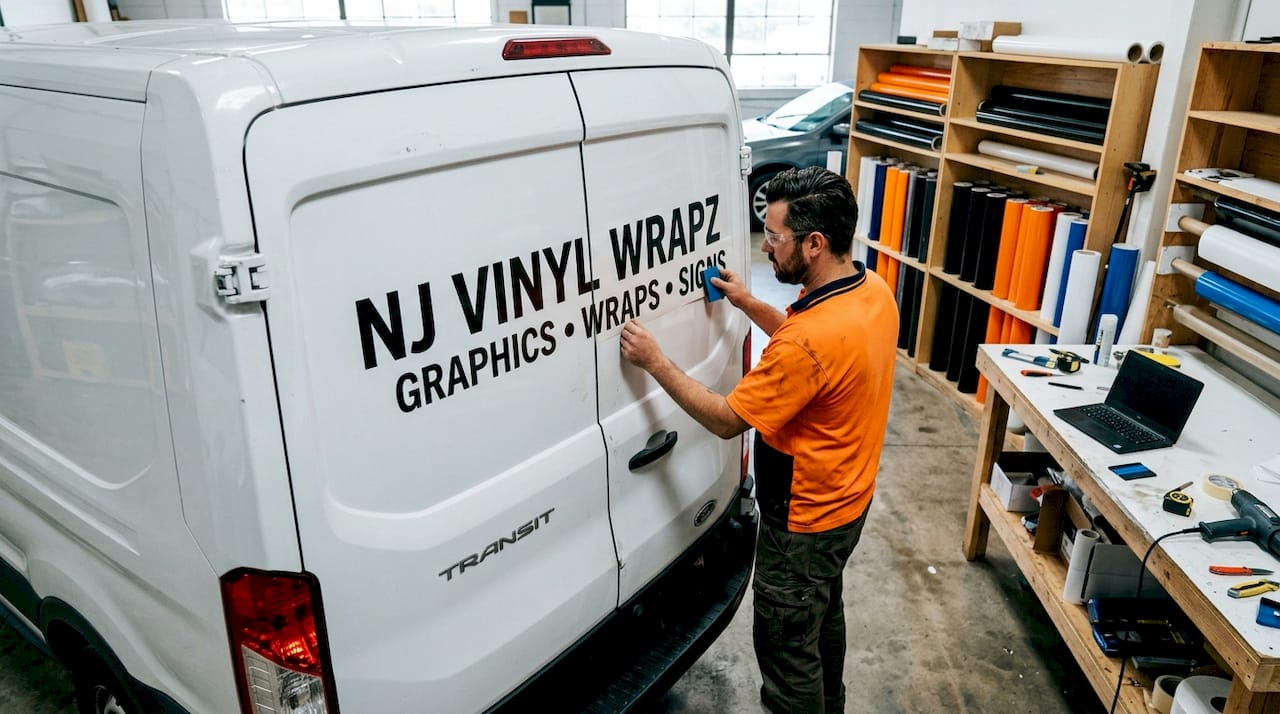
Vehicle vinyl lettering is cut adhesive vinyl applied to a vehicle’s surface to display business names, phone numbers, logos, and branded graphics. It is the most cost-effective form of automotive vinyl lettering available to business owners and fleet managers. Premium materials from brands like 3M and Avery deliver professional results that hold up for years on the road. Whether you manage a single service van or a fleet of 50 trucks, understanding how vinyl lettering works, what it costs, and how to install it correctly will determine how much value you get from every dollar spent.
1. What are the main types of vehicle vinyl lettering?
Vehicle vinyl lettering falls into two primary categories: cut vinyl and printed vinyl graphics. Each serves a different purpose, and choosing the wrong type wastes money.
Cut vinyl lettering uses a plotter to cut letters, numbers, and simple shapes from a single-color vinyl sheet. The result is clean, flat text with sharp edges. Cut vinyl works best for business names, phone numbers, website URLs, and simple logos. It reads clearly at highway speeds and holds up well against weather and UV exposure. Premium cast vinyl lasts 5–7 years with proper care, making it a durable long-term investment.
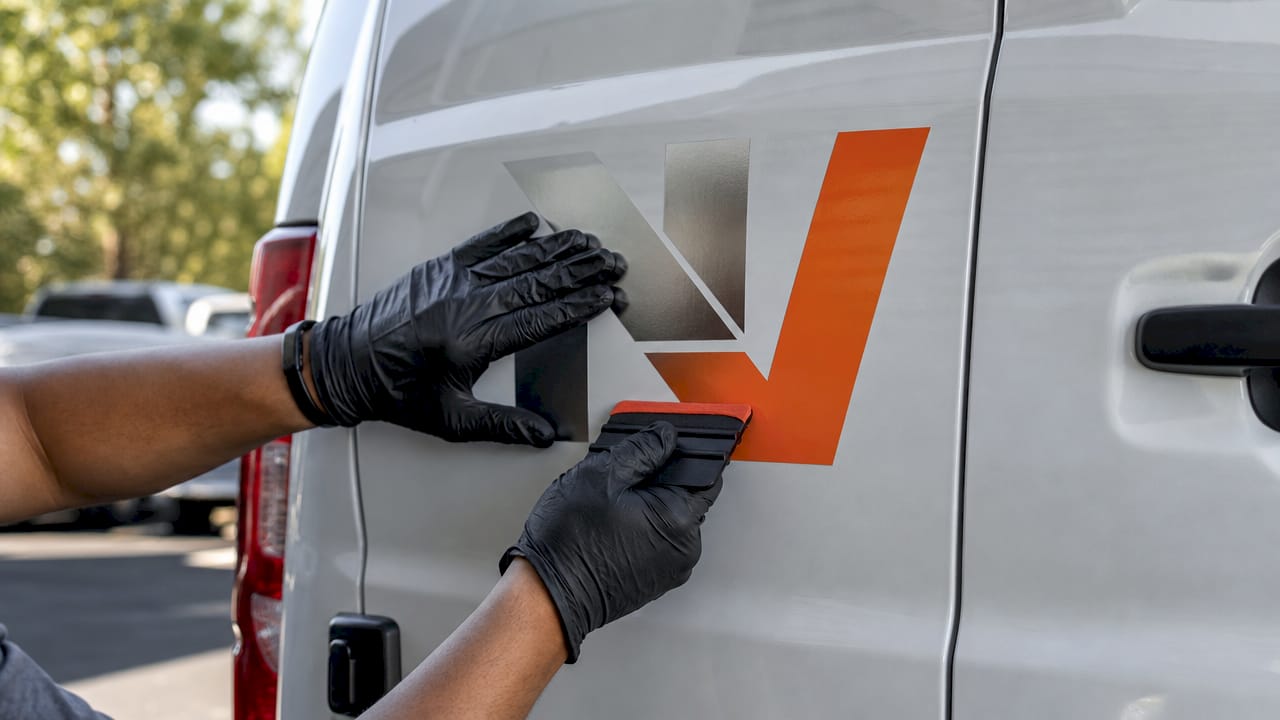
Printed vinyl graphics use digital printing to reproduce full-color images, gradients, and complex logos. This is the right choice when your brand requires photographic imagery or multi-color artwork that a plotter cannot cut. Printed graphics cost more than cut lettering but deliver higher visual impact.
Key differences at a glance:
- Cut vinyl: Single color, lower cost, fastest production, ideal for text and simple logos
- Printed vinyl: Full color, higher cost, best for complex artwork and photo-quality graphics
- Reflective vinyl: Adds visibility at night, common for emergency vehicles and safety fleets
- Removable vinyl: Lower-tack adhesive for short-term campaigns or leased vehicles
Pro Tip: Choose cast vinyl over calendered vinyl for any vehicle that stays in service longer than two years. Cast vinyl conforms better to curved surfaces and resists shrinking in cold weather.
2. How to properly install vehicle vinyl lettering for lasting results
Poor installation is the leading cause of vinyl lettering failure. The process matters as much as the material.
Follow these steps for a clean, lasting application:
- Wash the vehicle thoroughly. Remove all dirt, grease, and road grime with soap and water. Let the surface dry completely before moving to the next step.
- Wipe with isopropyl alcohol. Skipping the alcohol wipe is the most common cause of install failures. Road wax and silicone residue prevent the adhesive from bonding, causing lettering to peel at highway speeds or during power washing.
- Check the temperature. Apply vinyl between 50°F and 80°F for best adhesion. Cold surfaces cause the adhesive to stiffen and fail. Hot surfaces make the vinyl stretch and bubble.
- Position before committing. Use masking tape as a hinge to hold the lettering in place while you confirm alignment. Measure twice.
- Choose your application method. The dry method works best for small lettering on flat panels. The wet method (a few drops of dish soap in water misted on the surface) gives you time to reposition larger graphics before the adhesive sets.
- Squeegee from center outward. Work air bubbles toward the edges. Overlap each squeegee pass by about half an inch.
- Remove the transfer tape slowly. Pull at a low angle, not straight up. If the vinyl lifts with the tape, press it back down and wait another minute.
- Avoid high-pressure washing for 48 hours. The adhesive needs time to cure fully before it can handle aggressive water pressure.
Pro Tip: Work indoors whenever possible. Wind carries dust particles that get trapped under the vinyl during application, creating visible bumps that cannot be removed without reapplying.
Lettering installs in 1–3 hours per vehicle, compared to 2–4 days for a full wrap. That difference in downtime matters when vehicles need to stay on the road generating revenue.
3. Cost, ROI, and impact: how does vinyl lettering compare?
The financial case for automotive vinyl lettering is straightforward. Standard vehicle vinyl lettering costs $200–$600 per vehicle, while partial wraps run $1,200–$3,000 and full wraps start at $2,500 and climb past $5,000. ROI break-even typically arrives within 3–6 months for lettered vehicles.
Cost per impression tells a more nuanced story. Lettering delivers a CPM of $0.02–$0.04, making it the lowest-cost impression generator in vehicle branding. Full wraps reach a CPM of up to $0.30 but generate significantly higher brand recall. That gap matters when you are deciding where to put your budget.
| Branding option | Typical cost | Brand recall | Best for |
|---|---|---|---|
| Vinyl lettering | $200–$600 | 15–20% | Budget-conscious fleets, solo operators |
| Partial wrap | $1,200–$3,000 | 30–40% | Mid-size businesses, mixed fleets |
| Full wrap | $2,500–$5,000+ | 45–55% | Hero vehicles, high-visibility routes |
Brand recall for lettering sits at 15–20%, compared to 45–55% for full wraps. That gap reflects the difference in visual coverage, not quality. Lettering works best when the vehicle is already recognizable or when the message is simple and direct.
Small businesses and solo operators benefit most from lettering because of its low entry cost, fast turnaround, and minimal vehicle downtime. A plumber or electrician with a single van gets a professional presence on the road for under $500.
4. Strategic ways to use vinyl lettering for fleet branding
The most effective fleet branding programs do not treat all vehicles the same. Fleet managers who combine full wraps on one or two hero vehicles with consistent lettering across the rest of the fleet get maximum visibility without blowing the budget. The hero vehicle draws attention at events and on high-traffic routes. The lettered fleet maintains brand presence everywhere else.
Strategic placement and design decisions amplify the impact of custom vehicle decals and lettering:
- Keep the message short. A phone number, website, and business name are enough. Drivers have 3–5 seconds to read a moving vehicle.
- Use high-contrast color combinations. White text on dark vehicles and dark text on white vehicles read fastest at distance.
- Place contact information on the rear. Drivers behind you have the most time to read and act on what they see.
- Match fonts across the fleet. Consistent typography signals professionalism and makes the brand look intentional.
- Use door panels and tailgates for primary messaging. These surfaces offer the largest flat area and the most visibility in traffic.
For personal vehicles that double as brand touchpoints, such as a real estate agent’s car or a contractor’s personal truck, lettering on the rear window or tailgate delivers brand exposure without committing to a full wrap. Njvinylwrapz works with individual owners to design car lettering layouts that look professional without overwhelming the vehicle’s appearance.
Businesses with trailers and haulers can extend the same lettering strategy across their entire rolling inventory. Consistent branding across a trailer fleet reinforces the brand every time the vehicle parks at a job site or travels a highway. For inspiration on how graphics translate across larger vehicles, the trailer wrap gallery at IPD Racing shows how cohesive design scales from small vans to full-size haulers.
Njvinylwrapz has over 10 years of experience helping New Jersey businesses build fleet branding programs that balance cost and impact. Their team designs lettering layouts that work across vehicle types and sizes, keeping the brand consistent whether the fleet has 3 vehicles or 300.
Pro Tip: If your fleet vehicles vary in color, use a consistent logo placement and font rather than trying to match background colors. Placement consistency builds recognition faster than color matching.
Key takeaways
Vehicle vinyl lettering delivers the lowest cost per impression in vehicle branding, making it the right starting point for most business owners and fleet managers before scaling to partial or full wraps.
| Point | Details |
|---|---|
| Cost advantage | Lettering costs $200–$600 per vehicle, far below partial or full wrap pricing. |
| Lifespan | Premium cast vinyl lasts 5–7 years with proper care and correct installation. |
| Installation speed | Lettering installs in 1–3 hours, minimizing vehicle downtime compared to full wraps. |
| Fleet strategy | Combine hero vehicle wraps with fleet-wide lettering to balance impact and budget. |
| Installation success | Always wipe surfaces with isopropyl alcohol before applying vinyl to prevent peeling. |
What I’ve learned from years of vinyl lettering projects
The question I hear most often from fleet managers is whether lettering is “worth it” compared to a full wrap. My honest answer is that it depends entirely on what the vehicle needs to do.
Lettering is not a compromise. It is the right tool for a specific job. A service vehicle that parks in front of homes all day does not need a full wrap to generate leads. Clean, readable lettering with a phone number and website does the work. I have seen contractors double their inbound calls simply by adding lettering to a van they had been driving unbranded for years.
Where I see businesses go wrong is treating lettering as a permanent decision. Vinyl lettering is removable. That is a feature, not a limitation. If your phone number changes or you rebrand, lettering comes off cleanly without damaging the paint. A full wrap requires more effort to remove and replace.
The maintenance advice I give every client is simple: hand wash the vehicle, avoid automated car washes with stiff brushes, and never use a pressure washer within six inches of a vinyl edge. Those three habits alone extend the life of lettering by years. For fleet managers tracking vehicle branding as part of a broader marketing program, staying current on vehicle branding trends helps you make smarter decisions about when to upgrade from lettering to a partial or full wrap.
The biggest mistake I see is rushing the surface prep. Clients who skip the isopropyl alcohol step almost always call back within a few months because their lettering is peeling. The prep takes ten minutes. The fix takes a full reinstall.
— Krunal
Professional vehicle lettering and wraps from Njvinylwrapz
Njvinylwrapz provides professional vehicle lettering services for businesses and fleet managers across New Jersey, from single-vehicle installs to full fleet programs. Every project includes custom design, premium materials from trusted brands like 3M and Avery, and expert installation in a climate-controlled facility.
For businesses ready to scale beyond lettering, Njvinylwrapz offers full vehicle wraps and partial wrap options that integrate with existing lettered fleets. The team handles everything from layout design to final installation, with fast turnaround times that keep your vehicles on the road. Request a quote at njvinylwrapz.com and get a branding solution built for your fleet size and budget.
FAQ
How long does vehicle vinyl lettering last?
Premium cast vinyl lettering lasts 5–7 years with proper care. Avoiding high-pressure washing and automated brush car washes extends the lifespan significantly.
What does vinyl lettering cost for a business vehicle?
Standard vehicle vinyl lettering costs $200–$600 per vehicle. That range covers most business applications including name, phone number, logo, and website.
Can vinyl lettering be removed without damaging paint?
Yes. Vinyl lettering uses pressure-sensitive adhesive that releases cleanly from factory paint when removed correctly. Using a heat gun to warm the vinyl before peeling reduces the risk of residue.
What is the best surface temperature for applying vinyl lettering?
Apply vinyl lettering when the surface temperature is between 50°F and 80°F. Colder surfaces reduce adhesive bond strength, and hotter surfaces cause the vinyl to stretch during application.
Is vinyl lettering better than a full wrap for a small fleet?
For most small fleets, lettering is the right starting point because of its low cost and fast installation. Fleet managers with larger budgets often combine full wraps on one or two high-visibility vehicles with lettering across the rest of the fleet for the best balance of impact and cost.