
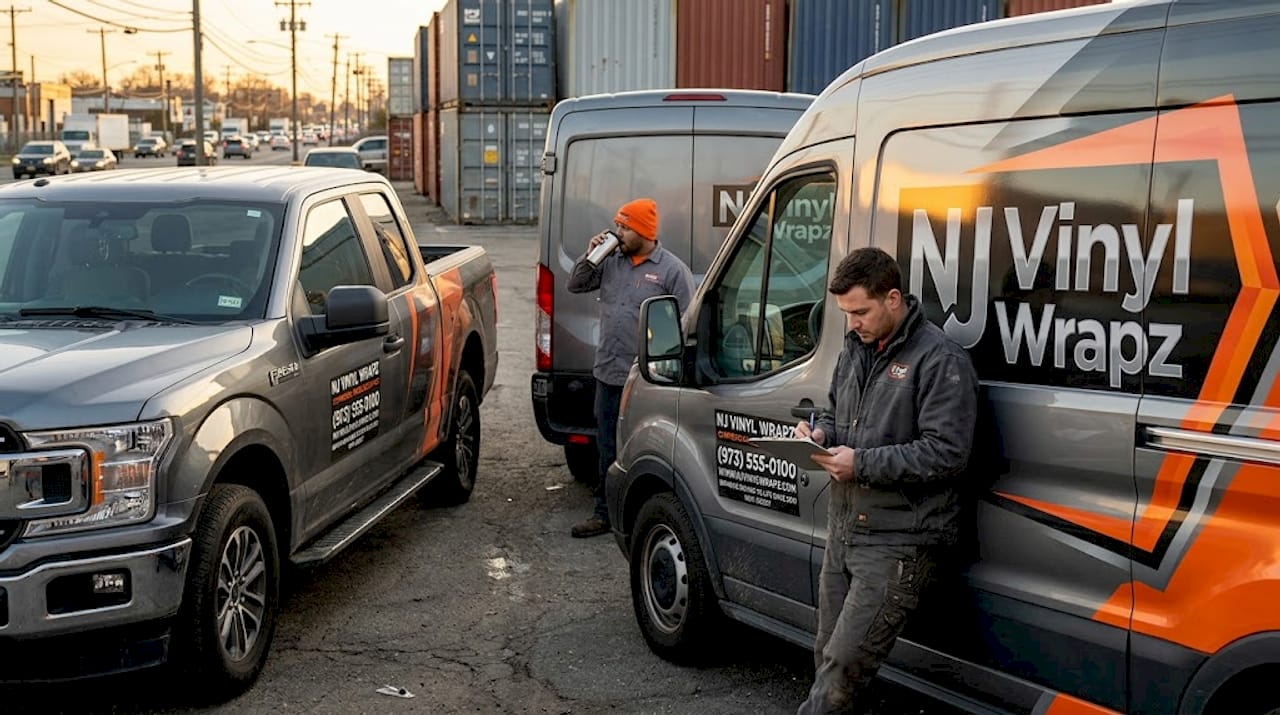
If you’ve ever watched a plumbing van roll past and immediately knew the company, phone number, and service area, you witnessed a business vehicle decal doing exactly what it’s designed to do. A business vehicle decal is a vinyl graphic applied directly to a vehicle’s surface, turning ordinary fleet vehicles into moving advertisements that generate thousands of impressions daily without any recurring cost. Many business owners confuse decals with full wraps or magnetic signs, and that confusion leads to poor purchasing decisions. This guide breaks down every type, cost, benefit, and legal consideration you need to know before putting graphics on your vehicles.
Table of Contents
- Key takeaways
- What is a business vehicle decal, exactly?
- Types of business vehicle decals and their uses
- Benefits of vehicle decals for branding and promotions
- Costs, materials, and lifespan of business vehicle decals
- Legal and practical considerations for vehicle decals
- How to plan, design, and install effective vehicle decals
- My honest take on vehicle decals after 10 years in this industry
- Ready to put your brand on the road?
- FAQ
Key takeaways
| Point | Details |
|---|---|
| Decals are vinyl graphics | Business vehicle decals range from simple logos to full wraps, all made from adhesive vinyl material. |
| Mobile advertising pays off | A single wrapped vehicle can generate tens of thousands of impressions daily with no recurring ad spend. |
| Cost scales with coverage | Decals start around $800; partial wraps run $1,200 to $3,500; full wraps range from $2,500 to $8,000 or more. |
| Material quality drives lifespan | High-quality decals last up to seven years; poor materials or bad installation drops that to two years. |
| Legal compliance matters | Local ordinances and HOA rules can restrict commercial decals, so check regulations before wrapping your fleet. |
What is a business vehicle decal, exactly?
A business vehicle decal is a printed vinyl graphic adhered to the exterior of a commercial or personal vehicle for branding, identification, or advertising purposes. Think of it as a sticker, but one engineered for outdoor exposure, UV resistance, and years of road use. The vinyl is printed with your logo, contact information, service details, or any graphic your brand requires, then professionally applied to painted metal, glass, or plastic surfaces.
What separates decals from wraps is mostly coverage. A decal might be a 12-inch logo on a truck door. A full wrap covers the entire vehicle surface. Both fall under the broader category of business vehicle signage, and both serve as forms of business advertising on cars and commercial vehicles. Magnetic signs, by contrast, sit on top of the vehicle and can be removed, which makes them temporary but also less polished and less durable.
The reason fleet decals generate such strong marketing returns is simple geography. Your vehicles travel the same neighborhoods, highways, and job sites your customers use every day. That repeated exposure builds recognition faster than most digital campaigns at a fraction of the long-term cost.
Types of business vehicle decals and their uses
Understanding your options prevents overpaying for coverage you don’t need or underspending in ways that hurt your brand.
Simple decals and vehicle lettering
This is the entry-level option. You apply your company name, phone number, logo, and maybe a short tagline directly to the vehicle door or tailgate. Vehicle lettering works well for service businesses that want a professional look without a large upfront investment. It’s clean, readable from a distance, and easy to remove when you sell or retire the vehicle.
Partial wraps
A partial wrap covers specific panels, typically the rear quarter panels, tailgate, or hood, leaving the factory paint visible on the rest of the vehicle. This creates a dramatic visual contrast that actually draws more attention than you might expect. Partial wraps give you the high-impact look of full coverage branding at a lower cost and faster installation time.
Full wraps
A full wrap covers the entire exterior surface of the vehicle in custom printed vinyl. This is the most powerful vehicle branding option available, turning your truck, van, or car into a rolling billboard. Full wraps also protect the factory paint underneath, which matters a lot when you’re managing a fleet and thinking about resale value.
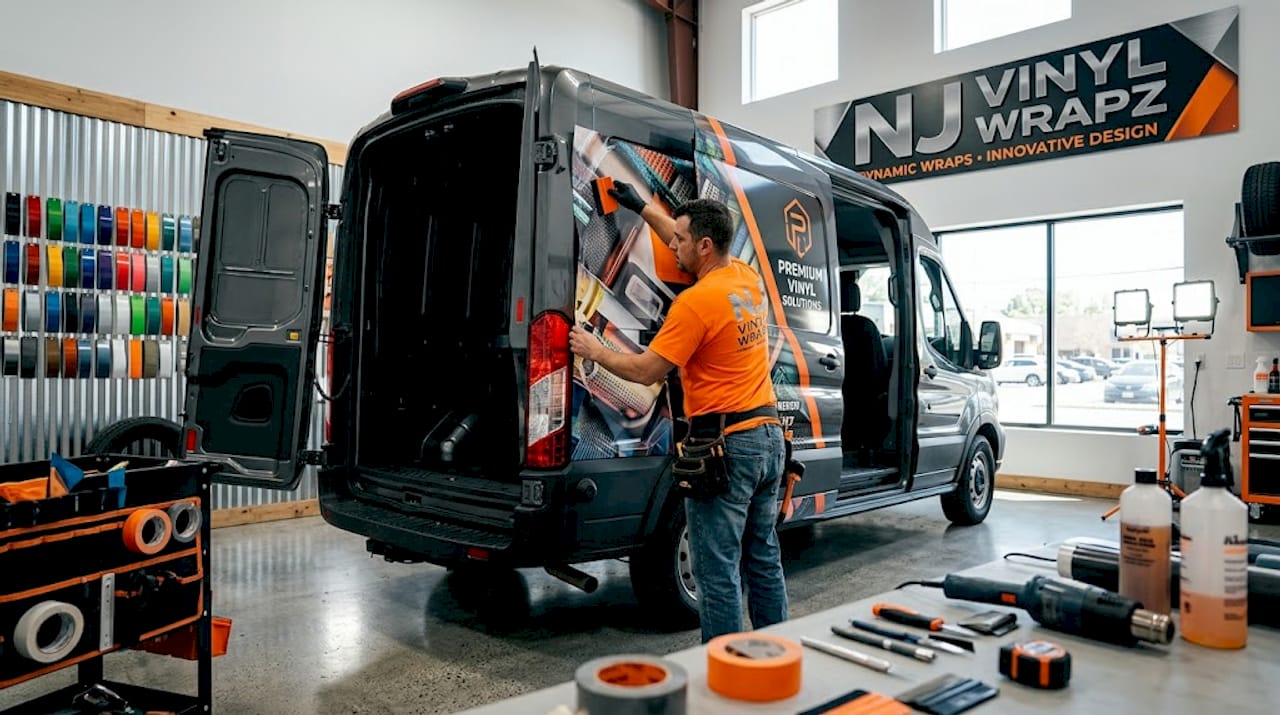
Here’s a direct comparison of the three main options:
| Type | Typical cost (2026) | Installation time | Lifespan | Best for |
|---|---|---|---|---|
| Vehicle lettering/decals | From $800 | A few hours | 3 to 5 years | Budget-conscious branding |
| Partial wrap | $1,200 to $3,500 | 1 to 2 days | 4 to 6 years | Strong visual impact on a budget |
| Full wrap | $2,500 to $8,000+ | 2 to 4 days | 5 to 7 years | Maximum brand coverage |
The right choice depends on your marketing goals, budget, and how many vehicles you’re branding. Pricing varies by coverage and vehicle size, so getting a custom quote for your fleet makes sense before committing.
Benefits of vehicle decals for branding and promotions
Custom vehicle graphics are not just about looking professional. They deliver measurable marketing value that most traditional advertising channels cannot match at the same price point.
Here’s why fleet managers and business owners keep coming back to this channel:
- No recurring costs. Unlike digital ads or radio spots, you pay once and the impression count keeps climbing. Cost-per-impression drops to pennies over the decal’s lifespan.
- High daily reach. A single wrapped vehicle can generate tens of thousands of impressions daily depending on route and urban density.
- Brand consistency across a fleet. When every vehicle looks identical, customers recognize your brand instantly and associate it with reliability.
- Paint protection. Quality vinyl acts as a barrier against minor scratches, UV fading, and road debris, which directly reduces fleet maintenance costs.
- Versatile design options. You can run seasonal promotions with removable decals layered over your base graphics, then swap them out without touching the permanent design underneath.
Custom vehicle graphics act as strategic marketing tools that enhance brand visibility while protecting the vehicle underneath. That dual function is what makes them genuinely cost-effective compared to billboards, radio, or social media advertising.
Pro Tip: When branding a fleet, start with your highest-visibility vehicles first. Box trucks and cargo vans travel the most miles and park in the most visible locations, so they deliver the best return on your first investment.
Costs, materials, and lifespan of business vehicle decals
Price is almost always the first question, and the answer depends on three variables: coverage area, material quality, and design complexity.
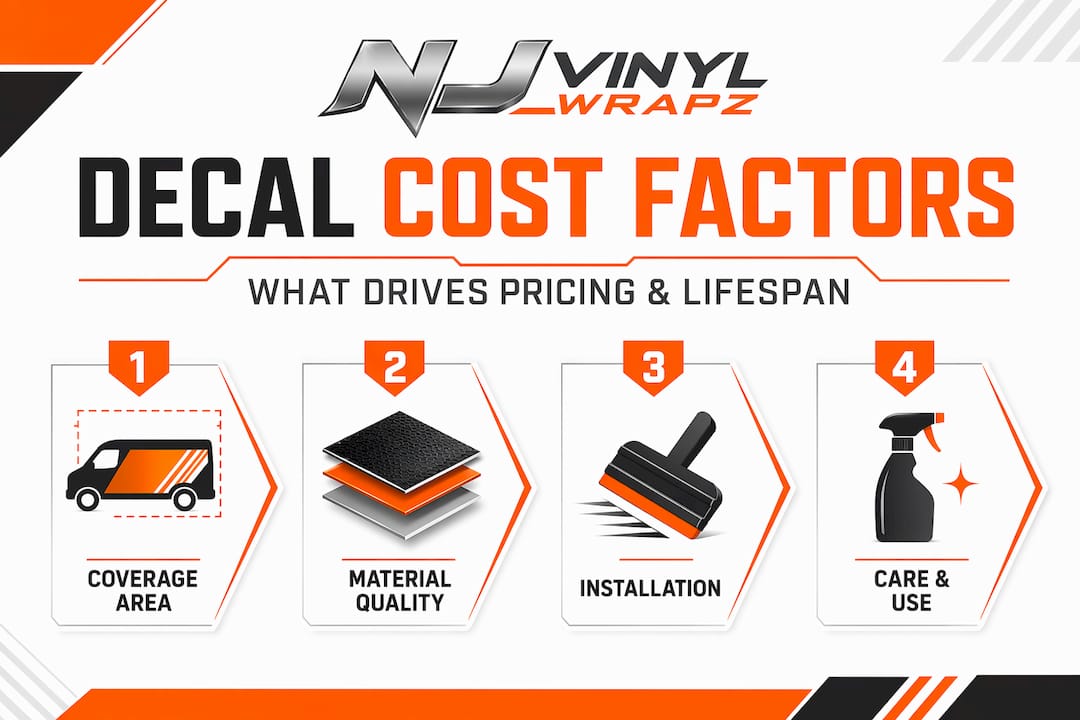
For 2026, expect to pay roughly $800 or more for basic decals and lettering on a standard pickup or cargo van. Partial wraps run $1,200 to $3,500, while full wraps on a large commercial vehicle can exceed $8,000. Those numbers include design, printing, and professional installation.
Material quality has a dramatic effect on how long your investment lasts. High-quality decals last up to seven years, while budget materials or improper installation can result in peeling, fading, or bubbling within two years. Brands like 3M and Avery produce films specifically engineered for vehicle applications, and the difference in durability is substantial.
Installation environment matters as much as the vinyl itself. Climate-controlled installation is critical because temperature and humidity affect how the adhesive bonds to the vehicle surface. Applying vinyl in a cold, dusty, or humid environment leads to premature failure. For a complete installation guide covering preparation and best practices, it’s worth reviewing before booking a shop.
Here are maintenance steps that extend decal life significantly:
| Maintenance practice | Why it matters |
|---|---|
| Hand wash only | Pressure washers and automatic car washes degrade vinyl edges faster |
| Avoid solvent cleaners | Harsh chemicals break down the adhesive layer from the outside |
| Park in shade when possible | UV exposure accelerates color fading and edge lifting |
| Inspect edges quarterly | Catching a lifting edge early prevents larger sections from peeling |
Pro Tip: Ask your installer about overlaminate films. A clear protective layer applied over printed decals adds UV resistance and makes cleaning easier, extending your graphics life by one to two years.
Legal and practical considerations for vehicle decals
Many business owners skip this step entirely, and it can create real problems. Compliance is not just about fines. It affects where your vehicles can park and how long your branding investment stays intact.
Key legal considerations to address before installing any commercial graphics:
- Federal DOT requirements. Commercial vehicles involved in interstate commerce must display DOT identification numbers in a specific format and size. Non-compliance risks inspection fines.
- State and local regulations. Some states have specific rules about what information must appear on commercial vehicles, including company name and address.
- HOA and residential parking restrictions. Local ordinances and HOA rules may prohibit commercial vehicles with decals from parking in residential areas. Removable magnetic signs are sometimes used as a workaround, but they introduce their own complications.
- Tax deductions. Vehicle decal and wrap costs qualify as ordinary advertising expenses and are potentially tax deductible. You’ll need to track the percentage of business use for the vehicle to support any deduction claim.
- Lease agreements. If your fleet vehicles are leased, check the lease terms before applying permanent adhesive graphics. Some leases require the vehicle to be returned in original condition.
The removable decal route seems appealing for compliance flexibility, but it creates real-world problems. Magnets fall off at highway speeds, temporary decals often look cheaper, and re-application over time adds up in cost and time.
How to plan, design, and install effective vehicle decals
A great-looking vehicle wrap that doesn’t communicate clearly is wasted money. Design strategy and execution are where most businesses either win or lose with this medium.
Follow this process to get it right from the start:
- Define your goal. Are you trying to generate calls, build brand recognition, or promote a specific service? Your design should prioritize one clear message above all others.
- Know your vehicle surface. Curves, door handles, wheel wells, and body lines all affect how graphics appear. A design that looks perfect on a flat screen may distort badly on a curved panel.
- Prioritize readability. Effective decal design requires high contrast colors and simple layouts. A passing driver has two to three seconds to absorb your message. Make it count.
- Work with a professional designer. Professionally designed decals tailored to your audience demographics outperform generic templates every time. Cookie-cutter layouts look like every other truck on the road.
- Choose the right coverage level. Match your budget to the vehicle’s visibility role. A daily delivery van deserves a full wrap. An occasional service vehicle might do well with lettering only.
- Scale strategically. Start with one or two vehicles to proof the design in real-world conditions. Then scale to your full fleet once you’re confident the design works.
Pro Tip: Request a vehicle-specific digital mockup from your graphics provider before approving any design. Seeing the actual layout on a photo of your vehicle model catches problems that flat proofs miss entirely.
My honest take on vehicle decals after 10 years in this industry
I’ve seen businesses spend $15,000 on a radio campaign that generated zero trackable calls. I’ve also seen a single wrapped cargo van become the primary driver of new leads for a landscaping company for three straight years. That contrast never stops being striking.
What I’ve learned is that most business owners underestimate vehicle decals because they compare them to other passive media. They think, “It’s just a sticker on a truck.” But when your truck sits outside a busy job site for eight hours a day, or parks in the same shopping center lot twice a week, that’s not passive at all. It’s targeted, repeated, local advertising in the exact neighborhoods where your customers live.
The compliance and HOA issues catch people off guard more than anything else. I’ve watched business owners install expensive full wraps only to discover their residential parking situation made the vehicle a liability. Check the rules first. It takes one phone call.
The design mistakes I see most often are cramming too much text onto the vehicle, using fonts that are impossible to read at 40 miles per hour, and choosing colors that disappear against the factory paint. Simple, bold, and legible beats clever every single time. Your truck is not a brochure. It has three seconds of someone’s attention. Use them well.
Investing in quality materials and professional installation is not optional if you want a five-year return on this asset. The shops cutting corners on material grade or skipping climate-controlled installation will cost you far more in early replacement than you saved upfront.
— Krunal
Ready to put your brand on the road?
At Njvinylwrapz, we work with business owners and fleet managers across New Jersey who are done guessing at their marketing ROI and ready to put a proven advertising tool to work. Our team handles custom design, premium printing with 3M and Avery materials, and professional installation in our climate-controlled facility, giving your graphics the best possible foundation for long-term durability.
Whether you’re starting with one vehicle or branding an entire fleet, we offer full vehicle wraps, partial wraps, and vehicle lettering options designed around your specific business goals. We also provide ceramic coatings and paint protection film to keep your fleet looking sharp between graphic refresh cycles. If you’re managing commercial fleet vehicles and want consistent, professional branding that complies with regional regulations, our experienced team is ready to help you scale from concept to road-ready in days, not weeks.
FAQ
What is a business vehicle decal?
A business vehicle decal is a vinyl graphic applied to a commercial vehicle for branding, advertising, or identification purposes. It ranges from simple logo stickers to partial or full vehicle wraps.
How long do business vehicle decals last?
High-quality decals installed professionally in a climate-controlled environment last up to seven years. Lower-grade materials or improper installation typically result in a lifespan of only two years.
Are vehicle decals tax deductible for businesses?
Yes. Vehicle decal and wrap costs generally qualify as ordinary advertising expenses and may be tax deductible with proper documentation, including tracking the percentage of business use for the vehicle.
What is the difference between a vehicle decal and a vehicle wrap?
A decal is a specific graphic element applied to part of the vehicle surface. A wrap covers a larger or complete portion of the vehicle. Both are made from vinyl and serve as business vehicle signage, but they differ in coverage, cost, and visual impact.
Do I need to check any regulations before applying commercial decals?
Yes. Commercial vehicles in interstate commerce must comply with DOT identification requirements. Local ordinances and HOA rules may also restrict where commercially branded vehicles can be parked, so verify both before committing to a design.