
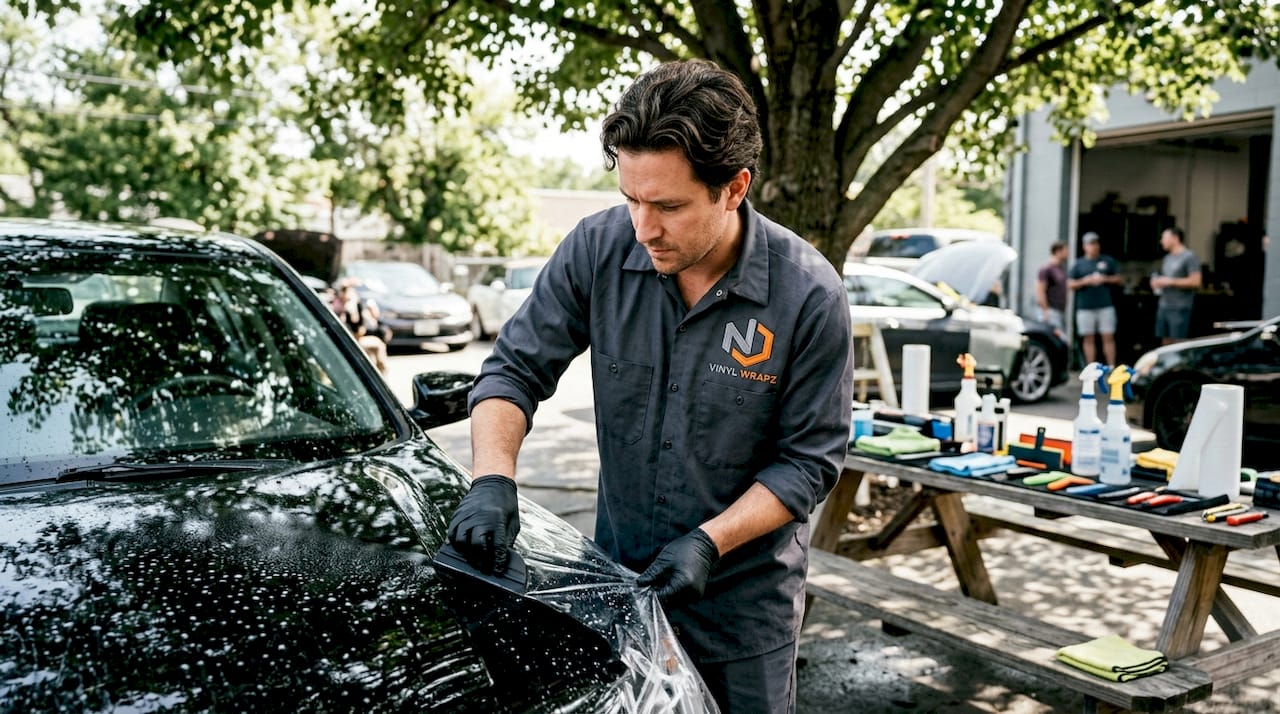
Paint protection film (PPF) is a clear thermoplastic polyurethane (TPU) barrier applied directly to your car’s painted surfaces to block chips, scratches, and environmental damage. Searching for ppf wraps near me means you want a local installer who can apply this film correctly, not just cheaply. Modern TPU films run 6–10 mils thick and include self-healing properties that cause light surface scratches to disappear with heat exposure. Premium films last 5–10 years with proper care, making PPF one of the highest-return investments you can make for your vehicle’s paint. Unlike vinyl wraps, which primarily change a car’s color, PPF focuses on physical protection with minimal effect on appearance.
How to find reliable PPF wraps near me
The quality gap between local paint protection film installers is wider than most car owners expect. A shop with a clean lobby and a low price is not the same as a certified installer using professional-grade film. Knowing what to look for saves you from a botched job that costs more to fix than the original installation.
Certifications and experience matter most. Reputable shops hold manufacturer certifications from film brands like 3M or Avery, which require installers to complete training and pass quality standards. Local PPF installers vary widely in pricing and quality, so verifying certifications and customer feedback is the single most reliable filter before you commit.
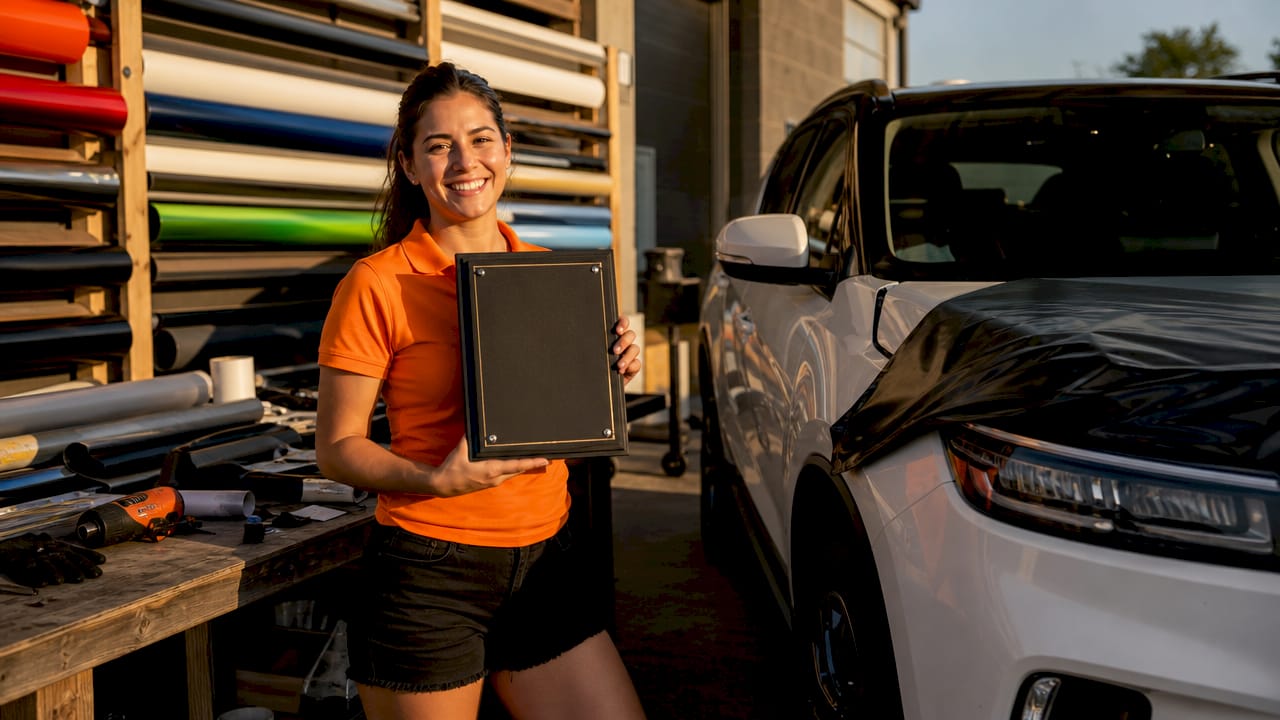
Check portfolios and warranties before you book. A professional installer shows finished work on vehicles similar to yours, not just stock photos. Ask specifically about the warranty on both the film and the labor. A shop that backs its work with a multi-year warranty has financial skin in the game.
Here is what to verify before choosing a local shop:
- Manufacturer certification for the film brand they use
- A portfolio of completed installs on vehicles with similar body complexity to yours
- Written warranty covering film defects and installation errors
- Climate-controlled installation bay (temperature and dust affect adhesion)
- Clear pricing with no hidden fees for paint correction prep
Pro Tip: Ask the shop whether they use computer-cut film patterns or hand-cut on the car. Computer-cut patterns reduce the risk of blade marks on your paint and produce cleaner edges.
Finding qualified local automotive professionals who install PPF and related services is easier when you treat the search like hiring a contractor. Read recent reviews, visit the shop in person, and ask to see a job in progress.
What are the common PPF package types and costs?
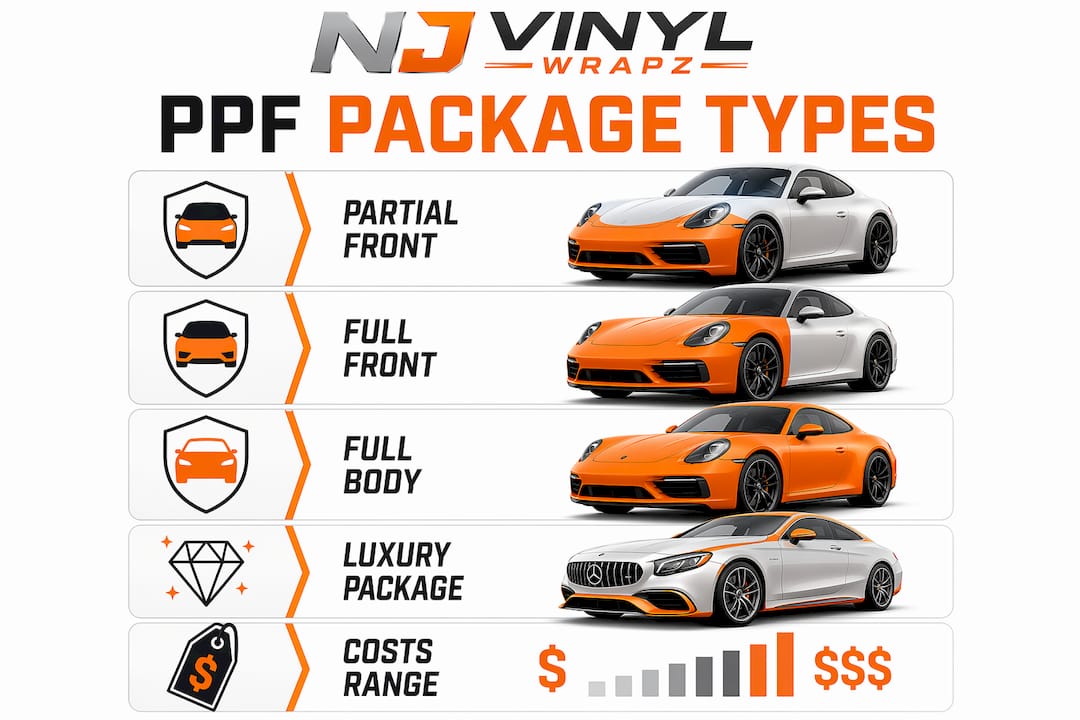
PPF pricing follows a tiered structure based on how much of the vehicle you cover. Professional PPF installation costs range from $600 for partial front-end coverage to over $10,000 for full-body wraps on luxury vehicles. That range reflects real differences in labor, film quantity, and vehicle complexity.
| Package | Coverage area | Sedan cost | SUV cost | Luxury/performance cost |
|---|---|---|---|---|
| Partial front | Bumper only or partial hood | $600–$900 | $700–$1,100 | $900–$1,500 |
| Full front | Hood, bumper, fenders, mirrors | $1,500–$2,500 | $1,900–$3,000 | $2,500–$3,500 |
| Track/extended | Full front plus rocker panels, A-pillars | $2,500–$4,000 | $3,000–$5,000 | $4,000–$7,000 |
| Full vehicle | All painted surfaces | $5,000–$7,000 | $6,000–$9,000 | $8,000–$10,000+ |
Most drivers choose full front coverage because it protects roughly 90% of typical paint damage areas, including the hood, bumper, fenders, and mirrors. That makes it the best value for daily drivers who want real protection without covering the entire car.
Several factors push costs higher:
- Vehicle complexity: Luxury SUVs and performance cars with intricate body lines require more labor. Highly skilled labor and premium films increase costs for complex installations significantly.
- Film brand and grade: Entry-level films cost less but offer shorter warranties and fewer self-healing properties. Professional-grade films from established brands carry higher price tags but last longer.
- Paint correction: If your paint has swirl marks or scratches before installation, the shop must correct them first. Paint correction runs $500–$3,000 per panel and adds to the total bill.
Pro Tip: Get quotes from at least two local shops and ask each one to specify the film brand and grade they are quoting. A lower price that uses a lesser film is not a bargain.
PPF acts as an insurance policy that preserves factory paint and reduces future repair costs. When you factor in the cost of repainting a single panel, a full-front package often pays for itself within a few years of daily driving.
What happens during the PPF installation process?
The installation process has more steps than most car owners realize. Rushing any of them produces visible defects, lifting edges, or trapped contamination under the film.
- Surface decontamination. The installer washes the vehicle, then uses a clay bar to remove bonded contaminants like rail dust and tree sap. This step takes one to three hours depending on the car’s condition.
- Paint correction (if needed). Any scratches or swirl marks get polished out before film goes on. Applying PPF over damaged paint locks in those defects permanently.
- Film cutting. The installer uses computer-cut patterns specific to your vehicle’s make, model, and year, or hand-cuts sections for custom coverage areas.
- Application. The film is applied wet using a slip solution, then squeegeed into position. Edges are tucked into door jambs and panel gaps for a clean finish.
- Curing. The adhesive bonds fully over 24–48 hours. During this period, the film may show slight cloudiness or water bubbles. Both disappear as the adhesive cures.
- Final inspection. A trained installer checks every panel for lifting edges, contamination, and alignment before releasing the vehicle.
A full front PPF installation takes about 1.5 to 2 days for proper surface prep, application, overnight curing, and inspection. Full body wraps generally take 3 to 5 days depending on vehicle size and complexity. That timeline is not negotiable if quality is the goal.
“Express” same-day PPF installs skip critical steps. Proper curing alone requires overnight time. Any shop offering a full front install in four hours is cutting corners that will show up within months as lifting edges, bubbles, or contamination trapped under the film.
Vehicles with intricate body curves and custom designs, like those detailed in ECD Auto Design’s custom builds, illustrate exactly why complex body lines demand more installation time and skill. The same principle applies to any performance or luxury vehicle you bring to a local shop.
How to maintain your PPF wrap after installation
PPF maintenance is straightforward, but the first week after installation is the most critical period. Mistakes during that window can compromise the adhesive bond before it fully sets.
Follow these care rules after your installation:
- Wait 48 hours before washing. Avoid vehicle washing for 48 hours post-installation to let the adhesive cure properly. Water pressure on fresh film can cause lifting at the edges.
- Avoid pressure washing near edges for 7 days. High-pressure water directed at film edges can break the seal before full bonding occurs.
- Use pH-neutral car wash soap. Harsh chemicals and solvent-based cleaners degrade the film’s top coat over time. Stick to products labeled safe for PPF or ceramic-coated surfaces.
- Skip automatic car washes with brushes. Spinning brushes create micro-scratches on the film surface and can catch edges, causing peeling.
- Inspect edges regularly. Check door jambs, hood edges, and mirror wraps every few months. Catching a lifting edge early means a simple repair. Ignoring it leads to contamination under the film.
Pro Tip: Adding a ceramic coating on top of your PPF after installation gives the film a hydrophobic surface that repels water and makes cleaning faster. Many shops offer this as a package add-on.
Protecting factory finishes and vehicle resale value is the long-term payoff of proper PPF maintenance. A well-maintained film preserves the paint underneath in factory condition, which directly supports a higher resale price when you sell the vehicle.
Key Takeaways
Choosing the right local PPF installer and package protects your paint investment for 5–10 years when you verify certifications, understand costs, and follow proper maintenance.
| Point | Details |
|---|---|
| Verify installer credentials | Check manufacturer certifications and review portfolios before booking any local shop. |
| Match package to your needs | Full front coverage protects 90% of damage-prone areas and offers the best value for daily drivers. |
| Budget for the full cost | Costs range from $600 for partial coverage to $10,000+ for full-body luxury installs. |
| Respect the installation timeline | Full front installs need 1.5–2 days; full body wraps need 3–5 days for proper curing. |
| Maintain carefully post-install | Avoid washing for 48 hours and pressure washing edges for 7 days to protect the adhesive bond. |
What I’ve learned from watching car owners choose the wrong PPF shop
I’ve seen the same mistake repeated more times than I can count. A car owner finds the cheapest quote in their area, books it without asking a single question about the film brand or installer experience, and shows up six months later with lifting edges and trapped bubbles asking what went wrong.
The uncomfortable truth is that PPF is a skill-intensive service. The film itself is only part of the equation. The installer’s technique, the quality of the prep work, and the curing environment all determine whether the job lasts five years or five months. A climate-controlled bay is not a luxury. Dust and temperature swings during application cause adhesion failures that no amount of post-install care can fix.
Industry experts recommend installing PPF immediately on a new car for the best long-term results. The reasoning is simple. New paint has no defects to lock in, and the film bonds cleanly to a surface that has never been exposed to road debris or UV degradation. Waiting until your paint shows damage means paying for correction work before the film even goes on.
My honest advice: treat the installer selection process like hiring a surgeon, not a handyman. Ask hard questions. Request references. Walk away from any shop that cannot explain exactly what film they use and why. The best local shops welcome those questions because they know their answers hold up.
— Krunal
Njvinylwrapz: professional PPF and vehicle wrap services in New Jersey
Car owners across New Jersey trust Njvinylwrapz for professional-grade paint protection and vehicle customization backed by over 10 years of experience. The team works with premium materials from 3M and Avery in a climate-controlled facility, covering everything from partial front PPF packages to full vehicle wraps built for both protection and appearance.
Whether you want a clear PPF install to preserve your factory paint or a color change wrap that turns heads, Njvinylwrapz delivers licensed, insured, and warranty-backed results. Explore the full range of wrap service packages and schedule a consultation to get an accurate quote for your vehicle.
FAQ
What is PPF and how does it differ from a vinyl wrap?
PPF is a clear thermoplastic polyurethane film that physically protects paint from chips and scratches. Vinyl wraps primarily change a vehicle’s color and offer minimal impact resistance.
How much does PPF cost for a typical car?
Full front coverage costs $1,500–$2,500 for sedans and $1,900–$3,000 for SUVs. Full-body installs on luxury vehicles can exceed $10,000.
How long does PPF installation take?
A full front install takes 1.5 to 2 days including prep, application, and overnight curing. Full-body wraps require 3 to 5 days.
Can I wash my car right after PPF installation?
Wait at least 48 hours before washing and avoid pressure washing near film edges for 7 days to allow the adhesive to fully bond.
Does PPF protect against ceramic coating damage?
PPF and ceramic coating serve different functions. PPF blocks physical damage like chips and scratches, while ceramic coating adds a hydrophobic layer. Applying ceramic coating over PPF combines both benefits for maximum protection.