
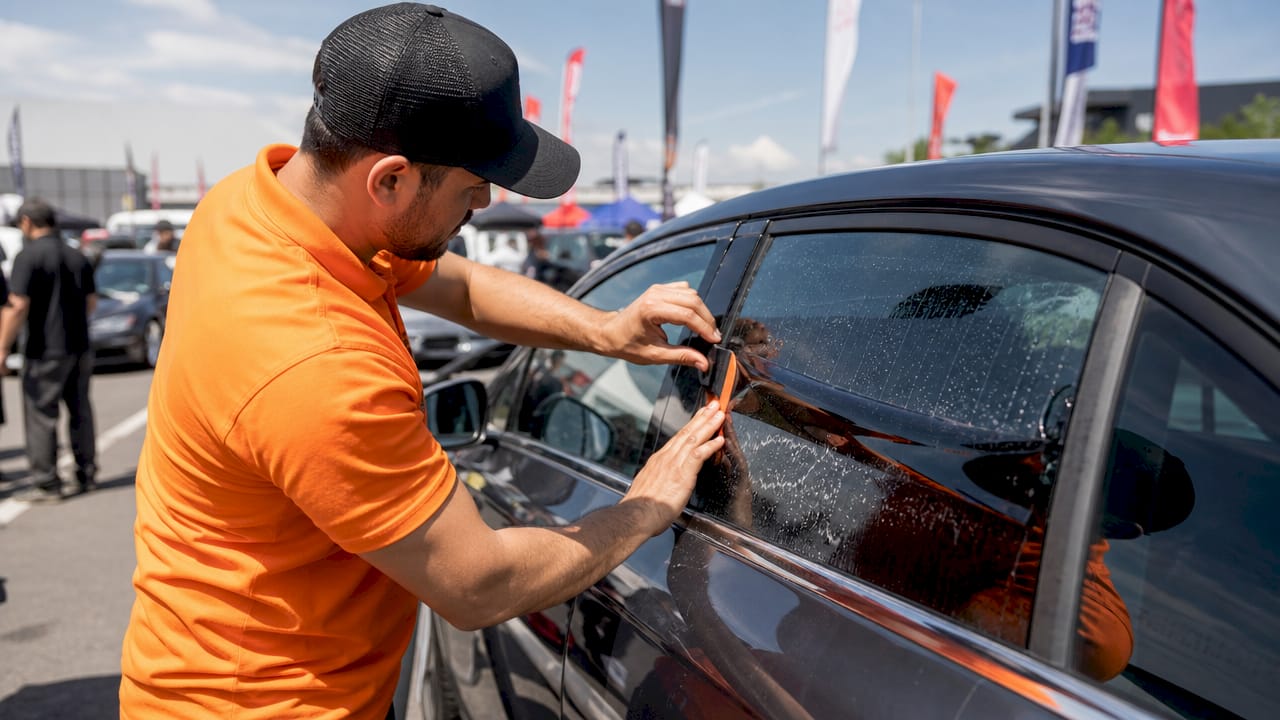
Window tinting near me refers to local professional services that apply a thin laminate film to vehicle windows to improve privacy, reduce UV heat, and enhance appearance. The right film does more than darken your glass. It protects your interior from UV fading, keeps your cabin cooler, and can raise your vehicle’s resale value. For drivers in New Jersey, choosing a local shop also means getting guidance on NJ state tinting laws before you commit to a shade. This guide covers how to find a reputable shop, what the law allows, which film types perform best, and how to prepare for a smooth installation.
How to find window tinting near me that you can trust
The best local window tint shops share three traits: verified customer reviews, named film brands, and written warranties. Start your search with a local query, then filter by shops that list specific film products rather than generic descriptions. A shop that stocks Solar FX, 3M, or Avery films is signaling product accountability. One that only says “premium film” is not.
When you call or visit, ask these questions directly:
- What film brands do you carry? Named brands come with manufacturer backing.
- Do you offer a lifetime warranty? A solid lifetime warranty on installation should cover both material defects and labor workmanship, not just the film itself.
- How long does installation take? Most reputable shops schedule same-week appointments and complete standard installs in a single day.
- Are you familiar with NJ tinting laws? Any shop working in New Jersey should answer this without hesitation.
- Can I see recent work or reviews? Photos and Google reviews from local customers are the fastest credibility check.
Pro Tip: Ask the shop to show you a physical sample of the film in sunlight before you commit. Color, reflectivity, and clarity all look different indoors versus outside.
Turnaround time matters too. If a shop cannot get you in within the week, that is a sign of either high demand or poor scheduling. Both affect your experience. Shops that work with professional automotive modification standards, like those following custom automotive build practices, tend to treat installation quality as non-negotiable rather than optional.
What are the window tinting laws in New Jersey?
New Jersey has some of the strictest tinting rules in the country. NJ law prohibits any aftermarket tinting on the front windshield and front side windows of passenger cars, SUVs, and vans. That means no tint at all on the two windows beside the driver and front passenger, regardless of how light the shade is.
The rear side windows and the rear window are unrestricted. You can go as dark as you want on those. Here is a quick breakdown:
- Front windshield: No aftermarket tint permitted. Factory AS-1 line tint only.
- Front side windows (driver and passenger): No tint allowed under NJ law.
- Rear side windows: No darkness limit.
- Rear window: No darkness limit.
Visible Light Transmission, or VLT, is the percentage of light a film allows through. A 5% VLT film is very dark and blocks 95% of visible light. A 70% VLT film is nearly clear. In New Jersey, the VLT number only matters for the rear windows since the front ones cannot be tinted at all.
Medical exemptions exist for certain conditions, such as lupus or severe photosensitivity. These exemptions require documentation and typically mandate a transparent or very high VLT film. The exemption does not give you unlimited freedom to tint front windows any shade you choose. Check current NJ Motor Vehicle Commission guidelines before assuming an exemption applies to your situation.
Getting caught with illegal tint in New Jersey results in a motor vehicle violation and a fine. More importantly, it can create liability issues if you are involved in an accident. Choosing a local shop that knows NJ regulations protects you from both outcomes.
What types of window tint film should you choose?
Window tint film falls into four main categories, and the differences in performance are significant.
Dyed film is the most affordable option. It absorbs heat rather than reflecting it, which means it fades over time and offers the weakest heat rejection of any film type. It works for drivers who want a darker look on a tight budget but do not expect long-term performance.
Metallic film reflects heat more effectively than dyed film and holds up better over time. The drawback is signal interference. Metallic particles in the film can disrupt GPS, satellite radio, and cell signals. For modern vehicles loaded with electronics, this is a real problem.
Carbon film skips the metallic layer and delivers solid heat rejection without signal interference. It has a matte finish that many drivers prefer aesthetically. Carbon film sits in the middle of the price range and performs well for most daily drivers.
Ceramic film is the top performer. Ceramic films block up to 88% of infrared heat without interfering with electronic signals like GPS or satellite radio. That combination makes ceramic the clear choice for modern vehicles. Solar FX Black FX is one example of a ceramic film that delivers high heat rejection while maintaining safe visibility at night.
| Film Type | Heat Rejection | Signal Interference | Durability |
|---|---|---|---|
| Dyed | Low | None | Fades over time |
| Metallic | Moderate | Yes | Good |
| Carbon | Good | None | Very good |
| Ceramic | Excellent | None | Excellent |
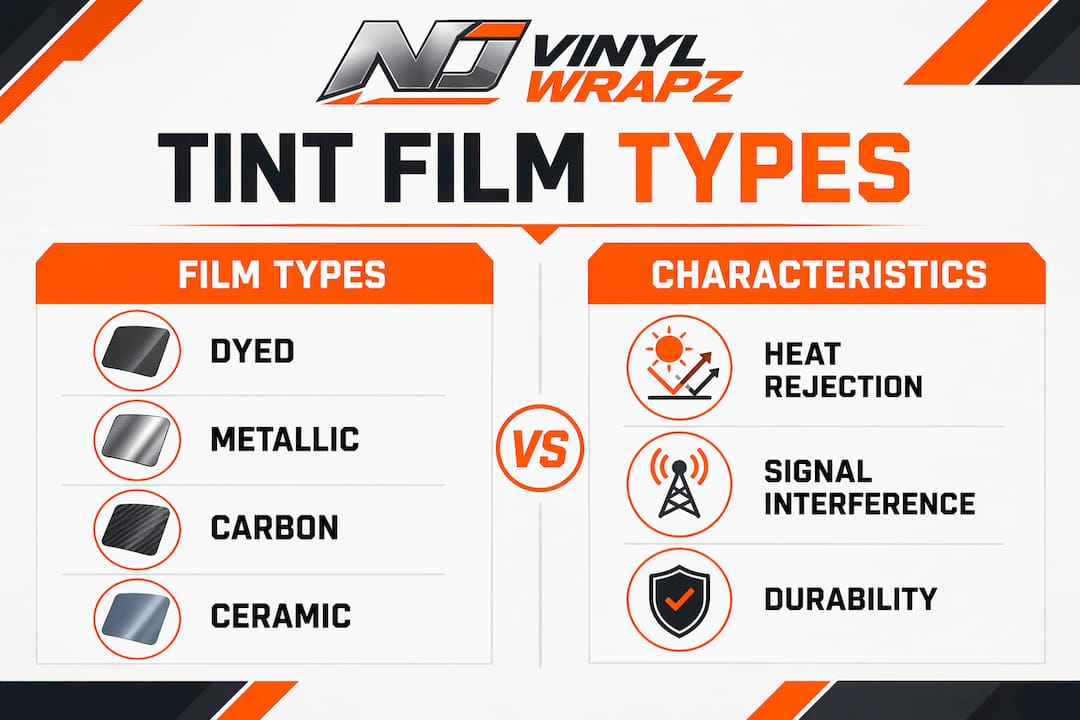
True heat rejection depends on film quality, not darkness level. A very dark dyed film will not keep your car as cool as a lighter ceramic film. This is the most common misconception drivers bring into tint shops.
Pro Tip: For NJ drivers who cannot tint front side windows, ceramic film on the rear windows and windshield band delivers the most heat reduction legally possible. Prioritize VLT and infrared rejection specs over shade darkness.
How to prepare for your window tint installation
Getting the most from your tint appointment starts before you walk in the door.
- Gather your vehicle details. Provide your car’s make, model, and year when booking. Window shape affects installation complexity, and curved rear windows often require heat shrinking, which influences both labor time and cost.
- Clean your windows beforehand. Remove any stickers, decals, or old film residue. Installers will clean the glass again, but arriving with a clean surface speeds up the process.
- Clear your schedule for the day. Most standard installs finish in one day. Plan to drop off your vehicle in the morning and pick it up by late afternoon.
- Ask about the curing period. Film requires 3–5 days to cure after installation. During that time, keep your windows rolled up and avoid cleaning the inside of the glass.
- Confirm the warranty in writing. Before you leave the shop, get the warranty terms on paper. Verbal promises do not hold up if bubbling or peeling appears six months later.
Common mistakes to avoid after installation:
- Rolling windows down within the first 3–5 days causes the film to peel at the edges.
- Cleaning the inside glass with ammonia-based products damages the film coating.
- Choosing an illegal tint shade because a shop did not mention NJ law. That is your responsibility to verify.
- Skipping the warranty conversation because the price seemed low. Cheap installs without warranties cost more in the long run.
The window tinting step-by-step process involves precise cutting, application, and heat forming. Professional installers work in climate-controlled environments to prevent dust contamination during application. That controlled setting is one reason professional results outlast DIY attempts by years.
Key Takeaways
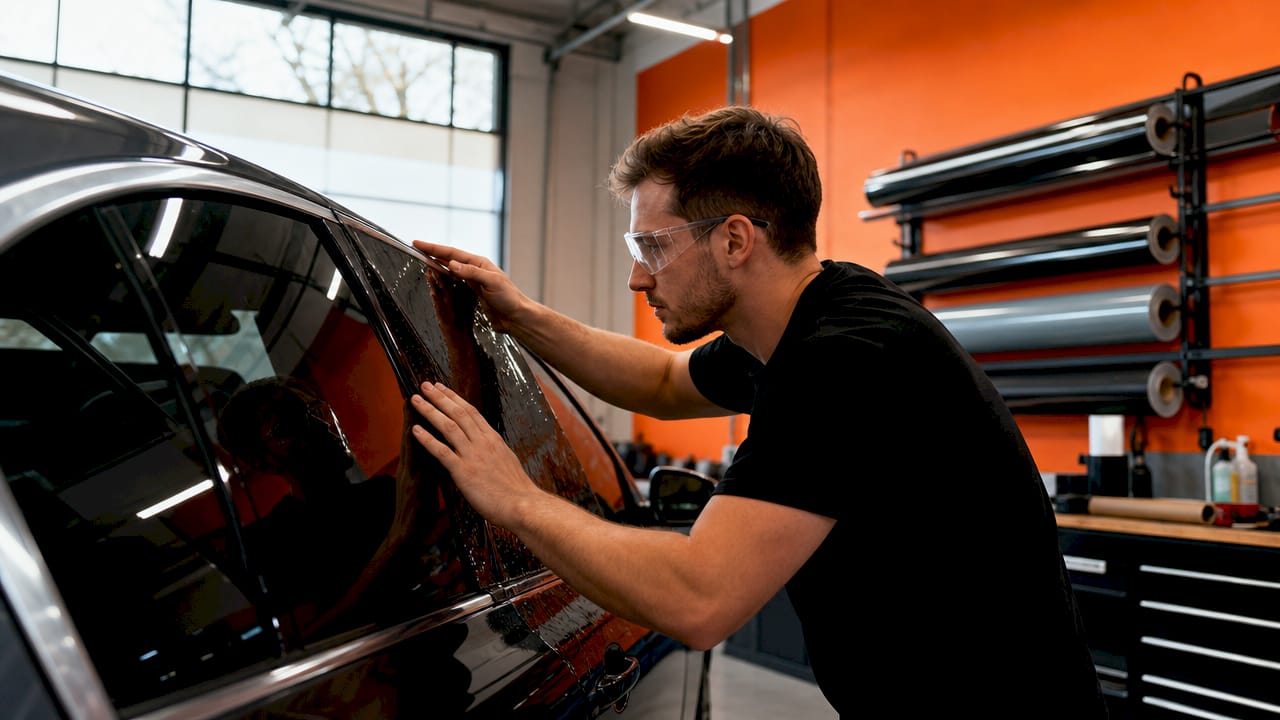
Professional window tinting delivers real heat rejection, UV protection, and privacy when you choose the right film and a certified local installer.
| Point | Details |
|---|---|
| NJ front windows cannot be tinted | NJ law bans aftermarket tint on front windshields and front side windows entirely. |
| Ceramic film outperforms all others | Ceramic blocks up to 88% of infrared heat with no signal interference, making it the top choice. |
| Darkness does not equal heat rejection | Film quality determines heat performance; a lighter ceramic film outperforms a dark dyed film. |
| Curing takes 3–5 days | Keep windows rolled up and avoid cleaning inside glass during the curing period to prevent damage. |
| Verify warranty terms in writing | A lifetime warranty must cover both material defects and labor workmanship to be worth anything. |
Why ceramic film is the right call for most NJ drivers
I have talked with a lot of drivers who walk in asking for the darkest tint available. They assume dark means cool. That assumption costs them money and comfort.
New Jersey’s front window restriction is actually a useful forcing function. Since you cannot tint the front side windows at all, the only way to meaningfully reduce heat in the cabin is to maximize performance on the windows you can tint. That means ceramic film, not the cheapest dyed option. A high-quality ceramic film on your rear windows and a UV-blocking windshield band will do more for your comfort than blacking out your rear glass with a low-grade film.
The other thing I see drivers overlook is the warranty conversation. A “lifetime warranty” sounds great until you read the fine print and realize it only covers the film material, not the installation. Bubbling and peeling almost always come from installation errors, not film defects. If the warranty does not cover workmanship, it is not protecting you from the most likely failure point.
Local shops matter here. A shop that knows NJ regulations, works with named film brands, and backs their labor with a written warranty is worth paying a bit more for. Post-install support, like fixing an edge lift six months later, only happens when you have a relationship with a local business that stands behind its work.
— Krunal
Njvinylwrapz: professional window tinting in NJ
Njvinylwrapz has served New Jersey vehicle owners and commercial fleets for over 10 years, working with trusted film brands and backing every installation with professional warranties. The team handles everything from ceramic film upgrades on personal vehicles to full fleet tinting programs, all from a climate-controlled facility built for precision work.

Whether you want heat-rejecting ceramic film for your daily driver or consistent tinting across a commercial fleet, Njvinylwrapz delivers fast turnaround and written warranty coverage. Appointments are typically available within the week. For drivers who want to go further with their vehicle’s appearance, full vehicle wraps and custom graphics are available alongside tinting services. Visit Njvinylwrapz to request a quote or schedule your appointment.
FAQ
What tint is legal on car windows in New Jersey?
NJ law prohibits any aftermarket tint on the front windshield and front side windows. Rear side windows and the rear window have no darkness restriction.
How long does window tint installation take?
Most professional shops complete a standard installation in a single day. Same-week appointments are common at reputable local shops.
What is the best type of window tint film?
Ceramic film is the top performer. It blocks up to 88% of infrared heat, does not interfere with electronics, and holds up longer than dyed or metallic options.
How long does window tint take to cure?
Window tint film requires 3–5 days to fully cure. Keep windows rolled up and avoid cleaning the inside of the glass during that period to prevent peeling or bubbling.
Does darker tint mean better heat rejection?
No. Heat rejection depends on film technology, not shade darkness. A lighter ceramic film blocks more heat than a dark dyed film.