
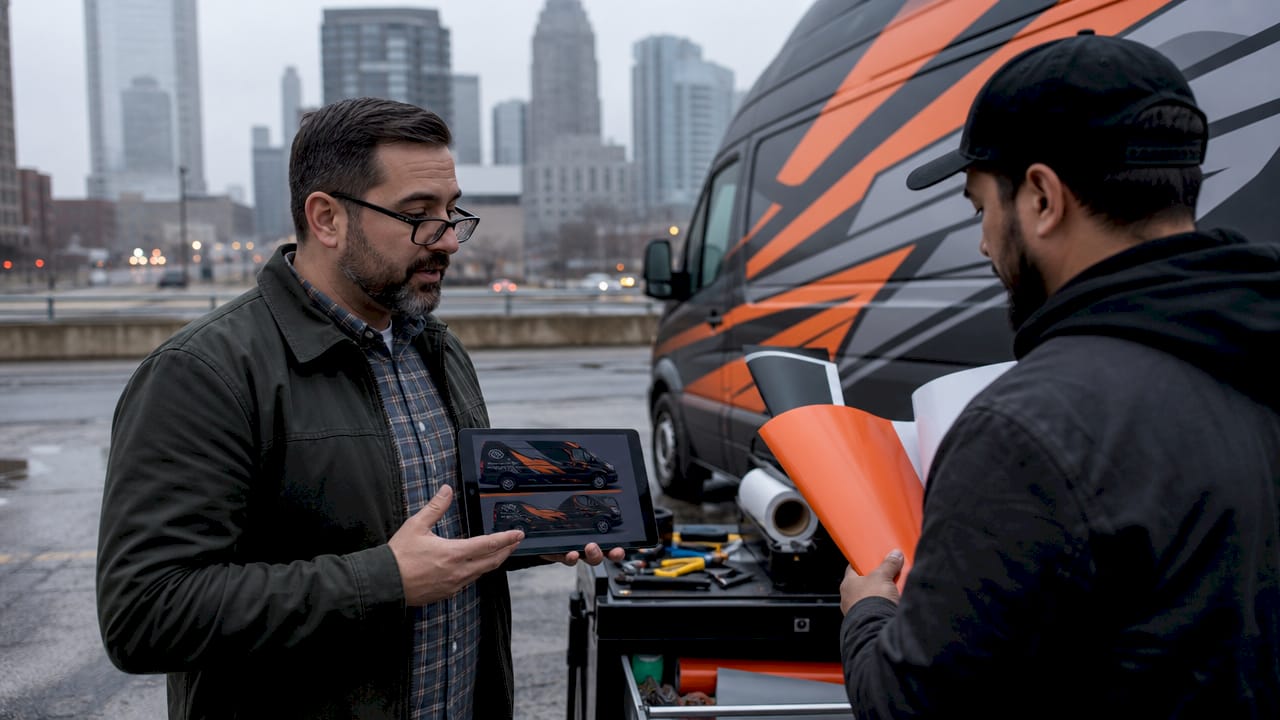
Mobile vehicle wrapping near me is the process of applying custom vinyl graphics directly at your business location, eliminating the need to transport your fleet to a shop. For business owners and fleet managers, this means less downtime, faster turnaround, and vehicles that become moving billboards the moment installation is complete. The industry standard term is “on-site vehicle wrap installation,” though most buyers search for local mobile wrapping services when sourcing providers. Materials like 3M cast vinyl and Avery Dennison films are the benchmark for quality, and knowing how to specify them separates smart buyers from those who get burned by inferior work.
What types of vehicle wraps are available from mobile wrapping services?
Local vehicle wrapping providers offer far more variety than most fleet managers expect. Understanding your options before requesting a quote prevents scope creep and keeps projects on budget.
Full wraps, partial wraps, and spot graphics
A full wrap covers every painted surface of the vehicle with printed or solid-color vinyl. It delivers the highest visual impact and the most complete paint protection. A partial wrap covers a defined section, typically the rear half or the sides, and costs less while still creating strong brand presence. Spot graphics and decals are individual cut-vinyl elements, such as logos, phone numbers, or door lettering, applied to specific areas.
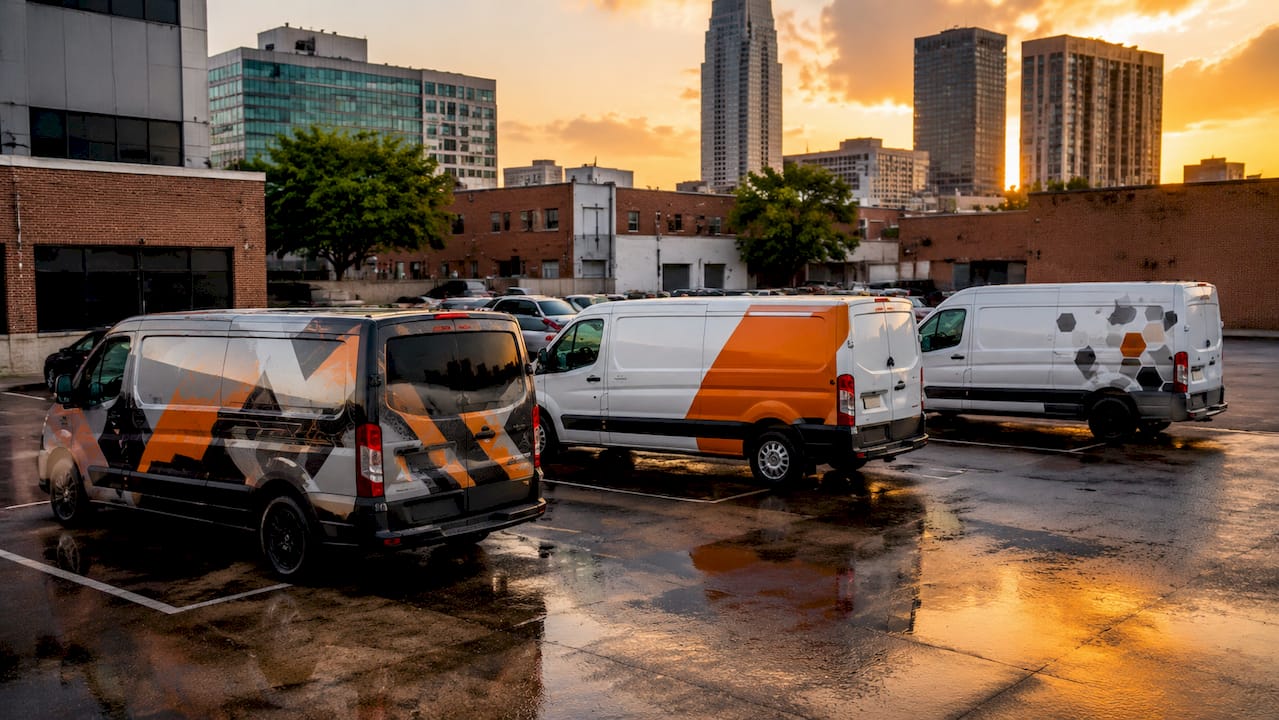
Cast vinyl films offer the durability and conformability needed for full vehicle wraps. That conformability matters because it allows the film to stretch around curves, door handles, and bumpers without lifting or creasing over time.
Color change wraps and specialty finishes
Color change wraps replace the factory paint color entirely, using matte, satin, gloss, chrome, or textured finishes. These are popular for personal vehicles but also work well for fleet managers who want a uniform color across mixed-make vehicles. Specialty finishes like brushed metal or carbon fiber give individual vehicles a distinct look without a custom paint job.
Paint Protection Film and window perf
Paint Protection Film (PPF) protects vehicle paint from chips and scratches without changing the vehicle’s appearance. It is a separate product from vinyl wraps and serves a different purpose. Window perforated film, often called window perf, allows full-color graphics on glass while maintaining outward visibility for the driver.
| Wrap Type | Best For | Material |
|---|---|---|
| Full wrap | Maximum brand coverage | Cast vinyl |
| Partial wrap | Budget-conscious branding | Cast vinyl or calendered |
| Spot graphics / decals | Contact info, logos | Cut vinyl |
| Color change wrap | Fleet color uniformity | Cast vinyl, specialty finishes |
| PPF | Paint protection, no color change | Urethane film |
| Window perf | Glass advertising | Perforated vinyl |
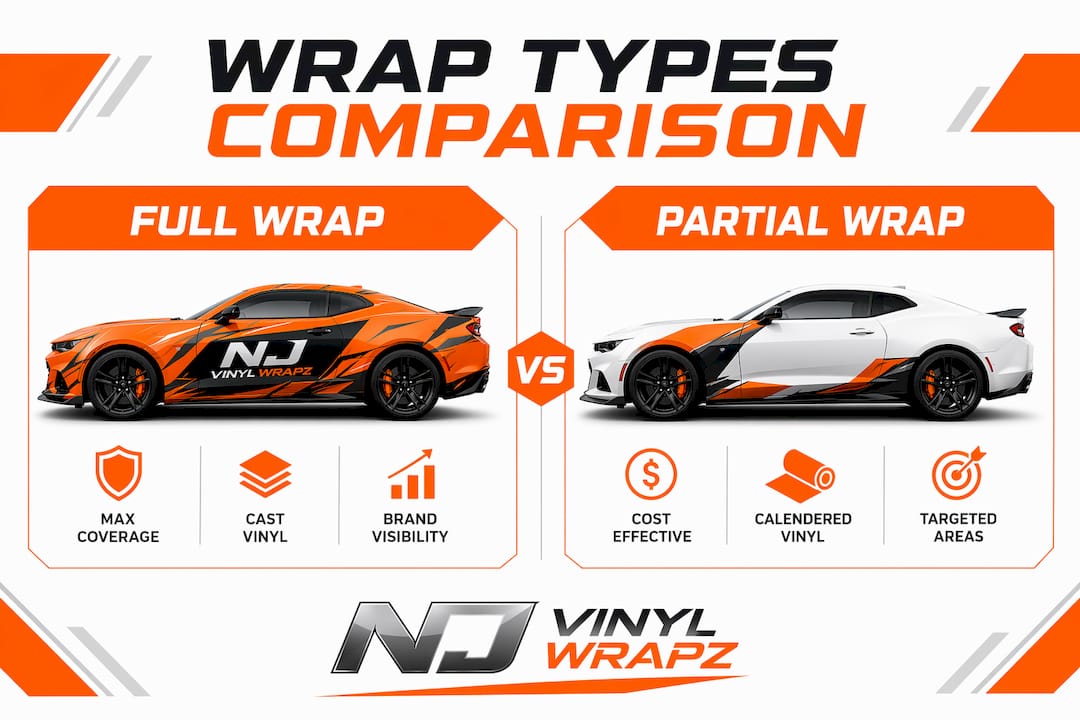
Pro Tip: Always specify cast vinyl over calendered vinyl for any wrap that will stay on a vehicle longer than two years. Cast vinyl conforms better and lasts significantly longer in outdoor conditions.
How do you find and evaluate local vehicle wrapping providers?
Finding the best vehicle wrap near me requires more than a Google search. The quality gap between providers is wide, and a poor installation can damage paint and cost more to remove than the original wrap.
Start with certifications. 3M Preferred Installer certification is a reliable indicator that a provider meets documented quality standards. Avery Dennison also maintains an authorized installer network. These certifications require training, equipment standards, and ongoing quality reviews, so they carry real weight.
- Review portfolios with fleet-specific work. A provider who wraps personal cars is not automatically qualified for a 20-vehicle commercial fleet. Look for examples of vans, box trucks, or trailers similar to your vehicles.
- Check client testimonials and references. Ask specifically for references from businesses with fleets of five or more vehicles. Fleet work requires project management skills that single-vehicle jobs do not.
- Evaluate the installation environment. Climate-controlled facilities prevent dust contamination and adhesion failures. If a provider installs outdoors or in an unheated garage, the wrap quality will reflect that.
- Request itemized quotes. A quote that bundles design, materials, and labor into one number makes it impossible to compare providers fairly. Ask for line items.
- Verify warranty terms. Material warranties from 3M and Avery Dennison are only valid when an authorized installer applies the film. Confirm the provider’s warranty covers both materials and labor.
Mobile wrap services come directly to your location, reducing vehicle downtime and transportation complexity. That convenience is real, but it does not replace the need to vet the provider’s credentials and track record.
Pro Tip: Ask any prospective provider for their installer’s certification number and verify it directly with 3M or Avery Dennison before signing a contract.
How to prepare your vehicles and business for a mobile wrap project
Preparation determines whether a mobile wrap project runs smoothly or creates operational headaches. Most delays and quality problems trace back to inadequate prep, not installer error.
- Clean vehicles thoroughly before the installer arrives. Proper surface preparation is critical for vinyl adhesion and wrap longevity. Remove all wax, grease, and road film. Pay attention to door jambs, mirror housings, and panel edges where contamination hides.
- Schedule installations during off-peak hours or in phases. Pulling multiple vehicles from service simultaneously disrupts operations. Plan wrap sessions around your fleet’s lowest-demand periods, such as evenings or weekends.
- Finalize and approve all design files before the installation date. Last-minute design changes delay production and push back your installation window. Lock in brand colors, logo versions, and layout approvals at least one week before the scheduled date.
- Designate a secure, accessible area for the installer. Mobile installers need a flat, sheltered surface with adequate lighting. A covered loading dock or a large garage bay works well. Outdoor installations in direct sunlight or wind compromise adhesion quality.
- Assign one internal contact to manage the project. A single point of contact prevents conflicting instructions and keeps the project moving. This person approves final proofs, coordinates vehicle availability, and signs off on completed work.
Pro Tip: If your fleet includes vehicles of different makes and models, provide the installer with accurate vehicle dimensions in advance. Wrap files are cut to specific templates, and incorrect measurements mean reprints and delays.
What is the step-by-step process of a mobile vehicle wrap installation?
Understanding the installation process helps you set realistic timelines and catch quality issues before they become permanent.
Step 1: Design proofing and approval. The installer or a partnered design team produces a digital mockup showing the wrap layout on your specific vehicle model. You review color accuracy, logo placement, and text legibility. Approve only when every element matches your brand standards.
Step 2: Material production. Once the design is approved, files go to a wide-format printer. Premium providers use printers calibrated for 3M or Avery Dennison media to maintain color consistency across multiple vehicles. Production typically takes two to five business days depending on fleet size.
Step 3: On-site surface preparation. The installer cleans the vehicle surface again on-site, even if you pre-cleaned it. They use isopropyl alcohol solutions to remove any remaining contaminants. This step is non-negotiable for proper adhesion.
Step 4: Vinyl application. Panels are applied section by section using squeegees and heat guns to conform the film around curves and recesses. A skilled installer works methodically, checking for air bubbles and lifting edges as they go. A full wrap on a standard cargo van typically takes six to eight hours.
Step 5: Quality inspection and client walkthrough. The installer inspects every panel edge, seam, and corner before calling the job complete. You should walk around the vehicle with the installer and flag any concerns before signing off. Routine wrap care after installation, including gentle washing and avoiding harsh chemicals, extends the wrap’s life and keeps the graphics looking sharp.
- Wash wrapped vehicles by hand or with a touchless car wash only.
- Avoid pressure washing directly at panel edges or seams.
- Park in shade when possible to reduce UV degradation.
- Inspect edges monthly and address any lifting immediately.
Pro Tip: Request a post-installation heat cure period of at least 24 hours before washing the vehicle. The adhesive needs time to fully bond, especially in cooler temperatures.
Key Takeaways
Selecting a qualified local mobile wrapping provider and preparing your fleet properly are the two factors that determine whether a vehicle wrap project delivers lasting brand value or becomes a costly rework.
| Point | Details |
|---|---|
| Prioritize certified installers | Look for 3M Preferred Installer or Avery Dennison authorization before hiring any provider. |
| Match wrap type to budget and goal | Full wraps maximize coverage; partial wraps and decals suit tighter budgets without sacrificing brand presence. |
| Prep vehicles before installation day | Clean surfaces and finalized design files prevent delays and adhesion failures. |
| Schedule in phases to protect operations | Stagger installations across off-peak hours to keep your fleet running during the project. |
| Maintain wraps after installation | Gentle washing, shade parking, and monthly edge checks extend wrap life and visual impact. |
Why fleet programs outperform one-off wraps every time
I’ve seen fleet managers make the same mistake repeatedly: they wrap one vehicle at a time, using whoever is cheapest and available that week. Six months later, they have five vehicles on the road with five slightly different shades of blue, three different logo sizes, and two different fonts. It looks like a patchwork operation, not a professional company.
Fleet wrap programs solve this by locking in consistent design, color matching, and production standards across every vehicle from day one. That consistency is what turns a fleet into a genuine advertising asset. A single wrapped vehicle is a nice touch. Ten vehicles with identical, sharp graphics driving through your market every day is a brand campaign.
The other thing most managers underestimate is scheduling. Phased installations that run during off-hours or across multiple weekends keep your fleet operational while the project moves forward. I’ve worked with businesses that wrapped 30 vehicles over six weekends without pulling a single truck from Monday-to-Friday service. That kind of coordination requires a provider with real project management capability, not just a good installer.
If you manage a fleet of any size, treat the wrap program as a marketing investment with a defined scope, a locked design system, and a provider who can scale brand impact across your entire vehicle count. The per-vehicle cost drops, the quality goes up, and your brand looks like it belongs on the road.
— Krunal
Njvinylwrapz brings professional fleet wrapping to New Jersey businesses
Njvinylwrapz has over 10 years of experience wrapping commercial fleets and business vehicles across New Jersey, working with materials from 3M and Avery Dennison to deliver consistent, durable results. Whether you need a single branded van or a coordinated program for a multi-vehicle fleet, Njvinylwrapz handles design, production, and installation under one roof.
Their full vehicle wrap services cover everything from cargo vans and box trucks to passenger cars, with climate-controlled installation facilities that protect wrap quality from start to finish. Fleet managers can also request fleet wrap programs designed for phased rollouts that keep vehicles in service throughout the project. Contact Njvinylwrapz to get a quote and see how your fleet can work harder for your brand.
FAQ
What is mobile vehicle wrapping?
Mobile vehicle wrapping is the on-site application of custom vinyl graphics or full-color wraps directly at a business location, eliminating the need to transport vehicles to a shop. It reduces fleet downtime and simplifies logistics for businesses with multiple vehicles.
How much does vehicle wrapping cost?
Pricing varies by wrap type, vehicle size, and material quality. Full wraps on a cargo van cost more than partial wraps or spot decals, and premium cast vinyl materials from 3M or Avery Dennison carry a higher price than standard calendered films.
How do I find the best vehicle wrap near me?
Look for providers with 3M Preferred Installer or Avery Dennison authorization, a portfolio of commercial fleet work, and clear warranty terms covering both materials and labor. Requesting itemized quotes from at least three providers gives you a reliable basis for comparison.
How long does a vehicle wrap last?
A professionally installed full wrap using cast vinyl typically lasts five to seven years with proper care. Routine maintenance, including gentle washing and avoiding harsh chemicals, extends the wrap’s lifespan and keeps graphics looking sharp.
Can vehicle wraps be removed without damaging paint?
Yes. Professionally installed vinyl wraps from certified installers using quality materials remove cleanly without damaging factory paint, provided the paint was in good condition before application. Wraps installed over damaged or repainted surfaces carry a higher risk of paint lifting during removal.