

Fleet branding must make your brand instantly legible from the road while never obscuring required safety markings. That means every graphic package has to pass two tests at once: a corporate identity check and a federal compliance check. The strongest guidelines treat each vehicle as a distinct canvas, borrowing structure from established brand guidelines and installation discipline from manufacturers like 3M. What follows covers identity rules, placement standards, legal constraints, materials, and a rollout checklist, drawn from experience in fleet installs.
TL;DR:
- Commercial carriers must display legal name and USDOT number on both sides, readable from 50 feet when stationary; hazmat markings require three inches of clearance.
- Use separate templates for vans, box trucks, sedans, and utility vehicles; give rear truck doors larger lettering and design around equipment, seams, and panel space.
- Specify premium cast film by series, require climate controlled installation and lot number records, and wait 72 hours before washing to let adhesive cure.
- Wrap and approve one pilot vehicle before the full run, then inspect each installation against its template and retain measurements, film lots, and photographs.
- Check state and local rules for window coverage and reflective materials, and verify advertising claims, image rights, and partner logo permissions before production.
Table of Contents
- Core Brand Identity Rules for Vehicle Graphics
- Applying Brand Rules to Different Vehicle Types
- Federal Marking and Placard Rules for Commercial Vehicles
- Materials, Installation, and Maintenance Standards
- A Step-by-Step Rollout Checklist for Fleet Branding
- Adding Contact Details and Calls to Action to Fleet Graphics
- Keeping Branding Consistent Across a Mixed Fleet
- Color Matching Standards Across Wrap Materials
- Measurement and Documentation for Quality Control
- Legal Considerations Beyond Federal Marking Rules
- Why Professional Installation Protects Fleet Consistency
- Turn Your Fleet Branding Guidelines Into a Finished Fleet
- FAQ
- Sources
Core Brand Identity Rules for Vehicle Graphics
A vehicle brand guide starts with the same building blocks as any corporate style guide, then gets stricter because the viewing distance and angle change constantly. Supply approved logo files in vector format, define which lockups (horizontal, stacked, icon-only) are permitted on which panels, and set a minimum reproduction size so the mark never shrinks past recognition at highway speed. Clear space rules matter more on a vehicle than on paper: keep the logo isolated from door handles, seams, and trim lines that can visually cut through it.
Color consistency depends on specifying exact values, not just swatches. List primary and accent colors in CMYK, RGB, and HEX, then require a film-match verification step so the printed wrap matches the approved palette under daylight conditions. Typography should lean toward humanist-style display faces built for distance reading rather than decorative fonts that blur at speed. Set minimum letter height and tracking rules so text doesn’t compress into illegible blocks when applied to curved panels.
- Logo lockups: approve specific versions, lock a minimum vehicle-reproduction size, and protect clear space from handles and seams.
- Color palette: document CMYK, RGB, and HEX values, and require a film-match check before production approval.
- Typography: use humanist-style faces, set minimum letter height, and avoid tight tracking that collapses at a glance.
- Hierarchy: prioritize logo placement, then primary message, then contact details, especially on narrow surfaces like doors or tailgates.
- Co-branding: keep the primary brand visually dominant and set a fixed minimum separation from any partner mark.
These rules belong in a written document your design and install vendors both sign off on, not in a verbal brief that changes with every new vehicle.
Applying Brand Rules to Different Vehicle Types
A logo that reads cleanly on a box truck can disappear on a sedan door, so guidelines need vehicle-specific placement templates rather than one generic spec. Vans, box trucks, sedans, and service bodies each have their own usable surface area, panel curvature, and typical viewing distance, and the artwork has to adjust accordingly.
- Vans and cargo vehicles: use the full side panel for the primary logo and tagline, keeping a safe margin around door seams and mirror brackets; our guide to wrapping vans for business covers common layout mistakes.
- Box trucks: treat the rear door as a second primary surface since it’s the panel drivers behind the truck see longest, and increase letter height there compared to the side panels.
- Sedans and smaller vehicles: scale down to door-panel graphics or rear window lettering, prioritizing the logo and phone number over secondary messaging that won’t fit cleanly.
- Service bodies and utility trucks: map out equipment mounts, ladder racks, and toolboxes first, then design around those avoid zones instead of designing an ideal layout and hoping it fits.
- Distance legibility: as a practical rule of thumb, taller letters read better at highway speed. Legibility research on glance-based viewing supports sizing text generously on any surface meant to be read from more than a few car lengths away.
- Limited-space surfaces: reserve full wraps for high-visibility panels, use partial wraps or spot graphics for secondary surfaces, and switch to perforated window film only where visibility from inside the cab isn’t compromised.
- Production files: build templates with defined safe areas, bleed allowances, and panel-wrap overlap so printers and installers aren’t guessing where the art needs to extend around edges.
Federal Marking and Placard Rules for Commercial Vehicles
Branding guidelines for commercial fleets have to work inside, not around, federal marking law. Under §390.21 marking requirements, motor carriers must display their legal name and USDOT number on both sides of the vehicle, legible from 50 feet while the vehicle is stationary, and that marking has to stay legible over time, not just on install day. Build this requirement into the art file from the first draft instead of squeezing it in after the brand design is finalized.
Hazmat placards add another constraint. Under §172.516 placard visibility rules, placards must stay clearly visible, and other markings, including branding, cannot sit within 3 inches of a placard in any direction.
- Confirm legal name and USDOT number placement and size before any creative layout begins.
- Keep all graphic elements at least 3 inches clear of placard zones on vehicles that carry them.
- Use reflective film only where it improves night visibility and never where it competes with reflective safety markings.
- Assign a named compliance reviewer who signs off on every vehicle’s artwork before production, with documentation kept on file.
Materials, Installation, and Maintenance Standards
The guideline document should specify materials by name, not just by quality level. Premium cast films such as 3M Wrap Film Series 2080 and comparable Avery Dennison products conform better to body curves, hold color longer, and reduce the lifecycle cost of a fleet rebrand compared to lower-grade calendared vinyl that fades and lifts within a couple of years.
Installation requirements matter just as much as material choice. 3M’s own installer guidance calls for installation in an environmentally controlled workshop, full inspection of the vehicle’s paint condition before work starts, and thorough surface cleaning beforehand. Require installers to record film lot numbers for every vehicle so future repairs or panel replacements match existing color exactly.
- Specify premium cast film and overlaminate by name in any procurement document or RFP.
- Require climate-controlled installation bays, documented lot numbers, and manufacturer-approved primers where panels call for them.
- Hold vehicles for 72 hours before washing to let adhesive cure fully, per 3M’s maintenance FAQ.
- Ban grease pencils for layout marking since the wax can embed in the film and cause permanent discoloration; use approved masking tape instead.
- Make manufacturer instruction bulletins a contractual requirement for installers, since skipping them can void film warranties.
Pro Tip: Hand washing or touchless washes protect wrap edges far better than brush-based car washes, which abrade seams and cause early lifting.
A Step-by-Step Rollout Checklist for Fleet Branding
Rolling out branding across a full fleet works best as a sequence, not a single event where every vehicle gets wrapped at once before anyone confirms the design actually works in the real world.
- Finalize identity specs, including logo lockups, color codes, and typography rules, then build vehicle-specific templates for each body type in the fleet.
- Wrap and approve one pilot vehicle first, checking art placement, color match, and panel fit before committing to the full run.
- Select installers who use manufacturer-compliant materials and documented install procedures, and require lot-number records for every vehicle.
- Schedule installations in batches that minimize vehicle downtime, then inspect each finished vehicle against the approved template before it returns to service; this approach aligns well with Irving TX fleet management programs that emphasize efficient maintenance scheduling and vehicle uptime.
- Hand drivers a short card of care rules (wash timing, no brush washes) and set a recurring inspection schedule to catch peeling or fading early.
Our breakdown of fleet vehicle branding fundamentals covers why this sequencing protects both brand consistency and your wrap investment.
Adding Contact Details and Calls to Action to Fleet Graphics
Contact information earns a fixed spot in the hierarchy, usually below the logo and above any secondary tagline, so drivers behind the vehicle can read a phone number or website without hunting for it. Keep the call to action short: a phone number, a short URL, or a single action phrase works better than a paragraph of services crammed onto a door panel. Match contact-text size to the same legibility standard used for the brand name, since a logo someone can read from 50 feet is useless if the phone number beneath it is too small to follow.
Rear doors and tailgates are the strongest placement for contact details on trucks and vans, since that’s the panel drivers view longest in traffic. On sedans, rear window lettering or a small rear-bumper decal usually works better than crowding the door panel. Avoid rotating in seasonal promotions or phone numbers tied to short-term campaigns unless the guideline explicitly allows for swap-in decal zones, since constant changes undercut the consistency the rest of the branding is trying to build.
Keeping Branding Consistent Across a Mixed Fleet
Most fleets mix vehicle types: vans, box trucks, pickups, and the occasional sedan, each with different panel shapes and surface area. Consistency doesn’t mean identical layouts on every vehicle; it means every vehicle follows the same hierarchy, color values, and typography rules scaled to fit its own surfaces. A master brand guide should include a template for each vehicle category rather than one generic layout stretched or shrunk to fit.
Assign one person, typically a fleet or marketing manager, as the approval authority for every new vehicle added to the fleet, so a one-off addition doesn’t quietly drift from the approved spec. When new vehicle types join the fleet, like a heavy equipment trailer or a box truck replacing a van route, treat them as new template categories rather than improvising. Our heavy machinery vinyl wraps work follows this same logic: equipment with unusual panel shapes still needs a documented layout before any graphics go on.
Color Matching Standards Across Wrap Materials
Color consistency across a fleet depends on locking down exact values before production and verifying them after installation, not assuming every print run will match automatically. Specify brand colors in CMYK, RGB, and HEX in the guideline document, then require a physical film sample check against those values before full production runs begin. Lighting conditions change how a color reads, so verification should happen in daylight, not just under studio or shop lighting.

Different film lines, even from the same manufacturer, can render color slightly differently depending on base material and finish (gloss, matte, or satin), so the guideline should name a specific film series rather than leaving “brand blue” open to interpretation across vendors. Keep a physical color reference chip on file for your fleet’s exact palette, and require any new installer or print run to match against that chip rather than a digital file alone, since screens and printers don’t always agree on what a given HEX code should look like on vinyl.
Measurement and Documentation for Quality Control
Every vehicle in a fleet branding program needs a documented record: panel measurements, film lot numbers, install date, and installer name, kept together rather than scattered across invoices. This record is what makes a repair, a panel replacement, or a warranty claim fast instead of a guessing game months or years later.

Before production, measure each vehicle type’s usable panel area rather than relying on manufacturer spec sheets, since trim packages and aftermarket equipment change available surface space. After installation, photograph each finished vehicle from multiple angles and file those images with the vehicle’s record, creating a baseline to compare against during future inspections. A simple quality control pass, checking logo placement against the template, confirming clear space, and verifying placard distance on vehicles that carry hazmat loads, should happen before a vehicle leaves the install bay, not after it’s already back on the road.
Legal Considerations Beyond Federal Marking Rules
Federal marking and placard rules set the floor, but advertising content on a commercial vehicle can raise separate legal questions depending on what the graphics say and show. Claims made on vehicle graphics, pricing, certifications, or service guarantees, are subject to the same truth-in-advertising expectations as any other marketing material, so a wrap shouldn’t promise something the business can’t actually deliver. Trademark and copyright matter too: using a licensed character, a stock photo without proper rights, or another company’s logo in a co-branding arrangement without a signed agreement creates exposure that has nothing to do with DOT compliance.
Some states and municipalities impose their own restrictions on vehicle signage, particularly around reflective materials, window coverage percentages, or flashing or illuminated elements, so a design approved federally can still run into a local ordinance. When a fleet branding program includes a sponsorship or partner logo, a written agreement covering usage rights, placement, and duration protects both parties better than a verbal understanding. None of this replaces legal counsel for a specific campaign, but a guideline document that flags these checkpoints keeps a design team from finding out about a problem after the wrap is already installed.
Why Professional Installation Protects Fleet Consistency
Guidelines only work if execution matches them, and that’s where experience shows. Experience with fleet wrap installs shows that consistency comes from controlled conditions: climate-controlled bays, premium materials, and documented lot numbers for every vehicle. A turnkey provider hands over maintenance instructions, lot records, and a project summary, not just a finished vehicle.
— NJ Vinyl Wrapz
Turn Your Fleet Branding Guidelines Into a Finished Fleet
Fleet branding projects from design through climate-controlled installation use premium materials to help your guidelines translate into a consistent, durable result across every vehicle type.
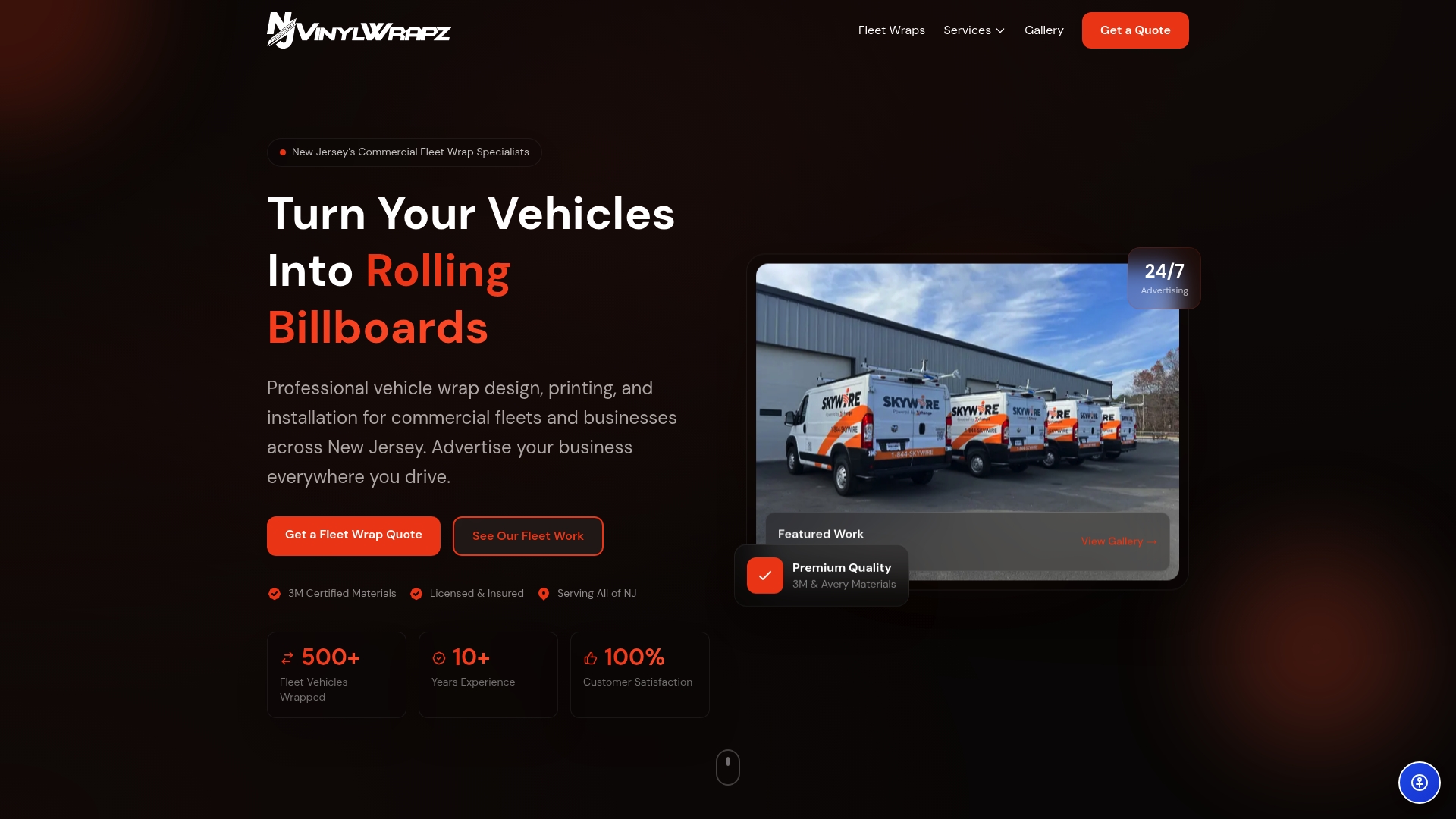
Browse our fleet wraps services or compare wrap options to find the right fit, then request a quote and we’ll walk through your fleet’s specific vehicles and timeline.
FAQ
What Is Fleet Branding and How Does It Work?
Fleet branding applies a company’s logo, colors, and messaging to its vehicles so they function as mobile advertising while on the road or parked at job sites.
What Are the Brand Guidelines for a Logo on a Vehicle?
Vehicle logo guidelines typically set a minimum reproduction size, protected clear space around the mark, and approved lockup versions for different panel shapes. These rules exist because a logo that reads clearly on paper can blur or get visually cut off by door seams and handles if placement isn’t specified in advance.
What Are Brand Identity Guidelines in General?
Brand identity guidelines are the documented rules covering logo usage, color values in formats like CMYK and HEX, typography, and layout hierarchy that keep a company’s visual presence consistent across every application, according to Bynder’s brand guidelines overview. For vehicles, these rules extend to vehicle-specific minimum sizes, placement zones, and legibility standards suited to roadside viewing.
What Are Corporate Brand Guidelines Used For?
Corporate brand guidelines exist to keep every piece of marketing material, from business cards to building signage to fleet vehicles, visually consistent regardless of who produces it. For fleets specifically, they also need to account for federal marking requirements under §390.21, so the brand design never conflicts with required DOT identification.
How Far Should Branding Stay From Hazmat Placards?
Branding and other markings need to stay at least 3 inches away from hazmat placards in every direction, based on §172.516 placard visibility rules. This spacing keeps the placard clearly visible and prevents branding elements from reducing its effectiveness.
Sources
- Using 3M Wrap Film Series 1080 & 2080 — 3M
- § 390.21 Marking of self-propelled CMVs and intermodal equipment — eCFR
- § 172.516 Visibility and display of placards — govinfo / CFR
- Brand guidelines definition — Bynder