
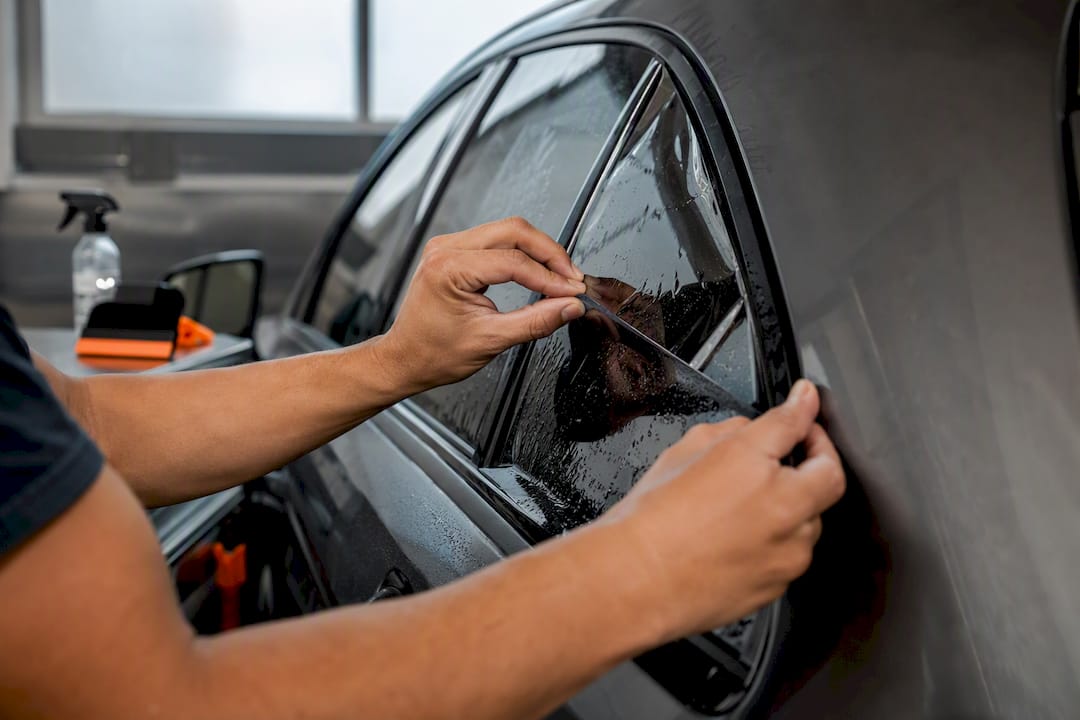
In Utah, your front windshield must let in visible light above the legal minimum, and front side windows need to meet a specific light transmittance threshold. Rear windows can be darker without a set minimum, but tint them and you’re legally required to run mirrors on both sides. If a shop measures your current tint below those numbers, get it corrected by a certified installer and ask for a meter reading before you drive off.
- Windshield: minimum light transmittance as per Utah law
- Front side windows: minimum light transmittance as per Utah law
- Rear windows: unrestricted darkness but mirrors required if tinted
- Metallic or mirrored finishes: prohibited
Key Takeaways
Utah’s window tint law sets hard VLT floors, 70% on the windshield and 35% on front side windows, and bars metallic finishes outright regardless of film quality.
| Point | Details |
|---|---|
| Know your VLT floors | Windshield needs 70% VLT, front side windows need 35%, rear windows are unrestricted but require mirrors. |
| Metallic film is illegal | Reflective or mirrored finishes fail inspection no matter how good their heat rejection numbers look. |
| Certification matters most | Ask for 3M or XPEL certification and a written warranty before booking any installer. |
| Match film to priorities | Ceramic for heat and longevity, carbon for value, dyed only for budget rear glass. |
| Fleets need a centralized vendor | NJ Vinyl Wrapz offers a single-vendor option for multi-vehicle wrap, tint, and PPF work across NJ, PA, NY, and DE. |
Table of Contents
- What Are Utah’s Window Tint Laws in 2026?
- Ceramic, Carbon, or Dyed: Which Film Fits You?
- How Do You Pick a Reliable Window Tint Installer?
- What Does Window Tinting Cost in Utah?
- How Long Does a Tint Appointment Take?
- Where Can You Get Window Tinting Near You in Utah?
- Why Compliance Should Drive Every Tint Decision
- An Alternative for Fleet and Multi-State Tinting Projects
- Sources
- FAQ
What Are Utah’s Window Tint Laws in 2026?
The rules come straight from Utah Code § 41-6a-1635, and they haven’t loosened for 2026. Windshields need to meet the legal minimum visible light transmittance, with allowances for a narrow non-transparent strip at the top and a lower corner exception for glare control. Front side windows have a specified minimum light transmittance, sometimes with a small allowed variance during metering. Rear windows have no VLT floor, but darken them and you must run left and right side mirrors, since you’ve eliminated your rearview visibility.
Here’s what actually gets a car flagged during a Utah Highway Patrol safety inspection:
- A tint meter reading below 70% on the windshield or below 35% on the front doors.
- Any metallic, mirrored, or reflective-looking film, regardless of how dark it reads on the meter.
- Windshield damage, clouding, or scratching that obstructs the driver’s view, per the inspection manual.
- Missing side mirrors on a vehicle with tinted rear glass.
Inspectors log the actual meter number on your safety inspection certificate. That’s not a guess. If a shop tells you “it’ll pass,” ask them to prove it with a reading, not a promise.
Ceramic, Carbon, or Dyed: Which Film Fits You?
Metallic film is off the table in Utah no matter how well it performs, because its reflective look violates state law and fails inspection outright. That leaves three legal families, and they perform very differently.
- Ceramic blocks the most heat, with total solar energy rejection approaching 65%, stays clear for cell signal and GPS, resists fading, and typically lasts the life of the vehicle. It costs the most upfront.
- Carbon lands in the middle, usually 35% to 45% TSER, with a flat, non-fading black finish and no signal interference. Solid value for most daily drivers.
- Dyed film is the cheapest option but only rejects 15% to 25% of solar energy and can shift purple or fade within a few years, especially in Utah’s high-altitude sun.
Pro Tip: If you drive an EV, lean toward ceramic. Dyed and carbon films won’t interfere with your battery sensors, but ceramic’s superior heat rejection reduces cabin AC load, which matters more on electric range than on a gas tank.
Fleet operators on a budget often mix carbon on side windows with ceramic up front, since the windshield and front doors take the brunt of Utah’s summer sun. Budget buyers can go dyed on rear glass where heat load matters less, then upgrade to ceramic on rows that get direct exposure. A breakdown of VLT percentages is worth a look if you’re still deciding how dark to go before film type even enters the conversation.
How Do You Pick a Reliable Window Tint Installer?
Ask for proof, not promises. A shop that hesitates when you ask for documentation is telling you something.
Start with credentials. A legitimate installer carries manufacturer certification, typically 3M or XPEL, plus an active business license and liability insurance. Certified shops follow factory-specified install procedures, which cuts down on bubbling and edge lifting later. Ask to see recent installs, either in person or through photos, and check whether their warranty language is specific or vague.
| Factor | What to look for |
|---|---|
| Film type / performance | Ceramic for maximum heat rejection, carbon for value, dyed only for budget rear glass |
| Installer certifications | 3M or XPEL certified, documented training, active license |
| Warranty | 5+ years on carbon/dyed, lifetime on ceramic, coverage for bubbling and peeling |
| Typical price range | Varies by vehicle size and film grade, discussed below |
| Service scope | Auto only, or auto plus residential/commercial glazing |
Before you book, run through this sequence:
- Ask if they’ll take a VLT meter reading before and after install, and whether they’ll write it on your invoice.
- Ask what the warranty explicitly covers, bubbling, peeling, adhesive failure, discoloration, and get it in writing.
- Ask about removal policy if you sell the car or want a redo.
- Ask for cure time; most films need several days out of direct sun and away from window operation.
- Ask for two or three references from jobs done in the last year.
Pro Tip: A shop that pushes a mirrored or “chrome” tint option, or dodges your warranty question with vague reassurance, is a red flag. Walk.
What Does Window Tinting Cost in Utah?
Price scales with film grade, vehicle size, and glass complexity. A basic sedan with dyed film often runs on the low end of the market, while a full ceramic package on an SUV with curved rear glass sits considerably higher. Commercial and residential glazing gets priced by square footage instead of per-vehicle, and runs higher per job simply due to surface area.
- Dyed film: the most affordable option, best suited for budget-conscious rear-window jobs
- Carbon film: mid-range pricing, strong value for full-vehicle jobs
- Ceramic film: premium pricing, justified by heat rejection and warranty length
- SUVs and vehicles with complex curved glass cost more to install than a standard sedan
- Bundling tint with paint protection film or a ceramic coating often reduces the combined labor cost versus booking each separately
Warranty length tracks film quality. Dyed films commonly carry shorter coverage, carbon runs longer, and ceramic frequently comes with a lifetime warranty from the manufacturer when installed by a certified shop. Read the fine print. Some warranties cover the film only, not labor to remove and replace it if something goes wrong.
How Long Does a Tint Appointment Take?
Plan for half a day if you’re getting a full vehicle done. A standard sedan with four windows typically takes two to three hours for an experienced installer working with quality film. Add curved rear glass, a hatchback, or a third-row SUV window, and that stretches toward three to four hours.
Ceramic and carbon films take slightly longer to install correctly than dyed film, since precision trimming matters more when you’re paying for signal clarity and long-term adhesion. Rushed installs are where bubbling and edge peeling start.
After the work is done, don’t roll your windows down for at least two to three days, longer in cold weather, so the adhesive can fully cure. Utah’s dry climate actually helps cure time compared to humid states, but direct sun exposure on a freshly tinted window can still cause distortion if you’re impatient. If you’re booking a fleet of vehicles, ask whether the shop can stagger appointments or handle multiple vehicles in a day. Some shops offer volume scheduling for businesses that need several company vehicles done without pulling every driver off the road at once.
Where Can You Get Window Tinting Near You in Utah?
Utah has a wide range of shops, from single-location specialty tint installers to auto detailing chains that add tinting as one of several services. What separates a reliable provider from a risky one usually comes down to three things: manufacturer certification, warranty transparency, and whether they’ll show you a meter reading unprompted.
Look for shops that list their certification level explicitly, rather than just claiming “professional grade film.” Names like Pro Tint show up frequently across Utah review platforms, and shops like it tend to differentiate themselves through documented warranty terms and willingness to demonstrate meter readings on request rather than through price alone. Check recent reviews for mentions of bubbling, fading, or installer responsiveness on warranty claims, since those complaints surface faster than praise does.
If you’re vetting a shop over the phone, our guide to finding reliable local window tint services walks through the specific questions worth asking before you hand over a deposit. A shop with strong reviews but no certification claim is worth a second look; a shop with certification but thin, generic reviews deserves the same scrutiny.
Why Compliance Should Drive Every Tint Decision
Most tint guides lead with film comparisons and treat the legal limits as a footnote. That’s backwards. Utah’s inspection process doesn’t care how good your film looks; it cares what the meter reads, and a failed inspection costs you more in time and re-installation than doing it right the first time would have.
The overlooked risk isn’t getting caught with tint that’s too dark. It’s buying a “premium” metallic film because a seller claims better heat rejection, only to have it rejected outright because reflective finishes are barred regardless of performance. Heat rejection numbers mean nothing if the film is illegal to drive with.
Prioritize in this order: confirm the legal limit for each window, confirm your installer is certified and will show you a meter reading, then optimize for film performance within what’s legal. Homeowners tinting residential glass have more flexibility since vehicle VLT law doesn’t apply, but the same logic holds: verify credentials and warranty terms before performance claims. Fleet operators managing multiple vehicles face the highest compliance stakes, since one flagged vehicle can mean a whole fleet gets scrutinized.
An Alternative for Fleet and Multi-State Tinting Projects
If you’re managing a business fleet or a batch of company vehicles rather than a single car, a local single-bay shop isn’t always the most efficient path. NJ Vinyl Wrapz handles window tinting alongside full fleet wraps, paint protection film, and ceramic coatings, all installed in climate-controlled facilities using 3M and Avery materials, and backed by more than a decade of licensed, insured work.
NJ Vinyl Wrapz operates out of New Jersey and serves the broader New Jersey, Pennsylvania, New York, and Delaware region, so it’s not a substitute for a same-day Utah appointment. What it does solve is the fleet-manager problem: consistent film specs, one warranty structure, and one vendor across every vehicle instead of coordinating with separate shops for tint, wraps, and protective film. If your business runs vehicles across multiple states and wants centralized branding plus glass protection handled by a single certified vendor, request a quote on a full vehicle wrap project and ask how tinting fits into a combined package.
Sources
Verify these directly if you want to cite the law yourself or double-check a shop’s claims.
- Window Tint Requirements | Utah Highway Patrol
- Utah Code § 41-6a-1635 (Windshields and windows – Tinting – Prohibitions)
- Ceramic vs Carbon vs Dyed Window Tint comparison (industry explainer)
FAQ
What is the darkest legal tint in Utah?
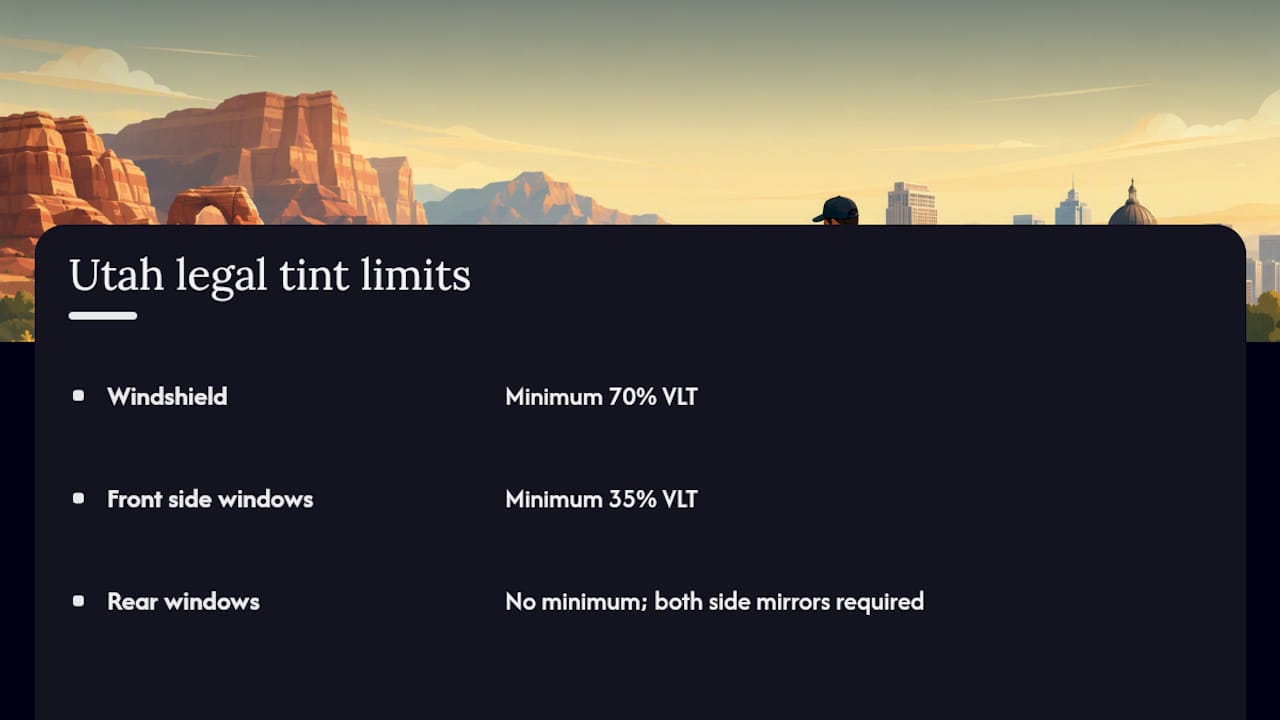
Front side windows must allow at least 35% VLT, and the windshield must allow at least 70%. Rear windows have no minimum, but tinting them requires both side mirrors.
How much does window tint cost in Utah?
Cost depends on film grade and vehicle size, with dyed film the cheapest, carbon mid-range, and ceramic the most expensive due to its heat rejection and longer warranty coverage.
Is 35 or 20 tint darker?
A 20% VLT film is darker than 35%, since the percentage refers to how much visible light passes through, not how much is blocked. Utah requires front side windows to allow at least 35%, so a 20% film would fail inspection there.
What are the window tint laws in Utah for 2026?
The limits haven’t changed: 70% VLT minimum on the windshield, 35% minimum on front side windows, no minimum on rear windows with a mirror requirement, and a full ban on metallic or mirrored finishes under Utah Code § 41-6a-1635.