
If you want the short answer: call a professional installer who works with 3M or LLumar ceramic film and can show you a measured VLT reading before you pay, not just the darkest tint they have in stock. For fleet and personal vehicles alike, NJ Vinyl Wrapz is worth putting at the top of your call list for window tinting work that needs documented material sourcing and a climate-controlled bay, especially if you already need paint protection film or a wrap on the same vehicle.
Beyond that, Houston has several established names worth a quote:
- Executive Tint (XM Houston) — best for drivers who want a shop-stated lifetime warranty on the film itself.
- Tint World (East Houston / Tint World®) — best for anyone who wants tint, PPF, and detailing bundled under one franchise network.
- Maximum Tint And Sound — best for owners combining tint with a stereo upgrade or wrap in the same visit.
- Texan Glass — best for ceramic film recommendations tuned to Houston’s heat, across multiple area locations.
- Pro Auto Tint (mobile) — best for anyone who can’t get to a shop and needs installation done in a driveway or office lot.
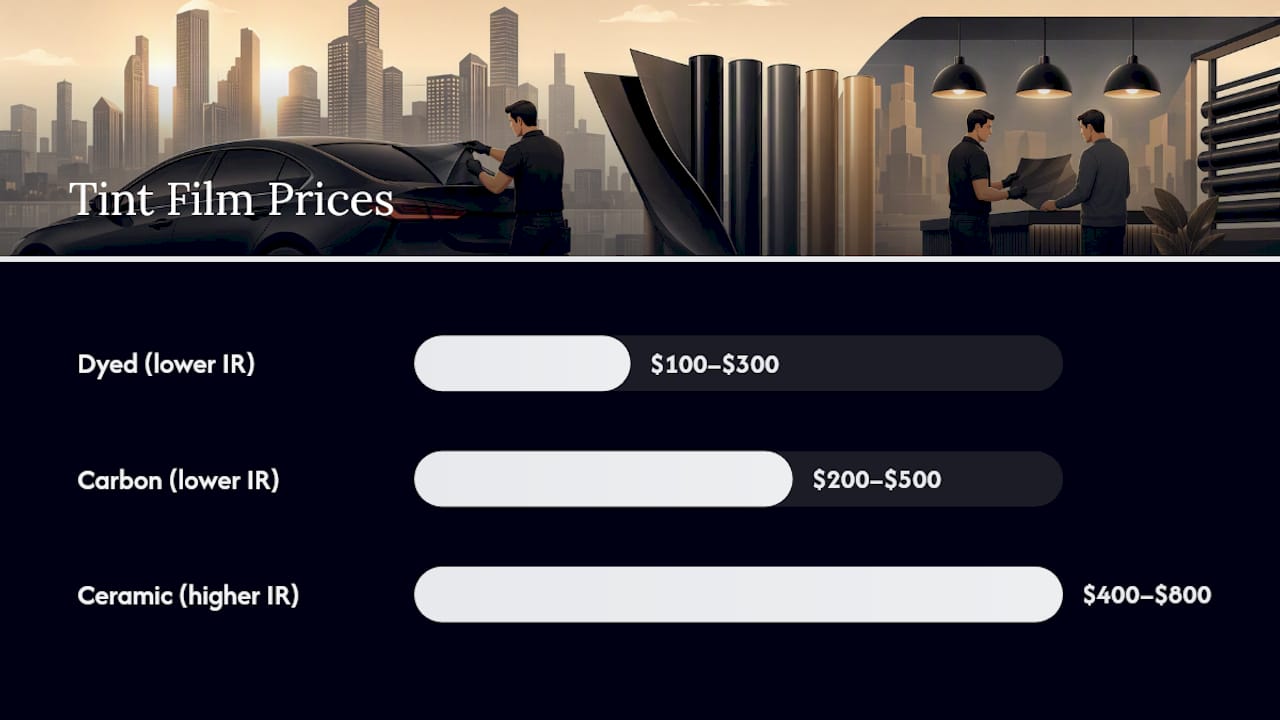
Expect roughly $100 to $300 for dyed film, $200 to $500 for carbon, and $400 to $800 for ceramic on a typical sedan or SUV, according to AAA’s film comparison. Texas caps front side windows at 25% VLT minimum, so confirm legality before you commit to a shade.
Key Takeaways
Legal, long-lasting window tint in Houston comes down to matching film technology to Texas VLT limits and confirming warranty terms in writing before you pay.
| Point | Details |
|---|---|
| Front window limit | Texas requires at least 25% VLT on front side windows, with darker rear glass allowed if dual mirrors are installed. |
| Film type drives cost | Dyed runs $100 to $300, carbon $200 to $500, and ceramic $400 to $800 depending on vehicle size. |
| Ceramic suits Houston’s heat | Ceramic film rejects more infrared heat than dyed or carbon, a real advantage in Texas summers. |
| Verify before paying | Ask for a measured VLT reading and a written warranty before the final payment, not after. |
| Total timeline | Quote to finished, cured install typically takes three to ten days depending on scheduling and add-ons. |
| For bundled projects | NJ Vinyl Wrapz suits owners combining tint with wraps, PPF, or branding under one documented installation process. |
Authoritative Places to Check Prices, Film Specs, and Legal Rules
Before booking, confirm the legal baseline directly from Texas DPS’s window tinting standards, then compare film performance using AAA’s film type breakdown and a deeper look at VLT percentage trade-offs. Check any installer’s photo gallery and reviews directly on their site before you commit to a deposit.
Table of Contents
- Best Window Tinting Services in Houston at a Glance
- How Do You Choose the Right Tint Shop in Houston?
- What Does Window Tinting Cost in Houston, and How Long Does It Take?
- What Are Houston’s Legal Tint Limits?
- How Long Does It Take From Quote to Finished Install?
- How Do Warranty and Support Options Compare Across Shops?
- What Installers Wish Customers Knew Before Booking
- When a Comparison Shop Isn’t the Right Fit
- Sources
- FAQ
Best Window Tinting Services in Houston at a Glance
Every shop on this list handles the basics, cutting film, applying it, and cleaning up the edges. What separates them is warranty language, specialty services, and how they prove compliance with Texas law. The table below lines up the practical differences.
A few things stand out once you look past the marketing copy. Executive Tint’s lifetime warranty claim is a real differentiator if you plan to keep the vehicle for years, but ask exactly what “lifetime” covers, peeling, bubbling, or color shift, before assuming it’s unconditional. Tint World’s franchise structure means service quality can vary by location, so check the specific East Houston shop’s own reviews rather than the brand’s national reputation. Maximum Tint And Sound’s audio specialty is genuinely useful if you’re already planning stereo work, since coordinating two installers usually costs more time than doing both under one roof.
Texan Glass leans hard into film technology suited for Texas summers, recommending ceramic film for maximum heat rejection rather than just the darkest available shade. Pro Auto Tint’s mobile model solves a real logistics problem for fleet operators and busy professionals, though mobile installs depend more on weather and workspace conditions than a controlled bay does.
Pro Tip: Call at least two shops and ask them to quote the exact same film brand and VLT percentage. Price differences of more than $100 on an identical spec usually mean one shop is cutting corners on labor time or material grade.
To get moving, most of these shops take quote requests by phone or a booking form on their site, and a same-day callback is standard across Houston’s tint market.
How Do You Choose the Right Tint Shop in Houston?
Picking a shop by price alone is how people end up with bubbling film or a failed inspection six months later. Run through this checklist before you hand over a deposit:
- Confirm the film brand and series. 3M, LLumar, and similar branded lines carry manufacturer-backed warranties; generic film often does not.
- Ask about film technology, not just darkness. Ceramic, carbon, and dyed films perform differently at the same VLT. Ceramic targets infrared heat rather than just blocking visible light, so two tints at the same shade percentage can feel very different in July traffic.
- Request a measured VLT reading. A legitimate shop uses a digital meter on the combined glass and film, not a guess based on the roll’s label.
- Get the warranty in writing. Verbal promises about “lifetime coverage” mean nothing without paperwork specifying what’s covered.
- Look at the installation bay. A dusty garage bay is a bubbling and dust-contamination risk; a climate-controlled space isn’t just a marketing phrase.
Questions worth asking on the phone before you book: Which film brand and series will you install? Can you show me a VLT compliance sticker after the job? Do you measure combined VLT with a digital meter, or estimate it? What exactly does your warranty cover, and for how long?
Red flags to walk away from: a shop that quotes a flat price without naming a film brand, one that won’t measure your factory glass beforehand, or one with no photo gallery or reviews anywhere online. A missing measurement step is the single biggest predictor of a failed inspection down the line.
Pro Tip: Ask to see the compliance label the shop applies after install. Reputable installers stick a small VLT certification label inside the door jamb, which becomes your proof if you’re ever pulled over.
What Does Window Tinting Cost in Houston, and How Long Does It Take?
Film type drives both price and performance more than any other single factor. Dyed film runs about $100 to $300, carbon lands between $200 and $500, and ceramic sits at $400 to $800 for a typical sedan or SUV, per AAA’s cost comparison. Trucks and larger SUVs with more glass surface usually land at the higher end of each band.
Most single-vehicle jobs take one shop visit and finish same day. A standard sedan with four windows and a rear windshield typically takes two to four hours; add a windshield strip or a full-vehicle ceramic package and you’re looking at closer to a full day.
Common add-ons that shift the price and timeline:
- Paint protection film (PPF) adds a separate multi-hour install, often scheduled as its own appointment.
- Ceramic coating is usually a same-day add if paired with tint, since both require a clean, controlled environment.
- Defog/de-icer film for rear windows adds modest labor time but little to the base cost.
Ceramic film’s higher upfront cost is often justified by longevity: dyed film tends to fade faster in high-UV climates like Houston, which means a cheaper install can mean a second install a few years sooner. Factor that into any “budget” quote that looks unusually low.
What Are Houston’s Legal Tint Limits?
VLT, visible light transmission, measures how much light passes through your glass and film combined. Texas sets clear limits: front side windows must allow at least 25% VLT, rear side windows and the rear windshield can go darker if the vehicle has outside mirrors on both sides, and windshield tint is restricted to the top AS-1 line or the top five inches, whichever is lower.
A shop that skips measurement is gambling with your inspection sticker. Ask them to test the combined glass-plus-film reading with a calibrated digital meter, not estimate it from the film roll’s rated percentage, since factory glass already blocks some light before tint is even applied.
- Front side windows: 25% VLT minimum, no exceptions for tint darkness alone.
- Rear side windows and rear windshield: darker film allowed with dual outside mirrors.
- Windshield: top AS-1 line or five inches only.
- Request a compliance sticker and written measurement at pickup.
Pro Tip: If you have a documented medical condition requiring extra UV protection, Texas allows a medical exemption process, but it requires paperwork filed in advance, not a note handed to an officer during a traffic stop.
There’s effectively no gray area in enforcement: a reading even slightly under the legal threshold fails, which is a big part of why DIY kits and unmeasured “eyeball” installs run into trouble at inspection time.
How Long Does It Take From Quote to Finished Install?
For a standard sedan, the full process from first phone call to driving away with finished windows usually runs three to seven days, and that’s mostly scheduling, not labor. Getting a quote takes minutes, whether by phone or an online form, and most Houston shops respond same day or next business day with a price and a booking window.
Availability is the real variable. Popular shops book out anywhere from a same-day opening to a week out during peak season, spring and early summer, when everyone remembers how hot their car gets. If you’re bundling tint with PPF or a ceramic coating, add another day or two, since some shops schedule those as separate appointments to keep bays available for standard tint jobs.
The actual install itself is fast once you’re in the chair: two to four hours for a sedan, closer to a full day for a truck or SUV getting a full ceramic package. Cure time afterward matters more than people expect. Film needs roughly three to five days to fully bond, and rushing that window with aggressive window operation or high-pressure washing can cause the edges to lift.
If you’re on a deadline, ask directly whether the shop has same-day availability rather than assuming; several Houston shops, including mobile options like Pro Auto Tint, market same-day service specifically because scheduling friction is where most customers lose patience. A realistic total timeline, quote to finished car, sitting in your driveway with fully cured film, is closer to a week and a half than a single afternoon.
How Do Warranty and Support Options Compare Across Shops?
Warranty language varies more than most buyers expect, and the fine print matters more than the headline claim. Executive Tint advertises a lifetime warranty on certain film installations, which sounds absolute but should always be confirmed in writing for exactly what “lifetime” covers, bubbling, peeling, adhesive failure, or color shift, since shops define these differently.
Franchise operations like Tint World typically back warranties through the film manufacturer’s own coverage combined with a location-specific labor guarantee, meaning claims may route through corporate rather than the local shop you dealt with. That can mean slower turnaround on a claim but more consistent standards nationwide.
Independent shops such as Maximum Tint And Sound and Texan Glass generally offer shop-stated coverage tied to the specific film brand installed, often 3M or LLumar’s own manufacturer warranty layered under a labor guarantee from the installer. A written measurement sticker and warranty at pickup removes most of the ambiguity that causes post-install disputes, regardless of which shop you choose.
Mobile installers like Pro Auto Tint face a practical limit here: warranty claims on a mobile install still typically require returning to a fixed location or scheduling a second mobile visit, so ask how remediation actually works before booking, not after a bubble shows up.
What Installers Wish Customers Knew Before Booking
The first thing a good installer checks isn’t your preferred shade, it’s your glass condition and whether old adhesive residue needs removing first. Customers chasing the darkest legal tint often get less comfort than someone who picks a lighter ceramic film, since ceramic blocks infrared heat regardless of how dark it looks.
Aftercare matters more than people assume. Avoid automatic car washes and rolling windows down for at least two days, longer in humid weather, while the adhesive fully cures. Skip ice scrapers directly on tinted glass in winter; use a defroster instead to protect the film’s edges near the seal.
When a Comparison Shop Isn’t the Right Fit
If your vehicle needs more than tint, a color change wrap, fleet branding, chrome delete, or paint protection film alongside the tint job, splitting that work across two or three specialty shops means coordinating separate appointments and hoping the finishes match. NJ Vinyl Wrapz handles tint, PPF, ceramic coating, and full vehicle graphics under one roof, in a climate-controlled facility, using 3M and Avery materials with documented installation records.
That matters most for fleet managers and business owners who need consistent results across multiple vehicles, not just one car getting tinted on a Saturday. Instead of hiring a tint specialist for windows and a separate wrap shop for branding, a single full vehicle wrap project can include tint as part of the same scope, with one warranty conversation and one installation timeline to track.
If your vehicle already has window graphics or partial branding planned, tint needs to be sequenced correctly with that work, which is easier to manage with one provider than two. Request a quote directly through NJ Vinyl Wrapz’s window tinting service page to get a project timeline that accounts for every service your vehicle needs, not just the tint.
Sources
- Window Tinting Standards | Department of Public Safety
- Window Tinting in Houston, TX: Benefits, Laws, and What to Expect - Texan Glass
- 6 types of window tint to consider for your car - AAA
- Texas Window Tint Laws (2026): Legal Tint Limits & Windshield Rules - BTH Tint
FAQ
What is the darkest legal tint in Houston?
Front side windows must allow at least 25% VLT in Texas. Rear windows and the rear windshield can go darker only if the vehicle has outside mirrors on both sides.
How much does window tinting cost in Houston?
Expect roughly $100 to $300 for dyed film, $200 to $500 for carbon, and $400 to $800 for ceramic on a typical sedan or SUV, according to AAA.
Is 20% window tint legal in Texas?
No. Texas requires front side windows to allow at least 25% VLT, so anything below 25% on the front windows would fail inspection and violate state law.
Which is the darkest legal tint in Texas for rear windows?
There’s no fixed rear-window percentage in Texas law; rear side windows and the rear windshield may be as dark as the driver wants, as long as the vehicle has outside mirrors on both sides.
Should I choose NJ Vinyl Wrapz for my window tinting project?
NJ Vinyl Wrapz is a strong fit if you need tint bundled with other services, PPF, ceramic coating, or vehicle wraps, since everything is handled in one climate-controlled facility with documented material sourcing.