
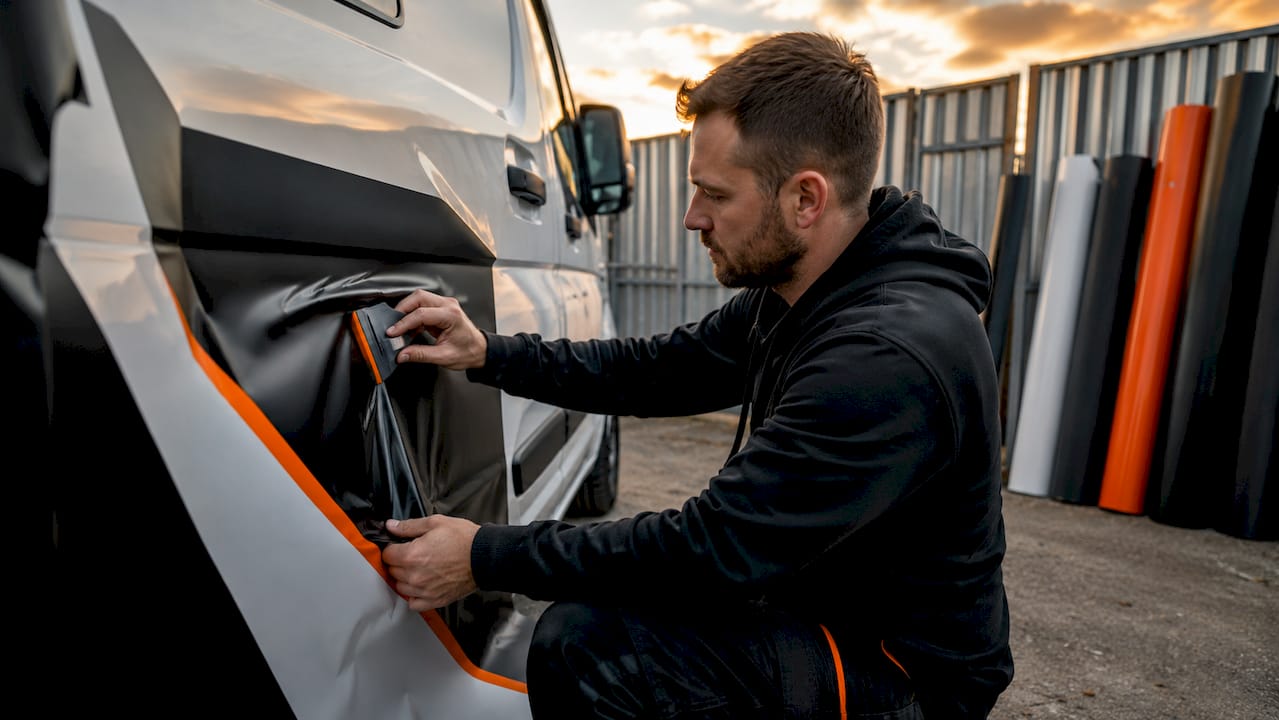
Vehicle branding is defined as the application of custom graphics, wraps, and decals to commercial vehicles to create mobile advertising platforms. It works because a single wrapped vehicle can generate 30,000–70,000 impressions per day, making it one of the highest-reach local advertising formats available. According to OAAA and Nielsen research, wrapped vehicles rank first among all moving out-of-home ad formats and second overall in outdoor advertising noticeability. For business owners and marketing professionals focused on ROI, vehicle branding delivers continuous, localized exposure at a fraction of the cost of traditional media. Brands like 3M and Avery supply the materials that make these wraps durable, professional, and long-lasting.
Why vehicle branding is effective for visibility and reach
Vehicle branding works as an advertising tool because it moves through your market every single day. A delivery van parked on a busy New Jersey street or a service truck driving through a commercial district generates thousands of impressions without any additional spend after the initial wrap investment.
The volume of impressions depends on route density, traffic patterns, and how much time the vehicle spends in high-visibility areas. Urban routes in markets like Newark or Jersey City will outperform rural routes simply because more eyes are present. Parking your wrapped vehicle near shopping centers, transit hubs, or event venues during off-hours extends your reach without adding a single mile to your odometer.
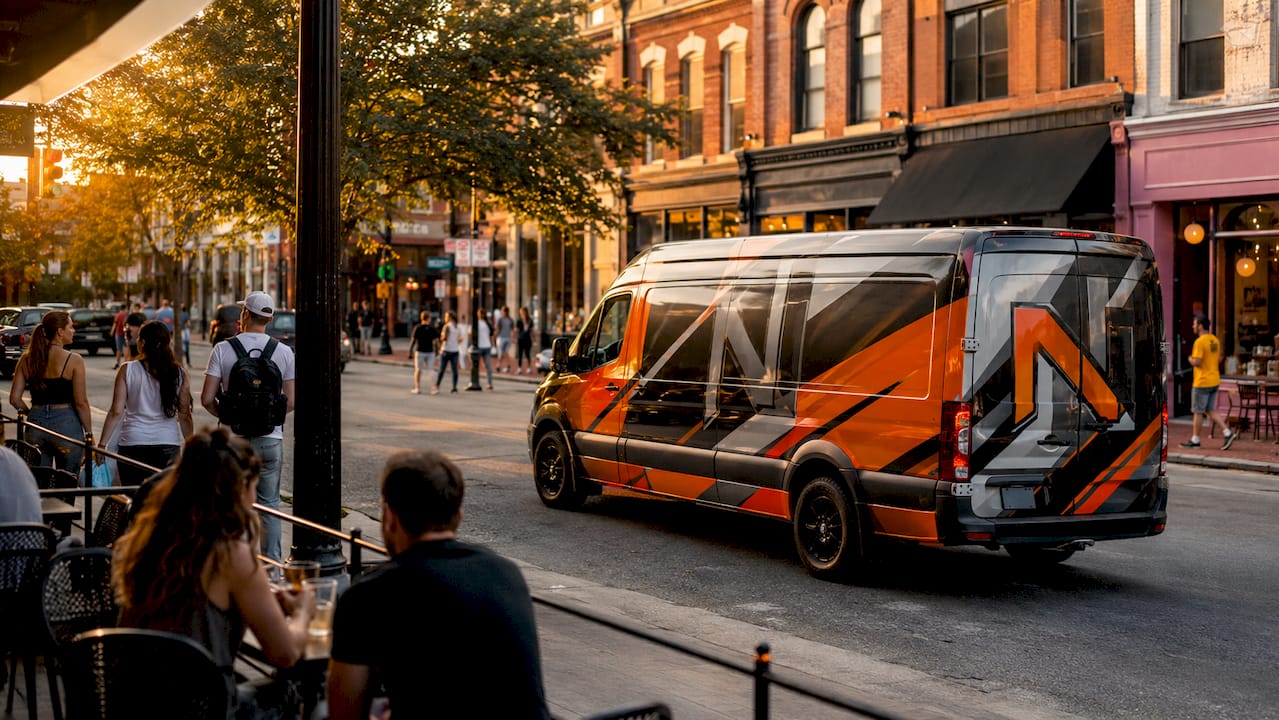
Compared to static outdoor formats, the mobile nature of vehicle branding is a structural advantage. A billboard sits in one location and reaches only the people who pass that specific spot. A wrapped fleet vehicle travels across multiple neighborhoods, zip codes, and demographics in a single day. That geographic flexibility is something no fixed sign can replicate.
The cost-per-thousand-impressions (CPM) comparison makes the case even more clearly:
| Advertising Format | Average CPM |
|---|---|
| Vehicle wraps | $0.48 |
| Billboards | $3.56 |
| Transit advertising | $7.45 |
Vehicle wraps deliver the lowest CPM of any major outdoor format. That gap is not marginal. It means you are reaching roughly seven times more people per dollar spent compared to transit ads.
Pro Tip: Map your highest-traffic routes and identify two or three strategic parking locations near commercial corridors. Positioning your vehicle in those spots during lunch hours and evenings adds passive impressions without changing your operations.
How vehicle branding achieves superior message recall
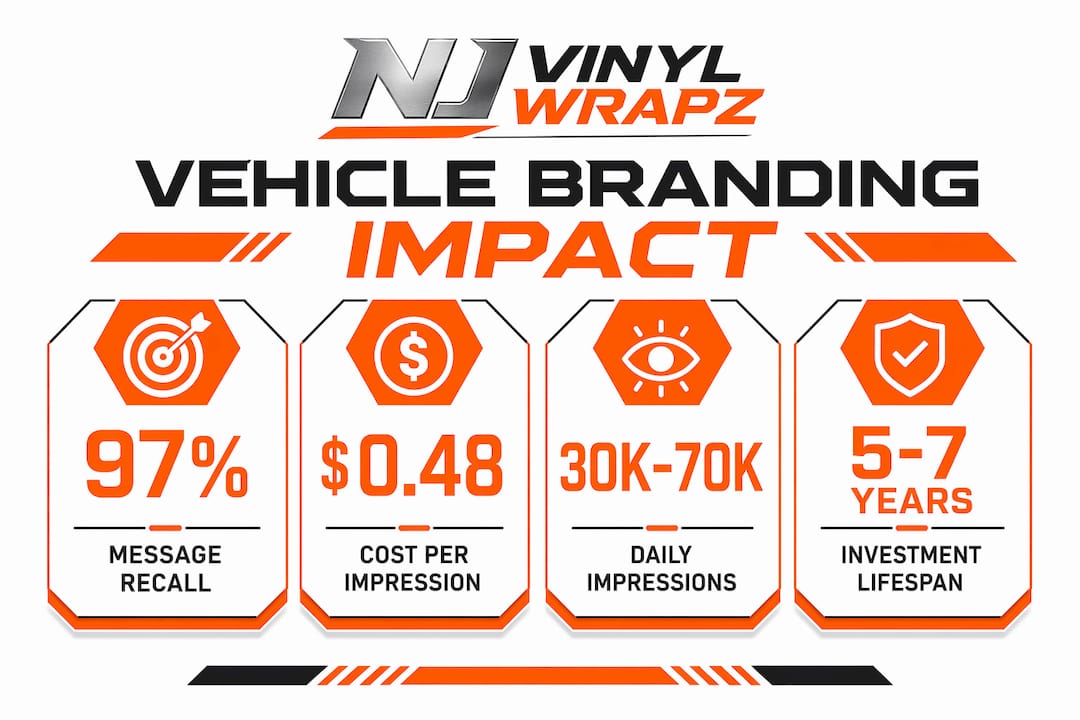
The 97% message recall rate for vehicle wraps versus 19% for stationary and digital ads is the single most compelling data point in mobile advertising. That gap exists because moving, visually distinct objects capture attention differently than static displays that blend into familiar surroundings.
Human peripheral vision is wired to notice movement and contrast. A bold, well-designed wrap on a white service van stands out in traffic precisely because it breaks the visual pattern of unmarked vehicles. That moment of attention is enough to register a brand name, a phone number, or a service category.
Consistent branding across a fleet amplifies this effect significantly. When a potential customer sees the same logo, color scheme, and contact information across three different vehicles in their neighborhood over two weeks, recognition compounds. That repetition builds the kind of familiarity that makes your business the first call when a need arises.
Branded fleet vehicles build trust before a technician or sales rep ever knocks on a door. A homeowner who has seen your wrapped truck in the neighborhood twice already feels a degree of familiarity when you arrive for a service call. That pre-arrival credibility reduces friction in the sales process.
Key elements that drive recall and trust in vehicle branding:
- Logo placement: Position your logo on the driver and passenger doors at eye level for maximum visibility at traffic stops.
- Color contrast: High-contrast color combinations (dark backgrounds with bright text) are read faster and remembered longer.
- Contact information: Include one primary phone number and a website URL. More than two contact points creates visual clutter.
- Service description: A three-to-five word service descriptor tells viewers exactly what you do before they finish reading.
- Consistent fleet presentation: Every vehicle in your fleet should use identical design elements to build cumulative recognition.
Pro Tip: Keep your vehicles clean. A dirty or damaged wrap signals neglect and undercuts the professional image you paid to create. Regular washing and prompt repair of any peeling edges protect both the wrap and your brand perception.
Does vehicle branding deliver strong marketing ROI?
Vehicle branding delivers a cost-per-impression of roughly $0.48, making it one of the most cost-efficient advertising channels a local business can use. A full vehicle wrap typically costs between $2,500 and $5,000 installed, using premium materials from 3M or Avery. That one-time investment produces impressions every day for five to seven years without any recurring media spend.
Compare that to a Google Ads or Facebook campaign, where your visibility stops the moment your budget runs out. Vehicle wraps work 24/7 and continue generating impressions long after the initial payment. That compounding effect is what separates wraps from almost every other advertising format.
The ROI calculation does require patience. Measurable leads typically compound after three or more months of consistent exposure. Judging a wrap’s effectiveness after four weeks is like canceling a TV campaign after one airing. The recognition builds gradually, and the payoff accelerates once your brand reaches a threshold of local familiarity.
To measure ROI beyond raw impressions, use attribution tools built directly into your wrap design:
- A unique phone number that routes only through your vehicle wrap campaign
- A dedicated landing page URL printed on the vehicle
- A QR code linking to a specific offer or contact form
- Asking new customers directly how they heard about your business
Tracking conversions from wraps requires these attribution layers. Without them, you are measuring visibility but not revenue impact. Both matter, but only the second one justifies budget decisions.
| Advertising Channel | Avg. CPM | Lifespan of Investment |
|---|---|---|
| Vehicle wrap | $0.48 | 5–7 years |
| Billboard | $3.56 | Monthly rental |
| Transit ad | $7.45 | Campaign duration |
| Digital display | Variable | Active spend only |
How to maximize the benefits of vehicle branding
Getting the most from vehicle branding requires more than ordering a wrap and driving. Design, placement, fleet consistency, and integration with your broader marketing all determine whether your wrap generates leads or just looks good.
1. Start with a professional design brief. Your wrap design should communicate your brand identity, primary service, and contact information within two to three seconds of viewing. Work with a designer who understands vehicle wrap design principles and knows how graphics translate across curved vehicle surfaces. A design that looks great on a flat screen can lose impact when applied to wheel wells and door handles.
2. Match your wrap to your existing brand standards. Use the exact hex codes, fonts, and logo files from your brand guidelines. Inconsistency between your wrapped vehicles and your website or business cards creates a fragmented impression. Customers notice when the blue on your truck does not match the blue on your invoice.
3. Integrate vehicle branding with your digital presence. Print a QR code on the vehicle that links to a Google review page or a specific landing page. This connects your offline visibility to measurable online actions. A plumber in Bergen County who added a QR code to their fleet saw a 30% increase in Google review submissions within 90 days, simply because the code made the action frictionless.
4. Maintain your fleet’s visual condition. Regular detailing preserves the wrap’s appearance and extends its lifespan. Maintaining branded vehicles for sustained visual impact directly protects your advertising investment. A faded or peeling wrap communicates the opposite of professionalism.
5. Track and review performance quarterly. Pull call data from your unique wrap phone number every 90 days. Compare it against your other lead sources. Adjust routes or parking strategies if certain areas are underperforming.
Pro Tip: The most common mistake in vehicle branding campaigns is overloading the design with too much information. Pick one primary message, one contact method, and one strong visual. Simplicity drives recall.
Key takeaways
Vehicle branding is effective because it combines the lowest CPM in outdoor advertising with a 97% message recall rate and continuous, compounding exposure that no digital campaign can replicate.
| Point | Details |
|---|---|
| Highest recall rate | Vehicle wraps achieve 97% message recall, far above digital and static ad formats. |
| Lowest CPM | At $0.48 per thousand impressions, wraps cost less than billboards and transit ads. |
| Continuous exposure | Wraps work 24/7 without recurring spend, compounding value over five to seven years. |
| Attribution is required | Use unique phone numbers, URLs, and QR codes to connect impressions to actual revenue. |
| Patience pays off | Measurable leads typically build after three or more months of consistent exposure. |
Vehicle branding: what I’ve learned after years in the field
I have watched business owners treat vehicle wraps as a one-time decoration and then wonder why the phone did not ring after two weeks. That expectation mismatch is the biggest obstacle to getting real value from this format.
A wrap is a revenue asset, not a cosmetic upgrade. The businesses that get the most from vehicle branding treat it the way a smart investor treats a rental property. They optimize the asset, track its performance, and give it time to produce returns. They park strategically, keep the vehicles clean, and review their attribution data quarterly.
The design decisions matter more than most people realize. I have seen beautifully printed wraps that communicate nothing because the designer prioritized aesthetics over legibility. At highway speeds, you have about two seconds to register a brand. Your design needs to work within that constraint, not fight it.
Fleet consistency is where I see the biggest missed opportunity. A single wrapped vehicle is good. Five wrapped vehicles with identical branding, all operating in the same market, create a presence that feels much larger than the company actually is. That perceived scale builds trust with customers who equate visibility with stability.
My honest advice: commit to at least six months before evaluating results. Use attribution tools from day one. And invest in quality materials from proven suppliers like 3M or Avery, because a wrap that fades or peels in year two is not just an aesthetic problem. It is a brand credibility problem.
— Krunal
Get your fleet working harder with Njvinylwrapz
Your vehicles are already on the road every day. The question is whether they are advertising for you while they do it.
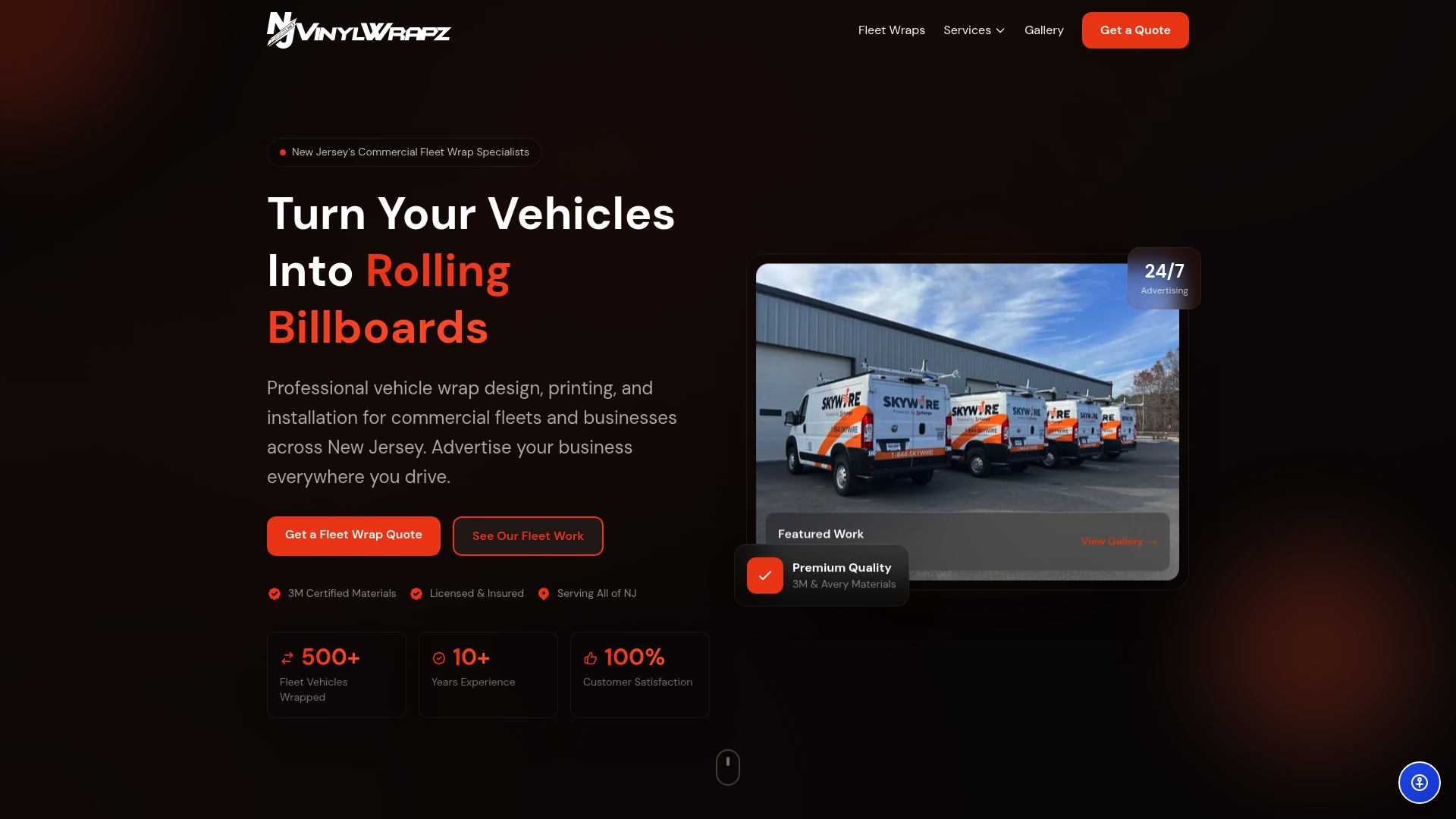
Njvinylwrapz has spent over 10 years transforming commercial fleets across New Jersey into mobile advertising platforms using premium 3M and Avery materials. From full vehicle wraps to complete fleet branding programs, every project is designed, printed, and installed in a climate-controlled facility by a licensed and insured team. Whether you operate two vehicles or twenty, Njvinylwrapz builds wrap programs that match your brand standards and hold up for years. Contact Njvinylwrapz today to get a custom quote and put your fleet to work as your most cost-efficient advertising channel.
FAQ
Why is vehicle branding more effective than digital ads?
Vehicle wraps achieve a 97% message recall rate compared to 19% for digital and stationary ads. They also generate impressions continuously without recurring spend, unlike digital campaigns that stop when the budget runs out.
How many impressions does a wrapped vehicle generate?
A single wrapped vehicle generates 30,000–70,000 impressions per day depending on location and traffic density. Urban routes in high-traffic markets produce the highest daily exposure.
How long does it take to see ROI from vehicle branding?
Measurable leads typically build after three or more months of consistent exposure. Using attribution tools like unique phone numbers and QR codes from the start helps you track returns accurately over time.
What is the cost per impression for vehicle wraps?
The average CPM for vehicle wraps is $0.48, compared to $3.56 for billboards and $7.45 for transit advertising. That makes wraps the most cost-efficient format in outdoor advertising.
How do branded fleet vehicles build customer trust?
Consistent fleet branding builds credibility before a business representative ever makes contact. Customers who recognize a branded vehicle in their neighborhood already associate the company with professionalism and reliability.