
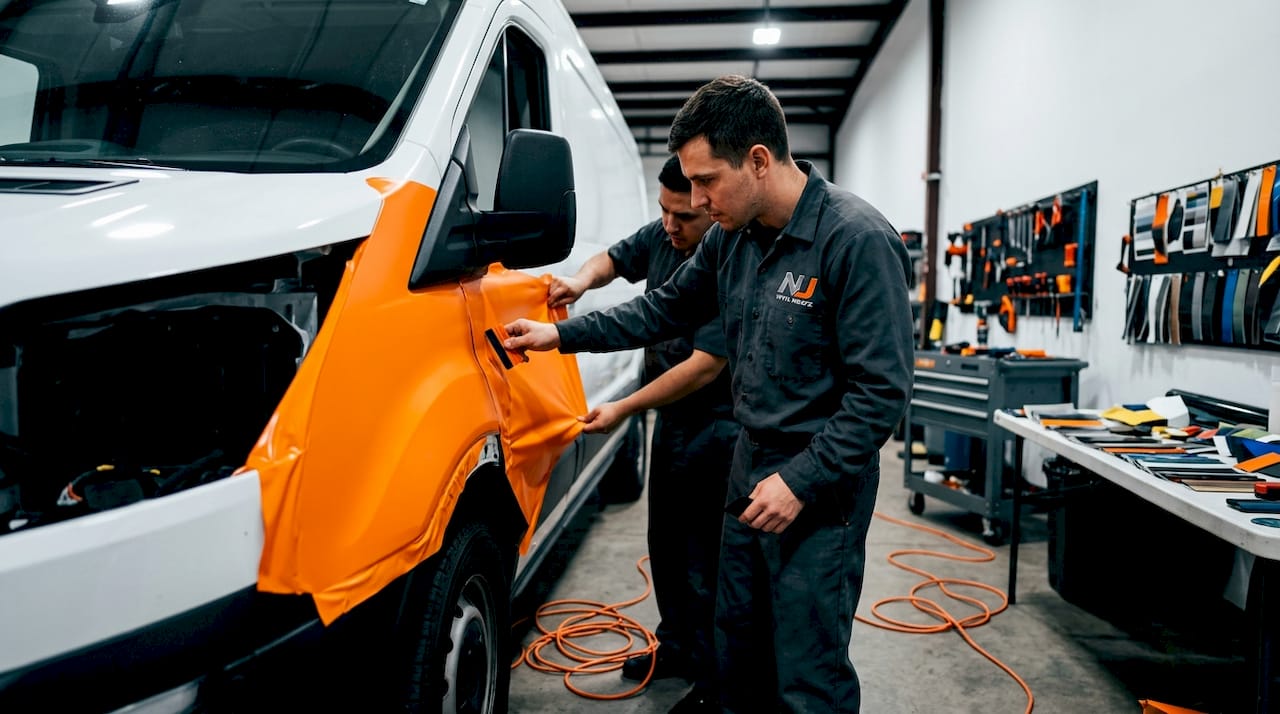
Not all vehicle wraps are created equal, and for New Jersey fleet managers, that difference shows up fast. The question of why use premium wrap materials stops being theoretical the moment you pull a budget-vinyl-wrapped van out of a Jersey winter and watch the edges curl on the highway. Premium wraps last longer, hold color sharper, and protect the paint underneath, but the real story goes deeper than that. This guide breaks down exactly what you get from high-quality materials, why New Jersey’s climate makes that gap even wider, and how the right choice today changes your total fleet costs over the next several years.
Table of Contents
- Understanding premium wrap materials: what sets them apart
- Why durability matters in New Jersey’s climate and fleet use
- Full wraps vs partial wraps: maximizing brand visibility with premium materials
- Protecting your investment: paint preservation and vehicle value
- Choosing the right premium wrap material and installer for your NJ fleet
- The overlooked edge: why smart fleets invest above the sticker price
- Explore premium full vehicle wraps for your New Jersey fleet
- Frequently asked questions
Understanding premium wrap materials: what sets them apart
Premium wraps start with a fundamental difference in manufacturing. Standard wraps use calendered vinyl, which is made by pressing melted PVC through heavy rollers under tension. That process leaves internal stress locked inside the material. Over time, that stress releases, and the vinyl shrinks, lifts at edges, and cracks under temperature swings. Cast vinyl, the foundation of every premium wrap, is manufactured by flowing liquid PVC over a casting sheet and curing it slowly. No tension. No memory. The result is a film that conforms, breathes, and holds its shape.
The 3M 2080 series is the clearest example of why this matters in practice. It wraps around compound curves, door handles, and body lines without heat guns or force, which means an installer can cover a full commercial van cleanly without creating stress points that become failure zones six months later. It comes in dozens of finishes, from gloss to brushed metal to satin, giving your fleet creative range without sacrificing durability. 3M’s warranty coverage for the 2080 series reaches up to 8 years on vertical surfaces and up to 3 years on horizontal surfaces, a distinction that matters enormously for fleets operating year-round in New Jersey.
Here is a direct comparison of the two main material categories:
| Feature | Cast vinyl (premium) | Calendered vinyl (standard) |
|---|---|---|
| Manufacturing method | Poured and cured | Pressed under tension |
| Thickness | Thinner, more flexible | Thicker but stiffer |
| Conformability | Excellent on curves | Poor, prone to bridging |
| Lifespan (vertical) | Up to 8 years | 2 to 4 years |
| Shrinkage over time | Minimal | Significant |
| Color stability | High | Moderate |
| Best use | Full fleet wraps | Flat panels only |
Key advantages of premium cast vinyl for fleet vehicles:
- Conforms to door edges, mirrors, and recessed areas without lifting
- Maintains color saturation longer under direct sunlight
- Thinner profile creates a “painted on” look that looks more professional
- Adhesive releases cleanly, protecting original paint at replacement time
- Compatible with digital printing for sharp, photorealistic graphics
Pro Tip: Ask your installer to show you which vinyl roll they are pulling for your job. If they cannot confirm the material brand and product line by name, that is a red flag worth taking seriously.
Why durability matters in New Jersey’s climate and fleet use
New Jersey puts wraps through a genuinely brutal seasonal rotation. Summers bring intense UV exposure that bleaches pigments and degrades adhesive. Winters deliver road salt, freeze-thaw cycles, and slush that creeps under any seam that is not properly bonded. Spring and fall add heavy rain, acid from pollution, and temperature swings that stretch and contract vinyl repeatedly. A calendered wrap might survive one or two seasons looking acceptable. By year three, you are looking at faded graphics, lifted corners, and a brand image that communicates neglect rather than professionalism.
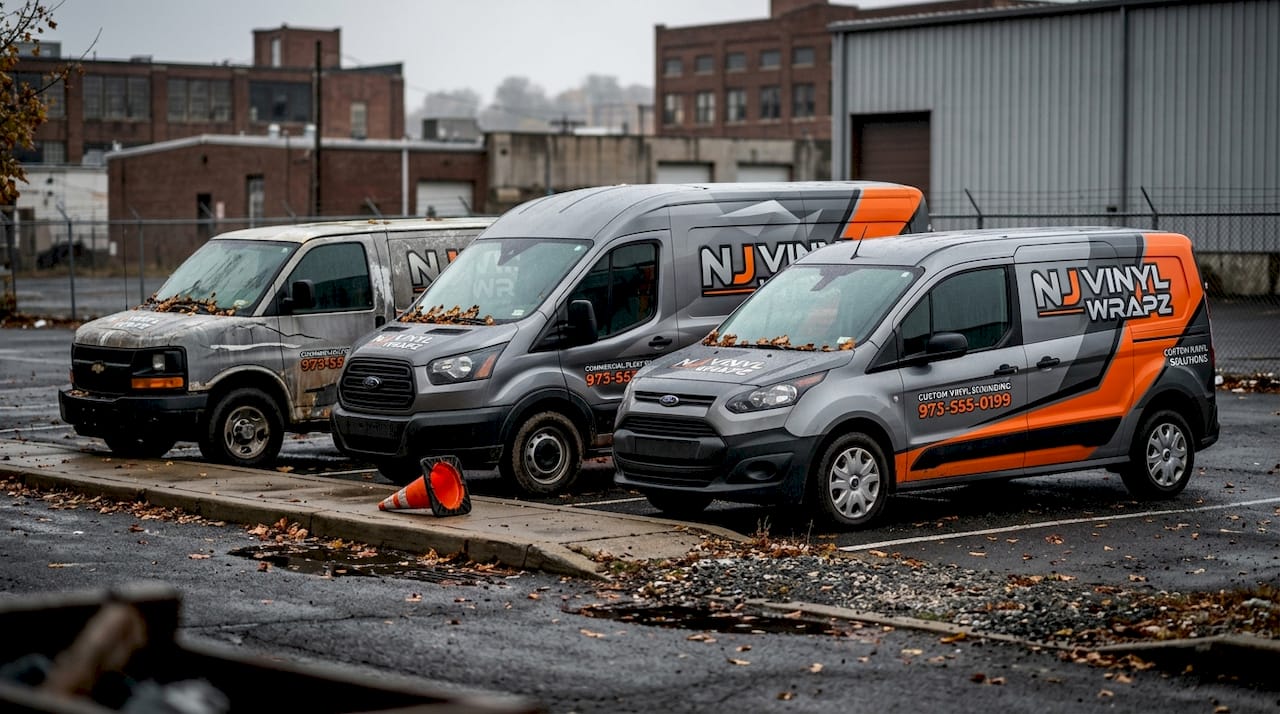
The commercial wrapping benefits for New Jersey businesses are only fully realized when the material can actually survive the environment it operates in. That means selecting vinyl with UV-resistant topcoats, moisture-barrier adhesives, and dimensional stability tested for cold climates. Premium materials minimize shrinkage, fading, and cracking in ways that budget films simply cannot match.
The warranty structure tells the real story about environmental exposure:
- Vertical surfaces (doors, side panels, front and rear fascia): Up to 8-year warranty with 3M 2080
- Horizontal surfaces (hood, roof, trunk): Up to 3-year warranty due to direct UV and pooling water
- Installations in high-UV regions without protection coatings age faster regardless of material grade
“3M offers up to 8 years warranty on vertical surfaces and up to 3 years on horizontal surfaces that face more direct sun exposure.”
What that warranty gap tells you is straightforward. Horizontal surfaces take the most abuse, and even premium materials have limits there. Cheaper vinyl does not even come close to those benchmarks on vertical panels, let alone horizontal ones. For a fleet running year-round on the Turnpike or the Parkway, that lifespan gap directly translates to replacement frequency and downtime.
Full wraps vs partial wraps: maximizing brand visibility with premium materials
Once you commit to premium materials, the next question is coverage. A partial wrap is cheaper upfront. It covers a section of the vehicle, usually the rear, sides, or a band across the doors, and leaves the rest of the factory paint visible. A full wrap covers the entire vehicle, turning it into a complete mobile billboard. The difference in visual impact is not marginal.
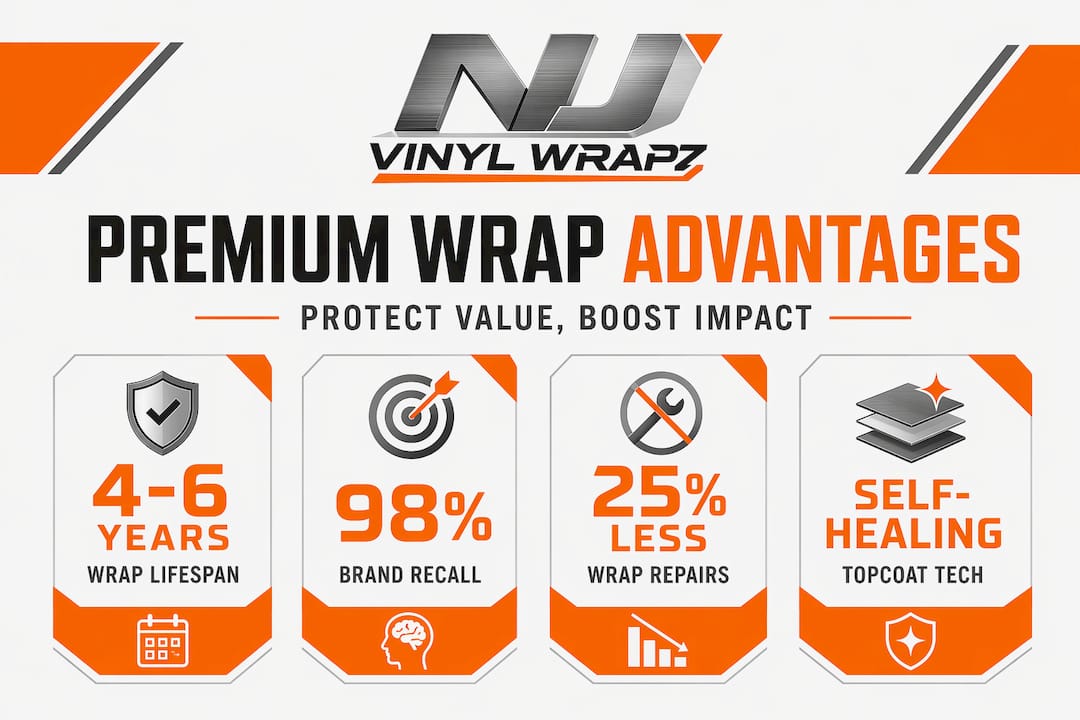
Full wraps deliver maximum brand visibility supporting stronger brand recall and more impressions compared to partial wraps. For a fleet of ten or twenty vehicles, that is a meaningful difference in marketing reach per dollar spent. Every vehicle on the road is a moving impression. A full wrap on a delivery van generates thousands of views per day in dense areas like Newark, Hoboken, or Cherry Hill.
| Factor | Full wrap | Partial wrap |
|---|---|---|
| Brand coverage | Entire vehicle | Selected panels only |
| Visual consistency | High across entire fleet | Inconsistent, breaks the design |
| Advertising impressions | Maximum | Reduced |
| Material cost | Higher | Lower |
| Long-term ROI | Superior | Moderate |
| Paint protection | Complete | Partial only |
Why full, premium wraps make financial sense for your fleet:
- Consistency across the fleet. When every vehicle looks identical, the brand feels established and reliable to customers who see your vehicles repeatedly.
- More surface area for messaging. Phone numbers, URLs, service lists, and QR codes have room to breathe without crowding.
- Complete paint protection. The entire vehicle benefits from the sacrificial layer, not just the wrapped sections.
- Better resale positioning. When you remove the wrap, buyers see pristine paint on the full vehicle, not half-paint and half-worn factory color.
- Premium material longevity amplified. Cast vinyl on a full wrap means every surface is held to the same quality standard, so degradation is uniform and manageable.
Pro Tip: If budget is a genuine constraint, prioritize a full wrap on your highest-visibility vehicles first, like cargo vans or box trucks, before moving to smaller vehicles. The impressions per dollar are highest on large-surface vehicles.
Protecting your investment: paint preservation and vehicle value
Here is the angle most fleet managers miss entirely. A premium wrap is not just advertising. It is a paint protection benefit that directly affects the resale or trade-in value of every vehicle in your fleet.
High-quality vinyl wraps shield original paint from UV rays, acid rain, bird droppings, and minor scratches. That layer of protection is especially valuable in New Jersey, where highway debris, urban pollution, and seasonal corrosives are constant threats. When a lease ends or a vehicle rolls over in your fleet cycle, unwrapped paint that has spent three years on Route 1 looks noticeably worse than paint that spent those same three years protected under cast vinyl.
Key paint protection benefits of premium wraps:
- Blocks UV radiation that causes oxidation and paint fade
- Prevents micro-scratches from road grit and car washes
- Resists bird droppings and tree sap that etch into clear coat
- Creates a moisture barrier over seams and panels
- Removal at end of wrap life reveals original factory finish if installed correctly
Premium materials with greater thickness and self-healing topcoat technology offer a meaningful step up from standard wrap films here. Some cast films partially absorb light surface scratches under heat, maintaining a cleaner appearance longer between maintenance cycles.
Pro Tip: Always request professional removal when the wrap reaches end of life. Tearing off wrap yourself risks lifting the clear coat, especially on older factory paint. Proper removal is part of what makes premium installation worth it from start to finish.
Choosing the right premium wrap material and installer for your NJ fleet
The material alone does not guarantee results. Professional installation prevents premature peeling and lifting, ensuring longevity of the premium vinyl wrap. Even the best cast vinyl fails quickly when applied over unclean surfaces, in a dusty garage, or without proper panel prep. The installer’s environment and process matter just as much as what comes off the roll.
When selecting your material and installation partner, use these criteria:
- Confirm cast vs. calendered: Insist on cast vinyl for any full wrap application, especially on curved surfaces. Ask for the specific product SKU if you want certainty.
- Check warranty documentation: A reputable installer using certified premium wrap material options can provide manufacturer warranty paperwork tied to the specific roll used.
- Evaluate the facility: Wrapping in a climate-controlled, dust-free space is not optional for a quality result. Contamination under the film creates bubbles and early adhesive failure.
- Ask about surface preparation: Proper prep includes washing, clay bar treatment, and panel wipe-down with isopropyl alcohol before any film touches the vehicle.
- Request maintenance guidelines: Premium materials respond well to correct care, including hand washing with pH-neutral soap and avoiding high-pressure washing on seams.
Pro Tip: The cost of premium wrap materials is typically 15 to 25 percent higher than standard materials, but installation labor is the same. The total price difference is smaller than most fleet managers expect, and the lifespan difference is much larger.
The overlooked edge: why smart fleets invest above the sticker price
After ten-plus years wrapping commercial fleets across New Jersey, the pattern is consistent. Fleet managers who focus almost entirely on the upfront quote almost always pay more over a three-year period than those who pay a bit more for premium materials from the start.
The math works like this. A budget wrap that costs 20 percent less but fails at 18 months needs replacement. That means new design time, production, installation labor, and vehicle downtime, twice in three years instead of once. Multiply that across a ten-vehicle fleet and the “savings” from cheaper materials become a clear financial loss. Worse, mismatched graphics during the replacement period send inconsistent brand signals to customers who see your vehicles regularly. That erosion is harder to measure but very real.
Warranty terms encode expected field conditions, and choosing material without considering environmental exposure leads to early wrap failure. New Jersey qualifies as a genuinely harsh environment by any material spec standard. The fleet wrap value is only captured when the material survives long enough to deliver the advertising impressions you paid for.
The uncomfortable truth is this: a premium wrap does not just look better. It compounds its own value. Every additional month of clean, consistent branding on a fleet vehicle is advertising you already paid for. Every prevented paint repair is money that stays in your maintenance budget. Premium materials reduce total fleet branding costs by delivering longevity, fewer repairs, and easier maintenance over a realistic three-to-eight year operating horizon. The few extra dollars at purchase are not a luxury. They are a logical decision once you account for the full picture.
Explore premium full vehicle wraps for your New Jersey fleet
Your fleet represents one of the most valuable, underutilized advertising assets in your business. Every mile driven without consistent, professional branding is a missed opportunity.
At NJ Vinyl Wrapz, we specialize in premium full vehicle wraps built specifically for the demands of New Jersey fleet operations. We use certified 3M and Avery materials, install in a climate-controlled facility, and provide hands-on consultation to match your material choice to your fleet’s specific surface exposure and branding goals. Whether you are starting with one vehicle or rebranding a 50-unit fleet, our team delivers consistent results built to last. Explore our full range of vehicle wrap options or go straight to our dedicated fleet wraps service page to get started.
Frequently asked questions
What makes premium vinyl wrap materials better than cheaper alternatives?
Premium vinyl wrap materials, like cast vinyl, offer superior durability, better conformability to vehicle curves, longer warranties, and greater resistance to fading and shrinking. Cast vinyl provides better outdoor durability and dimensional stability than calendered vinyl, making it the right choice for any serious fleet branding investment.
How does New Jersey’s climate affect the lifespan of vehicle wraps?
New Jersey’s combination of strong UV exposure, road salt, snow, and temperature swings accelerates wrap wear, particularly on horizontal surfaces. Horizontal surfaces have shorter warranty coverage due to increased UV and environmental exposure, which is why premium materials and proper installation are non-negotiable in this region.
Are full vehicle wraps more effective than partial wraps for fleet branding?
Yes. Full vehicle wraps cover the entire surface and create a complete, consistent brand impression across your fleet. Full wraps generate more impressions and stronger long-term brand recall than partial wraps, making them the better choice for businesses serious about fleet advertising.
Can a premium vehicle wrap protect my fleet’s original paint?
Absolutely. High-quality wraps protect paint from fading, scratches, and environmental contaminants, preserving the underlying factory finish and protecting your fleet’s resale value throughout its operating life.
Why is professional installation important for premium vehicle wraps?
Professional installation ensures the surface is properly prepared, the film is applied without contamination, and seams are sealed correctly. Professional installation prevents premature peeling and extends wrap longevity, meaning the quality of the material is only realized when the application matches it.