
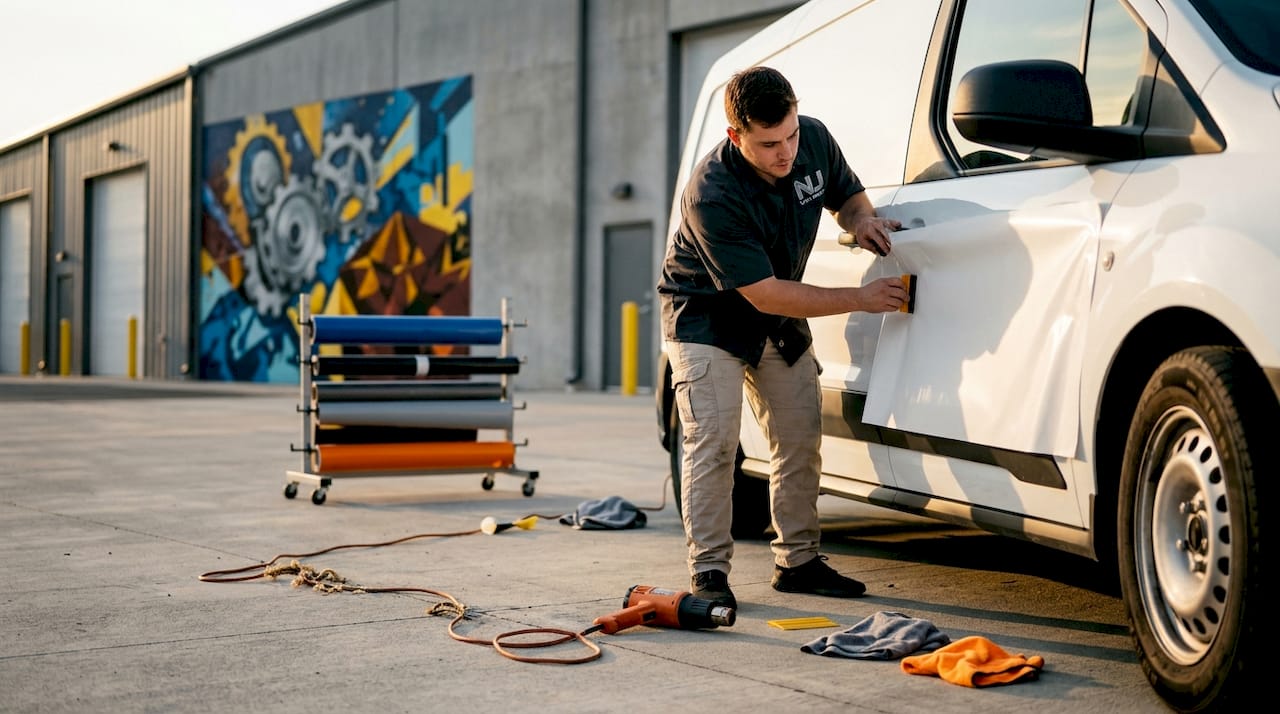
Vehicle wraps are one of the most cost-effective forms of outdoor advertising available to businesses today. But there’s a critical variable most business owners overlook: the installation itself. Why professional wrap installation matters isn’t just a question of aesthetics. It’s a question of durability, warranty protection, and whether your brand looks credible rolling down the highway or embarrassing. Before you hand your fleet vehicles over to the lowest bidder or consider a DIY kit, here’s what you need to understand about the real cost of cutting corners.
Table of Contents
- Key takeaways
- Why professional wrap installation delivers results DIY cannot
- How expert wrap installation affects your brand and your bottom line
- Choosing the right materials: what professionals know that DIY guides don’t tell you
- What to expect when hiring a professional wrap service
- My take on professional wraps as a long-term business investment
- See what Njvinylwrapz can do for your fleet
- FAQ
Key takeaways
| Point | Details |
|---|---|
| Professional quality is measurable | Pros use climate-controlled facilities, precise temperatures, and multi-stage prep to prevent bubbles, lifting, and shrinkage. |
| DIY costs more long-term | Poor installation leads to early failure, costing $2,400 to $7,500 per vehicle in downtime and replacement. |
| Material compatibility is non-negotiable | Mismatched film types cause cracking and void warranties; professionals match cast vinyl with correct overlaminates. |
| Warranties protect your marketing budget | Only professionally installed wraps typically qualify for material warranties from brands like 3M and Avery Dennison. |
| Vet your installer before committing | Ask about certifications, materials used, installation process, and request portfolio examples before signing a contract. |
Why professional wrap installation delivers results DIY cannot
The temptation to save money with a DIY kit is understandable. DIY kits cost $200 to $800, while professional full vehicle wrap installation runs $2,500 to $6,000 or more depending on vehicle size and design complexity. That gap looks significant until you understand what professionals are actually doing during those one to three days in the shop.
Professional wrap installation is not simply applying vinyl like a large sticker. It’s a deliberate engineering process involving chemistry, physics, and quality control at every stage. The process starts well before the film touches the vehicle.
Surface preparation: the step that determines everything
Professional installers follow four distinct preparation stages including isopropyl alcohol wipes, adhesion promoters on low-energy surfaces, and hardware removal. Skipping or rushing this stage is where most DIY attempts and budget installations fail. Dirt, wax residue, or oil contamination between the film and the paint surface creates micro-pockets that grow into bubbles and lifted edges over time.
Professionals also remove mirrors, moldings, and trim pieces during application. Removing vehicle components eliminates exposed edges that catch wind at highway speeds and begin peeling. A wrap installed over door handles and mirror housings instead of underneath them is guaranteed to fail prematurely regardless of how good the vinyl is.
Temperature, tension, and post-heating
Professional wrap shops maintain climate-controlled workspaces because vinyl wrap films must be applied within ambient temperatures of 68°F to 77°F, with forming temperatures between 104°F and 140°F. Too cold and the adhesive won’t activate properly. Too warm and the film stretches unevenly and snaps back.
Tension management during application is equally technical. Professionals manage tension, anchor points, and relief cuts to navigate complex curves, recesses, and body panels without creating stress points that lead to cracking.
The final step is post-heating. Post-heating vinyl to 180°F to 200°F resets its internal molecular memory and locks it permanently into the vehicle’s contours. Professionals verify surface temperature with infrared thermometers. Most DIY installers skip this entirely or guess, which results in shrink-back within weeks or months.
Pro Tip: Ask any installer whether they use an infrared thermometer during post-heating. If they don’t know what that means, walk away.
| Criteria | Professional installation | DIY installation |
|---|---|---|
| Upfront cost | $2,500 to $6,000+ | $200 to $800 |
| Time required | 1 to 3 shop days | 1 to 3+ days with steep learning curve |
| Surface prep | Multi-stage, hardware removed | Usually single wipe-down |
| Post-heat process | Verified with infrared thermometer | Often skipped |
| Warranty coverage | Typically included | None |
| Expected wrap lifespan | 5 to 7+ years (cast vinyl) | 1 to 3 years (calendered vinyl typical) |
How expert wrap installation affects your brand and your bottom line
A vehicle wrap is a rolling billboard. Every time one of your trucks or vans sits in traffic, parks outside a job site, or pulls into a client’s lot, it’s communicating something about your business. A professionally installed wrap communicates quality, consistency, and attention to detail. A poorly installed wrap with bubbles, lifting edges, or faded graphics tells a different story entirely.
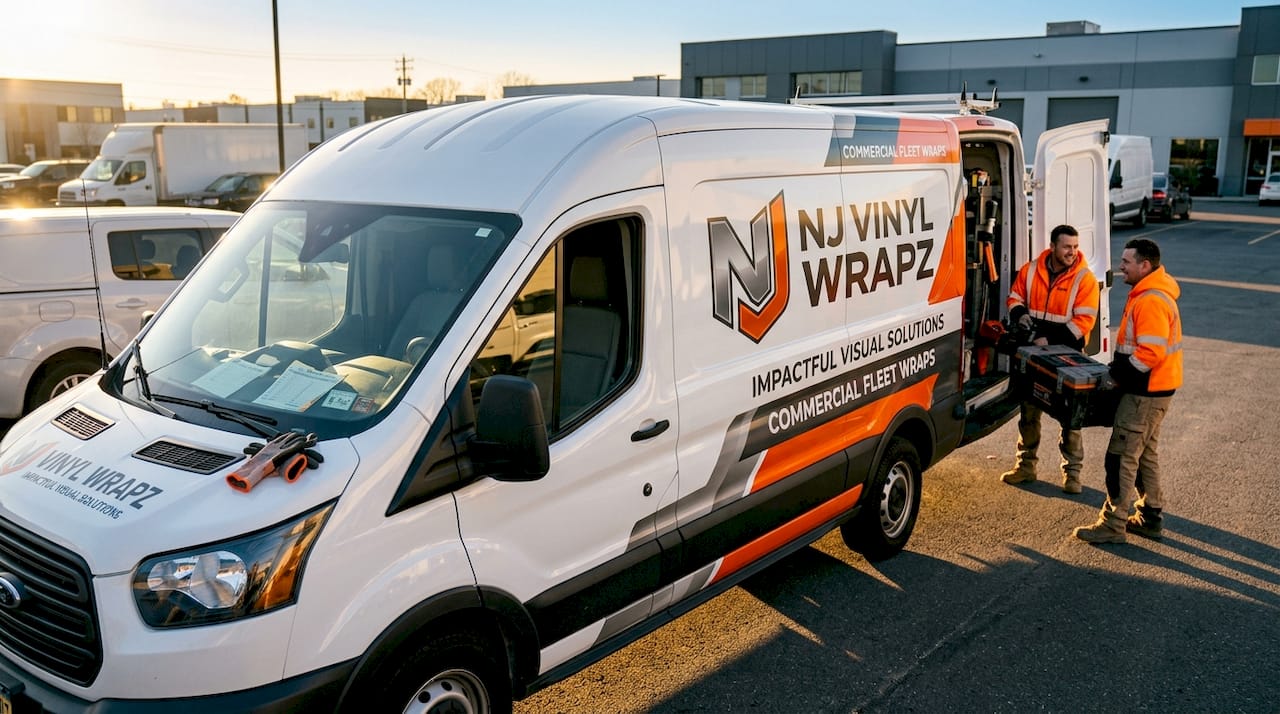
Improper installation leads to significant costs including early edge lifting, shrinkage, and paint damage during removal, with total downtime costs reaching $2,400 to $7,500 per vehicle. For a fleet of five or ten vehicles, that math gets painful fast. A wrap that fails at 18 months instead of lasting 60 to 84 months forces you to reinvest in design, printing, and labor all over again.
The visual consistency argument is equally important. When your fleet vehicles all carry the same sharp, flawless graphics, customers notice. That consistency builds brand recall. When half the fleet looks great and the other half has peeling logos and color fade, the damage to your perceived professionalism is real.
Here’s what professional wrap installation actually delivers for your business:
- Consistent color accuracy and sharpness across every vehicle in your fleet
- Wraps that qualify for manufacturer warranties from material brands like 3M and Avery Dennison
- Clean removal at end of wrap life without paint damage, protecting your vehicle’s resale value
- Protection of your marketing investment through reliable installation warranties
- Learn more about protecting your wrap investment and understanding what your warranty actually covers
Pro Tip: Before approving any wrap project, ask the shop whether the installation warranty and the material warranty are separate. They often are, and you need both.
The business benefits of expert installation go beyond the physical wrap. When your vehicles look professional, your sales team feels more confident. Clients judge you before you speak.
Choosing the right materials: what professionals know that DIY guides don’t tell you
Not all vinyl is interchangeable. This is one of the most misunderstood aspects of why professional wrap installation matters, and it’s where the professional vs DIY wrap conversation gets technical fast.
There are two primary categories: cast vinyl and calendered vinyl. Cast vinyl offers superior conformability and durability, lasting 5 to 7 or more years, while calendered vinyl typically lasts only 1 to 3 years. Cast vinyl is manufactured differently, maintaining dimensional stability across temperature changes. Calendered vinyl, being less expensive, is prone to shrinkage on complex curves.
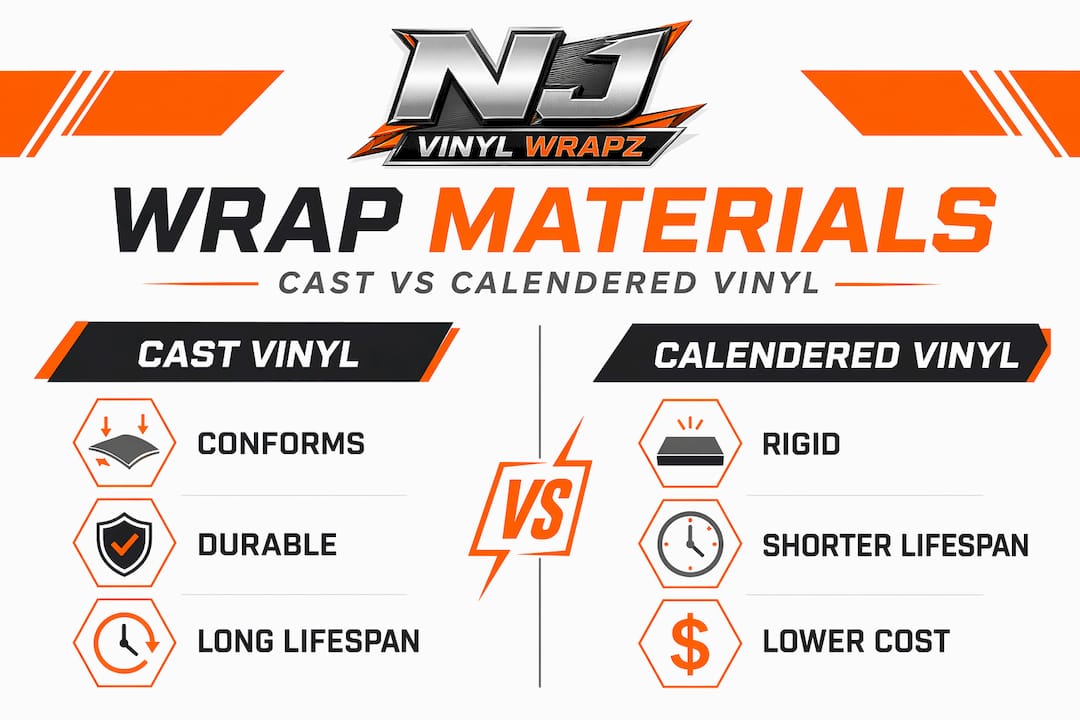
The overlaminate layer is where another failure point hides. Mismatching a calendered overlaminate on cast vinyl creates shrinkage mismatch between layers, causing cracking, lifting, and warranty voidance. Professional installers understand that the base film and the overlaminate must be sourced as a compatible system, not mixed and matched by price.
| Material type | Thickness | Conformability | Typical lifespan | Best use case |
|---|---|---|---|---|
| Cast vinyl (professional grade) | 2.0 to 2.5 mil | High, complex curves | 5 to 7+ years | Full vehicle and fleet wraps |
| Calendered vinyl (intermediate) | 3.0 to 4.0 mil | Moderate, flat surfaces | 3 to 5 years | Short-term graphics, flat panels |
| Calendered vinyl (economy) | 4.0+ mil | Low, flat surfaces only | 1 to 3 years | Temporary signage |
Professional wrap shops partner with trusted brands like 3M and Avery Dennison specifically because these manufacturers dominate the professional market through consistent quality, documented system compatibility, and warranty backing. When an installer uses certified materials, your investment is covered from multiple directions.
Professionals also choose materials based on the specific vehicle and its finish. Heavily contoured vehicles like delivery vans with pronounced body lines require films engineered for high elongation. Selecting the wrong film for a complex vehicle surface results in tension cracking at exactly the points under the most stress.
Learn more about how material compatibility affects longevity and what questions to ask your installer about their film systems.
What to expect when hiring a professional wrap service
Understanding the importance of professional wraps is one thing. Knowing how to find and work with the right installer is another. Here’s a practical framework for business owners evaluating professional wrap services.
-
Verify certifications and experience. Ask how long the shop has been installing wraps commercially, not just doing personal vehicles. Fleet wrap experience requires a different skill level than a single consumer car.
-
Ask about their facility. A climate-controlled installation bay is non-negotiable for quality results. If they’re installing wraps in an open garage or outdoors, temperature and dust contamination will affect adhesion.
-
Request material documentation. The shop should tell you exactly which film and overlaminate system they’re using and why it’s right for your vehicle and environment.
-
Understand the warranty structure. Get the installation warranty and the material warranty in writing. Know the duration and what voids each one.
-
Review the portfolio with a critical eye. Look specifically at fleet wrap projects, not just personal vehicles. Check edge work, panel alignment, and how they’ve handled complex vehicle shapes.
-
Ask about vehicle preparation requirements. Read this resource on preparing your vehicle for a wrap before your consultation so you arrive with the right questions.
Pro Tip: Shops that rush you through a quote without asking about your brand standards, vehicle condition, or design goals are shops that treat wraps as commodity work. That’s a red flag.
For more detailed vetting guidance, review this list of questions to ask wrap installers before committing to any shop.
My take on professional wraps as a long-term business investment
I’ve seen the aftermath of budget wrap jobs more times than I’d like to count. A business owner brings in a fleet vehicle with graphics peeling off the doors at 14 months. The original shop is unreachable, the warranty was verbal and meaningless, and now they’re looking at reprinting, reinstalling, and losing vehicle availability during the process.
What I’ve learned is that the upfront cost of professional wrap installation is almost never the real cost conversation. The real conversation is about risk. When you invest in a professional install, you’re buying a documented process, certified materials, and a shop that’s accountable when something goes wrong.
The subtle technical steps matter enormously. Post-heating done correctly versus guessed at. Components removed properly versus wrapped over. Materials matched as a certified system versus sourced separately by price. None of these things are visible to the client at delivery. They only become visible at month 18 when one installation is still perfect and the other is failing at the edges.
My strongest advice: treat your vehicle wrap budget the same way you treat your digital marketing budget. You wouldn’t hire a web developer with no portfolio to build your company’s website. Don’t hand your fleet vehicles to an installer who can’t document their process and back it with a real warranty.
Professional wraps, done right, are one of the best marketing investments available to businesses with vehicles. Done wrong, they’re an expensive lesson.
— Krunal
See what Njvinylwrapz can do for your fleet
Njvinylwrapz has been wrapping commercial fleets across New Jersey for over 10 years, using certified 3M and Avery Dennison materials in a fully climate-controlled facility. Whether you need full vehicle wraps for a single branded vehicle or complete fleet wrap solutions that maintain visual consistency across dozens of units, the team brings documented installation processes and real warranty coverage to every project. Services also include color change wraps and paint protection film to preserve your vehicle’s finish long after the wrap comes off. Contact Njvinylwrapz today to schedule a consultation and get a quote for your fleet.
FAQ
What does professional wrap installation actually cost?
Professional full vehicle wrap installation typically costs between $2,500 and $6,000 or more, depending on vehicle size and design complexity, with shop time of one to three days. DIY kits cost $200 to $800 but carry significantly higher risk of failure and no warranty coverage.
Is professional wrap worth it for small business fleets?
Yes. Professionally installed wraps last 5 to 7 or more years with proper materials, while poor installations often fail within 12 to 18 months, costing $2,400 to $7,500 per vehicle in downtime and replacement. The long-term ROI of professional installation is substantially better.
What is the difference between cast and calendered vinyl?
Cast vinyl conforms to complex curves, maintains dimensional stability, and lasts 5 to 7 or more years. Calendered vinyl is stiffer, prone to shrinkage on curved surfaces, and typically lasts only 1 to 3 years. Professional installers use cast vinyl for full vehicle and fleet wraps.
How do I know if a wrap installer is qualified?
Ask about their facility setup, materials used, certification from brands like 3M or Avery Dennison, installation warranty terms, and request a portfolio of completed fleet projects. Qualified shops document their process and provide written warranties for both installation and materials.
Can a poorly installed wrap damage my vehicle’s paint?
Yes. Improper installation and premature wrap failure can damage paint during removal, particularly if the wrap was applied incorrectly or removed too early. Professional installation using quality materials and correct processes allows for clean removal without paint damage at end of wrap life.