
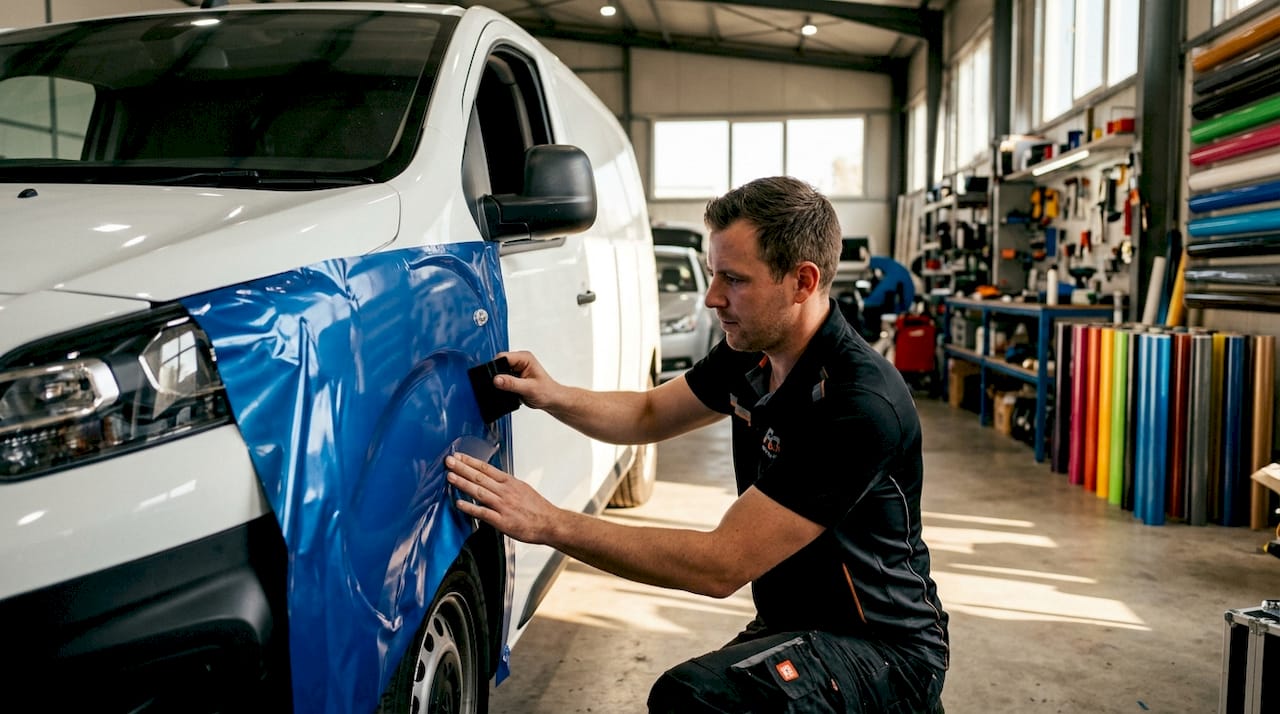
3M and Avery Dennison are the two most trusted premium vinyl wrap film brands in the vehicle branding industry. Understanding why choose 3M or Avery materials comes down to four factors: finish quality, installation behavior, durability, and how well each aligns with your operational goals. Both brands produce cast vinyl films engineered for long-term outdoor performance, but they solve different problems. Fleet managers running high-volume wrap programs and marketing professionals chasing bold brand visibility will find each brand pulls in a different direction.
What are the key material properties of 3M and Avery vinyl films?
The material composition of a wrap film determines everything downstream, from how it handles on a complex bumper to how long it holds color on a highway-facing panel.
3M’s 2080 series uses a dual-layer cast vinyl construction with Comply™ v3 and Controltac™ technology, delivering air-release channels and a repositionable adhesive that activates fully under pressure. That design produces bubble-free application and a 5–8 year outdoor life for color retention. The film is thicker than most alternatives, and a clear protective topcoat adds scratch resistance and UV blocking. For fleet vehicles that spend long hours in direct sun, that topcoat is a meaningful advantage.
Avery Dennison’s Supreme Wrapping Film takes a different approach. Its Easy Apply RS™ adhesive allows the film to slide across large panels without bonding prematurely, which dramatically reduces installation time on big surfaces like van sides and truck doors. The adhesive releases without leaving residue, which matters for leased vehicles or fleets that refresh wraps on a regular cycle. Avery films also conform well to curved surfaces, though 3M’s thicker construction tends to hold tighter on deep recesses and compound curves.
- 3M 2080 series: Dual-layer cast vinyl, Comply™ v3 air-release, Controltac™ pressure-activated adhesive
- Avery Supreme Wrapping Film: Easy Apply RS™ slideable adhesive, clean-release design, strong conformability on flat and moderately curved panels
- Shared trait: Both are cast vinyl films, not calendered, which means they resist shrinkage and maintain dimensional stability over time
Pro Tip: Always confirm you are purchasing cast vinyl, not calendered vinyl. Calendered films shrink over time and lift at edges, especially on curved panels. Both 3M and Avery’s premium wrap lines are cast films.
For a deeper look at 3M vinyl types and how they differ across product lines, Njvinylwrapz has a full breakdown on their blog.
How do 3M and Avery materials perform in installation and application workflows?
Installation behavior is where the Avery vs 3M comparison becomes most practical for fleet managers and professional installers.
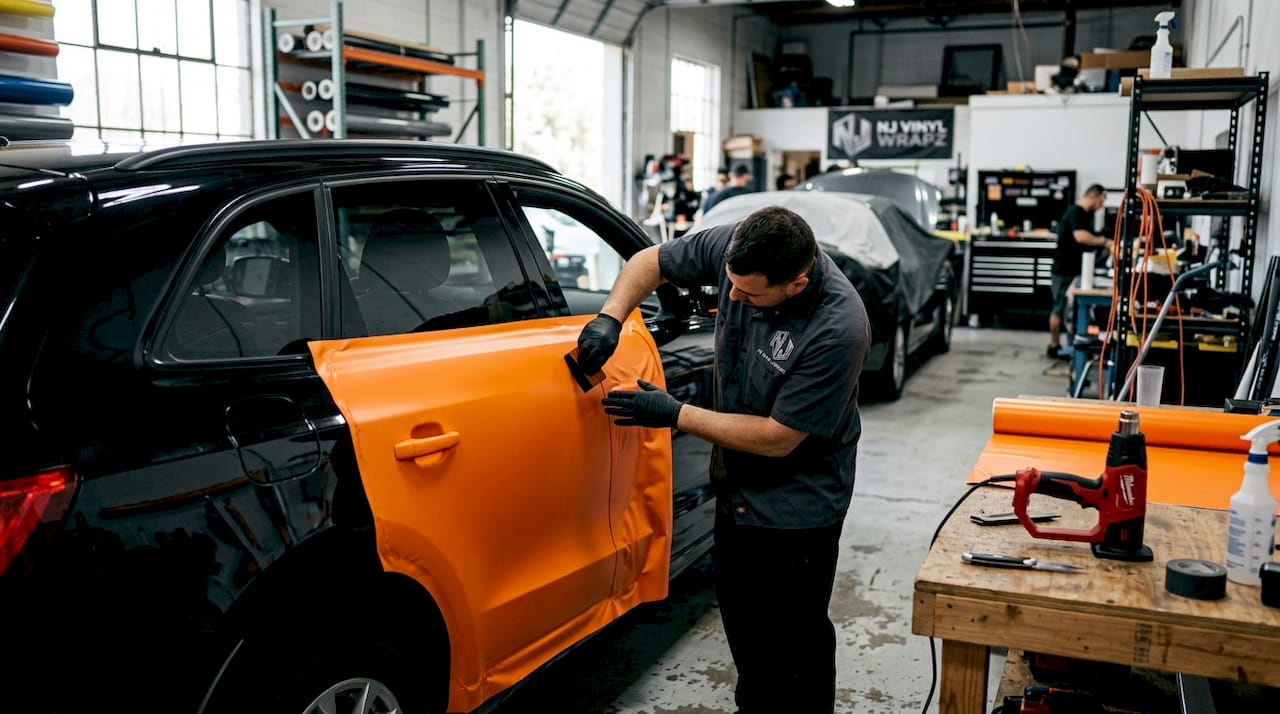
Avery’s slideable adhesive speeds installation on high-volume commercial projects. An installer can float a large panel section into position, adjust alignment, and then press to bond. That forgiving behavior reduces wasted material and shortens labor time per vehicle. For a fleet of 20 vans, that efficiency compounds quickly.
3M’s Controltac™ adhesive has a stronger initial tack once pressure is applied. That characteristic gives experienced installers precise control on complex surfaces and tight body lines. The tradeoff is that repositioning after contact requires more care. For custom show vehicles or high-end branding projects where every millimeter of alignment matters, 3M’s behavior is an asset rather than a limitation.
The single most overlooked installation step with both brands is post-heating. Failing to post-heat vinyl to 180–200°F after installation causes edge lifts and adhesive failure at complex curves, regardless of which brand you use. Post-heating fully activates the adhesive and locks the film into recesses. Skipping it voids warranties and shortens wrap life.
Here is a practical installation workflow that applies to both brands:
- Clean the surface with isopropyl alcohol and a lint-free cloth. Any contamination under the film will cause adhesion failure.
- Measure and cut panels with a 1-inch overlap at edges before applying.
- Apply the film using a squeegee at a 45-degree angle, working from center outward to push air toward edges.
- Stretch and conform film into recesses using a heat gun on low, keeping the film pliable without overheating.
- Post-heat all edges and recesses to 180–200°F to fully activate the adhesive and prevent lifting.
Pro Tip: Post-heating is not optional. Treat it as the final quality check on every panel. A heat gun and an infrared thermometer together cost less than one panel of wasted film.
Fleet managers evaluating wrap materials for protection will find that proper installation technique matters as much as material selection.
What finish quality and aesthetic options do 3M and Avery provide?
Finish selection directly affects how your brand reads at speed, which is the primary job of a fleet wrap.
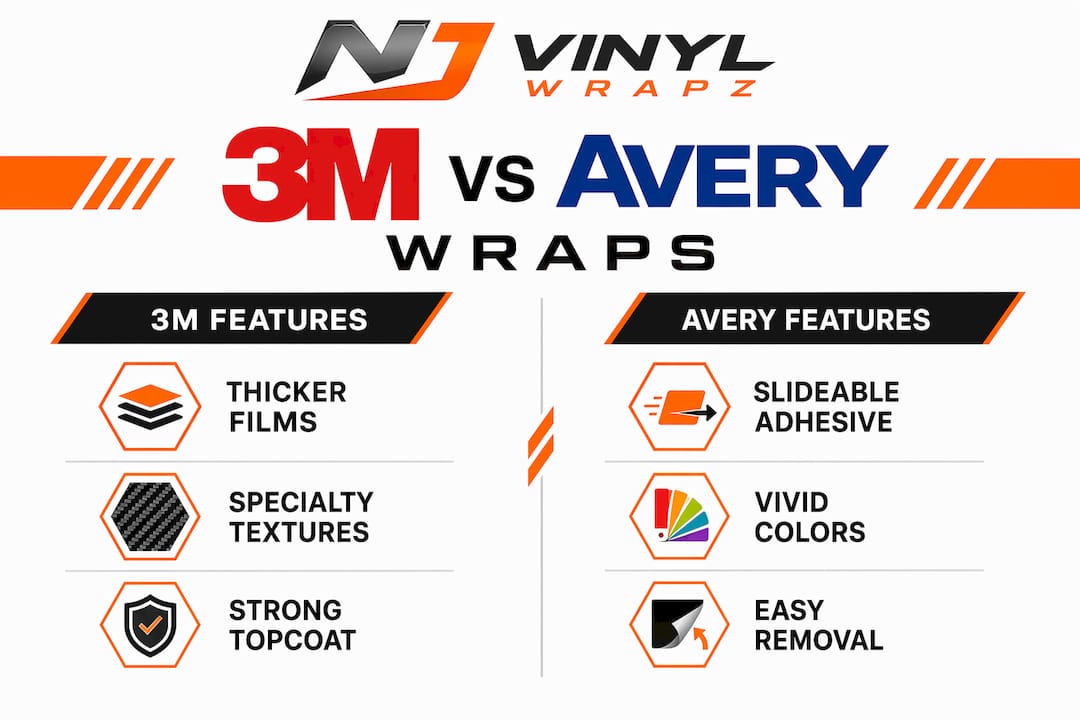
3M offers specialty textures that no other brand matches at scale: matte metallic, carbon fiber, brushed metal, and satin finishes that give vehicles a premium, tactile appearance. These finishes are favored for custom show vehicles, executive fleet cars, and high-end retail brand vehicles where the wrap itself communicates quality. The color depth in 3M’s matte and metallic lines is particularly strong under direct light.
Avery Dennison’s palette is built for commercial branding impact. Its gloss and satin options deliver vivid, saturated color that reads clearly from a distance, which is exactly what a moving billboard needs. Avery’s color consistency across large print runs also makes it reliable for multi-vehicle fleet programs where every van must match precisely.
| Feature | 3M 2080 Series | Avery Supreme Wrapping Film |
|---|---|---|
| Specialty textures | Matte metallic, carbon fiber, brushed metal | Limited specialty textures |
| Gloss and satin range | Strong | Excellent, optimized for branding |
| Color consistency across fleet | Good | Very strong for multi-vehicle programs |
| UV resistance | High, with protective topcoat | High, with long-term color retention |
Both brands resist UV fading well over their rated service lives. For fleet managers, Avery’s color consistency across a large order is a practical advantage. For marketing professionals building a premium brand identity, 3M’s specialty finishes offer visual options that standard gloss films cannot replicate.
What are the durability and removal characteristics of each brand?
Durability and removal behavior determine the total cost of ownership for a fleet wrap program, not just the upfront material price.
3M’s thicker films and protective topcoats deliver strong scratch resistance and UV protection, making them well suited for vehicles operating in harsh environments. A delivery fleet running daily routes in New Jersey winters benefits from that extra physical protection. The films hold up against minor abrasions from brushes, branches, and loading dock contact better than thinner alternatives.
Avery Dennison wraps remove cleanly without heavy residue or paint damage, which is a significant operational advantage for leased vehicles and fleets on annual refresh cycles. Clean removal means lower labor costs at the end of a wrap’s life and no risk of paint damage that could trigger lease return penalties. That clean-release behavior is built into the adhesive chemistry, not just a marketing claim.
Both 3M and Avery carry 3-year manufacturer warranties for vertical vehicle wrap applications. That warranty parity means the decision between brands does not hinge on coverage terms. It hinges on which material properties align with your specific use case. Fleets refreshing wraps every two to three years gain more from Avery’s clean removal. Vehicles staying wrapped for the full warranty period gain more from 3M’s protective topcoat.
For fleet managers tracking vinyl wrap protection across a large vehicle pool, understanding these removal and durability differences directly affects budget planning and vehicle lifecycle decisions.
How to choose the right material based on your branding goals
The choice between Avery and 3M aligns with business goals: Avery for efficient, high-volume commercial fleets; 3M for premium finishes and specialty textures on showcase vehicles. That principle holds across most real-world projects, but the details matter.
Choose Avery Dennison when:
- You are wrapping a fleet of five or more vehicles and need consistent color across all of them
- Your installer team handles high-volume work and values installation speed
- Vehicles are leased or on short refresh cycles where clean removal is a priority
- Your branding relies on bold, saturated gloss or satin color rather than specialty textures
- Budget efficiency per vehicle matters more than premium finish options
Choose 3M when:
- The vehicle is a showcase asset, executive car, or brand flagship where finish quality is the priority
- You need specialty textures like matte metallic, carbon fiber, or brushed metal that Avery does not offer at the same depth
- The vehicle operates in a harsh environment where scratch resistance and UV protection are critical
- Your installer is experienced with higher-tack adhesives and works on complex body lines
- The wrap will stay on for the full warranty period, maximizing the value of 3M’s protective topcoat
Budget is a real factor. 3M’s premium lines typically carry a higher material cost than Avery’s equivalent films. For a single vehicle, that difference is manageable. For a fleet of 30 vehicles, it becomes a line item worth evaluating against the specific performance benefits you actually need. Njvinylwrapz works with both brands and can help you match the right material to your project scope and budget.
Fleet managers can also review Avery wrap material details and 3M fleet wrap benefits separately to build a clearer picture before committing to a material choice.
Commercial fleet operators looking for workflow benchmarks can also find useful context in fleet management case studies that document real-world wrap program outcomes.
Key Takeaways
3M and Avery Dennison are both premium cast vinyl brands, and the right choice depends on whether your priority is installation efficiency, specialty finish quality, or clean fleet lifecycle management.
| Point | Details |
|---|---|
| Material composition matters | Both brands use cast vinyl, which resists shrinkage and outperforms calendered films on curved surfaces. |
| Avery excels in fleet workflows | Easy Apply RS™ adhesive speeds installation and enables clean removal, reducing labor costs on multi-vehicle programs. |
| 3M leads in specialty finishes | Matte metallic, carbon fiber, and brushed metal textures are available in 3M’s lineup and suit premium branding applications. |
| Post-heating is non-negotiable | Heating to 180–200°F after installation activates adhesive fully and prevents edge lifts on both brands. |
| Warranty parity simplifies the decision | Both brands carry 3-year warranties for vertical applications, so the choice rests on performance fit, not coverage terms. |
What I’ve learned from choosing between 3M and Avery on real fleet projects
The most common mistake I see is treating this as a brand loyalty decision rather than a project-fit decision. Fleet managers often default to one brand because a previous installer preferred it. That habit costs money.
On high-volume commercial fleet projects, Avery’s installation speed is a genuine operational advantage. I have watched experienced installers cut wrap time per vehicle by a meaningful margin simply because the film slides and repositions without fighting them. On a 20-van fleet, that time savings is real money.
On custom and premium work, 3M’s specialty finishes deliver results that Avery’s standard palette cannot match. A brushed metal or matte metallic finish on an executive vehicle communicates something that a standard gloss wrap does not. Clients notice it, and it reflects on the brand.
The one thing both brands punish equally is skipping post-heat. I have seen beautiful installs fail within weeks because an installer rushed the final step. The material is not the problem. The process is. Whichever brand you choose, post-heating to the correct temperature is the step that separates a wrap that lasts from one that starts lifting at the first cold snap.
My honest recommendation: use Avery for fleet efficiency and 3M for premium showcase work. If you are unsure which fits your project, talk to an installer who works with both regularly, not one who only stocks one brand.
— Krunal
Njvinylwrapz uses both 3M and Avery for professional vehicle wrap results
Njvinylwrapz has over 10 years of experience installing premium vehicle wraps across New Jersey using both 3M and Avery Dennison materials. The team works with fleet managers and business owners to match the right film to each project, whether that means Avery’s installation efficiency for a 15-van commercial fleet or 3M’s specialty finishes for a high-visibility brand vehicle.
Every wrap is installed in a climate-controlled facility by licensed, insured professionals who follow the full post-heat process on every panel. Njvinylwrapz offers full vehicle wraps and fleet wrap programs with material consultations included. Contact Njvinylwrapz to discuss your project and get a recommendation based on your specific vehicles, branding goals, and budget.
FAQ
What is the main difference between 3M and Avery wrap films?
3M offers thicker films with specialty finishes and a stronger protective topcoat, while Avery Dennison’s Easy Apply RS™ adhesive prioritizes installation speed and clean removal for fleet applications.
How long do 3M and Avery vehicle wraps last?
Both brands carry 3-year manufacturer warranties for vertical vehicle wrap applications, with 3M’s 2080 series rated for 5–8 years of color retention under normal outdoor conditions.
Which brand is better for a commercial fleet wrap program?
Avery Dennison is generally preferred for high-volume commercial fleet programs because its slideable adhesive reduces installation time and its clean-release adhesive simplifies wrap removal at the end of a lease or refresh cycle.
Does post-heating really matter for wrap durability?
Post-heating to 180–200°F is required to fully activate the adhesive at edges and recesses. Skipping this step causes edge lifts and can void the manufacturer warranty on both 3M and Avery films.
Can I use 3M and Avery materials on the same vehicle?
Mixing brands on a single vehicle is not recommended. Color matching and adhesive behavior differ between brands, which can create visible inconsistencies and uneven wear over time.