
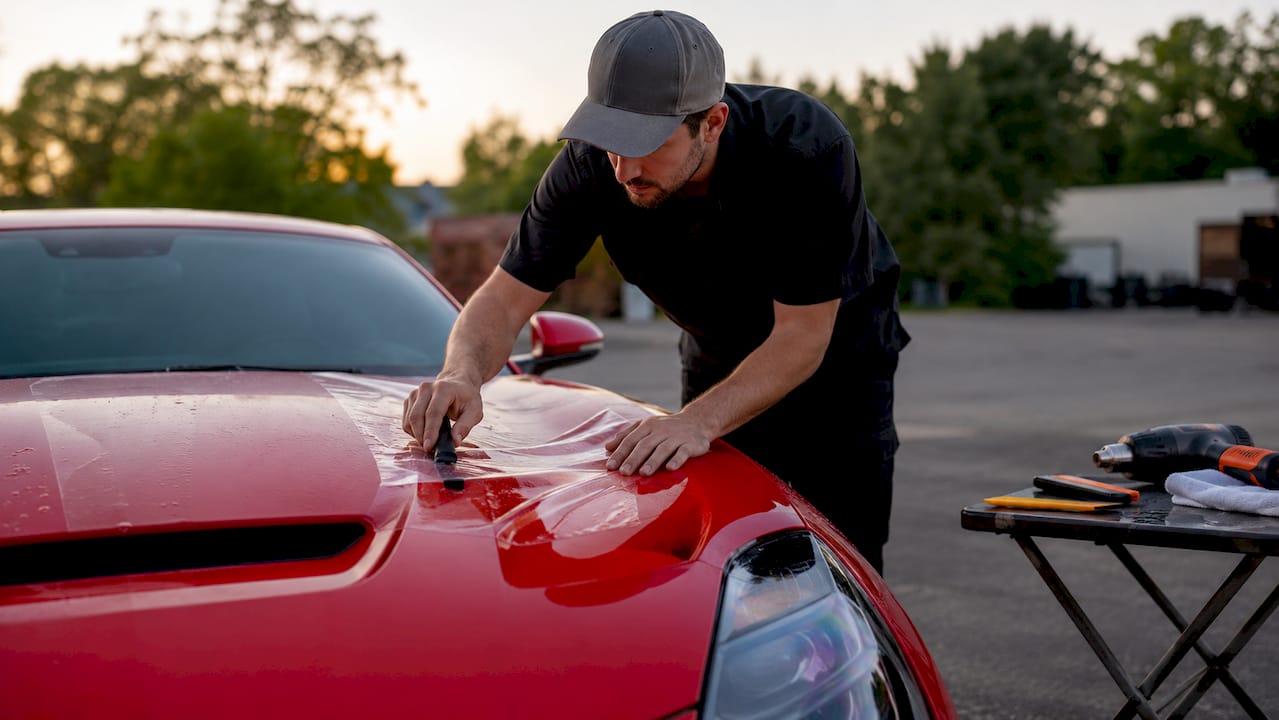
Paint protection film is defined as a transparent thermoplastic polyurethane (TPU) film applied directly to a vehicle’s painted surfaces to act as a sacrificial, self-healing barrier against rock chips, scratches, UV damage, and environmental contaminants. Commonly called PPF in the auto industry, this film typically runs 6–10 mils thick and lasts 7–10 years or more with proper care. Brands like XPEL and 3M have made PPF a mainstream choice for vehicle owners who want factory paint preserved without sacrificing appearance. If you drive anything worth protecting, understanding how PPF works and what it costs is the smartest place to start.
What is paint protection film made of?
PPF is a multi-layer film engineered specifically for automotive surfaces. Each layer serves a distinct function, and together they create protection that no wax or spray sealant can match.
The core structure includes:
- TPU base layer: The main protective body of the film. Thermoplastic polyurethane absorbs impact energy from road debris and flexes without cracking.
- Pressure-sensitive adhesive: Bonds the film to paint without damaging the clear coat. Designed to release cleanly when removed by a professional.
- Self-healing topcoat: The outermost layer activates with heat. Minor scratches disappear when exposed to sunlight or warm water, restoring the surface without any manual effort.
- Hydrophobic coating: Repels water, dirt, and road grime. This makes routine washing faster and keeps the vehicle looking cleaner between washes.
The hydrophobic barrier also preserves gloss over time by reducing the abrasive contact that comes from frequent washing. That is a detail most owners overlook until they see the difference on a film-protected panel versus an unprotected one.
Pro Tip: Run warm water over a light scratch on your PPF and watch it disappear within minutes. This self-healing feature works best when the film is relatively new and the topcoat is intact.
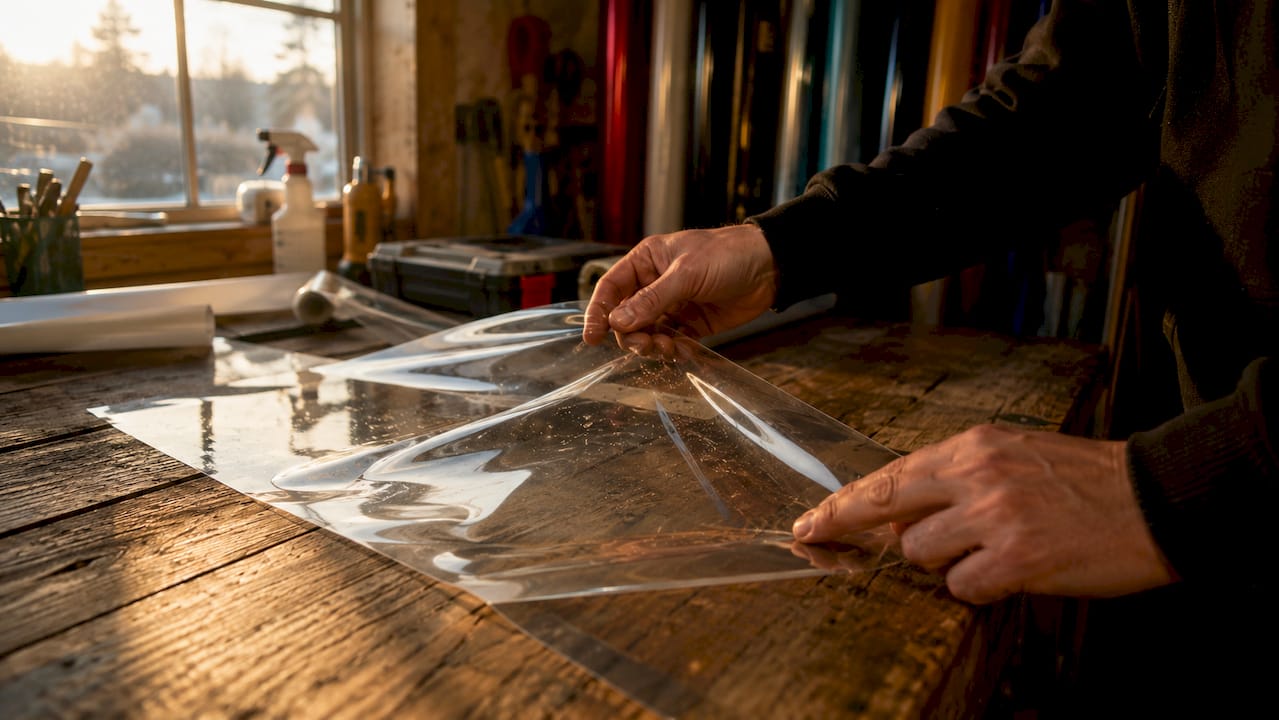
How does paint protection film installation work?
Installation is not a weekend project. A professional PPF job follows a precise sequence, and shortcuts at any stage compromise the result for years to come.
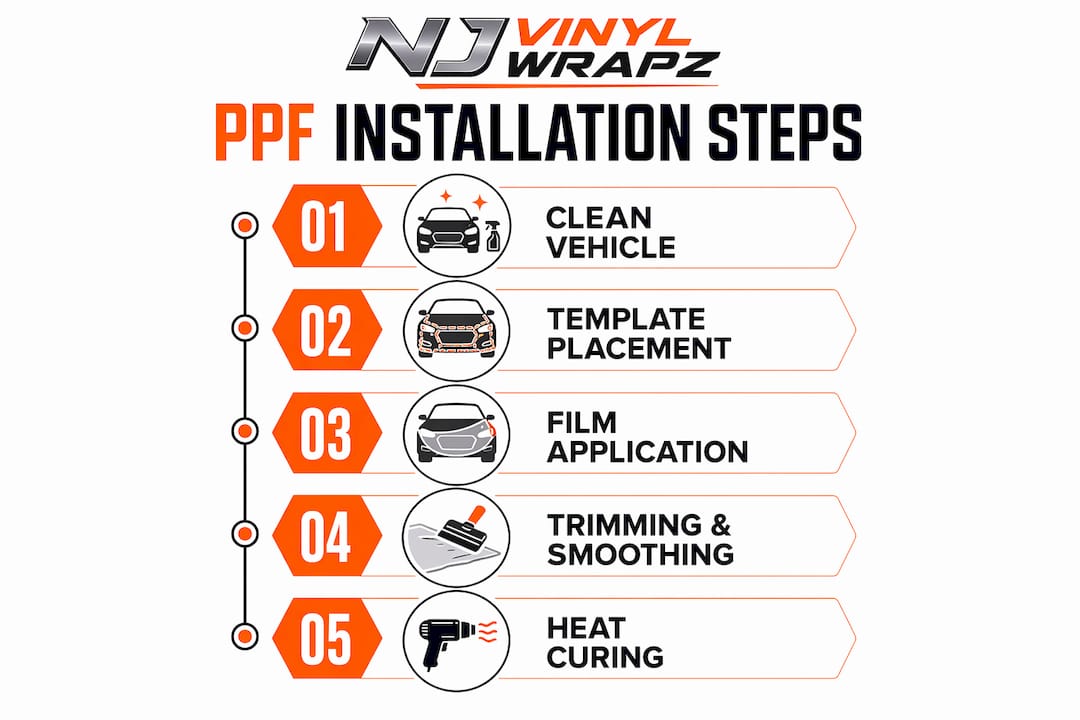
- Paint inspection under controlled lighting. Before any film is cut, the vehicle’s paint is examined closely for swirl marks, oxidation, or chips. Locking imperfections under film permanently encases them, so this step is non-negotiable.
- Decontamination and surface prep. The paint is clay-barred, cleaned, and dried. Any contamination left on the surface will cause adhesion problems or bubbles under the film.
- Film cutting and fitting. Most professional shops use computer-plotted templates matched to your vehicle’s exact make and model. This reduces waste and improves edge accuracy.
- Application in a dust-free environment. Professional, controlled environments reduce contamination risks that cause edge lift and premature failure. A garage at home simply cannot replicate this.
- Edge wrapping all panel edges. Wrapping film around panel edges prevents water and road salt from seeping underneath. Skipping this step causes failure within 2–3 years.
- Curing period. After installation, the vehicle needs 48–72 hours before washing or exposure to heavy moisture. This allows the adhesive to fully bond and any air pockets to settle.
Pro Tip: Ask your installer whether they use computer-cut templates or hand-cut the film on the car. Computer-cut templates produce cleaner edges and reduce the risk of accidental paint scratches during trimming.
What does PPF installation cost?
Cost depends on coverage level and vehicle size. Here are the 2026 ranges you should expect:
| Coverage level | Estimated cost |
|---|---|
| Partial front end (hood, mirrors, bumper) | $1,200–$1,800 |
| Full front end | $2,200–$4,500 |
| Full vehicle coverage | $5,500–$8,000+ |
Full vehicle coverage can require 30–40 hours of labor plus prep time. That scale explains why pricing climbs quickly for complete protection packages. A full impact package alone takes roughly 8 hours of hands-on installation work.
Applying PPF to older or repainted vehicles carries an additional risk. Poorly bonded paint can peel away when the film is eventually removed. Reputable installers will refuse the job if the paint surface is compromised. That is a sign of professionalism, not reluctance.
PPF vs. ceramic coating: which one does your car actually need?
This is the most common question vehicle owners ask, and the answer is straightforward. PPF and ceramic coatings are not competing products. They solve different problems.
PPF stops physical impact damage. Ceramic coating adds gloss and water resistance but offers no meaningful protection against rock chips or scratches. Thinking of ceramic coating as a replacement for PPF is like wearing a rain jacket to stop a punch.
| Feature | PPF | Ceramic coating |
|---|---|---|
| Rock chip protection | Yes | No |
| Scratch resistance | High | Moderate |
| Self-healing | Yes (topcoat) | No |
| Hydrophobic properties | Yes | Yes (stronger) |
| Gloss enhancement | Moderate | High |
| Lifespan | 7–10+ years | 2–5 years |
| Cost (full vehicle) | $5,500–$8,000+ | $1,000–$3,000 |
The expert recommendation is to install PPF first, then apply a ceramic coating on top of the film. This combination gives you physical impact protection from the PPF and the hydrophobic, gloss-boosting benefits of ceramic on the outer surface. The ceramic also makes the PPF easier to clean and extends the life of the topcoat.
Key advantages of PPF that ceramic coating cannot replicate:
- Absorbs and disperses energy from road debris before it reaches paint
- Self-heals light surface scratches with heat exposure
- Protects against rock chips and paint damage on high-impact zones like the front bumper, hood, and side mirrors
- Preserves resale value by keeping factory paint intact under the film
The main downside of PPF is cost and eventual replacement. Film does not last forever. After 10 years or so, yellowing or edge lifting signals it is time for removal and reinstallation. Removal by an unqualified installer on compromised paint is where things go wrong.
How to maintain paint protection film
PPF is low-maintenance by design, but a few habits will extend its life significantly.
- Wash with pH-neutral soap. Harsh detergents degrade the hydrophobic topcoat faster. Use products specifically labeled safe for PPF or ceramic-coated surfaces.
- Avoid high-pressure washing at close range. Directing a pressure washer at film edges can lift the adhesive over time. Keep the nozzle at least 12 inches from panel edges.
- Do not use abrasive compounds or clay bars on the film. These strip the self-healing topcoat. If the film needs decontamination, use a PPF-safe iron remover instead.
- Activate self-healing with heat. For light scratches, park in direct sunlight for 20–30 minutes or pour warm water over the affected area. The topcoat reflows and the scratch closes.
- Inspect edges every six months. Edge lifting is the earliest sign of failure. Catching it early means a simple repair rather than a full panel replacement.
Environmental factors matter too. Vehicles parked outdoors in harsh climates, particularly those exposed to road salt in New Jersey winters, experience faster edge degradation without proper sealing. Consulting paint protection film installers annually for a condition check is a practical habit for any owner who wants the full lifespan from their investment.
Pro Tip: Never apply a wax or sealant containing carnauba over PPF. It can cloud the film surface and interfere with the self-healing topcoat. Use a PPF-specific spray detailer instead.
Key takeaways
Paint protection film is the most effective physical barrier available for preserving factory paint against rock chips, scratches, and environmental damage over a 7–10 year lifespan.
| Point | Details |
|---|---|
| PPF definition | A transparent TPU film that acts as a sacrificial barrier protecting vehicle paint from physical damage. |
| Self-healing technology | Minor scratches disappear with heat exposure, keeping the film surface looking fresh without manual repair. |
| Installation quality matters | Dust-free environments, edge wrapping, and proper paint prep determine how long the film performs. |
| PPF and ceramic work together | Install PPF first for impact protection, then ceramic coating on top for gloss and easier maintenance. |
| Maintenance is simple | pH-neutral soap, edge inspections every six months, and avoiding abrasive products preserve PPF performance. |
Why I think most vehicle owners underestimate PPF until it is too late
I have watched the PPF market evolve significantly over the past decade. When the film first became widely available to everyday drivers, it was thick, yellowed within a few years, and had visible edges that made it obvious from 10 feet away. That version of PPF deserved skepticism.
The product today is a different story. Optically clear films from brands like XPEL and 3M are nearly invisible on the vehicle, and the self-healing topcoats genuinely work. The technology caught up to the promise.
What I see consistently is that owners invest in PPF after their first rock chip on a new vehicle, not before. That chip costs them a $300 paint repair and a permanent mark on the factory finish. The same money applied toward a partial front-end package before the damage would have protected the most vulnerable panels for years.
The other misconception I encounter regularly is that PPF is only for exotic cars or collectors. That thinking made sense when full-vehicle coverage cost $10,000 and the film quality was inconsistent. Partial front-end packages now start around $1,200 and cover the zones that take 90% of road damage. That is an accessible investment for any driver who plans to keep their vehicle for more than three years.
The one thing I would not compromise on is the installer. A great film applied poorly will fail at the edges within two years. A good installer in a controlled environment, using proper prep and edge-wrapping technique, is the difference between a 10-year result and a 3-year disappointment. Choose the shop before you choose the film brand.
— Krunal
Protect your vehicle with Njvinylwrapz
Njvinylwrapz brings over 10 years of professional installation experience to every PPF and vehicle wrap project across New Jersey. The team works in climate-controlled facilities using trusted materials from 3M and Avery, applying the same preparation standards and edge-wrapping techniques that determine long-term film performance.

Whether you need a partial front-end package to protect high-impact zones or a full vehicle wrap with integrated PPF coverage, Njvinylwrapz delivers results built to last. Contact Njvinylwrapz today to schedule a consultation and get a quote matched to your vehicle and coverage goals.
FAQ
What is paint protection film used for?
Paint protection film is applied to vehicle painted surfaces to protect against rock chips, scratches, UV damage, and road contaminants. It acts as a transparent, sacrificial layer that absorbs damage before it reaches the factory paint.
How long does paint protection film last?
PPF typically lasts 7–10 years or more with proper maintenance. Lifespan depends on installation quality, climate exposure, and how well the film is cleaned and inspected over time.
Can paint protection film be removed without damaging paint?
Yes, professionally installed PPF can be removed cleanly from paint in good condition. Removal from poorly bonded or repainted surfaces carries a risk of paint peeling, which is why professional assessment before installation matters.
Is paint protection film worth the cost?
For drivers who plan to keep their vehicle for three or more years, PPF pays for itself by preventing paint repairs and preserving resale value. Partial front-end packages starting around $1,200 cover the zones that absorb the most road damage.
Does paint protection film require special maintenance?
PPF requires pH-neutral soap, avoidance of abrasive compounds, and periodic edge inspections every six months. The self-healing topcoat handles minor scratches automatically with heat exposure, keeping routine care simple.