
When a vehicle wrap fails two years into a five-year campaign, you are not just replacing vinyl — you are reprinting designs, rescheduling installations, and losing weeks of brand visibility on the road. Understanding what is durable wrap material before you commit to a fleet project is the difference between advertising that pays for itself and a recurring budget drain. The vinyl market is full of options, price points, and competing claims, and most fleet managers in New Jersey do not have time to sort through them. This guide will.
Table of Contents
- Understanding durable wrap materials: cast vinyl vs. calendared vinyl
- Why cast vinyl is the premium choice for fleet durability
- Factors influencing the lifespan of vehicle wraps in New Jersey
- Comparing vinyl wrap options: durability, cost, and suitability for NJ fleets
- How to choose and maintain durable vehicle wraps for effective fleet branding in New Jersey
- Rethinking durability: what most fleet managers overlook about vinyl wraps
- Explore NJ Vinyl Wrapz solutions for durable fleet vehicle wraps
- Frequently asked questions
Key Takeaways
| Point | Details |
|---|---|
| Durable vinyl types | Cast vinyl is the premium wrap material offering superior durability and flexibility compared to calendared vinyl. |
| Material impact on lifespan | A vehicle wrap’s lifespan hinges on vinyl quality, installation, and environmental exposures like UV and temperature swings. |
| Cast vinyl benefits | Premium cast vinyl films like 3M’s IJ180mC can last up to 7–10 years outdoors with proper care and deliver excellent fleet branding ROI. |
| Maintenance matters | Regular professional installation and maintenance practices prevent early wrap failure and prolong brand visibility. |
| Choosing the right wrap | Selecting between cast, calendared, and hybrid vinyl depends on budget, vehicle shape, and desired durability for your fleet. |
Understanding durable wrap materials: cast vinyl vs. calendared vinyl
Not all vinyl wraps are created from the same process, and that manufacturing difference determines nearly everything about wrap durability. The two dominant categories in vehicle wrapping are cast vinyl and calendared vinyl, and confusing one for the other is one of the most common and costly mistakes fleet buyers make.
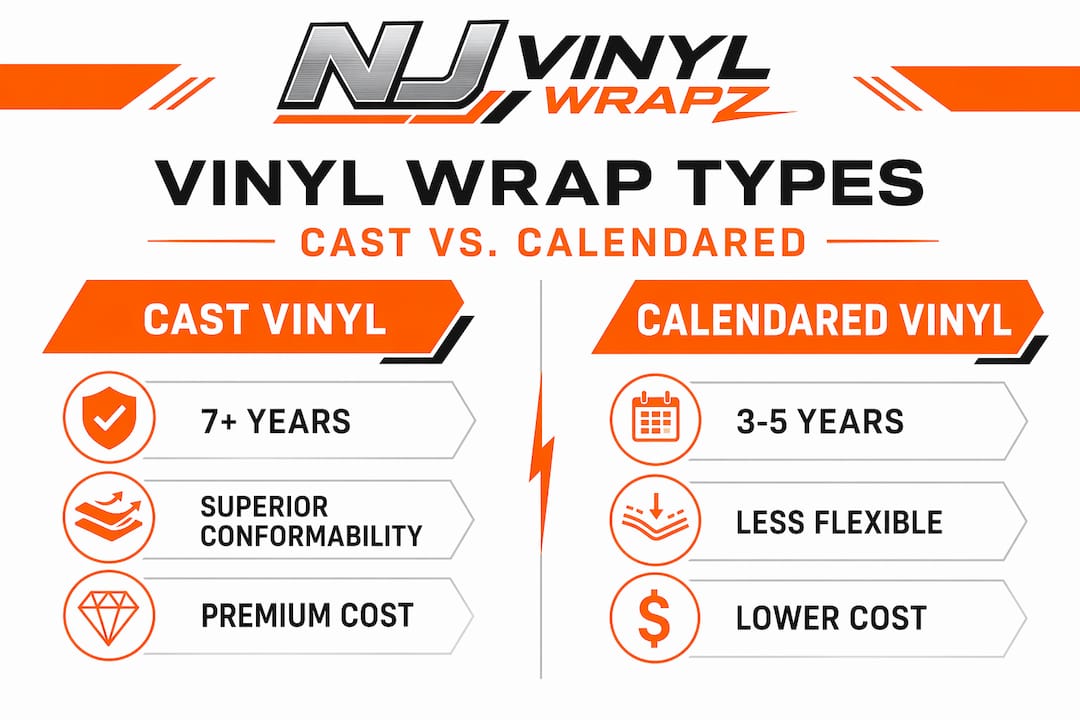
Cast vinyl begins as a liquid mixture poured onto a casting sheet and baked into a thin, flexible film that is stable and long-lasting, ideal for commercial fleets with durability of 5 to 7 years. Because the film is never mechanically compressed, it contains almost no internal stress. That means it lies flat, conforms to curves and rivets, and stays put through seasons of heat and cold without pulling away from edges.
Calendared vinyl takes a completely different path. Manufacturers heat vinyl resin into a thick slab and push it through heavy rollers to reach the target thickness. The result is a denser, stiffer film that retains memory of its original flat shape. On a flat van panel it can look fine initially. On a door handle, mirror cap, or bumper contour, it fights back against the surface and eventually wins.
Here is a side-by-side breakdown:
| Feature | Cast vinyl | Calendared vinyl |
|---|---|---|
| Manufacturing | Liquid poured, baked | Resin rolled under heat |
| Thickness | 2 mil (thin, flexible) | 3–4 mil (thicker, stiffer) |
| Conformability | Excellent on complex curves | Best on flat or near-flat surfaces |
| Durability outdoors | 5–7 years | 1.5–3 years |
| Internal stress | Minimal | Higher, causes shrinkage |
| Ideal use | Full fleet wraps | Short-term or partial graphics |
Key differences to remember when specifying a fleet order:
- Cast vinyl will not shrink back from edges over time because it has no stress to release
- Calendared vinyl is a workable option for temporary promotions on flat surfaces
- Wrapping a vehicle with complex body lines in calendared vinyl almost guarantees early edge lift
- Understanding commercial wrapping advantages helps you frame the ROI case before selecting materials
Why cast vinyl is the premium choice for fleet durability
Cast vinyl earns its reputation not from marketing but from physics. The liquid casting process produces a film with no residual tension. When you stretch it around a mirror or press it into a recessed panel, it stays where you put it. Calendared vinyl wants to return to its flat original shape. Over time, that tension wins.
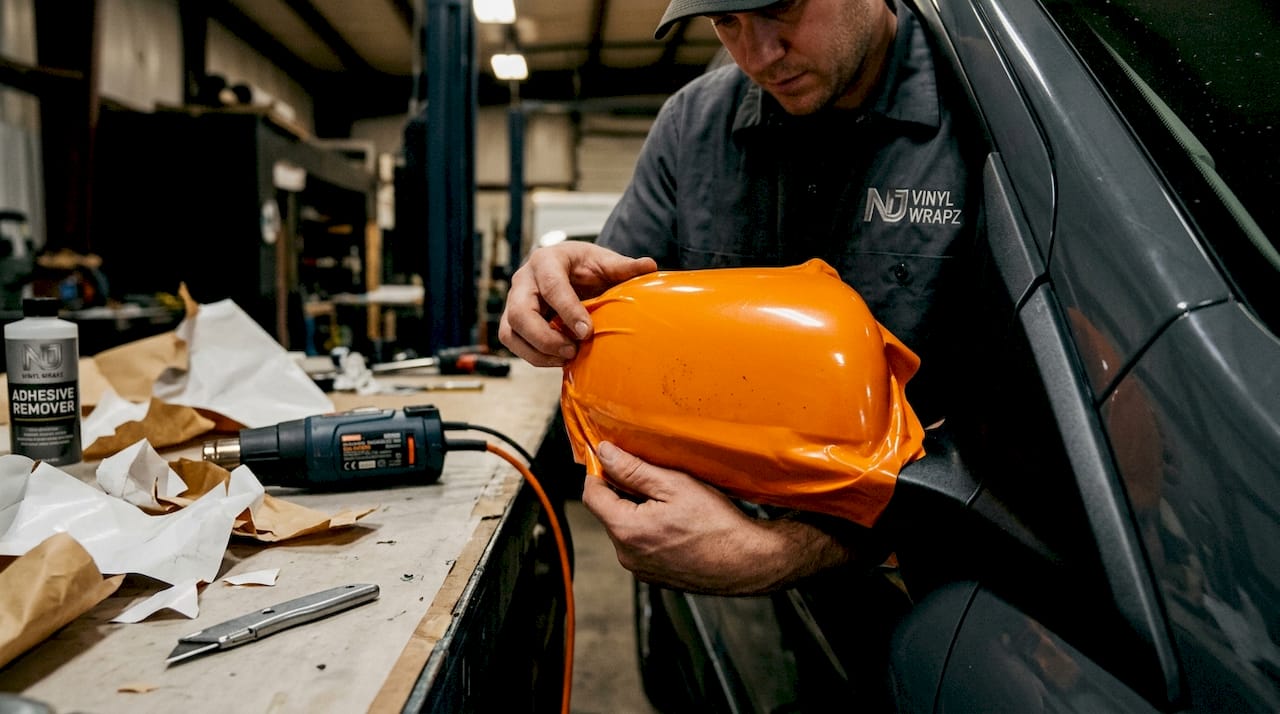
3M IJ180mC series cast vinyl films last up to 7 to 10 years outdoors with proper laminate and maintenance, which sets a performance benchmark that no calendared product comes close to matching for fleet applications.
The practical benefits for your fleet are significant:
- UV resistance: Cast vinyl is formulated with UV inhibitors that slow color shift. Your brand colors on vehicle 12 will still match vehicle 1 after four years of New Jersey sun.
- Crack resistance: Cast vinyl’s casting process eliminates internal stress, making it resistant to cracking, peeling, and fading compared to calendared vinyl, especially through freeze and thaw cycles.
- Conformability: Complex vehicle shapes, delivery trucks with rivet lines, vans with pronounced wheel arches — cast vinyl wraps them all without bridging.
- Laminate compatibility: Premium cast films pair with high-performance laminates that add another layer of UV, abrasion, and chemical resistance.
“When you manage a fleet of 20 vehicles, material-grade differences are not marginal. A two-year lifespan difference across a whole fleet is tens of thousands of dollars in avoided rewraps.”
Pro Tip: Always confirm the specific product series your installer is quoting. Ask for the product data sheet by name. “Cast vinyl” is a category, not a guarantee. A reputable installer using 3M vehicle wrap benefits from a trusted brand gives you documented performance specs before you commit.
Factors influencing the lifespan of vehicle wraps in New Jersey
Material grade sets the ceiling on wrap durability. Installation quality and maintenance habits determine whether you ever reach it. Wrap lifespan depends on UV exposure, temperature swings, installation quality, and maintenance, and improper prep causes bubbling, peeling, and early failure regardless of what grade vinyl was used.
For New Jersey specifically, your fleet faces a particularly demanding environment. Summers bring sustained heat and direct sun. Winters bring road salt, freezing temperatures, and the repeated mechanical stress of thermal expansion and contraction. That cycle stresses adhesive bonds harder than a warm-climate fleet would experience.
Four factors that determine real-world durability for NJ fleets:
- UV exposure management: Park wrapped vehicles in shade or covered lots when possible. Even the best UV-resistant cast vinyl loses color faster when left baking on an asphalt lot all day.
- Temperature variation response: Ensure your installer uses materials and adhesives rated for the full temperature range New Jersey sees. Cheap adhesives go brittle in cold and can soften and migrate in summer heat.
- Installation quality: A climate-controlled installation environment matters. Dust contamination under the vinyl causes bubbles. Improper squeegee pressure creates adhesion voids. Edge seal quality determines whether water infiltrates under the film.
- Maintenance routine: Wash wrapped vehicles regularly with a mild soap and soft cloth or touchless wash. Avoid pressure washers aimed directly at wrap edges. Wax is optional but should be vinyl-safe if used.
Pro Tip: Ask your installer for a written maintenance guide specific to the vinyl product installed. The right cleaning protocol for protecting vinyl wraps is different from waxing painted metal, and your drivers need to know the difference.
Comparing vinyl wrap options: durability, cost, and suitability for NJ fleets
Understanding material categories is one thing. Making a budget decision across a fleet of vehicles requires a more direct comparison. There is a third category worth knowing: hybrid polymeric vinyl.
Hybrid polymeric vinyl offers a middle ground with a 5 to 7 year lifespan, better conformability, and UV resistance compared to calendared vinyl, making it suitable for more intricate vehicle shapes.
| Material type | Outdoor lifespan | Conformability | Relative cost | Best for |
|---|---|---|---|---|
| Cast vinyl | 7–10 years | Excellent | Higher upfront | Full fleet wraps, complex shapes |
| Hybrid polymeric | 5–7 years | Good | Mid-range | Budget-conscious fleet branding |
| Calendared vinyl | 1.5–3 years | Limited | Lower | Flat panels, temporary graphics |
What this means for fleet decision-making:
- Full fleet rebranding projects with multi-year commitments should default to cast vinyl. The per-year cost is lower than it looks.
- Seasonal campaigns or temporary fleet graphics for a product launch or event work fine with calendared vinyl on flat surfaces.
- Growing fleets on a tight budget that still want multi-year performance should look closely at hybrid polymeric. It bridges cost and performance without the full premium of cast.
- Speak with your installer about fleet wrap services that specify material grades upfront so budget conversations are grounded in real performance data.
How to choose and maintain durable vehicle wraps for effective fleet branding in New Jersey
You now have the framework. Here is how to apply it to a real purchasing and care decision.
Investing in premium cast vinyl may cost more upfront but delivers lower cost-per-year and higher ROI due to long-term durability and brand consistency. That math becomes even clearer when you account for the disruption of rewrapping an active fleet vehicle.
Follow these steps to make a sound material choice and protect your investment:
- Audit your fleet’s exposure profile. Vehicles that sit outside year-round in New Jersey need cast vinyl. Vehicles garaged nightly or used seasonally may tolerate hybrid materials without sacrificing much lifespan.
- Specify UV-resistant laminate. The base film is only half the story. A quality overlaminate rated for outdoor exposure adds years to color and scratch resistance.
- Require documented surface preparation. Your installer should degrease, clean, and sometimes clay-bar vehicles before wrapping. Ask what their prep protocol is. If they cannot describe it, that is a warning sign.
- Establish a cleaning schedule. Bi-weekly washes with vinyl-safe soap are enough for most fleets. Monthly inspections for edge lift or bubbles let you address small issues before they become large ones.
- Protect high-wear areas. Bumpers, door edges, and door handles take more abuse. A clear protective film layer over vinyl in those zones adds meaningful protection without changing the appearance.
Pro Tip: When briefing an installer on wrapping fleet vehicles for brand consistency, ask them to document the exact product SKU, laminate, and print settings used on your first vehicle. That record makes matching future vehicle wraps much easier as your fleet grows.
Rethinking durability: what most fleet managers overlook about vinyl wraps
Here is something the industry rarely says out loud: a significant portion of “premature wrap failures” are not material failures at all. They are installation failures and maintenance failures dressed up as material problems.
We have seen vehicles wrapped with premium cast vinyl look terrible at the 18-month mark because the surface was not properly cleaned before installation. The adhesive bonded to contamination instead of paint, and edge lift followed within months. The vinyl did not fail. The process failed.
The real test of any wrap is not how it looks on day one. The actual test of a vehicle wrap is not how it looks on installation day, but how it performs over months of exposure and care.
What separates a five-year wrap from a two-year wrap on identical material is usually this:
- Whether the installer prepped the surface or skipped steps to hit a deadline
- Whether the garage temperature was controlled during application
- Whether the edges were properly sealed and heat-set after wrapping
- Whether the fleet manager put a cleaning protocol in place or left it to drivers
This is why the cheapest installer quote almost always costs more over time. A fleet manager in New Jersey who chooses an installer based on price alone and skips asking about prep protocol is not saving money. They are prepaying for a rewrap.
The better frame is to treat wrap durability as a system: premium material, skilled installation, and consistent maintenance. Remove any one leg and the whole thing shortens. Understanding this protects your wrap warranties and keeps your fleet looking professional for the full intended lifespan.
Explore NJ Vinyl Wrapz solutions for durable fleet vehicle wraps
Knowing what to ask for is half the battle. Finding an installer who actually delivers it is the other half.
NJ Vinyl Wrapz has spent over a decade wrapping commercial fleets across New Jersey using premium cast vinyl from trusted names like 3M and Avery. Every project starts with documented surface preparation in a climate-controlled facility and ends with material specs on file for future fleet consistency. Whether you need full vehicle wraps for a complete rebrand or partial graphics for a growing fleet, the process is built around material quality and long-term performance. Explore the full range of wrap options or go straight to fleet wrap services to start a conversation about your specific fleet and budget.
Frequently asked questions
What is the most durable vehicle wrap material?
Cast vinyl is the most durable wrap material, with premium 2 mil cast vinyl films like the 3M IJ180mC series rated for up to 7 to 10 years outdoors when paired with a quality laminate and professional installation.
How long does a typical cast vinyl wrap last on fleet vehicles in New Jersey?
With proper maintenance and high-quality materials, cast vinyl durability typically ranges from 5 to 7 years, influenced by New Jersey’s UV exposure, temperature cycles, and how consistently the wrap is cleaned.
Is professional installation important for wrap durability?
Absolutely. Poor prep leads to early failure including bubbling, peeling, and shrinkage, which means even premium cast vinyl will underperform without a skilled, properly equipped installer.
What maintenance extends the life of a durable vehicle wrap?
Routine gentle cleaning with vinyl-safe soap, UV protection where possible, and prompt attention to edge lift are the core habits, since environmental exposure and maintenance significantly impact color stability and adhesive bond strength over time.
Are there budget-friendly durable wrap options for fleets?
Yes. Hybrid polymeric vinyl lasts 5 to 7 years with better conformability and UV resistance than calendared vinyl, making it a practical choice for fleets that need extended lifespan without the full cost of premium cast vinyl.