
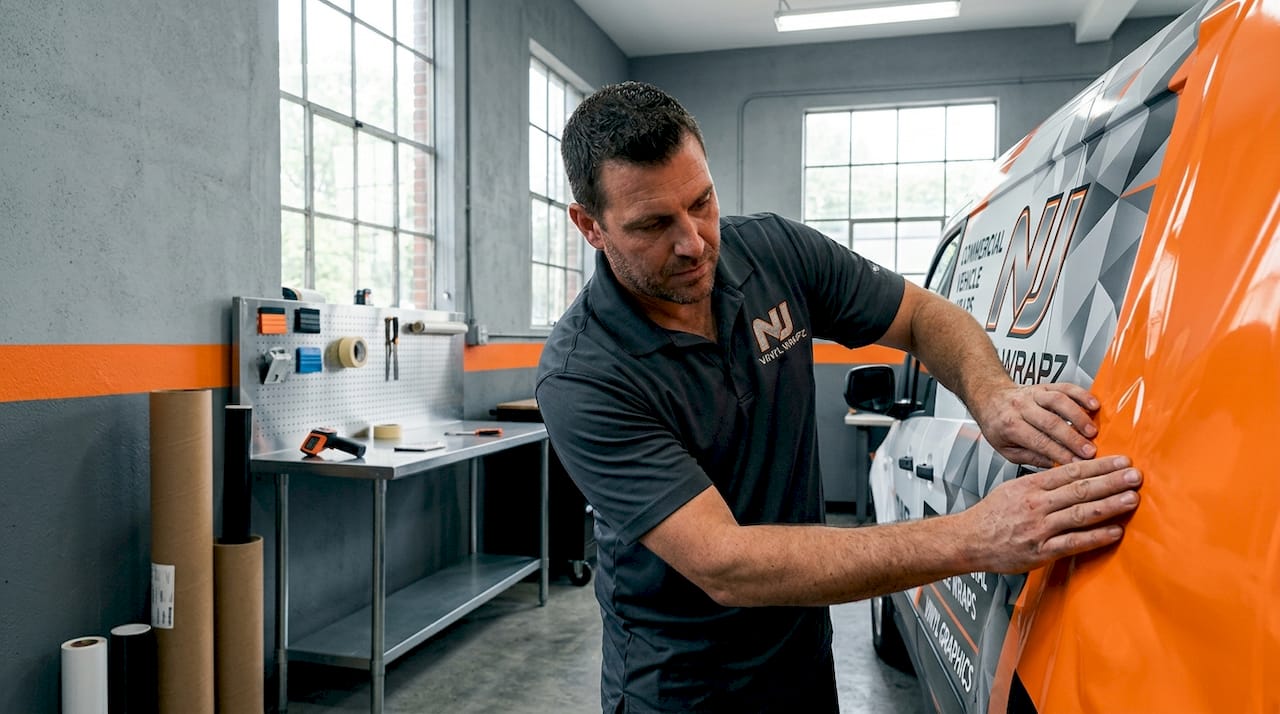
When someone asks what is climate-controlled wrap, the answer surprises most people. It’s not a special vinyl material or a high-tech product you can buy off a shelf. It refers to the installation environment where the wrap is applied, specifically the management of temperature, humidity, and air conditions inside the shop. Get those conditions wrong, and even the most expensive film from 3M or Avery can fail within months. Get them right, and your wrap delivers years of crisp, bonded results that hold up through New Jersey winters and summer heat alike.
Table of Contents
- Key takeaways
- What climate-controlled wrap actually means
- How adhesion and material behavior work under heat and cold
- Climate-controlled bays vs. outdoor or uncontrolled environments
- How to prepare for a quality climate-controlled installation
- My take after years working with vehicle wraps
- Get a professional wrap that actually lasts
- FAQ
Key takeaways
| Point | Details |
|---|---|
| Not a product, a process | Climate-controlled wrap describes installation conditions, not a special type of vinyl material. |
| Temperature range matters | The recommended installation range is 60°F to 80°F, with the sweet spot at 68°F to 75°F. |
| Substrate beats ambient air | A vehicle’s metal surface can stay cold even in a warm shop, causing adhesion failure and bubbling. |
| Controlled bays reduce rework | Professional climate-controlled facilities produce more consistent results and fewer failed installations. |
| Preparation is half the job | Acclimating the vehicle, cleaning surfaces, and controlling moisture before application protects your investment. |
What climate-controlled wrap actually means
The phrase “climate-controlled wrap” trips people up because it sounds like a product description. It isn’t. What the term actually describes is a controlled installation environment designed to give vinyl wraps the best possible conditions to adhere, stretch, and cure properly. Think of it the way a painter thinks about humidity before applying a coat of paint. The conditions matter as much as the material.
The core variables that define a climate-controlled bay are:
- Temperature: The recommended range is 60°F to 80°F, with peak adhesive performance happening between 68°F and 75°F. Outside this range, vinyl becomes either too rigid or too soft to apply predictably.
- Humidity: High humidity introduces moisture between the film and the vehicle surface. That moisture blocks proper adhesive bonding and is one of the leading causes of bubbling after installation.
- Airflow and dust: Uncontrolled airflow brings in particulates that get trapped under the film and create visible imperfections. A sealed, filtered bay eliminates this variable.
It’s worth being specific about what climate-controlled wrap is not. Temperature-controlled packaging in the logistics world refers to insulated packaging that keeps products cold or ambient during shipping, which is a completely different concept. When a wrap shop advertises climate-controlled installation, they are talking about the bay environment, not a specialized film product.
Pro Tip: Before booking a wrap installation, ask the shop directly what temperature and humidity they maintain. A shop that can answer with specific numbers is a shop that takes quality seriously.
How adhesion and material behavior work under heat and cold
This is where understanding the science pays off without needing a chemistry degree. Vinyl wrap adhesive bonds to a surface through a process called “wetting out,” where the adhesive flows into the microscopic texture of the vehicle’s paint to create a strong mechanical bond. Temperature controls how well this happens.
Here is what goes wrong when the environment is off:
- Cold air, cold vinyl. Below 60°F, vinyl film becomes rigid and loses its flexibility. Trying to stretch stiff film over complex curves like door handles or bumpers leads to cracking, tearing, and edges that won’t conform and will eventually lift.
- Cold substrate, warm air. This one catches installers off guard. A vehicle parked outside in February and then pulled into a warm shop may read 68°F on an air thermometer, but the metal panels can still be 45°F or colder. Warm air meeting a cold surface causes condensation to form on the panel, and that thin layer of moisture sits right between the adhesive and the paint. The bond fails before the job is even done.
- Excessive heat. Above 80°F, adhesive becomes overly aggressive during application, reducing your ability to reposition the film and increasing the chance of air pockets getting locked in permanently.
- Humidity spikes. High moisture content in the air accelerates the condensation problem and can also affect how quickly the adhesive cures after installation.
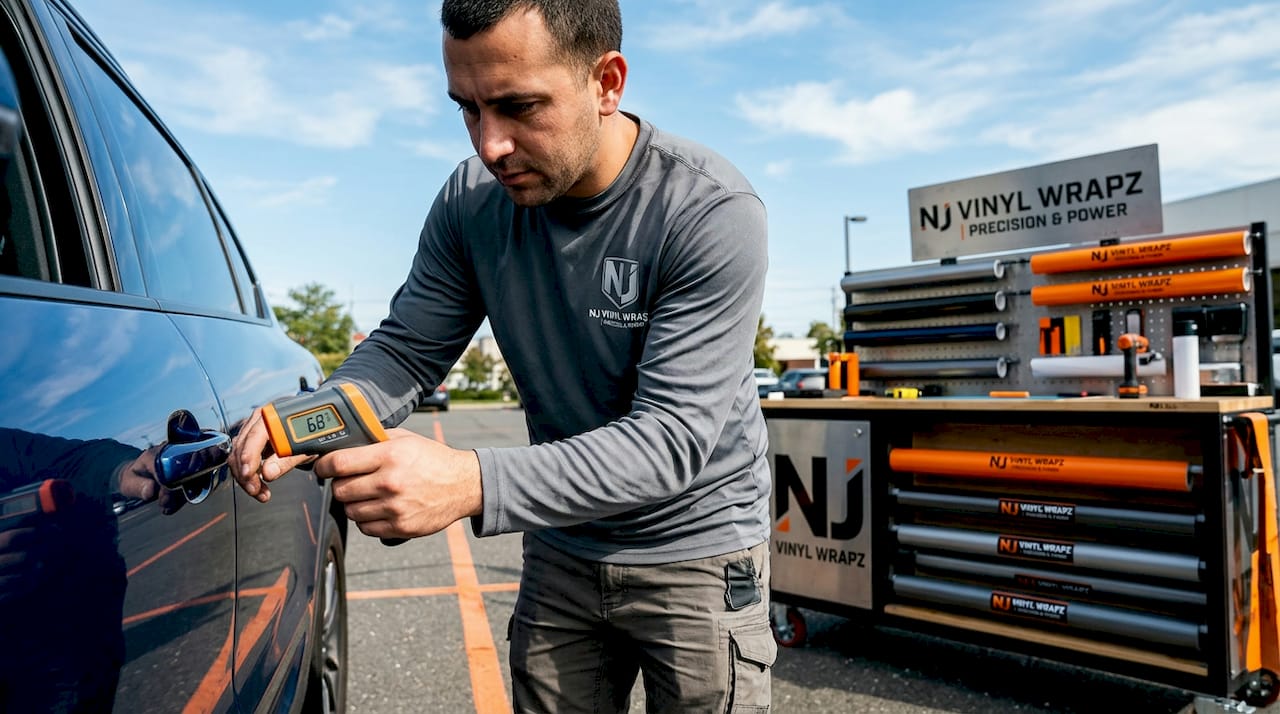
The fix for substrate temperature is not simply waiting for the car to warm up. Professional installers use infrared thermometers to measure panel temperature directly, not air temperature. They use heat guns and pre-warming protocols to bring surface temps into the optimal range before a single piece of film goes down.
Pro Tip: If you’re doing any DIY wrapping, point your infrared thermometer at the actual door panel before starting, not the air in the room. The numbers will often surprise you, especially in garages with concrete floors that draw cold from the ground.
Climate-controlled bays vs. outdoor or uncontrolled environments
Anyone who has watched a vinyl wrap get applied on a hot parking lot or inside a drafty garage has seen the difference firsthand. The comparison is stark, and the implications for businesses with fleet vehicles are significant.
Outdoor and uncontrolled environments introduce variables that no installer can fully compensate for. Wind lifts film before it seats. Direct sunlight heats panels unevenly across the same vehicle, creating zones where the adhesive behaves differently from one panel to the next. Temperature shifts between morning and afternoon can move the ambient conditions outside the acceptable range mid-installation. Dust and debris settle onto panels between cleaning and application.
For businesses managing a fleet, these inconsistencies compound. One van installed on a cold Tuesday and another installed on a warm Thursday in the same uncontrolled space may deliver different results and different lifespans, even with identical materials. Maintaining consistent 68°F to 75°F conditions across every installation removes that variability and protects your branding investment.
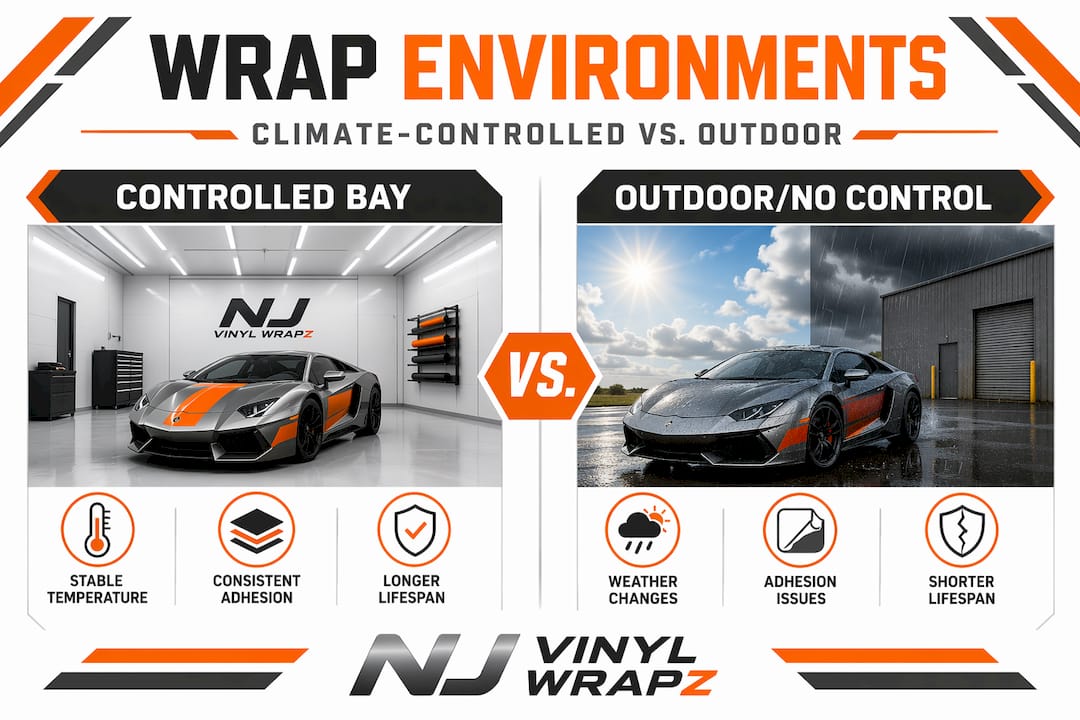
Here’s how the two environments compare across the factors that matter most:
| Factor | Climate-controlled bay | Uncontrolled or outdoor environment |
|---|---|---|
| Adhesion consistency | High, predictable across all panels | Variable, affected by surface temp swings |
| Rework rate | Low, fewer bubbles and lifting edges | Higher, especially in cold or humid conditions |
| Durability | 5 to 7 years with proper materials | Potentially 2 to 4 years, depending on conditions |
| Dust and debris | Filtered air, minimal contamination | Significant risk of trapped particles |
| Year-round reliability | Yes, consistent regardless of season | Weather-dependent, quality varies by season |
Businesses that depend on fleet wrap longevity and consistent branding across multiple vehicles cannot afford the inconsistencies that come with uncontrolled environments. A wrap that starts peeling at the edges after one winter is not just an aesthetic problem. It reflects on the business it represents every time the van pulls into a customer’s parking lot.
One additional consideration for fleet managers: fleet vehicle maintenance programs that factor in wrap condition as part of routine vehicle checks can catch early adhesion issues before they become full replacements.
How to prepare for a quality climate-controlled installation
Whether you’re choosing a shop or setting up your own space, the preparation steps before any film goes down are just as important as the controlled environment itself. Here’s what makes or breaks the result:
- Choose a facility that specifies its environment. Ask for the temperature range they maintain and whether humidity is monitored. A professional shop should be able to tell you both without hesitation. Read more about preparing your vehicle before you arrive.
- Acclimate the vehicle before installation. A car that has been sitting outside in cold weather needs at least a few hours inside the shop before any work begins. This brings both the air temperature and the panel temperature into alignment.
- Clean surfaces thoroughly and let them dry completely. Any wax, grease, or moisture on the paint surface undermines adhesion regardless of how well the shop controls the air. Isopropyl alcohol wipe-downs are standard practice after washing.
- Acclimate the wrap film itself. Rolls of vinyl stored in a cold environment should be brought to room temperature before cutting and application. Cold film does not stretch the way it should.
- Use an infrared thermometer on panels before application. Do not rely on room temperature readings alone. Confirm the actual surface is within range.
- Plan post-installation curing time. After the wrap is applied, the adhesive continues to cure. Keeping the vehicle indoors and out of direct sunlight for at least 24 hours after installation significantly improves long-term bond strength. For tips on protecting that investment afterward, see protecting vinyl wraps.
Pro Tip: For fleet vehicles, schedule installations during the same season when possible. Consistency in installation conditions contributes to consistency in how the wraps age across the entire fleet.
For businesses, premium wrap materials for NJ fleets also play a role here. The best climate-controlled materials from manufacturers like 3M and Avery are engineered to perform within those recommended temperature ranges. Using premium film inside a properly controlled bay gives you the full potential of both.
My take after years working with vehicle wraps
I’ve had this conversation hundreds of times. A client comes in having done research, and they ask whether we use “climate-controlled wrap.” They’re expecting me to pull out a product catalog and show them a special material. When I explain that it describes how and where the wrap gets installed, there’s always a moment of recalibration.
What I’ve found after years in this industry is that this misunderstanding costs people money. They focus on the brand name of the vinyl and ignore the question of where it gets installed. I’ve seen premium 3M film fail in less than two years because it was applied in a drafty, unheated garage in November. And I’ve seen mid-tier film outlast it comfortably because it went down in a proper, temperature-stabilized bay with correct substrate prep.
The uncomfortable truth is that the environment matters more than most buyers realize. If a shop can’t tell you the exact temperature and humidity they maintain during installation, that’s your signal to ask more questions before committing.
The other mistake I see regularly is clients picking up the vehicle too quickly. They want the van back on the road that afternoon. The adhesive hasn’t finished curing, they take it through a car wash two days later, and then they’re back in the shop wondering why edges are lifting. The preparation and curing steps exist for a reason, and skipping them undermines everything the climate-controlled environment was meant to protect.
My recommendation is always the same. Treat the installation environment as part of the product spec. Verify it the way you would verify the material grade. Your wrap’s lifespan depends on both in equal measure.
— Krunal
Get a professional wrap that actually lasts

At Njvinylwrapz, climate control is not a talking point. It’s built into the facility. Every installation happens inside our temperature and humidity-regulated bays, where surface prep, film acclimation, and panel temperatures are verified before any work begins. That’s how we deliver consistent results whether you’re wrapping one personal vehicle or a fleet of twenty commercial vans.
We work with individuals and businesses across New Jersey, offering full vehicle wraps, fleet wrap services, and color change wraps using premium materials from 3M and Avery. With over 10 years of experience and a team that knows exactly how to read a substrate before a film goes down, we take the guesswork out of wrap quality. If you want installation done right from the first application, we’re ready to talk.
FAQ
What does “climate-controlled wrap” mean in vehicle wrapping?
Climate-controlled wrap refers to installing vinyl wraps inside a temperature and humidity-regulated environment, not a special type of wrap material. The goal is to keep installation conditions within the optimal range of 68°F to 75°F for consistent adhesion and durability.
Why does installation temperature matter for vinyl wraps?
Temperature directly affects adhesive tack and vinyl flexibility. Below 60°F, film becomes rigid and adhesive loses its bonding strength, increasing the risk of lifting edges, bubbling, and cracking over time.
Can I wrap a vehicle outside or in an unheated garage?
You can, but results will be unreliable. Wind, temperature swings, humidity, and dust all compromise adhesion quality. Professional climate-controlled bays exist specifically to eliminate those variables and produce consistent, long-lasting results.
How do I check if my vehicle is ready for wrap installation?
Use an infrared thermometer to measure panel surface temperature, not just room temperature. Substrate temperature must be within the recommended range because metal panels can stay cold even in a warm shop, causing condensation that blocks adhesive bonding.
Is climate-controlled wrap the same as temperature-controlled packaging?
No. Temperature-controlled packaging is a logistics term describing insulated shipping materials that maintain product temperature during transport. In vehicle wrapping, climate-controlled refers to the installation bay environment, not any packaging or product design.