
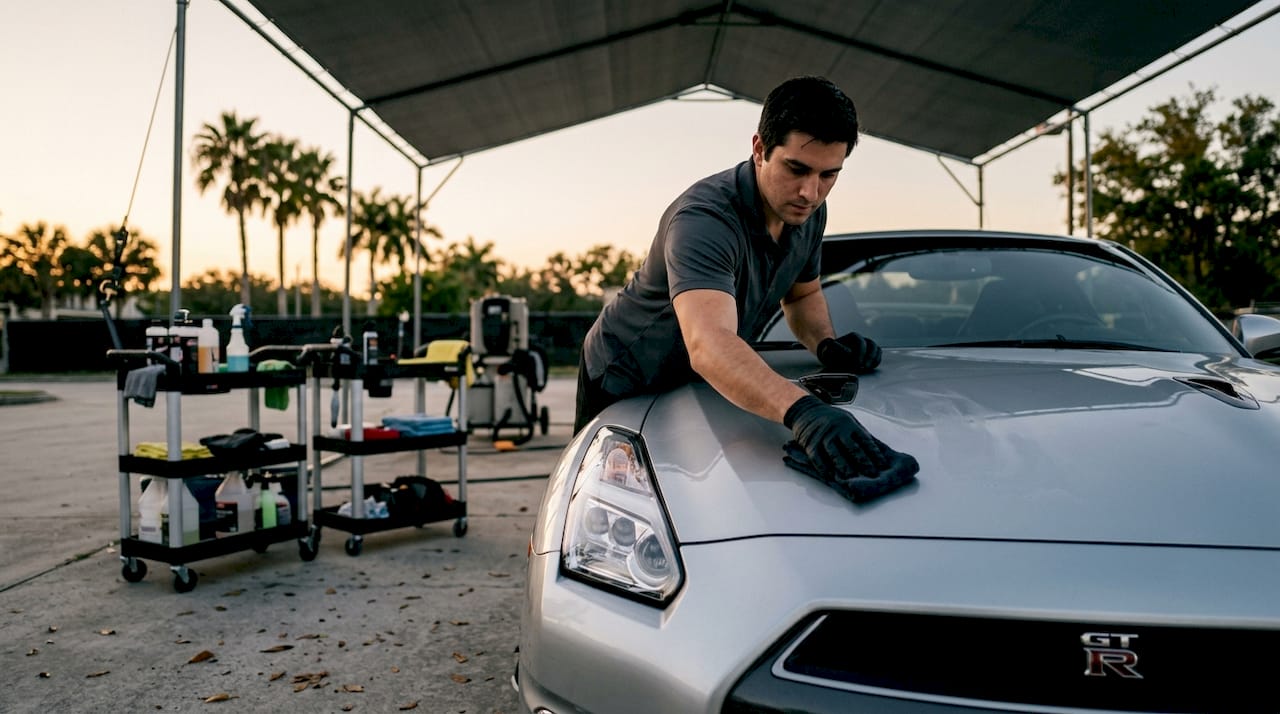
Ceramic coating is defined as a liquid polymer that bonds chemically to a vehicle’s clear coat, forming a semi-permanent, glass-like protective layer over the paint. Unlike wax or sealants that sit on the surface and degrade within weeks, ceramic coating integrates at the molecular level and can last years. It shields paint from UV rays, chemical stains, bird droppings, and environmental contaminants while delivering a deep, glossy finish. For car enthusiasts and vehicle owners who want lasting protection without constant reapplication, understanding what ceramic coating does and how it works is the first step toward making a smart investment.
What is ceramic coating and how does it chemically bond to paint?
Ceramic coating is a silica-based liquid polymer (SiO2) that forms covalent bonds with the vehicle’s clear coat at the molecular level. These bonds create a semi-permanent layer roughly 1–5 microns thick. That thickness is thin enough to be invisible, yet dense enough to resist chemical contamination and UV degradation for years.
The key difference from wax or paint sealants is permanence. Wax sits on top of the paint and washes away within weeks. Sealants last a few months. Ceramic coating, by contrast, does not wash off. It becomes part of the surface it bonds to.
One of the most noticeable effects is the hydrophobic water-beading property. Water beads up and rolls off the surface, carrying loose dirt and contaminants with it. This makes post-wash drying faster and reduces the frequency of deep cleaning sessions.
The formula and number of layers applied determine how durable the coating becomes. Entry-level consumer formulas deliver basic protection. Professional-grade, multi-layer applications produce a harder, more chemically resistant surface that holds up for years under daily driving conditions.
- SiO2 content: Higher concentrations produce harder, more durable coatings
- Layer count: Multiple layers increase thickness and chemical resistance
- Curing time: Full cure typically takes 2–4 weeks after application
- Bonding requirement: The clear coat must be clean and bare for covalent bonding to occur
Pro Tip: Never apply ceramic coating over wax or sealant residue. The coating bonds to the clear coat, not to existing surface products. Any contamination underneath will prevent proper adhesion and shorten the coating’s lifespan.
What protection benefits does ceramic coating actually deliver?
Ceramic coating protects paint from UV oxidation, acid rain, bird droppings, tree sap, and chemical etching. These are the everyday threats that dull paint over time. A properly applied coating creates a chemically resistant barrier that prevents these contaminants from reaching the clear coat directly.
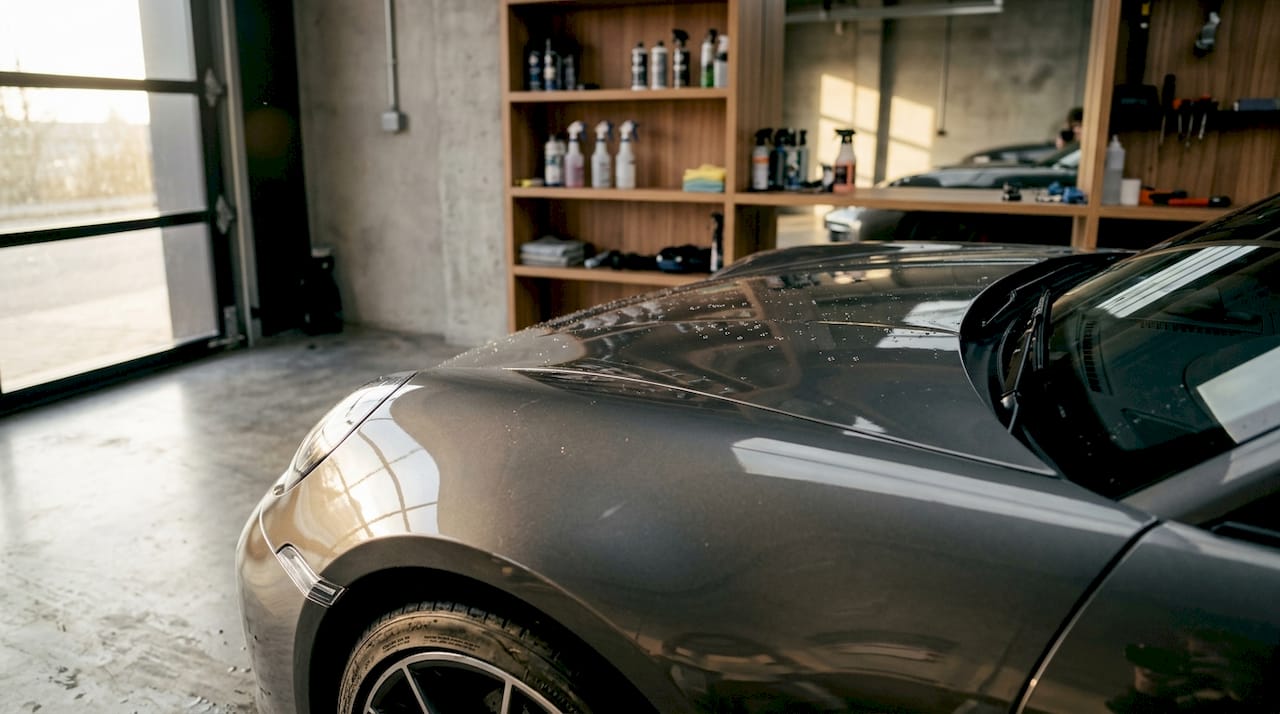
The gloss enhancement is real and noticeable. Color depth improves because the coating creates a flat, uniform surface that reflects light more evenly. The result looks like a permanent wet-shine finish.
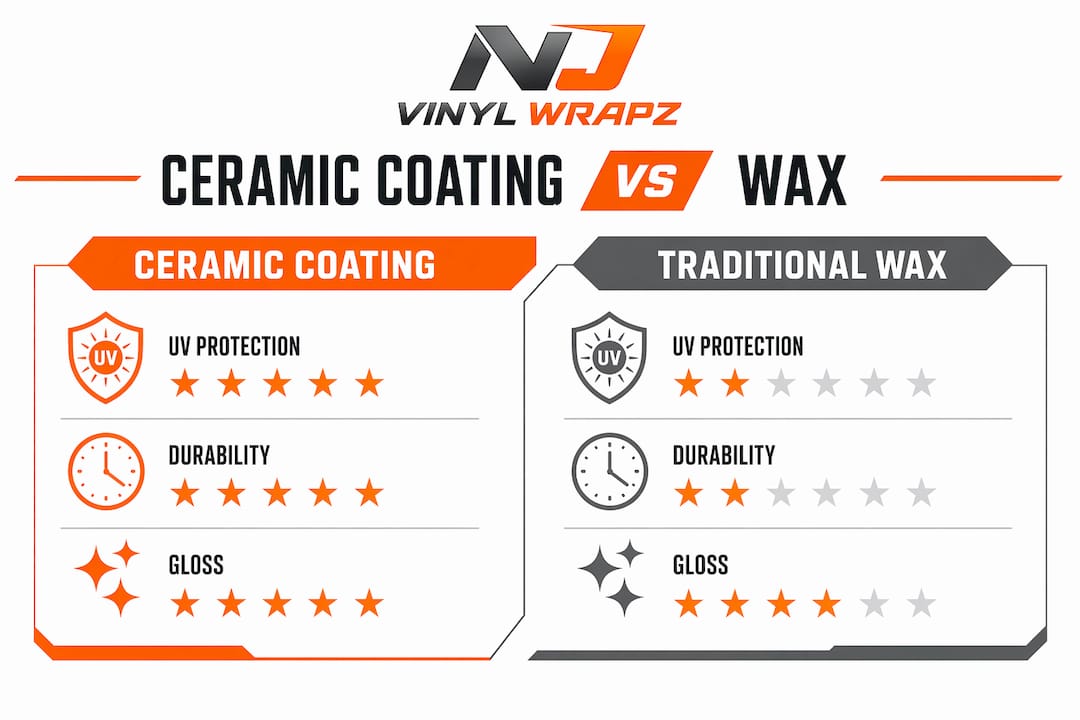
Ceramic coating also improves resistance to light swirl marks and wash marring. This matters for owners who wash their cars frequently. Repeated washing without protection is one of the leading causes of micro-scratches that accumulate into visible paint dullness over time.
The protection has clear limits, though. Ceramic coatings do not prevent deep scratches or rock chips. Those require Paint Protection Film (PPF), which physically absorbs impact. If you drive on highways where stone chips are a regular concern, pairing ceramic coating with PPF on high-impact zones gives you the most complete protection available.
| Protection Type | Ceramic Coating | Traditional Wax |
|---|---|---|
| UV oxidation resistance | Strong, lasts years | Moderate, fades in weeks |
| Chemical stain resistance | High | Low |
| Hydrophobic water beading | Yes, pronounced | Minimal |
| Deep scratch prevention | No | No |
| Rock chip protection | No | No |
| Gloss enhancement | Deep, long-lasting | Surface-level, temporary |
What does the ceramic coating application process involve?
The application process starts long before the coating itself is applied. Paint correction is the most critical step, and it is often the most expensive part of the job. Multi-stage machine polishing removes swirl marks, light scratches, and oxidation before the coating locks the finish in permanently.
This matters more than most owners realize. Approximately 90–99% of the final gloss comes from the paint correction, not the coating itself. The coating’s job is to lock in that corrected finish and protect it from future damage. Skipping correction means locking in every swirl mark and imperfection under a permanent layer.
Here is the standard professional application sequence:
- Wash and decontaminate the paint using a clay bar or chemical decontamination to remove bonded surface contaminants
- Paint correction using one or more stages of machine polishing to remove defects
- Panel wipe with an isopropyl alcohol solution to strip all polish oils and residue
- Coating application in a controlled environment, panel by panel, with immediate leveling
- Initial cure in a climate-controlled space for 12–24 hours before the vehicle is exposed to moisture
- Full cure over 2–4 weeks, during which the coating hardens to its final hardness rating
Professional shops apply coatings in climate-controlled facilities because temperature and humidity directly affect how the coating bonds and cures. DIY kits are available for $40–$300, but they are far more sensitive to application conditions. Wrong expectations, poor environment, and insufficient prep are the three most common reasons DIY ceramic coatings fail within months.
Watch out for dealership-offered ceramic coatings. These are often spray sealants with exaggerated claims, not true SiO2 coatings. They lack the molecular bonding density of professional products and typically last only a few months.
Pro Tip: Ask any installer for the specific product name and SiO2 concentration before booking. A professional-grade coating will have a documented hardness rating and a warranty backed by the manufacturer, not just the shop.
How much does ceramic coating cost in 2026?
Cost varies widely based on whether you go DIY or professional, and how much paint correction the vehicle needs. DIY kits range from $40 to $300 and last 6 months to 2 years. They suit owners with newer vehicles in good condition who understand the application requirements.
Professional installations typically cost $650 to $3,500 depending on the vehicle size, coating tier, and prep work involved. Daily driver packages with paint correction usually fall in the $900–$1,300 range. Paint correction alone can add $300–$1,500 to the total, and paint correction labor accounts for the majority of the final invoice on most professional jobs.
| Tier | Cost Range | Durability |
|---|---|---|
| DIY consumer kit | $40–$300 | 6 months–2 years |
| Entry-level professional | $650–$900 | ~2 years |
| Mid-tier professional | $900–$1,800 | 3–5 years |
| Premium multi-layer | $1,800–$3,500+ | 5–7+ years |
| Dealership spray sealant | $200–$500 | 3–6 months |
Long-warranty packages involve premium products applied in multiple layers with stringent preparation standards. The warranty reflects the quality of both the product and the installation process. A two-year warranty from a shop that skipped paint correction is worth far less than a five-year warranty from a shop that documented every correction stage.
How do you maintain a ceramic coating to maximize its lifespan?
Ceramic coating reduces maintenance effort but does not eliminate it. Zero maintenance is a misconception that leads owners to neglect their coated vehicles and then blame the product when it underperforms. Proper aftercare is what separates a coating that lasts two years from one that lasts five.
The core maintenance rules are straightforward. Following them consistently is what protects your investment over the long term. For fleet vehicles, Njvinylwrapz recommends reviewing a fleet protective coatings checklist to build a repeatable care routine across multiple vehicles.
- Use pH-neutral shampoos formulated for coated vehicles. Alkaline or acidic soaps degrade the hydrophobic layer over time.
- Avoid automatic brush car washes. The abrasive brushes create swirl marks that wear down the coating surface.
- Rinse frequently. A quick rinse after highway driving removes contaminants before they bond to the surface.
- Apply a ceramic-specific detailing spray every 4–6 weeks to refresh the hydrophobic properties and boost gloss between washes.
- Inspect annually. A professional inspection can identify areas where the coating has thinned and apply a top-up layer before full degradation occurs.
Pro Tip: Keep a log of your wash dates and products used. If the coating starts losing water-beading performance earlier than expected, the log helps a detailer diagnose whether the issue is product choice, wash technique, or coating wear.
Key Takeaways
Ceramic coating delivers lasting paint protection only when applied over properly corrected paint in a controlled environment, making preparation the single most important factor in the process.
| Point | Details |
|---|---|
| Chemical bonding is permanent | SiO2 bonds covalently to clear coat, lasting 1–7 years depending on product tier and care. |
| Paint correction drives the result | Up to 99% of final gloss comes from polishing, not the coating itself. |
| Deep scratches need PPF | Ceramic coating resists chemicals and UV but cannot absorb rock chips or deep impacts. |
| Cost reflects prep, not just product | Paint correction often costs more than the coating and cannot be skipped. |
| Maintenance extends lifespan | pH-neutral shampoos and avoiding brush washes are non-negotiable for long-term performance. |
Why I think most people misunderstand what ceramic coating actually does
The biggest misconception I see is that ceramic coating is a magic shield. Owners expect it to make their car scratch-proof and maintenance-free. Neither is true, and that gap between expectation and reality is where most disappointments come from.
The coating’s real value is in what it locks in and what it keeps out. If you put it over tired, swirl-marked paint, you get a glossy version of tired, swirl-marked paint. Permanently. The prep work is where the money goes, and it is also where the result is made or lost.
For daily drivers, ceramic coating makes more practical sense than wax. You wash less often, the paint stays cleaner between washes, and you are not reapplying product every few months. For weekend show cars that get hand-waxed as part of the ritual, wax suits enthusiasts who enjoy frequent reapplication and want that specific look and feel.
My honest advice: if your paint has not been corrected in the last two years, budget for correction first. A great coating over corrected paint is worth every dollar. A great coating over uncorrected paint is a permanent record of every swirl you did not fix. Also, check your vehicle’s overall condition before committing to any protective coating investment. Coating a car with underlying paint issues is money spent in the wrong order.
— Krunal
Professional ceramic coating services at Njvinylwrapz
Njvinylwrapz offers professional ceramic coating in NJ with paint correction included as part of every package. The team works in a climate-controlled facility to meet the curing conditions that consumer-grade DIY applications cannot replicate. Packages range from entry-level protection for daily drivers to premium multi-layer applications with extended warranties for vehicles that demand the best finish.

Every installation starts with a full paint assessment so you know exactly what correction is needed before a single drop of coating goes on. Njvinylwrapz also offers full vehicle wraps for owners who want to combine paint protection with a custom look. Contact Njvinylwrapz to get a quote and find the right protection package for your vehicle.
FAQ
What is ceramic coating made of?
Ceramic coating is made from silicon dioxide (SiO2), a silica-based liquid polymer that bonds chemically to a vehicle’s clear coat. Some formulas also include titanium dioxide (TiO2) to increase hardness and UV resistance.
How long does ceramic coating last?
Durability ranges from 6 months for DIY consumer kits to 7 or more years for professional multi-layer applications. Lifespan depends on product quality, preparation standards, and how well the coating is maintained after application.
Does ceramic coating prevent scratches?
Ceramic coating improves resistance to light swirl marks and wash marring but does not prevent deep scratches or rock chips. Paint Protection Film is the correct product for impact and scratch resistance.
Can I apply ceramic coating myself?
DIY kits are available for $40–$300, but successful application requires a clean, wax-free surface, controlled temperature and humidity, and proper paint correction beforehand. Most DIY failures result from skipping prep or applying in poor conditions.
Is ceramic coating worth the cost?
For owners who want years of protection with easier cleaning and no reapplication, professional ceramic coating delivers strong long-term value. The upfront cost reflects paint correction labor, which is the most important part of the process and cannot be skipped without compromising the result.