
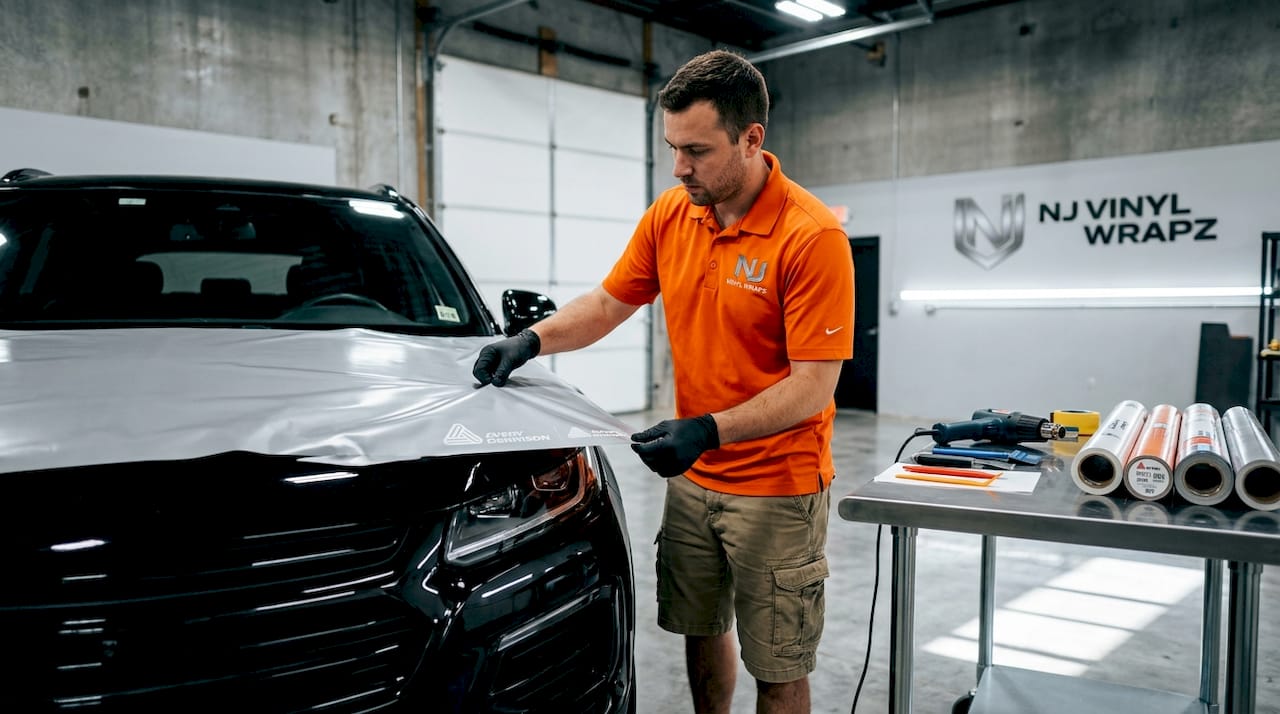
If you think all vinyl wraps are the same, you are leaving real money and performance on the table. Understanding what is Avery wrap material separates an informed buyer from someone who ends up with a wrap that fades in two seasons. Avery Dennison is one of the most trusted names in the wrapping industry, and their materials are used daily on everything from personal sports cars to full commercial fleets. This guide breaks down exactly what Avery wrap is made of, how it performs, how it compares to alternatives, and when it makes the most sense for your project.
Table of Contents
- Key takeaways
- What Avery wrap material actually is
- Durability and how long Avery wrap lasts
- How Avery wrap compares to other vinyl wraps
- How to use Avery wrap for vehicles and fleets
- My honest take on Avery wrap after years in the field
- See what Avery wrap can do for your vehicle or fleet
- FAQ
Key takeaways
| Point | Details |
|---|---|
| Premium cast vinyl construction | Avery wrap is a dual-layer cast vinyl with face film thickness between 3.2 and 4.7 mil, built for conformability. |
| Easy Apply RS adhesive | Patented air-egress technology allows repositioning during install and virtually eliminates bubbles without wet application. |
| 5 to 7 year lifespan | With proper care and overlaminates, Avery wraps hold color and adhesion for years across outdoor conditions. |
| Best for color-change efficiency | Avery outperforms competitors in installation speed and color vibrancy, making it a top choice for fleets and color-change wraps. |
| Dry application only | Water degrades the Easy Apply RS adhesive channels, so Avery wraps must always be applied dry for best results. |
What Avery wrap material actually is
Avery wrap material is a premium cast vinyl film manufactured by Avery Dennison, a global company with decades of experience in pressure-sensitive adhesive products. The flagship product for vehicle wrapping is the SW900 Supreme Wrapping Film, a dual-layer cast vinyl with face film thickness ranging from 3.2 to 4.7 mil depending on the finish selected.
Cast vinyl is the category that matters here. Unlike calendered vinyl, which is manufactured by pressing material through rollers and tends to shrink over time, cast vinyl is created by pouring liquid vinyl onto a casting sheet and allowing it to cure. The result is a film that is dimensionally stable, highly conformable around curved surfaces, and far more forgiving to work with during installation.
Finishes and product variety
The SW900 line covers an extensive range of finishes, giving designers and installers serious creative flexibility:
- Gloss finishes for deep, reflective color on passenger vehicles and fleet trucks
- Matte finishes for a flat, understated look popular in color-change applications
- Satin finishes that land between gloss and matte, offering a silky sheen
- Metallic and chrome-effect options for high-impact visual applications
- Textured finishes including brushed metal and carbon fiber effects for specialty builds
This variety is one reason Avery Dennison is viewed as a top choice among professionals for both commercial and personal vehicle applications.
The adhesive technology that changes everything
The component that sets Avery wrap apart from generic vinyl is its patented Easy Apply RS adhesive. This technology uses microscopic air-egress channels built into the adhesive layer. Those channels let air escape naturally during application, which means you get a bubble-free bond without the need for a wet application technique.
The Easy Apply RS technology also allows the film to be repositioned multiple times during installation before the adhesive fully bonds. That repositionability is a genuine advantage on complex vehicle panels where alignment errors are costly in both time and material.
Pro Tip: Never attempt to apply Avery wrap with water or a slip solution. Wet application damages the air-egress channels in the Easy Apply RS adhesive, defeating the very technology that makes Avery so installer-friendly.
Durability and how long Avery wrap lasts
One of the most common questions is whether Avery wraps hold up in the real world. The short answer is yes, when the film is applied correctly and maintained properly. Avery Dennison wraps typically last 5 to 7 years with proper care, which is competitive with any other premium wrap material on the market.
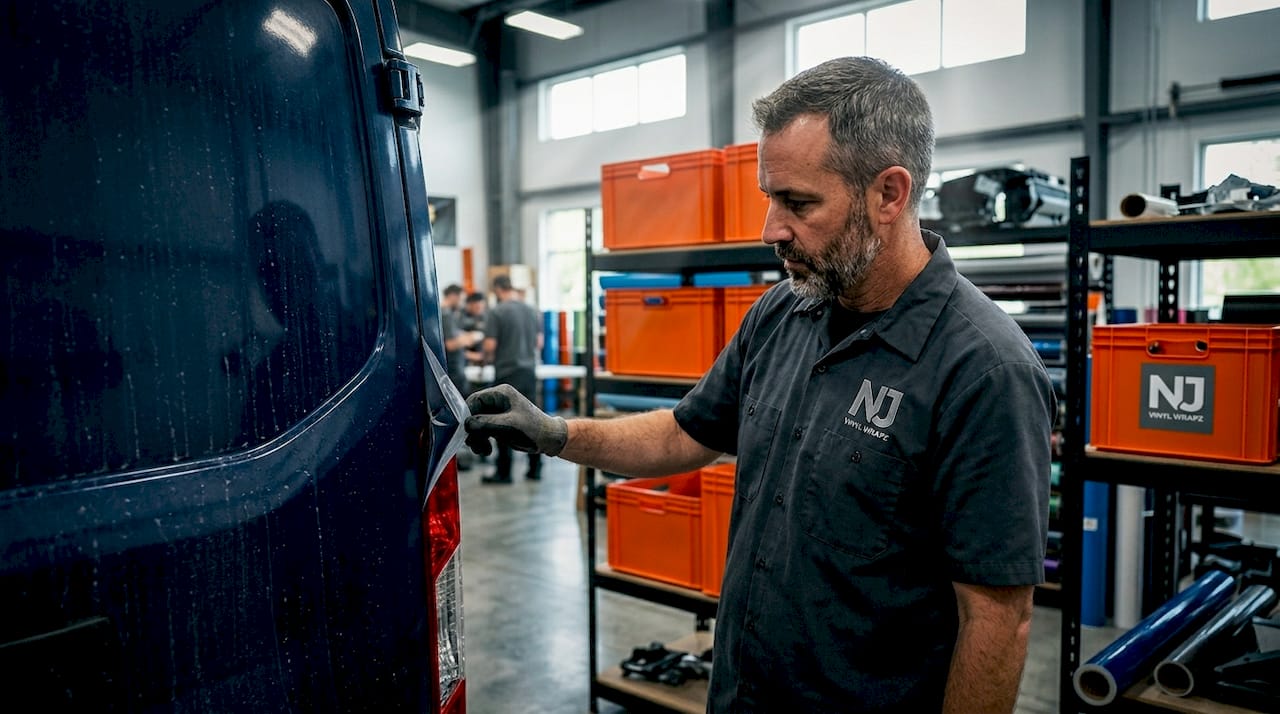
That lifespan depends on three factors: the quality of the original installation, the climate the vehicle operates in, and how the wrap is maintained over time.
The role of overlaminates
One of the most overlooked components in a durable wrap system is the overlaminate. Applied over the vinyl face film, overlaminates provide an additional layer of protection against UV radiation, chemical exposure from fuel and cleaning agents, and physical abrasion from road debris. Overlaminates extend wrap life while also improving the tactile and visual finish of the completed wrap.
Avery Dennison’s overlaminates are available in gloss and matte finishes and are engineered to match specific face films. Using mismatched overlaminates from other manufacturers can cause delamination or inconsistent appearance over time.
Color retention under UV exposure
This is where Avery genuinely stands out. Avery wraps maintain metallic and satin finishes longer than many competitors due to high pigment concentration in the face film. For businesses running branded fleet vehicles that need consistent color matching across multiple trucks for years, that sustained vibrancy matters.
Maintenance best practices that protect your investment:
- Hand wash with pH-neutral soap and a soft microfiber cloth
- Avoid automated brush car washes, which can lift wrap edges
- Rinse off bird droppings, tree sap, and fuel spills quickly to prevent chemical degradation
- Park in covered or shaded areas when possible to reduce cumulative UV exposure
- Inspect wrap edges every six months for lifting and address issues immediately
Pro Tip: If you use a pressure washer, keep the nozzle at least 12 inches from the surface and angle it away from seams and edges. Direct high-pressure water at seams is one of the most common causes of premature wrap failure.
How Avery wrap compares to other vinyl wraps
Not all premium vinyl wraps perform identically, and understanding where Avery excels relative to other options helps you make the right call for your specific project.
Thickness, flexibility, and handling
Avery wrap film is generally thinner and more flexible than 3M’s competing wrapping films. That thinner profile makes it easier to handle on complex curves, recesses, and compound contours. For newer installers, this forgiving flex reduces the learning curve significantly.
The trade-off is that thinner film requires more care during aggressive stretching. Avoid overstretching Avery film into extremely deep recesses without using heat to relax the material first. Forcing it cold increases the risk of tearing or adhesion failure.
Installation ease and repositionability
Avery Dennison’s repositionable adhesive is consistently cited as one of its strongest advantages for both shops and DIY installers. The ability to slide and reposition the film multiple times before final commitment reduces waste, speeds up installation, and reduces the stress of working on expensive vehicles.
Feature comparison at a glance
| Feature | Avery Dennison SW900 | 3M 1080 Series |
|---|---|---|
| Film thickness | 3.2 to 4.7 mil | 3.9 to 4.4 mil |
| Adhesive repositionability | High (Easy Apply RS) | Moderate |
| Conformability on curves | Excellent | Very good |
| Color and finish variety | Extensive | Extensive |
| Durability | 5 to 7 years | 5 to 7 years |
| Best use case | Color-change, fleet branding | Specialty textures, industrial |
| Wet application | Not supported | Supported on some films |
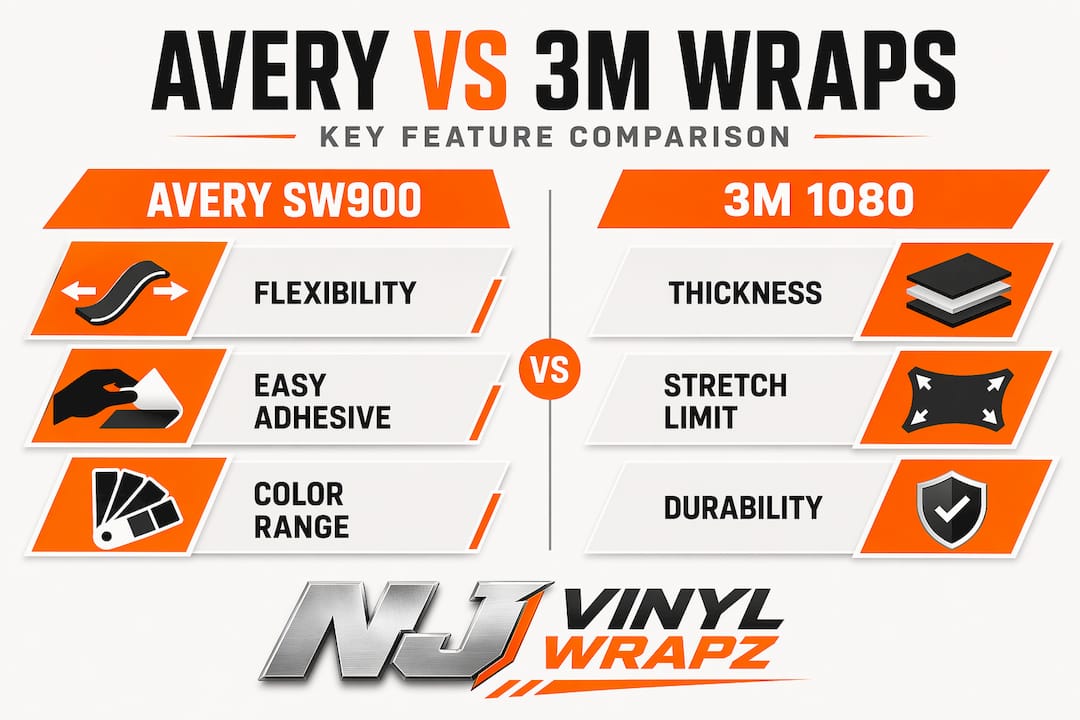
Experienced installers often switch between Avery and 3M depending on the job. Avery is the go-to for speed and color vibrancy. 3M gets the nod when specialty textures or maximum abrasion resistance are the priority. Neither brand is universally superior. The best choice depends on what the project actually demands.
How to use Avery wrap for vehicles and fleets
Knowing what Avery wrap is made of is only half the picture. How you apply it determines whether you get a result that lasts.
Application types and their demands
Avery materials are used across the full spectrum of vehicle wrap options, each with different installation considerations:
- Full vehicle wraps cover every painted panel and require the highest level of surface preparation and installer skill. Any surface contamination, paint defects, or rust will telegraph through the vinyl.
- Partial wraps cover specific sections like doors, hood, or rear panels and are frequently used for fleet branding on a tighter budget.
- Vehicle lettering and decals use cut vinyl for logos, phone numbers, and URLs. Simpler to apply but still requires clean, properly prepped surfaces.
- Fleet branding packages typically combine full or partial wraps with consistent color schemes and graphics across multiple vehicles.
Surface preparation is not optional
Before Avery vinyl ever touches a vehicle, the surface needs to be clean, dry, and free of wax, silicone, grease, and loose paint. Check out the detailed vehicle preparation guide from NJ Vinyl Wrapz for a step-by-step surface prep process that matches professional installation standards.
Avery wrap is a dry application only material. Water on the surface or in the adhesive layer will disrupt the air-egress channels that make Easy Apply RS work. That is a mistake that wastes material and time.
Pro Tip: Apply Avery wrap in a temperature-controlled environment between 60°F and 80°F. Cold surfaces reduce adhesive tack and make the film brittle. Hot surfaces cause the adhesive to bond too quickly, eliminating your repositioning window.
My honest take on Avery wrap after years in the field
I have installed wraps on everything from single passenger cars to 40-vehicle commercial fleets, and Avery Dennison is consistently the material I reach for when efficiency and color accuracy are the top priorities.
What I have learned after years of working with Avery is that the Easy Apply RS adhesive is not just a marketing claim. It genuinely changes how you work. On a tight deadline with a large fleet job, being able to reposition panels without tearing the film or wasting material means we can finish faster and still deliver a clean result. That matters when a business needs its branded vehicles back on the road.
Where I see people go wrong is treating Avery like generic vinyl. They apply it wet, stretch it cold into deep recesses, or skip the overlaminate to cut costs. Those shortcuts erase the advantage the material provides. Learning to protect your wrap and maintain fleet visibility starts with respecting the material’s specific requirements.
The trend I am watching closely in 2026 is the growth of specialty satin and textured finishes for commercial fleet applications. Businesses are moving beyond simple color changes toward texture-forward branding that makes their vehicles memorable at street level. Avery’s expanding SW900 catalog is well-positioned for that shift.
My final thought is this: material selection is not a commodity decision. The difference between a five-year wrap and a two-year wrap is often not the installation skill. It is the material choice and whether someone understood what the material actually needed to perform.
— Krunal
See what Avery wrap can do for your vehicle or fleet
At NJ Vinyl Wrapz, we use Avery Dennison materials on our full vehicle wrap services because the performance, color accuracy, and application efficiency directly translate to better results for our clients. Whether you are customizing a personal vehicle, rebranding a single work truck, or rolling out a consistent look across a commercial fleet wrap program, we match the right Avery material to the project demands. With over 10 years of installation experience, a climate-controlled facility, and licensed and insured operations across New Jersey, NJ Vinyl Wrapz delivers wraps that hold up as long as your brand needs them to. Contact us to get a quote or discuss which Avery wrap options fit your vehicle and goals.
FAQ
What is Avery wrap material made of?
Avery wrap material is a premium dual-layer cast vinyl film. The face film ranges from 3.2 to 4.7 mil in thickness and is backed by a patented Easy Apply RS repositionable adhesive.
How long does Avery vinyl wrap last?
Avery Dennison wraps typically last 5 to 7 years with proper installation, maintenance, and the use of a compatible overlaminate for UV and abrasion protection.
Can you apply Avery wrap with water?
No. Avery wrap is a dry application only material. Using water damages the air-egress channels in the Easy Apply RS adhesive, which eliminates the bubble-free installation benefit.
Is Avery wrap durable enough for commercial fleet vehicles?
Yes. Avery’s high pigment concentration maintains color vibrancy for years, and its conformable cast vinyl construction holds up well on large panel vehicles when professionally installed and maintained.
What is the difference between Avery vinyl and 3M vinyl wrap?
Avery is thinner and more repositionable, making it preferred for color-change wraps and fleet branding where installation speed matters. 3M tends to be chosen for specialty textures and maximum abrasion resistance in industrial or high-wear applications.
Recommended
- Wrap Options | Vehicle Lettering, Partial & Full Wraps | NJ Vinyl Wrapz | NJ Vinyl Wrapz
- How to protect vinyl wraps and maximize fleet visibility | NJ Vinyl Wrapz
- How to prepare your vehicle for a professional wrap | NJ Vinyl Wrapz
- Wrap warranties explained: Protect your fleet branding | NJ Vinyl Wrapz