

A fleet manager is defined as the operational leader responsible for every vehicle a company owns or leases, from the moment of acquisition through final disposal. The role covers vehicle maintenance, regulatory compliance under FMCSA and DOT standards, driver safety, and total cost of ownership. Fleet managers typically oversee fleets of 50 to 200+ vehicles, reporting directly to operations or finance leadership. The position has evolved well beyond administrative work. Today it sits at the intersection of finance, operations, and technology, making it one of the most consequential roles in any vehicle-dependent business.
What is a fleet manager, and what do they actually do?
A fleet manager owns the full lifecycle of a company’s vehicle assets. That means deciding which vehicles to buy, when to replace them, how to maintain them, and how to dispose of them at maximum residual value. The responsibilities of a fleet manager shift based on fleet size and industry, but the core duties stay consistent across sectors.
The daily work breaks down into six core areas:
- Vehicle acquisition and disposal. Selecting makes, models, and financing structures, then timing replacements to minimize depreciation losses.
- Preventive maintenance and repairs. Building and enforcing maintenance schedules to reduce unplanned breakdowns.
- Regulatory compliance. Keeping the fleet current with FMCSA, DOT, and OSHA requirements, including driver hours-of-service logs and vehicle inspection records.
- Driver management and safety. Monitoring driver behavior, enforcing safety policies, and managing incidents.
- Budget and cost control. Tracking fuel spend, maintenance costs, and capital expenses against approved budgets.
- Vendor management. Negotiating service contracts with repair shops, fuel card providers, and parts suppliers.
One distinction worth knowing: a fleet manager differs from a fleet maintenance supervisor in scope. The manager owns strategic and financial decisions, while the supervisor focuses on shop floor operations. In larger organizations, both roles work in tandem.
Pro Tip: When reviewing a fleet manager job description, check whether the role reports to operations or finance. That reporting line tells you whether the company treats fleet as a cost center or a strategic asset.

What skills and tools does an effective fleet manager need?
Technical literacy is the foundation of the fleet manager role. You do not need to be a certified mechanic, but you must understand key maintenance processes like OBD-II fault code diagnosis and diesel particulate filter regeneration cycles. That knowledge lets you verify repair quality, push back on inflated invoices, and make faster decisions when a vehicle goes down.
Beyond technical knowledge, the role demands a specific mix of skills:
- Data analysis. Reading fuel efficiency reports, driver scorecards, and cost-per-mile metrics to spot trends before they become problems.
- Financial acumen. Building maintenance budgets, negotiating vendor contracts, and presenting total cost of ownership to leadership.
- Leadership and communication. Managing drivers, coordinating with IT on telematics systems, and reporting to C-suite executives in business terms.
- Telematics proficiency. Using GPS tracking and AI-powered predictive maintenance platforms to monitor vehicle health in real time.
The technology side of the role has grown significantly. Modern fleet managers work with telematics platforms, fleet management software, and AI tools that flag maintenance needs before failures occur. Knowing how to read a dashboard and act on the data separates average managers from high performers.
Here is a practical order for building your technical skill set:
- Learn a telematics platform (GPS tracking, driver behavior scoring).
- Master your fleet management software for work orders and asset tracking.
- Study fuel card reporting and cost analysis.
- Build familiarity with predictive maintenance tools and alert systems.
- Practice translating fleet data into financial summaries for leadership.
Pro Tip: Earning proficiency in one telematics platform before switching to another builds deeper expertise faster. Breadth comes after depth.
How does a fleet manager impact business operations and cost control?
Unplanned downtime is the largest controllable cost in fleet operations. Delays can cost thousands per day in industries like construction and logistics. A fleet manager who runs tight preventive maintenance schedules directly reduces that exposure.
The financial impact extends beyond repair bills. Proactive safety management lowers insurance premiums and limits liability from accidents. Staying current with DOT and FMCSA compliance avoids fines that can run into tens of thousands of dollars per violation. Vendor negotiations on parts and labor contracts compound savings over time.
Fleet managers who present data in business terms, such as total cost of ownership and P&L impact, gain faster executive support and larger budget approvals. The role is most effective when it speaks the language of finance, not just maintenance.
Structured fleet management transitions vehicle operations from reactive firefighting to performance-driven planning. Businesses that delay appointing dedicated fleet leadership face hidden cost escalation that becomes visible only after significant damage is done.
| Cost area | Fleet manager impact |
|---|---|
| Unplanned downtime | Reduced through preventive maintenance scheduling |
| Fuel spend | Controlled via telematics and driver behavior monitoring |
| Compliance fines | Avoided through proactive DOT and FMCSA record management |
| Insurance premiums | Lowered by enforcing safety programs and incident reduction |
| Vendor costs | Cut through contract negotiation and bulk maintenance agreements |
What is the typical career path and salary for fleet managers?
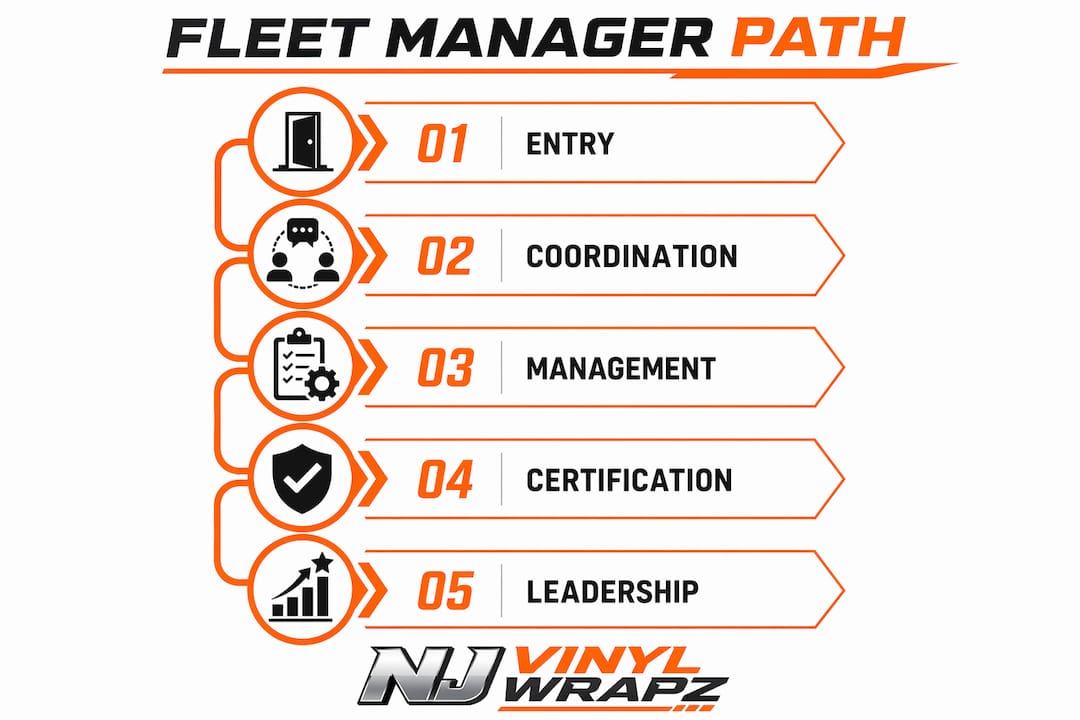
The fleet management career follows a clear progression. Most professionals enter as fleet coordinators handling scheduling and data entry, then advance to fleet manager, senior fleet manager, and eventually fleet director or VP of Fleet Operations.
Salary ranges across these stages reflect the growing scope of responsibility:
| Career stage | Typical salary range |
|---|---|
| Fleet coordinator | $42,000–$55,000 |
| Fleet manager | $65,000–$95,000 |
| Senior fleet manager | $90,000–$120,000 |
| Fleet director | $130,000–$175,000+ |
The average fleet manager salary in the United States sits around $77,121 per year, with variation based on fleet size, location, and industry.
The Certified Automotive Fleet Manager (CAFM) credential, issued by the NPTC (National Private Truck Council) and NAFA Fleet Management Association, is the most recognized certification in the field. Earning the CAFM accelerates career progression by 1–2 years on average. Most candidates combine the certification with a bachelor’s degree in business, logistics, or a related field, though experienced professionals without degrees regularly reach senior roles through demonstrated results.
Demand for fleet managers continues to grow as businesses expand delivery networks, electrify fleets, and face tighter regulatory requirements. The role is not going away. It is getting more complex and more valued.
What challenges do fleet managers face, and how do they stay effective?
The reality of the fleet manager role does not match the neat job description. Fleet managers spend roughly 70% of their time reacting to unplanned events: breakdowns, compliance audits, driver shortages, and accidents. Only 30% goes to structured planning.
The most common pressure points include:
- Unexpected breakdowns. A single vehicle failure can cascade into missed deliveries, customer complaints, and emergency repair costs.
- Compliance audits. DOT and FMCSA audits require complete, accurate records. Gaps in documentation create immediate liability.
- Driver shortages. Finding qualified drivers and managing turnover adds HR complexity to an already demanding role.
- Stakeholder pressure. Finance wants lower costs. Operations wants maximum uptime. Safety wants zero incidents. Balancing all three requires constant communication.
- Technical verification. Without basic mechanical knowledge, managers cannot effectively challenge repair estimates or confirm that work was done correctly.
The managers who handle these pressures best share one trait: they build systems before crises hit. A solid fleet vehicle maintenance checklist reduces reactive scrambling. Clear escalation protocols for breakdowns save hours when something goes wrong at 2:00 AM.
Pro Tip: Batch your reactive tasks into defined windows each day. Reserve your first 90 minutes for proactive work: reviewing reports, scheduling maintenance, and planning vendor calls. That discipline protects your planning time even on chaotic days.
Key Takeaways
A fleet manager’s value to a business is measured in uptime, compliance, and cost control, not just vehicle counts.
| Point | Details |
|---|---|
| Core role definition | A fleet manager oversees vehicle acquisition, maintenance, compliance, and disposal across the full asset lifecycle. |
| Financial impact | Proactive maintenance and vendor negotiation directly reduce total cost of ownership and insurance premiums. |
| Skills required | Technical literacy, data analysis, financial acumen, and telematics proficiency are all non-negotiable in 2026. |
| Career progression | Roles range from fleet coordinator ($42,000) to fleet director ($175,000+), with CAFM certification accelerating advancement. |
| Daily reality | Roughly 70% of the role is reactive problem-solving, making systems and prioritization critical for long-term effectiveness. |
What I’ve learned about succeeding in fleet management
The fleet manager role is misunderstood from the outside. People see vehicle logistics. What they miss is that the best fleet managers are essentially business analysts who happen to know what a DPF regeneration cycle is.
The professionals I have seen advance fastest share one habit: they translate everything into money. A breakdown is not a maintenance problem. It is a $4,000 downtime event with a root cause that needs a system fix. That framing gets budget approved and earns respect from finance leadership.
The other thing most articles get wrong is the emotional weight of the reactive side. Seventy percent of your day being unplanned is genuinely hard. The managers who burn out are the ones who never build the 30% of proactive structure that keeps the chaos manageable. The ones who thrive treat that 30% as non-negotiable, even when it feels impossible to protect.
If you are exploring this career, start building your technical vocabulary now. You do not need a mechanic’s license. You need enough knowledge to ask the right questions and recognize when an answer does not add up. That skill alone separates good fleet managers from great ones.
— Krunal
How Njvinylwrapz supports fleet managers and their vehicles
Fleet managers carry responsibility for how every vehicle in the fleet looks, performs, and represents the company on the road. Appearance is part of asset management, and branded vehicles are a direct extension of your company’s reputation.

Njvinylwrapz works with fleet managers across New Jersey to keep commercial vehicles looking sharp and protected. From full vehicle wraps that turn your fleet into moving advertising to protective coatings that preserve resale value, the team brings over 10 years of experience and materials from 3M and Avery to every project. Whether you manage 5 vehicles or 500, consistent branding across your fleet signals professionalism to every customer who sees your vehicles on the road. You can also explore fleet customization options to find the right fit for your operation.
FAQ
What does a fleet manager do on a daily basis?
A fleet manager handles vehicle maintenance scheduling, driver management, compliance monitoring, and vendor coordination. Roughly 70% of the role involves reacting to unplanned events like breakdowns and audits.
What is the average salary for a fleet manager in the US?
The average fleet manager salary in the United States is approximately $77,121 per year, with ranges varying by fleet size, industry, and location.
Do you need a certification to become a fleet manager?
Certification is not required, but the CAFM credential from the NAFA Fleet Management Association is the industry standard. It accelerates career progression by an average of 1–2 years.
How is a fleet manager different from a fleet maintenance supervisor?
A fleet manager owns strategic and financial decisions across the entire operation. A fleet maintenance supervisor focuses on shop floor repairs and day-to-day mechanical work. In large organizations, both roles work in tandem.
Is fleet management a stressful career?
Fleet management is demanding because most of the workday is unplanned. Managers who build strong maintenance systems and clear communication protocols handle the pressure well and report high job satisfaction in senior roles.