
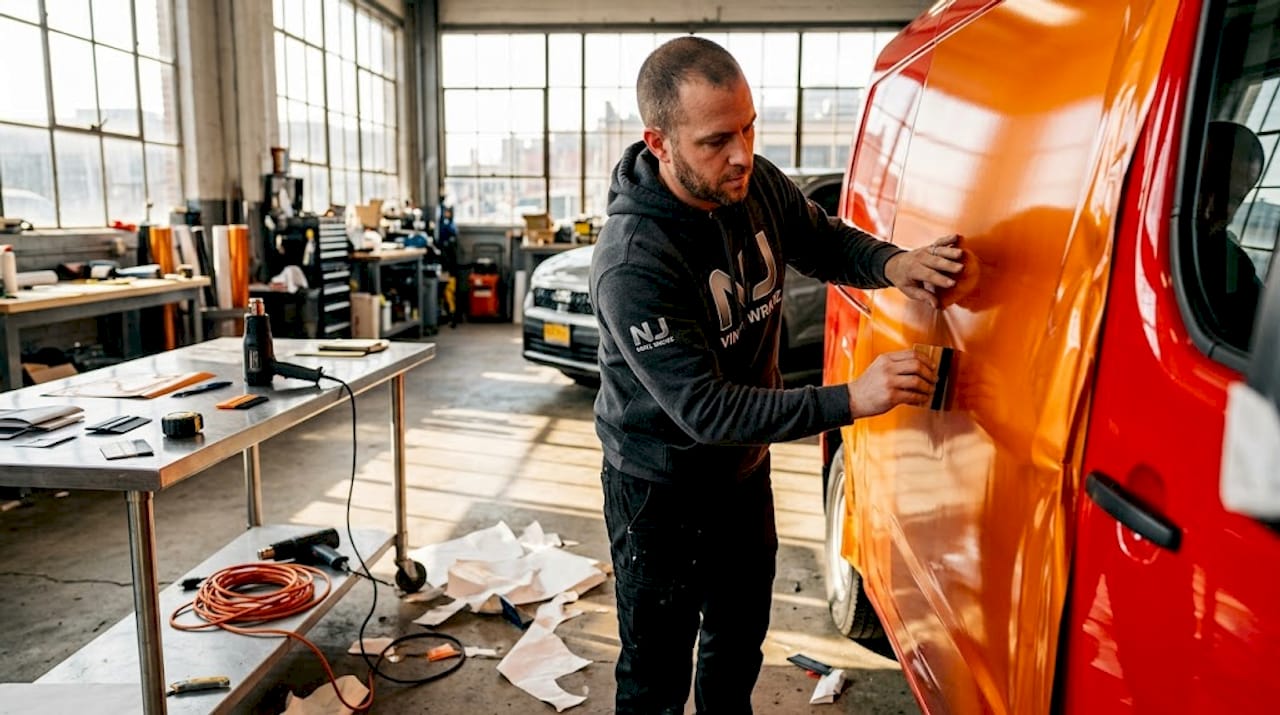
If you’ve been researching vehicle wraps or fleet branding, you’ve almost certainly run into the term “3M vinyl” and assumed it referred to one specific product. It doesn’t. What is 3M vinyl, exactly? It’s actually a family of adhesive-backed graphic films engineered for distinct purposes, from full vehicle wraps and printable signage to architectural surface refinishing. Each product line has different construction, adhesive technology, and durability ratings. Understanding those differences is what separates a wrap that looks great for eight years from one that starts peeling in eighteen months.
Table of Contents
- Key takeaways
- 3M vinyl types and how they’re made
- 3M vehicle wrap vinyl: features that actually matter
- How 3M vinyl is used for vehicles and branding
- Choosing the right 3M vinyl and preparing for installation
- My honest take on 3M vinyl after years of installs
- Get your 3M vinyl wrap done right with Njvinylwrapz
- FAQ
Key takeaways
| Point | Details |
|---|---|
| 3M vinyl is a product family | Multiple film types exist, including vehicle wrap, printable, and architectural vinyl, each built for different uses. |
| Cast film outperforms calendered | Cast 3M vinyl conforms to curved surfaces better and lasts longer, making it the right choice for vehicle wraps. |
| Adhesive technology matters | Controltac and Comply adhesives reduce installation defects and allow repositioning during application. |
| System compatibility is critical | Film, adhesive, ink, and overlaminate must all align or the wrap will underperform regardless of application skill. |
| Professional installation protects the investment | Proper surface prep and adhesive management are skills that directly determine wrap quality and longevity. |
3M vinyl types and how they’re made
Most people hear “3M vinyl” and picture a car wrap. But 3M printable vinyl is actually a broad category designed to accept ink from multiple printing systems and suit everything from full wraps to short-term removable promotions. The confusion is understandable because the product names, part numbers, and intended uses vary significantly across the lineup.
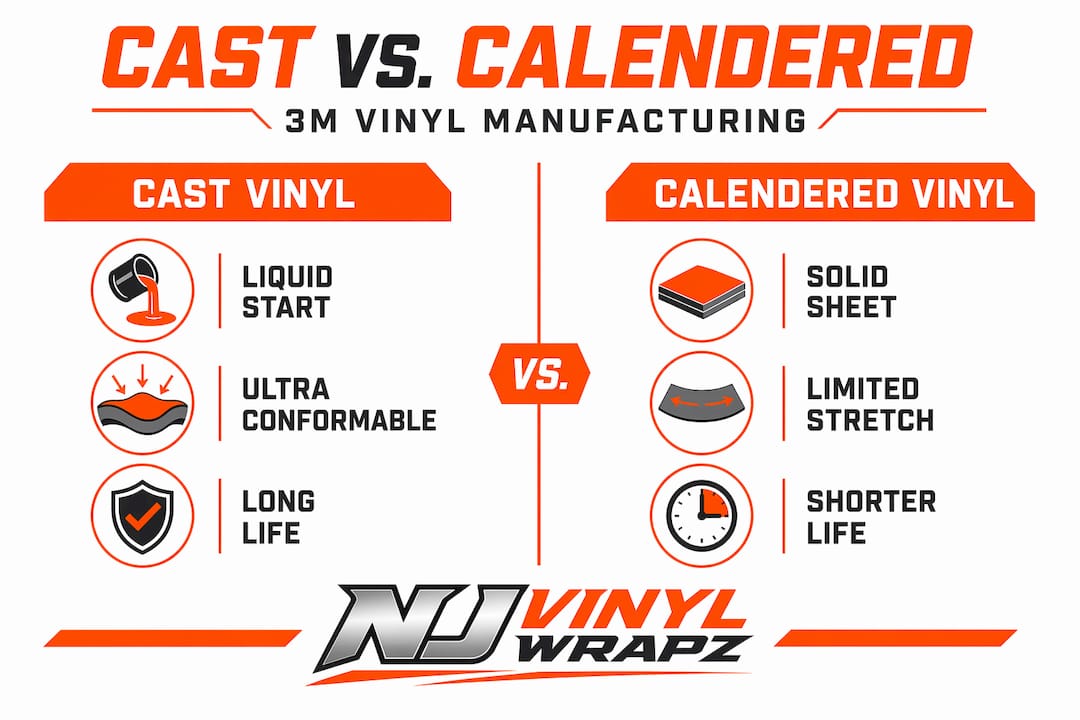
The two most important manufacturing distinctions to know are cast versus calendered vinyl.
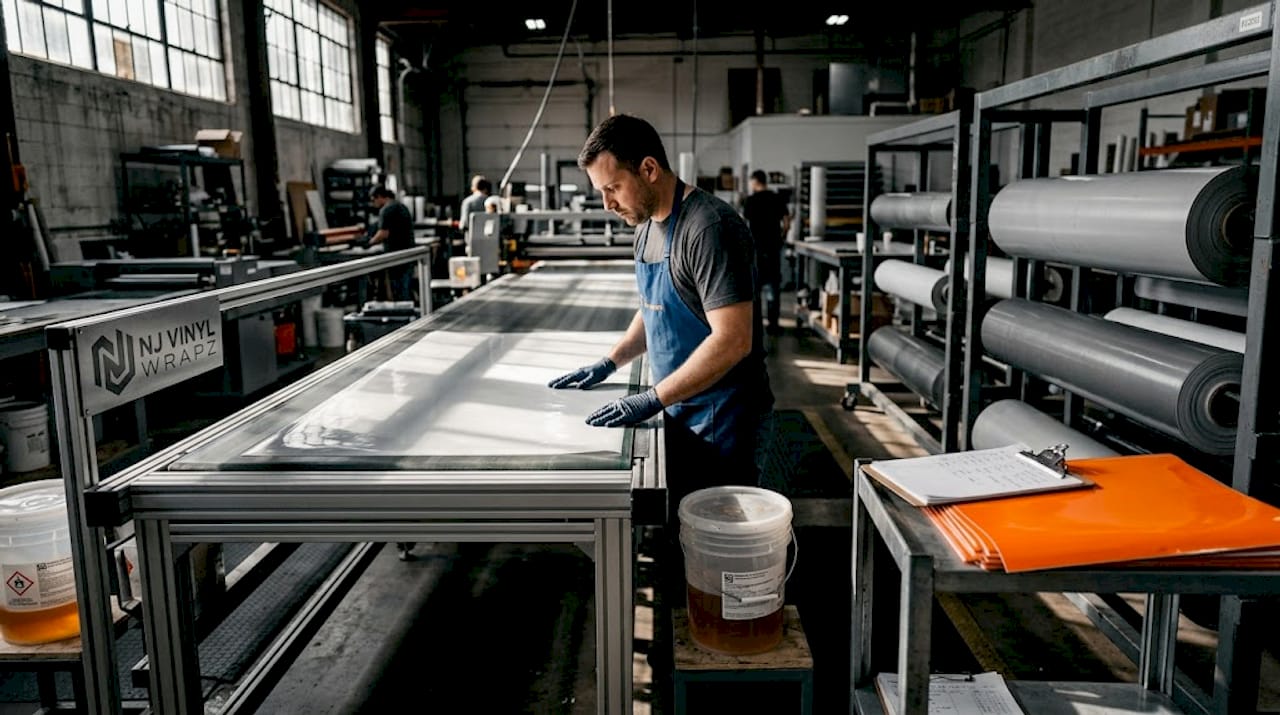
Cast vinyl is made by spreading liquid vinyl onto a casting sheet in thin layers, then curing it. This process produces a film that is dimensionally stable, highly conformable, and capable of wrapping around curves, rivets, and compound shapes without lifting at the edges. Cast films are the preferred choice for complex vehicle shapes precisely because they hug contours without the memory that causes edge lifting over time. Calendered vinyl, by contrast, is produced by running vinyl through heavy rollers to create a thicker sheet. It costs less, but it has more material memory, which means it tends to pull away from curved surfaces as it ages. Calendered films work well for flat signage, short-term graphics, and applications where cost matters more than longevity.
Beyond vehicle wrap films, there’s a third category worth knowing. 3M DI-NOC architectural vinyl is an entirely different product. At 8 mil thick with over 900 patterns replicating wood, stone, and metal, it’s built for interior and exterior surface refinishing with a 12-year indoor vertical application life. It is not interchangeable with vehicle wrap vinyl in any practical sense.
Here’s a quick comparison to put the major types in perspective:
| Vinyl type | Manufacturing method | Typical thickness | Primary application | Durability |
|---|---|---|---|---|
| Cast vehicle wrap (e.g., 2080) | Liquid casting | ~2 mil | Full and partial vehicle wraps | Up to 8 years |
| Cast printable (e.g., IJ180CV3) | Liquid casting | 2.0 mil | Printed vehicle graphics, signage | Up to 10 years |
| Calendered signage vinyl | Roller pressing | 3+ mil | Flat signs, short-term promotions | 3 to 5 years |
| DI-NOC architectural vinyl | Specialty casting | 8 mil | Interior/exterior surface refinishing | 12 years (indoor) |
3M vehicle wrap vinyl: features that actually matter
The two 3M vehicle wrap films that come up most often in professional installations are the Wrap Film Series 2080 and the IJ180CV3. Both are built on cast film construction, but they have distinct use cases.
The 3M Wrap Film Series 2080 is a multi-layer dual-cast film available in nearly 100 colors and finishes, with roll widths up to 60 inches. That width matters on large vehicles because fewer seams mean a cleaner finish. The 2080 carries warranties up to eight years on vertical applications under the 3M MCS warranty program, which is one of the most credible performance guarantees in the wrap industry.
The 3M IJ180CV3 takes a different angle. At 2.0 mil with stretchability up to 130%, it’s designed for printed graphics that need to conform over complex surfaces. It’s compatible with solvent, eco-solvent, UV, and latex inks, and it carries outdoor durability ratings up to 10 years. The removability story is also strong: heat or chemical removal is clean and predictable, which matters for fleet operators who rotate vehicle graphics seasonally.
Both films share 3M’s two signature adhesive technologies:
- Controltac adhesive: Pressure-activated, with microscopic glass beads that minimize initial contact with the surface. This lets installers slide and reposition the film before committing to the final placement.
- Comply adhesive: Features invisible air release channels that let trapped air escape as you apply pressure. The result is a bubble-free installation without the need to pierce the film with a pin tool.
These adhesive technologies are not marketing language. They represent real, measurable differences in installation behavior that reduce defects, especially on large flat panels where air entrapment is a constant challenge.
Pro Tip: If you’re choosing between Controltac and Comply for a vehicle wrap, Controltac is better for large, flat panels where repositioning matters most. Comply is the better choice for complex curves and corrugated surfaces where air release is the bigger installation challenge.
How 3M vinyl is used for vehicles and branding
The practical 3M vinyl uses for businesses and individuals break down into a few clear categories, each with its own set of priorities.
- Full vehicle wraps: A complete color change or branded wrap using cast vinyl like the 2080 series. This is the most demanding application because the film must conform to every panel, curve, and recess. Done right with professional-grade 3M film, a full wrap protects the underlying paint and can last the full warranty period before showing any degradation.
- Partial wraps and panel graphics: A cost-effective middle ground where high-impact graphics cover specific sections of a vehicle. Common for businesses that want brand presence without the full wrap investment.
- Fleet branding: This is where 3M vinyl delivers the clearest return for commercial operators. Consistent branding across multiple vehicles builds recognition, and fleet branding with 3M wraps provides the kind of outdoor durability that keeps graphics looking sharp for years, not months.
- Vehicle lettering and spot graphics: Name, logo, phone number, and URL applied with cut or printed vinyl. The lowest cost entry point for mobile advertising and still highly effective for local service businesses.
- Window graphics: Perforated window vinyl allows full-color graphics on glass while maintaining outward visibility from inside the vehicle.
For businesses managing vehicles as advertising assets, the durability advantage of cast 3M vinyl is real money. A wrap that lasts eight years instead of three means fewer replacement cycles, less downtime, and lower total cost per impression.
Removal and maintenance deserve a mention here too. 3M vehicle wrap films are designed for clean removal when the time comes. Professional wrap removal uses heat to relax the adhesive, allowing the film to come away cleanly without damaging the original paint, provided the film hasn’t been left on beyond its rated service life.
Choosing the right 3M vinyl and preparing for installation
Choosing the right 3M vinyl starts with the installation surface and the project’s goals, not the other way around. A common mistake is selecting a film based on price or color availability before considering how the adhesive will behave on the specific vehicle surface or whether the film is compatible with the intended printing method.
Here’s a practical checklist to work through before committing to a product:
- Surface type: Smooth painted metal, textured bumpers, corrugated truck bodies, and glass all behave differently under vinyl. Cast films handle all of these better than calendered films.
- Project duration: Short-term promotions (under two years) can use calendered or lower-grade cast films. Long-term fleet branding needs films rated for five years or more.
- Print compatibility: 3M printable vinyl must match the ink system being used. Solvent, eco-solvent, UV, and latex inks each require specific film and topcoat combinations. Mismatching leads to color shifts, delamination, and premature failure.
- Adhesive behavior: Controltac for repositioning on large flat areas; Comply for complex curves and air release needs.
- Overlaminate selection: Glossy, matte, or protective overlaminates change the final appearance and add UV protection. They must be matched to the base film for warranty coverage.
Vehicle surface preparation is the step most people underestimate. Contaminants, wax residue, silicone, and even fingerprints all reduce adhesion. A thorough pre-wrap surface preparation includes washing, clay bar treatment, isopropyl alcohol wipe-down, and adequate dry time in a controlled environment.
Pro Tip: Never apply 3M vinyl wrap film in ambient temperatures below 60°F or above 90°F. Adhesive behavior changes dramatically outside this range, making repositioning harder and bubble-free installation nearly impossible.
My honest take on 3M vinyl after years of installs
I’ve worked with a lot of film brands over the years, and the thing that consistently separates 3M from the field isn’t any single feature. It’s the system thinking behind the product line. 3M engineers the film, adhesive, ink compatibility, and overlaminate as a matched set. When clients come to me after a bad experience with a cheaper product, the failure almost always traces back to a mismatch somewhere in that system, not just a bad film.
The other thing I want to be direct about is removability. Customers often assume “removable” means easy to remove at any point. It doesn’t. 3M wrap films are designed for predictable removal within their rated service life. Leave a film on three years past its warranty and removal becomes a project. I’ve seen businesses put off a rebrand because they were dreading removal on a wrap that should have come off two years earlier. Plan your wrap lifecycle from the beginning, and removability stays an asset instead of becoming a headache.
What I find most underappreciated about 3M vinyl is the Controltac and Comply adhesive systems. Installers who haven’t worked with premium films often underestimate how much of their skill goes toward fighting the material. With 3M adhesive technology, the material works with you. That translates directly into installation speed, fewer defects, and a better-looking final result, which is ultimately what the client is paying for.
— Krunal
Get your 3M vinyl wrap done right with Njvinylwrapz
At Njvinylwrapz, we’ve spent over 10 years installing 3M vinyl for commercial fleets, small business vehicles, and personal rides across New Jersey. We work exclusively with premium materials from brands like 3M because the system matters as much as the skill.
Whether you’re looking for full vehicle wraps that run the full service life of your fleet or a fleet branding package that keeps every vehicle consistent, we handle design, print, and installation in our climate-controlled facility. We also offer partial wraps, vehicle lettering, and window graphics for businesses working with tighter budgets. Explore your wrap options or reach out directly for a consultation and quote. The right material paired with the right installation makes all the difference.
FAQ
What is 3M vinyl used for on vehicles?
3M vinyl is used for full color change wraps, partial wraps, fleet branding graphics, vehicle lettering, and window graphics. It protects paint while delivering long-lasting advertising visibility.
How long does 3M vinyl wrap last?
3M Wrap Film Series 2080 carries warranties up to eight years on vertical applications, while the IJ180CV3 printable film is rated for up to 10 years outdoors when installed and maintained correctly.
What is the difference between cast and calendered 3M vinyl?
Cast 3M vinyl is made from liquid vinyl and conforms to curved surfaces without lifting, making it ideal for vehicle wraps. Calendered vinyl is thicker, less conformable, and better suited for flat signage.
Can 3M vinyl be removed without damaging paint?
Yes. 3M vehicle wrap films are designed for clean removal using heat within their rated service life. Removal becomes more difficult if the film is left on significantly beyond its warranty period.
Is 3M vinyl better than other wrap brands?
3M’s advantage is its system approach, where film, adhesive, ink compatibility, and overlaminate are engineered together. This reduces installation defects and supports warranty coverage that many other brands do not match at the same level.
Recommended
- How 3M vehicle wraps boost fleet branding and longevity | NJ Vinyl Wrapz
- What Is Avery Wrap Material? Your 2026 Vehicle Guide | NJ Vinyl Wrapz
- Commercial Vinyl Services NJ | Window Graphics, Wall Murals & More | NJ Vinyl Wrapz | NJ Vinyl Wrapz
- Premium vinyl material: benefits for fleet vehicle branding | NJ Vinyl Wrapz