
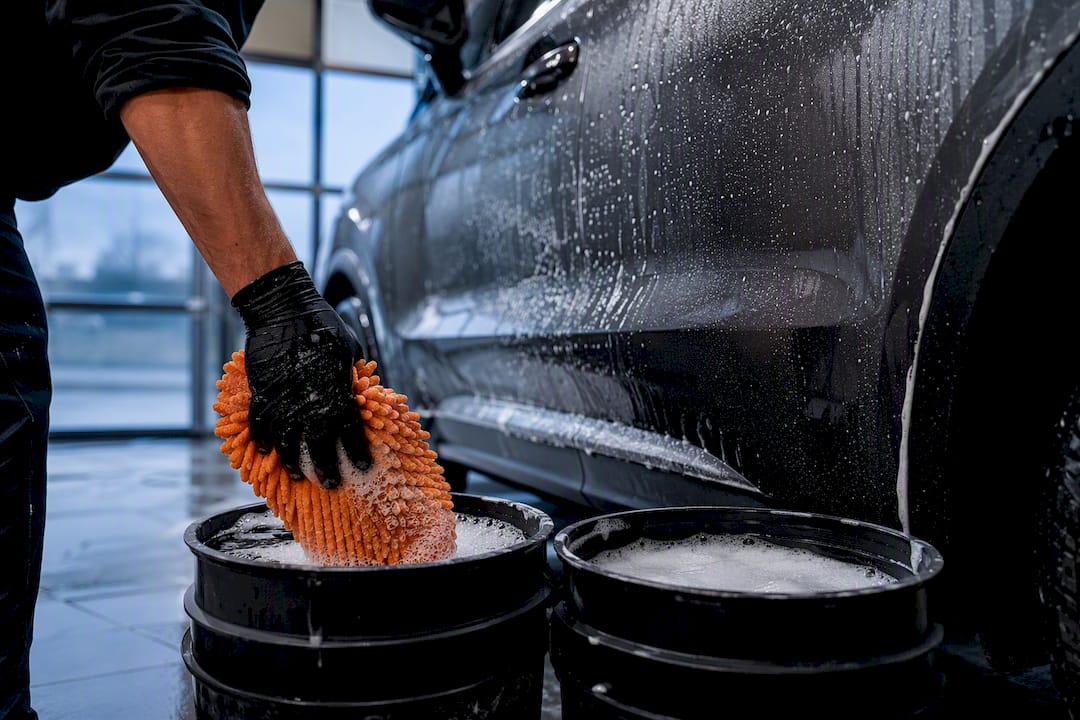
Hand-washing is the only method that reliably protects a vinyl wrap over its full lifespan. Skip brushes, skip anything petroleum-based, and never touch soap or water for several days after installation while the adhesive fully cures. After that, a two-bucket wash, prompt drying, and an occasional ceramic coating will keep the film looking new for years.
TL;DR:
- Hand-washing is the only reliable way to protect vinyl wraps throughout their full lifespan; avoid brushes, petroleum-based cleaners, and washing during adhesive curing.
- Use a two-bucket method with wrap-safe, pH-neutral soap and rinse water, rinsing the mitt each time to prevent grit buildup and scratching.
- Avoid brush and soft-touch car washes, especially those with spinning cloths or aggressive chemicals, and prefer touchless options with low pressure and no hot wax.
- Pressure washers are safe only if used at moderate pressure, with a wide fan nozzle, at least 12 inches away, and not on seams, edges, or during the first 72 hours after installation.
- Regular inspections and professional maintenance are crucial for detecting early signs of lift or bubbling, especially in high-mileage, outdoor, or fleet vehicles.
Table of Contents
- Everyday Vinyl Wrap Care: The Two-Bucket Wash Routine
- Can a Wrapped Car Go Through a Car Wash?
- How Much Pressure Can a Vinyl Wrap Actually Handle?
- How to Remove Bird Droppings, Sap, Tar, and Bugs Without Damaging Vinyl
- Caring for Matte, Satin, and Textured Vinyl Finishes
- Long-Term Protection: Coatings, Storage, and Winter Care
- Installer-Backed Checklist: When to DIY and When to Call a Pro
- What Actually Matters in Vinyl Wrap Maintenance
- Professional Maintenance and Repair Support From NJ Vinyl Wrapz
- Sources
- FAQ
Everyday Vinyl Wrap Care: The Two-Bucket Wash Routine
Most wrap damage doesn’t come from sun or age. It comes from a dirty wash mitt dragging grit across the surface, one micro-scratch at a time. The two-bucket method exists to break that cycle.
Fill one bucket with a pH-neutral, wrap-safe soap solution and a second with plain rinse water. Every time you pull the mitt off the panel, swirl it in the rinse bucket before dipping it back into the soap. That single habit keeps sand and road debris out of your suds and off your paint, which is exactly why 3D Car Care recommends the two-bucket approach as the standard for wrapped vehicles.
Here’s the routine, start to finish:
- Rinse the whole vehicle first to loosen loose dirt before any mitt touches the surface.
- Wash top to bottom, one panel at a time, using a soft microfiber mitt.
- Rinse the mitt between every panel, never scrub twice without rinsing.
- Squeegee excess water with a silicone blade to cut down water spots.
- Dry immediately with a clean microfiber towel or a low-pressure air blower.
A few tools matter more than people expect:
- Edgeless microfiber towels (regular towel edges can catch and lift seams over time).
- A silicone squeegee, not a rubber one with hard edges.
- A wrap-safe, pH-neutral shampoo, never a dish detergent as your default.
Never let a wrap air-dry. Water spots etch into vinyl faster than they do into clear coat, especially in hard-water regions.
Wash frequency depends on where the vehicle lives. A garage-kept car can go a few weeks between washes. A daily driver parked outside needs weekly attention, and that schedule tightens further near the coast (salt air), during pollen season, or after wildfire smoke settles ash across the hood.
Pro Tip: Keep a dedicated mitt and bucket set just for the wrapped vehicle. Cross-using tools from a bare-paint car reintroduces the exact grit you’re trying to avoid.
Can a Wrapped Car Go Through a Car Wash?
Yes, but not every car wash is safe. Brush and soft-touch tunnels use spinning cloth strips that snag at seams, edges, and mirror caps, which is exactly where wraps start to lift first.
Touchless washes are the better fallback when hand-washing isn’t practical, though they shouldn’t become your only method. A few things to watch for:
- Skip hot-wax add-on cycles. The heat and wax chemistry aren’t formulated with vinyl film in mind.
- Ask staff to confirm the wash uses low-pressure, touchless settings before you pull in.
- Tell the attendant the vehicle is wrapped. Most operators will adjust the cycle or wave you toward a gentler bay.
- Avoid washes advertising aggressive degreasers or tire-shine overspray systems near the body.
How Much Pressure Can a Vinyl Wrap Actually Handle?
Pressure washers are fine on wraps within specific limits. 3M’s technical guidance points to a wide, roughly 40-degree spray nozzle, held perpendicular to the panel, at a safe standoff distance.
Rules worth memorizing before you pick up the wand:
- Keep the nozzle at least 12 inches (30 cm) from the surface.
- Use a wide fan tip, never a narrow “turbo” or pinpoint nozzle.
- Avoid spraying directly at seams, edges, mirrors, or door handles where water can force its way underneath.
- Keep water temperature low. Heated pressure-washer systems exceed what most films are rated to handle.
- Never pressure-wash within 72 hours of installation, and never on a panel with visible bubbling or seam separation.
A wide spray at moderate pressure and a safe distance is the difference between a clean wrap and one with lifted edges by next weekend.
How to Remove Bird Droppings, Sap, Tar, and Bugs Without Damaging Vinyl
Contaminants are where impatience causes the most damage. The fix is almost always to soak first and scrub last, not the other way around.
- Soak the spot with hot, soapy water for several minutes to soften whatever has hardened onto the film.
- Wipe gently with a wrap-safe quick detailer and a microfiber towel, checking progress often.
- If residue remains, move to a diluted isopropyl alcohol mix (roughly 70% IPA to 30% water) as a stronger step, applied sparingly.
- For genuinely stubborn tar or sap, a manufacturer-approved citrus cleaner or diluted Simple Green can work, but always follow product-specific dilution guidance.
- Blot and lift rather than scrape. A fingernail or plastic scraper feels harmless and still scores the film’s clear coat layer.
Fuel spills need a different response entirely: immediate action, not a scheduled wash. Wipe the spill off right away, then wash, rinse, and dry that panel. Petroleum products attack the plasticizers in vinyl film, which is why manufacturer guidance treats gasoline and diesel contact as urgent rather than routine cleanup.
Pro Tip: Keep a travel-size bottle of diluted IPA and a microfiber cloth in your glovebox. Bird droppings left overnight etch far deeper than the same spot cleaned within the hour.
Caring for Matte, Satin, and Textured Vinyl Finishes
Matte finishes play by different rules than gloss. Waxes and polishing compounds that are harmless on a gloss wrap will leave permanent shiny patches on matte film, because they fill the microtexture that creates the flat look in the first place.
- Never apply wax, sealant, or polish to a matte or satin wrap.
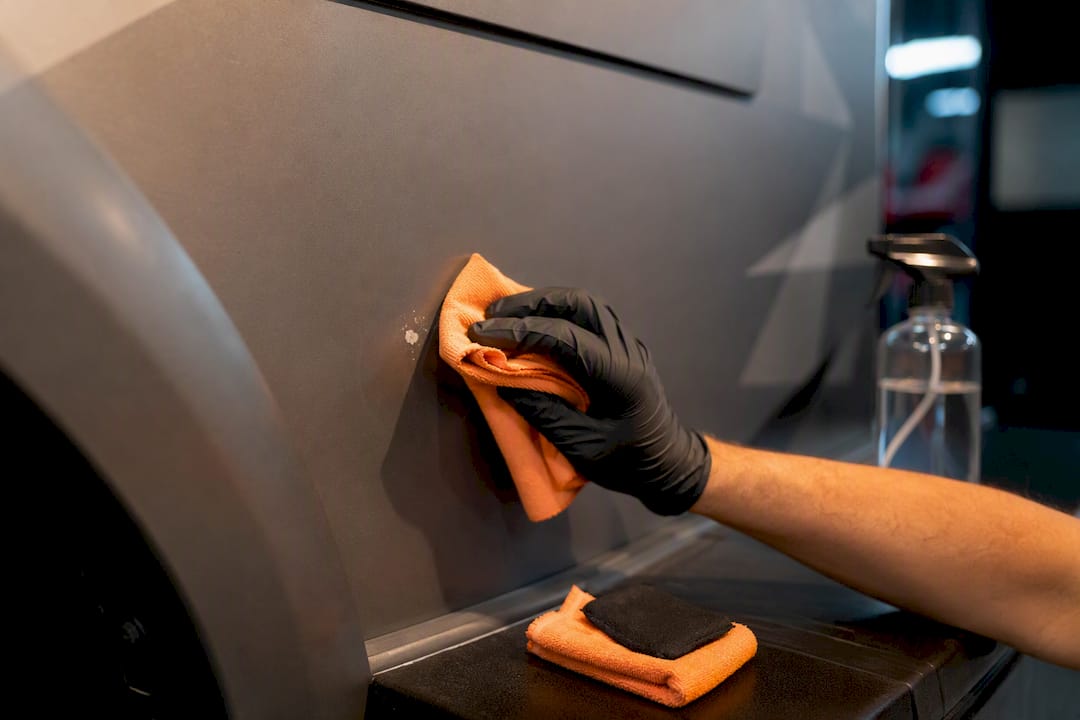
- Remove fingerprints and smudges with a 70% IPA to 30% water mix, wiped in straight lines rather than circles.
- Use only matte-safe quick detailers, and check Avery Dennison’s cleaning bulletin if a product’s compatibility isn’t listed on the label.
- Test any new product on an inconspicuous panel, like inside a door jamb, before using it across a visible surface.
Circular buffing motions on textured film tend to burnish the surface unevenly, leaving faint swirl patterns that are far more visible on matte than on gloss.
Long-Term Protection: Coatings, Storage, and Winter Care
A ceramic or hydrophobic coating acts as a sacrificial layer that contaminants bond to instead of the wrap itself. That means less scrubbing, faster wash times, and better resistance to staining. 3M notes that ceramic coatings can serve as effective hydrophobic protection for wrapped vehicles, though compatibility varies between matte and gloss films, so confirm the product is rated for your specific finish before applying it.
A few habits extend wrap life well beyond the wash bucket:
- Park in shade or a garage whenever you can. UV exposure fades color and dries out adhesive faster than almost anything else.
- Use a breathable, wrap-rated car cover for long-term outdoor storage, never a non-breathable tarp that traps moisture.
- Increase wash frequency in winter when road salt is present. Salt left to sit accelerates edge lift around wheel wells and rocker panels.
- Clear snow with a soft brush or squeegee, never an ice scraper, and never chip at frozen buildup directly on the film.
- Fleet vehicles and high-mileage daily drivers benefit from an annual professional inspection, catching small issues before they turn into full panel replacements.
Pro Tip: A hydrophobic booster spray applied every few months between full coating applications keeps water beading and cuts your wash time nearly in half.
Installer-Backed Checklist: When to DIY and When to Call a Pro
Photograph your wrap right after installation, then again every few months. Side-by-side comparisons catch edge lift, seam separation, bubbling, and adhesive yellowing long before they’re obvious in person.
- Check every seam and edge monthly, especially around mirrors, door handles, and wheel arches.
- Light surface lines on gloss film can sometimes be softened with controlled, low-temperature heat, but that’s an installer-only technique with strict temperature limits. Amateur heat-gun attempts routinely stretch or discolor the film.
- Test any new cleaning product in a hidden spot first, every time, even a product you’ve used before on a different vehicle.
- Widespread lifting, bubbling across multiple panels, or visible adhesive residue means it’s time for a professional inspection, not a DIY fix.
What Actually Matters in Vinyl Wrap Maintenance
Most of what gets written about wrap care focuses on the wrong details. The internet is full of advice about specific soap brands and miracle detailing sprays, when the real damage almost always traces back to three things: washing too soon after install, using the wrong tool, or reaching for whatever cleaner is under the kitchen sink because it’s convenient.
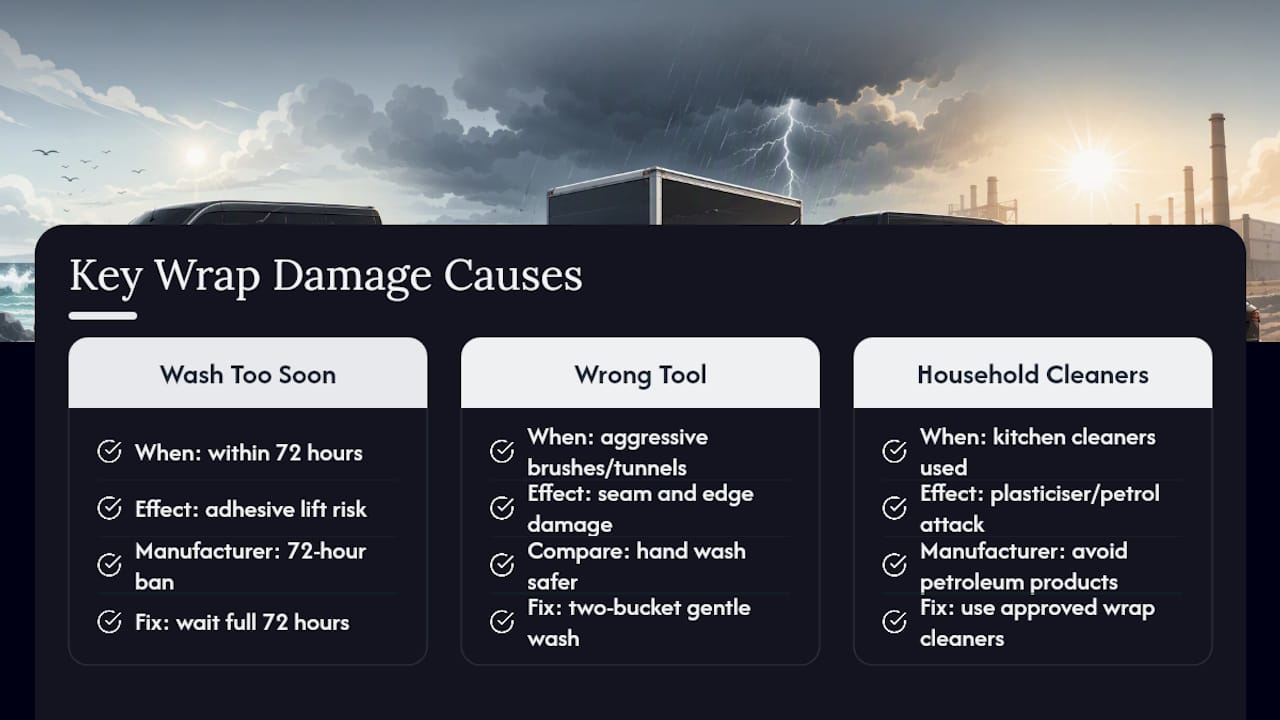
The manufacturer data backs this up plainly. 3M and Avery Dennison don’t hedge on the 72-hour wait or the ban on petroleum-based products, because those two mistakes account for a disproportionate share of early wrap failures we see in the field. Conventional wisdom treats vinyl like paint that just happens to be a different color. It isn’t. Paint doesn’t have seams, edges, or adhesive that can be lifted by a brush-wash tunnel.
If you take one thing from this guide, prioritize the wash method over the product. A gentle two-bucket hand wash with a mediocre soap will outperform an aggressive brush wash with a premium one, every time. Get the technique right first. The products are the easy part.
— NJ Vinyl Wrapz
Professional Maintenance and Repair Support From NJ Vinyl Wrapz
DIY care handles the everyday wash routine, but some jobs need a controlled shop environment: full seam repairs, widespread edge lift, stubborn staining that’s gone past what a quick detailer can fix, or a ceramic coating applied correctly the first time. Maintenance inspections, spot repairs, and fleet maintenance programs are available for businesses managing multiple wrapped vehicles in the region.

If your fleet manager is staring down a dozen vehicles with inconsistent wear, or you’ve got one wrap with bubbling that’s spread since last month, that’s your signal to bring it in rather than keep experimenting with home fixes. A short inspection catches problems while they’re still a spot repair instead of a full panel replacement. Request a quote through our full vehicle wraps page and get a maintenance plan built around how many vehicles you’re actually managing.
Sources
For exact pressure limits and IPA ratios, see 3M’s maintenance FAQ, the 3M 2080 wait-after-install bulletin, and Avery Dennison’s cleaning guide.
- 3M Protection Wrap Film — Vehicle maintenance FAQ (Revision A, April 2024)
- How to wash, protect and maintain car wrap or PPF | 3D Car Care
FAQ
Can a Wrapped Car Go Through a Car Wash?
Touchless car washes are generally safe for vinyl wraps, but brush and soft-touch tunnels can lift edges and seams and should be avoided when possible. Hand-washing with the two-bucket method remains the safest option overall.
What Are the Downsides of a Vinyl Wrap?
Wraps require more careful cleaning than paint, since brushes, petroleum-based products, and high heat can all damage the film or its adhesive. They also need periodic inspection for edge lift and seam separation, particularly on high-mileage or outdoor-parked vehicles.
Can I Use Dawn Dish Soap on a Vinyl Wrap?
Dish soaps such as Dawn are designed to strip grease but can also degrade protective layers on vinyl film if used repeatedly. Stick to a pH-neutral, wrap-safe shampoo instead for regular washing.
How Long Do Vinyl Wraps Usually Last?
Quality vinyl wraps typically last several years with proper care, though exact lifespan depends on film quality, climate exposure, and how consistently the maintenance routine above gets followed. Vehicles kept in shade or a garage with regular hand-washing tend to hold their finish noticeably longer than those parked outside year round.