
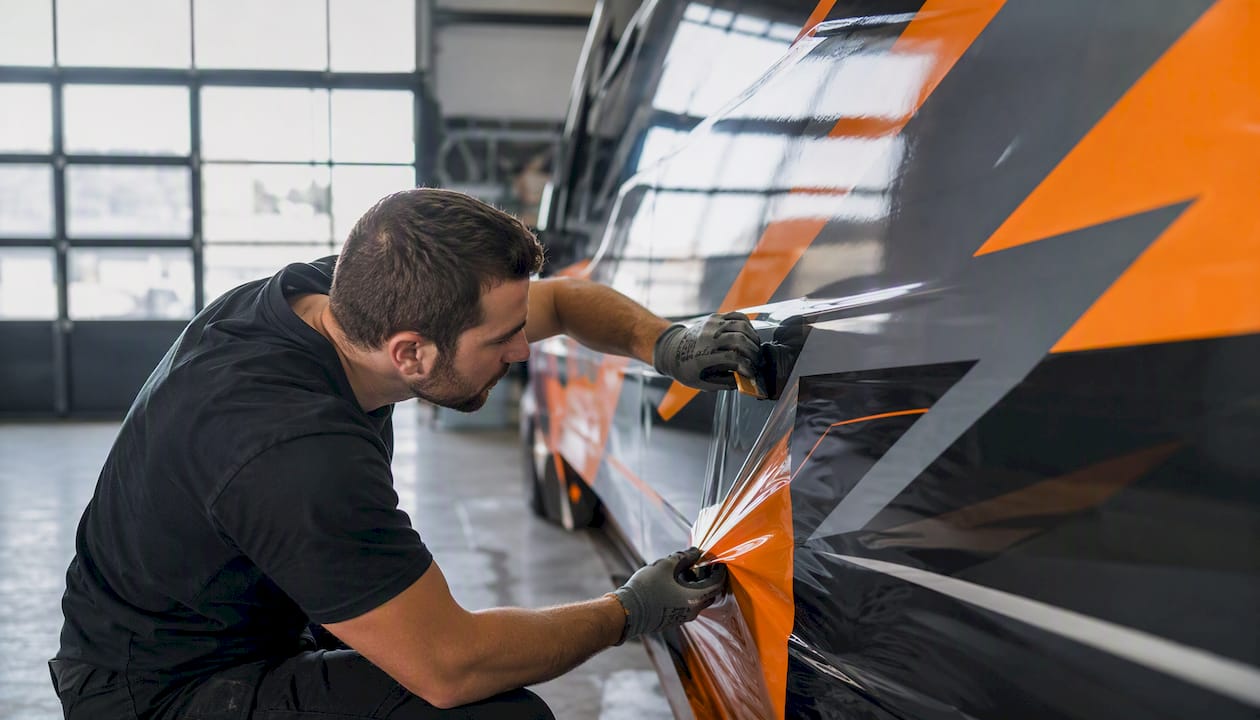
Most professionally installed, premium cast vinyl wraps last several years with proper maintenance. That range isn’t a guarantee; it’s an outcome. Get the material spec right and keep up a cleaning cadence, and the upper end is realistic. Skip either, and you’re looking at 3 years or less.
Two actions matter most from day one:
- Specify cast film with a UV-inhibited overlaminate. Brands like Avery Dennison and 3M produce cast films engineered for conformability and long-term color retention. Pair them with a 2–3 mil clear polyester or vinyl overlaminate with UV inhibitors.
- Set a cleaning schedule before the vehicle leaves the shop. Fleet vehicles need attention every 1–2 weeks. High-exposure routes warrant weekly washes.
Everything else in this guide builds on those two decisions.
Key Takeaways
A professionally installed cast vinyl wrap with a UV-inhibited overlaminate, maintained on a regular cleaning schedule, reliably reaches 5–7 years of service life under commercial conditions.
| Point | Details |
|---|---|
| Specify cast film + overlaminate | Cast vinyl with a 2–3 mil UV-inhibited overlaminate is the baseline spec for multi-year fleet service life. |
| Clean every 1–2 weeks | Avery Dennison recommends this cadence for standard fleets; high-exposure routes need weekly washing. |
| Horizontal panels age faster | Hoods and roofs weather faster than vertical panels and often carry shorter warranty terms. |
| Ask for written spec documentation | Request film model, rated durability, and laminate spec in writing before signing any fleet contract. |
| NJ Vinyl Wrapz | Installs premium 3M and Avery Dennison cast films in a climate-controlled facility with certified applicators. |
Table of Contents
- How long does vehicle wrap lifespan actually vary by film type?
- What factors shorten or extend a wrap’s real-world life?
- What’s the right maintenance schedule for wraps?
- How do you spot signs of wear before they become problems?
- What should you ask your installer about warranties?
- How does finish type affect lifespan and maintenance?
- How should you budget for wraps over time?
- Can a wrapped car go through a carwash?
- Why installation quality determines whether your wrap reaches its rated life
- What NJ Vinyl Wrapz sees most often in the field
- NJ Vinyl Wrapz helps your fleet reach the upper lifespan ranges
- Sources
- FAQ
How long does vehicle wrap lifespan actually vary by film type?
Wrap longevity is an engineering problem, not a marketing promise. The film, adhesive, overlaminate, and installer process together determine whether a wrap lasts months or years. Film type is the biggest single variable.
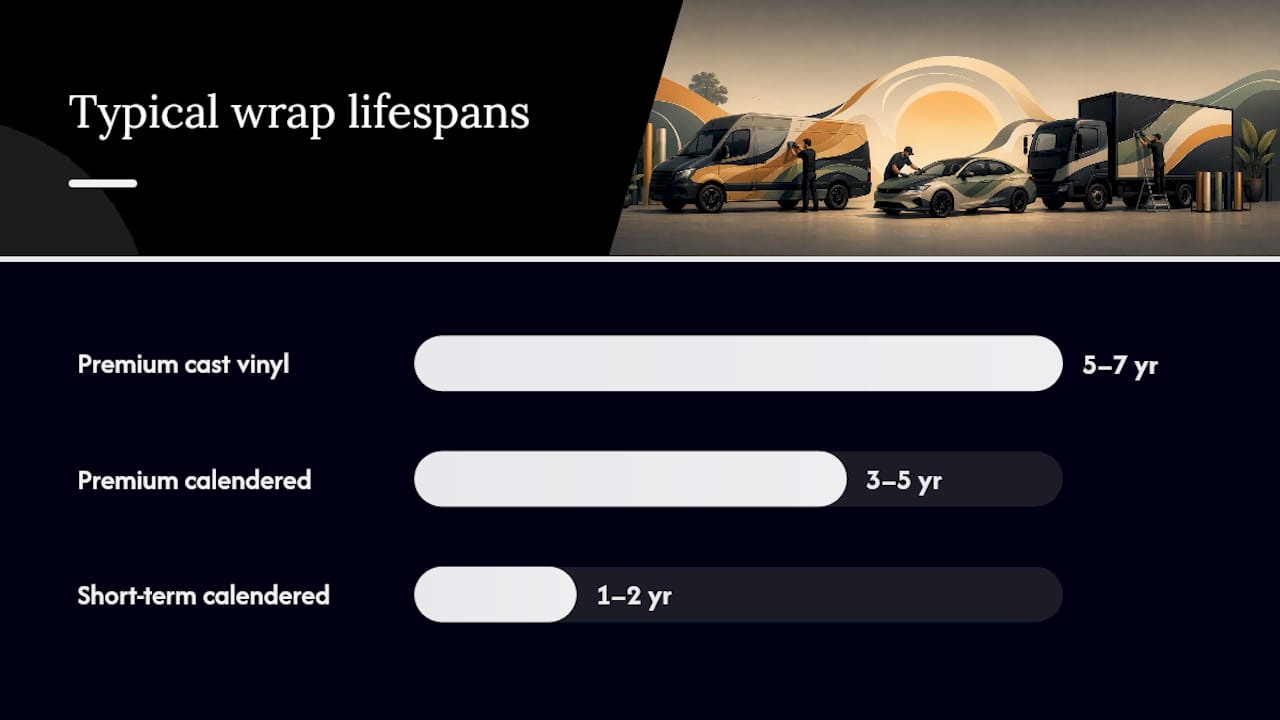
Cast vinyl offers superior conformability, UV resistance, and color retention compared to calendered vinyl, which is thicker, less conformable, and typically positioned as a shorter-term, lower-cost option. Some improved calendered formulations now reach up to five years of exterior durability when matched to the right adhesive, but that’s the ceiling for calendered, not the floor.
| Film Type | Typical Lifespan | Warranty Window | Best For |
|---|---|---|---|
| Premium cast vinyl | 5–7 years | 3–5 years material | Full wraps, fleet programs, complex curves |
| Premium calendered | 3–5 years | 2–3 years material | Flat panels, partial wraps, medium-term campaigns |
| Short-term calendered | 1–2 years | 1 year or less | Seasonal promos, event vehicles |
An overlaminate adds 1–2 years of protection to any film by shielding the ink and vinyl surface from UV, abrasion, and chemical exposure. Without one, even a premium cast film degrades faster. For fleet work, cast vinyl at a minimum 2-mil thickness plus a 2–3 mil UV-inhibited overlaminate is the baseline spec to reliably reach multi-year service life.
Professional installation matters almost as much as material choice. A rushed install on premium film still fails early. Proper surface prep, seam mapping, and post-heat treatment are non-negotiable steps, not optional finishing touches.
What factors shorten or extend a wrap’s real-world life?
Some variables are in your control. Others aren’t. Knowing which is which helps you make smarter spec decisions before the job starts.
Material and adhesive chemistry set the ceiling. Cast films use a solvent-cast manufacturing process that produces a thinner, more stable film with better dimensional memory. Calendered films are extruded under pressure, which introduces internal stress that can cause shrinkage over time, especially on curves and edges.
Surface orientation is one of the most underappreciated factors. Hoods, roofs, and trunk lids face direct sun at a perpendicular angle for hours daily. Horizontal surfaces experience faster weathering than vertical panels, which is why manufacturers often rate and warranty those areas differently. A wrap that holds up beautifully on the doors may show fading on the hood two years earlier.
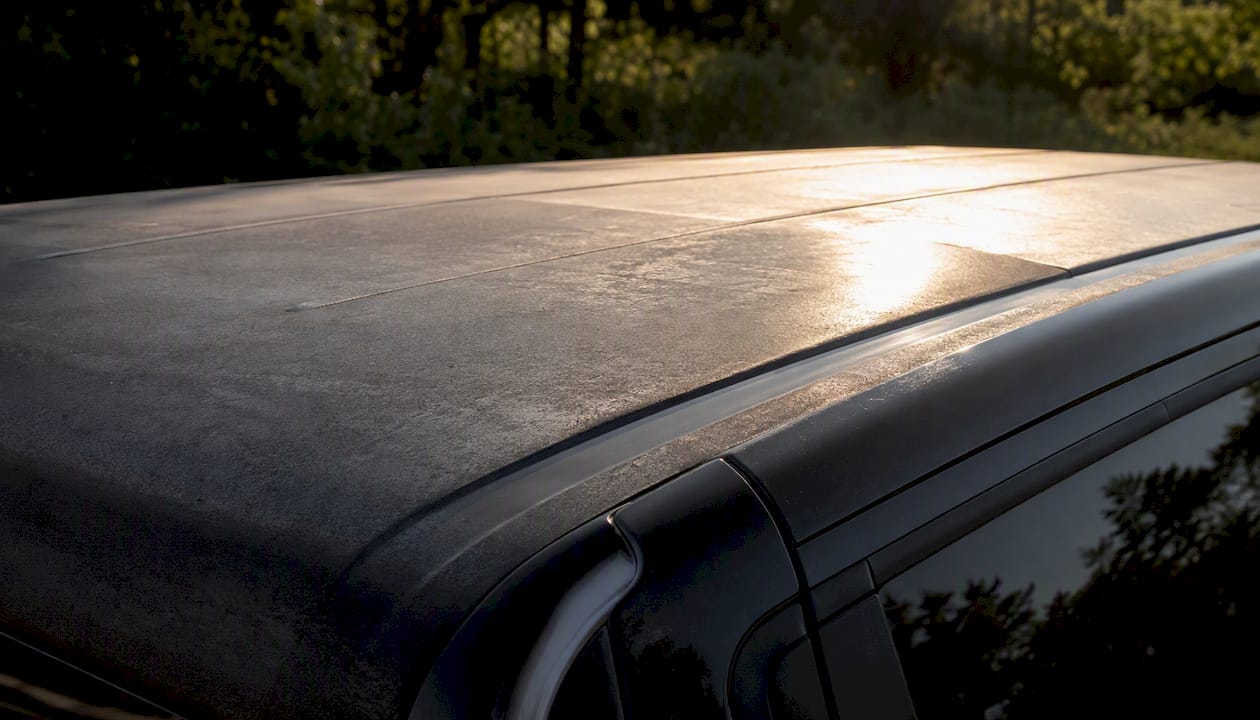
Environment compounds everything. UV intensity in the Southwest accelerates color loss. Coastal salt air attacks adhesive bonds. Road grime and industrial pollutants create a chemical film that, left unwashed, degrades the overlaminate surface. Thermal cycling, the daily expansion and contraction from temperature swings, stresses seams and edges over time.
Installation discipline is the most controllable factor. Skipping post-heat after stretching vinyl around compound curves leaves the film with internal memory that eventually causes edge lift. Inadequate surface prep (oil, wax residue, or silicone contamination) prevents proper adhesion from the start. These aren’t edge cases; they’re the most common causes of early failure.
Usage patterns matter for fleet managers specifically. High daily mileage means more road debris impact, more temperature cycling, and more frequent washing. Fuel and chemical spills near fill caps are a localized but real threat to adhesive integrity.
Pro Tip: For vehicles on demanding routes (highway delivery, coastal service areas), upgrade to a cast film with a solvent-based adhesive and specify a 3-mil overlaminate rather than the standard 2-mil. The cost difference is modest; the lifespan difference can be two or more years.
What’s the right maintenance schedule for wraps?
Avery Dennison recommends cleaning commercial vehicle wraps every 1–2 weeks for typical fleets and weekly for vehicles in high-exposure environments. Those aren’t arbitrary intervals. Contaminants that sit on a wrap surface start breaking down the overlaminate, and once that layer degrades, the vinyl underneath is exposed.
Here’s a practical schedule:
- Weekly (high-exposure routes): Hand wash with a wrap-safe, pH-neutral detergent. Rinse with low-pressure water from top to bottom. Dry with a clean microfiber cloth to prevent water spotting.
- Every 1–2 weeks (standard fleet): Same hand-wash process. Inspect seams and edges for any early lift while washing.
- Monthly: Apply a wrap-safe sealant on gloss finishes. Check door jambs and mirror housings where edges are most vulnerable.
- Quarterly: Full inspection of horizontal panels (hood, roof) for early chalking or color shift. Clean door jambs and tight panel transitions with a soft detailing brush.
- Annually: Professional inspection and touch-up of any lifted edges. Document condition with photos for warranty records.
| Cadence | Action | Notes |
|---|---|---|
| Weekly | Hand wash, low-pressure rinse, microfiber dry | Required for high-exposure routes |
| Every 1–2 weeks | Hand wash + seam/edge inspection | Standard fleet baseline |
| Monthly | Sealant application (gloss only), jamb check | Skip sealants on matte/satin |
| Quarterly | Horizontal panel inspection, detail brush on transitions | Look for chalking, color shift |
| Annually | Professional inspection, edge touch-up, photo documentation | Supports warranty claims |
For cleaning technique, streak-free methods that work on glass also apply to wrap surfaces: work top to bottom, avoid circular scrubbing, and rinse before the soap dries.
Pro Tip: Never use an automatic car wash with rotating brushes on a wrapped vehicle. The bristles catch edges and seams, and a single pass can undo months of careful maintenance. Touchless systems are acceptable in a pinch, but hand washing is always the right call.
Post-winter care deserves its own moment. After a salt season, flush the underside of door panels and any area where road salt accumulates. Salt trapped in seams accelerates adhesive failure faster than almost anything else.
How do you spot signs of wear before they become problems?
Early detection saves money. A small lifted edge caught at month six costs a few minutes to re-press. The same edge ignored for six months means a panel replacement.
Visual signs to watch for:
- Loss of gloss or a chalky, dull surface texture (overlaminate breakdown)
- Fading or discoloration, especially on horizontal panels
- Color shift at seams where two panels meet
- Cracking or micro-fractures in the film surface
- Peeling at door edges, mirror housings, or bumper corners
Tactile and functional signs:
- Lifting at seams that you can feel with a fingertip
- Bubbling under the film surface (trapped moisture or adhesive failure)
- Edges that flex away from the panel when pressed
Repair vs. replace decision:
- Small lifted edges or isolated bubbles on a wrap that’s otherwise in good condition: repair the panel.
- Fading or chalking on horizontal surfaces while verticals look fine: replace horizontal panels only, if color matching allows.
- Widespread color loss, cracking, or multiple panel failures on a fleet vehicle: full rewrap. Partial repairs on a visibly aged wrap rarely restore brand-consistent appearance.
For fleet managers, the brand-image threshold often drives the decision before the material actually fails. A wrap that looks tired at year four on a client-facing vehicle is a business problem, not just a maintenance one.
What should you ask your installer about warranties?
Warranty language in the wrap industry covers two separate things, and conflating them is expensive.
Material warranty comes from the manufacturer (Avery Dennison, 3M) and covers defects in the film itself: delamination, adhesive failure, color fade beyond rated tolerances. These warranties typically run 3–5 years for premium cast films and are tied to rated durability under specific exposure conditions.
Workmanship warranty comes from the installer and covers installation defects: edge lift from improper post-heat, bubbling from inadequate surface prep, seam failures. A reputable installer backs their work for at least 1–2 years.
Questions to bring to any sales meeting:
- What film model are you specifying, and what is its rated durability?
- What overlaminate are you using, and does it carry UV inhibitors?
- Does the material warranty cover horizontal surfaces (hood, roof) at the same rate as verticals?
- What are the care requirements that keep the warranty valid?
- Is the workmanship warranty transferable if the vehicle changes hands?
- What is your remediation process if a panel fails within the warranty period?
Written material documentation, including film model, rated durability, and laminate spec, is becoming a standard requirement for fleet contracts and renewals. If an installer can’t hand you a spec sheet, that’s a red flag.
How does finish type affect lifespan and maintenance?
Finish choice isn’t just aesthetic. It changes what you can and can’t do to maintain the wrap, and it affects how long the surface holds up under real-world conditions.
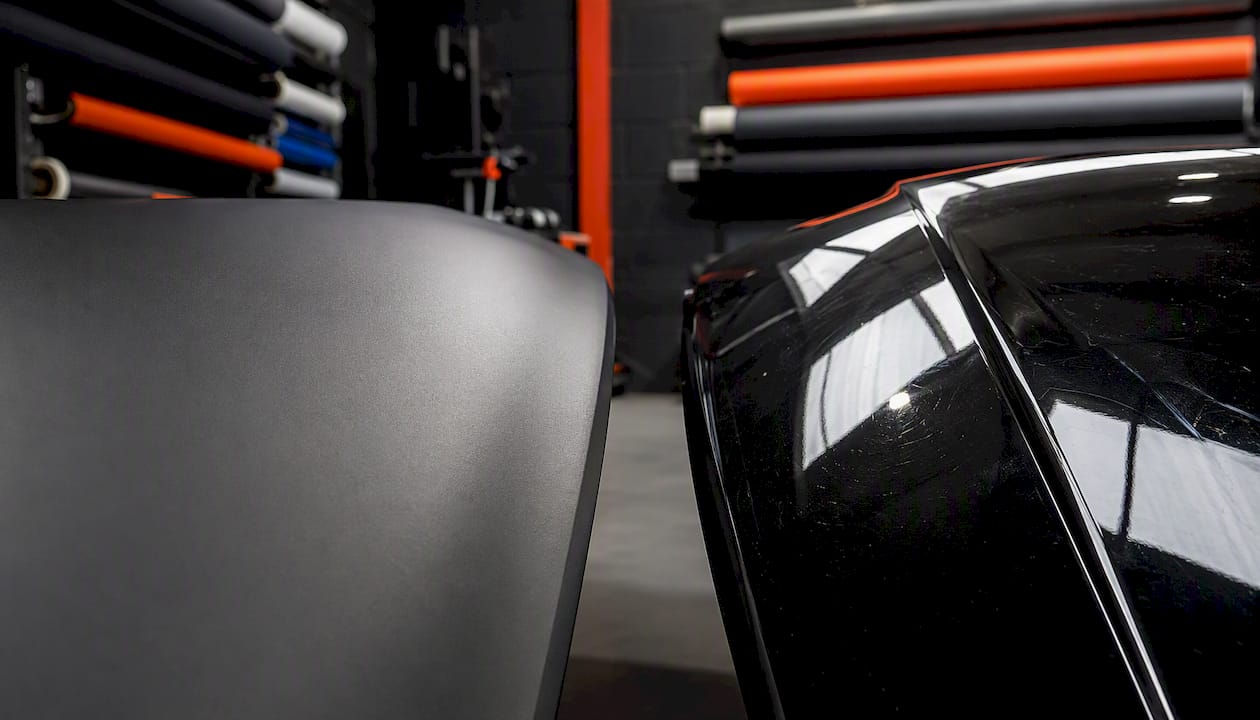
Gloss is the most forgiving finish to maintain. You can apply wrap-safe sealants and polishes, which add a protective layer and make cleaning easier. Gloss surfaces show contamination quickly, which is actually useful: it prompts more frequent cleaning.
Matte and satin finishes restrict your options significantly. Polishes and most protectants alter the surface texture and create shiny patches that can’t be reversed. Cleaning has to be gentler, and any product that adds gloss is off the table. Matte and satin finishes require avoiding polishes and many protectants that are standard for gloss wraps.
Chrome and specialty finishes (brushed metal, color-shift films) are the most demanding. They’re highly sensitive to abrasion and chemical exposure, and they typically carry shorter rated lifespans than standard cast films. Expect 3–5 years under ideal conditions, less in harsh environments.
| Finish | Expected Lifespan | Maintenance Intensity | Typical Uses |
|---|---|---|---|
| Gloss | 5–7 years | Low (sealants, polishes allowed) | Fleet branding, color change |
| Satin | 4–6 years | Medium (no polishes) | Premium personal vehicles |
| Matte | 4–6 years | Medium-high (restricted products) | Color change, specialty fleet |
| Chrome/specialty | 3–5 years | High (abrasion/chemical sensitive) | Show vehicles, accent panels |
Surface orientation interacts with finish too. A matte hood that can’t be polished has fewer protective options against UV than a gloss hood. For fleet vehicles in high-UV regions, gloss is often the more durable practical choice even when matte is the preferred aesthetic.
How should you budget for wraps over time?
A wrap isn’t a one-time cost. It’s a recurring line item, and the spec you choose determines how often that line item appears.
Full wrap costs vary by vehicle size, complexity, and material spec, but high-level industry ranges run roughly $2,500–$5,000 for a standard passenger vehicle and $3,500–$8,000+ for a large commercial van or truck. Partial wraps and spot graphics cost less upfront but cover less surface area.
The more useful number is cost per year:
The short-term film looks cheap at purchase and expensive over time. For fleet advertising vehicles where the wrap is a marketing asset, the cast system almost always wins on cost-per-year math. For seasonal promotions or vehicles being retired in 18 months, short-term calendered makes sense.
Replacement scheduling matters for fleet continuity. Stagger rewrap dates across a fleet so you’re not replacing 10 vehicles at once. A rolling replacement schedule also keeps the fleet looking consistent: a mix of fresh and aged wraps on the same brand fleet is a visible inconsistency that undermines the advertising value. For more on fleet ROI planning, the 2026 fleet wrap ROI guide breaks down the numbers in detail.
Can a wrapped car go through a carwash?
Automatic car washes with rotating brushes are a hard no for wrapped vehicles. The bristles catch seams and edges, and the mechanical pressure lifts film that’s otherwise adhered correctly. One pass through a brush wash can cause edge peeling that takes hours to repair.
Touchless automatic washes are acceptable occasionally, but the high-pressure jets can still stress seams on older wraps or areas with minor edge lift. Use them only when hand washing isn’t possible.
Pressure washing is safe with the right technique: keep the nozzle at least 12 inches from the surface, use a wide-angle tip (40-degree or wider), and never direct the stream at a seam or edge at a sharp angle. Water forced under an edge at high pressure is a fast way to create a bubble.
Dos and don’ts for daily use:
- Do hand wash with a pH-neutral, wrap-safe detergent
- Do rinse from top to bottom before soaping
- Do dry with a clean microfiber cloth
- Don’t use abrasive sponges or brushes
- Don’t let fuel, bird droppings, or tree sap sit on the surface; wipe immediately with a damp cloth
- Don’t park under trees that drop sap regularly
- Don’t use petroleum-based cleaners near seams
After a fuel spill at the fill cap, blot (don’t wipe) the area immediately with a clean cloth, then rinse with water. Fuel left on vinyl softens the adhesive and can cause permanent lifting around the fill area.
Why installation quality determines whether your wrap reaches its rated life
The best film on the market fails early when the installation is sloppy. When installers follow correct processing and post-heat procedures, films like Avery Dennison’s Supreme Wrapping Film remain adhered for the intended life of the film. Skip those steps, and the same film fails in months.
The installer’s job is to manage a system: film, adhesive, overlaminate, and process controls all have to work together. Air-release channel liners and specific adhesive chemistries are essential for large-panel fleet installations, allowing bubble-free repositioning and durable adhesion across wide surfaces.
Common installation mistakes and their consequences:
- Skipping post-heat: Vinyl stretched around compound curves retains memory. Without post-heat to reset that memory, the film slowly pulls back toward its original shape, lifting edges within weeks.
- Inadequate surface prep: Oil, wax, or silicone contamination on the paint surface prevents adhesion. The wrap looks fine on day one and starts lifting at seams within months.
- Poor seam placement: Seams placed at high-flex points (door edges, bumper corners) fail faster than seams placed on flat, stable panels.
- No overlaminate: Skipping the laminate saves money upfront and costs years of service life.
A qualified installer treats every vehicle wrap as a system, not a sticker job. The film spec, adhesive chemistry, overlaminate, surface prep, post-heat, and seam mapping all have to be matched to the vehicle’s geometry and use case. One weak link in that chain shortens the life of every other component.
For commercial fleet work, the recommended spec list is: cast film (minimum 2-mil), 2–3 mil UV-inhibited overlaminate, air-release liner for large panels, and a certified applicator with documented experience on fleet vehicles. NJ Vinyl Wrapz installs in a climate-controlled facility using 3M and Avery Dennison materials, which matters because temperature and humidity during installation directly affect adhesive cure and long-term bond strength.
Pro Tip: Ask any installer to show you their post-heat process before you commit. An installer who can’t explain it or skips it on a demo panel is telling you something important about how they’ll handle your vehicle.
What NJ Vinyl Wrapz sees most often in the field
After more than 10 years of fleet and personal vehicle installations across New Jersey, the pattern is consistent: the wraps that fail early almost always trace back to one of two problems, either an underspec’d film chosen to hit a low price point, or a maintenance routine that never got established after the install. The wraps that reach 6 or 7 years are the ones where the fleet manager asked the right spec questions upfront and kept a cleaning schedule.
The single most useful thing any fleet manager can do right now is pull the spec sheet on their current wraps. If it doesn’t list the film model, rated durability, and overlaminate spec, that’s the conversation to have with your installer before the next renewal.
NJ Vinyl Wrapz helps your fleet reach the upper lifespan ranges
Wraps that consistently hit 6–7 years don’t happen by accident. They start with the right material spec, get installed in controlled conditions, and stay on a maintenance schedule. NJ Vinyl Wrapz delivers all three: premium cast film from 3M and Avery Dennison, climate-controlled installation by certified applicators, and written care recommendations handed to every fleet manager at job completion.
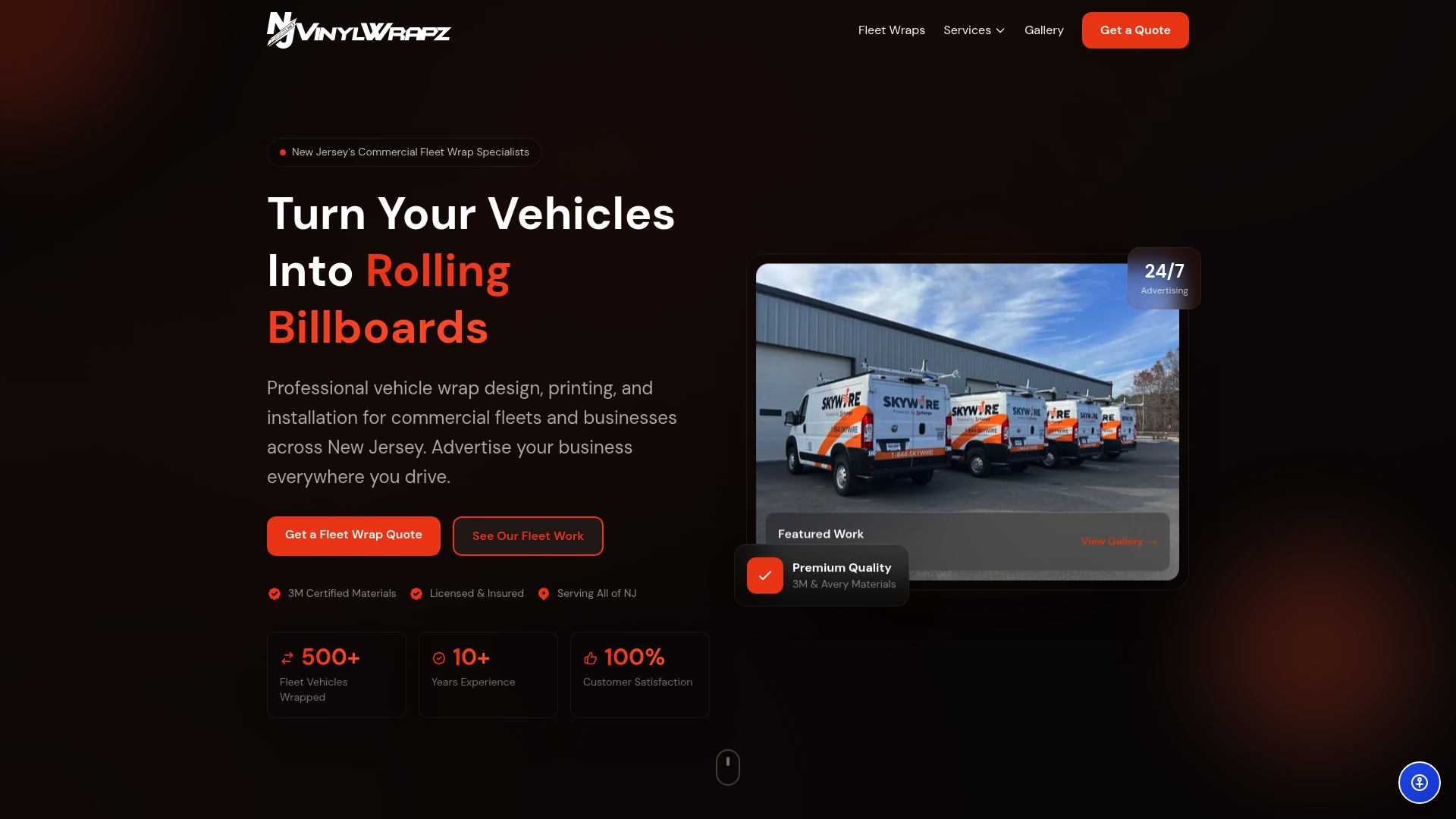
For fleet programs, NJ Vinyl Wrapz offers full wrap packages that include overlaminate spec, seam mapping for your vehicle geometry, and optional ceramic coating to extend surface protection further. Whether you’re wrapping a single vehicle or a 20-unit fleet, the process starts with a spec conversation, not a price sheet. Request a fleet wrap quote or ask about a fleet inspection to assess your current wraps’ condition and remaining service life.
Sources
These manufacturer technical bulletins and industry guides were used to build this article. They’re worth bookmarking if you’re managing a fleet procurement decision or evaluating installer claims.
FAQ
How long do most car wraps last?
Most professionally installed wraps using premium cast vinyl last 5–7 years with regular maintenance. Short-term calendered films typically last 1–2 years, and mid-grade calendered films reach 3–5 years.
Is there a downside to wrapping a car?
Wraps can’t hide existing paint damage and may reveal surface imperfections after removal if the underlying paint was already compromised. They also require consistent maintenance to reach their rated lifespan.
Can a wrapped car go through a carwash?
Automatic brush car washes are not safe for wrapped vehicles because the bristles catch seams and lift edges. Hand washing with a pH-neutral detergent is the recommended method; touchless washes are acceptable occasionally.
How much does it cost to wrap a car?
Full wrap costs typically range from roughly $2,500–$5,000 for a passenger vehicle and $3,500–$8,000 or more for a large commercial van, depending on vehicle size, material spec, and complexity. NJ Vinyl Wrapz provides fleet quotes based on your specific vehicle geometry and spec requirements.