
What is the best vehicle wrap business in the U.S.?
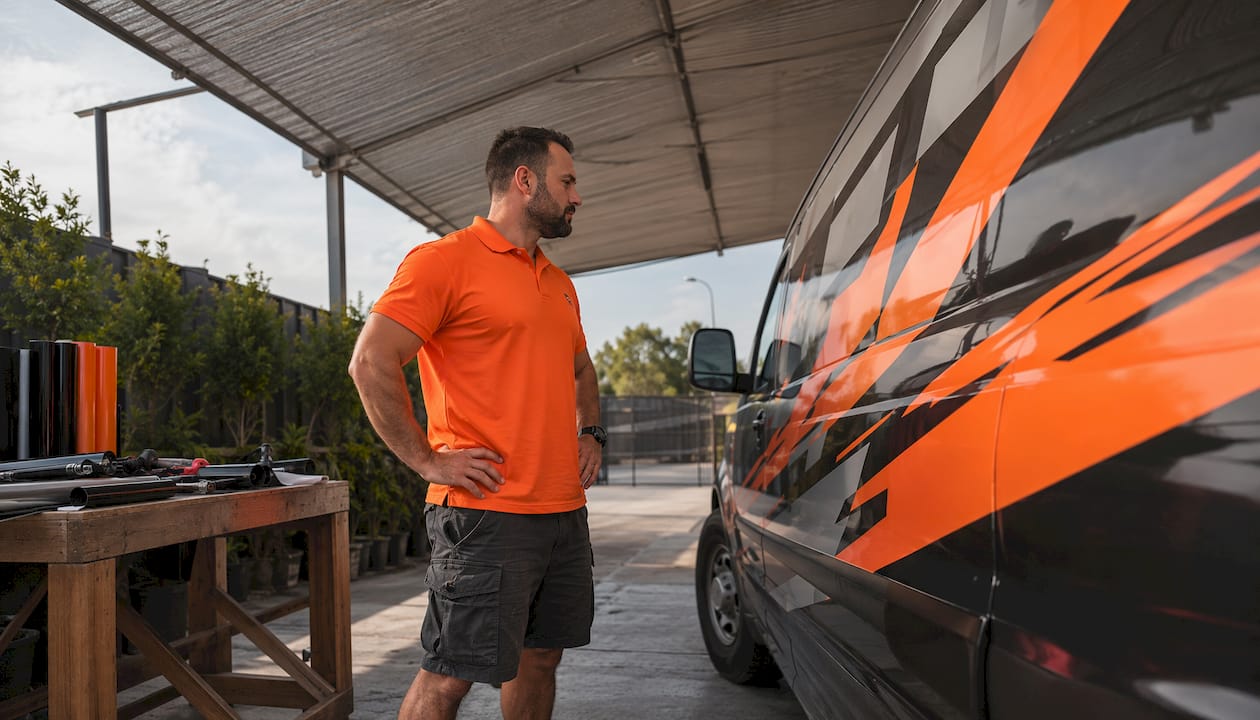
The strongest vehicle wrap providers in the U.S. right now are 3M and Avery Dennison at the materials tier, with AP Wraps, Tint World, Full Throttle Wraps & Graphics, RoadRunner, Baltimore Graphics, and Njvinylwrapz serving the installation and commercial branding market. Choosing between them comes down to five things: certifications, turnaround speed, design capability, geographic reach, and whether the shop has real fleet experience or focuses on one-off retail jobs.
The vehicle wrapping market is experiencing significant growth, driven by last-mile delivery fleets, commercial branding demand, and the cost-per-impression advantage wraps hold over traditional media. A medium-sized van wrap can deliver a very large number of impressions over several years, at a fraction of the cost of radio or digital advertising per thousand views.
Before diving into providers, here are the questions every business owner should ask before signing with a wrap shop:
- Are the installers 3M-certified or Avery Dennison Certified Wrap Installers (CWI)?
- Does the shop operate a climate-controlled installation bay?
- Can they show a portfolio of fleet work, not just single-vehicle retail jobs?
- What is the quoted turnaround from design approval to vehicle pickup?
- Are they licensed and insured, with garage-keepers liability coverage?
| Provider | Best For | Certifications | Turnaround | Design Customization | Coverage Area |
|---|---|---|---|---|---|
| AP Wraps | Certified quality, commercial clients | 3M-certified installers | Standard | High | Regional U.S. |
| Tint World | Bundled appearance services | Manufacturer-certified | Standard | Moderate | Nationwide |
| RoadRunner | Fleet managers, fast turnaround | Fleet-focused | Fast | Moderate | Regional |
| Baltimore Graphics | Bespoke local design | Local reputation | Standard | Very high | Baltimore area |
| Full Throttle Wraps & Graphics | Full wraps, graphic customization | Certified wrap materials | Standard | Very high | Regional |
| Full Throttle Wraps | Full vehicle wraps | — | Standard | High | Regional |
| 3M | Premium materials, certified installs | 3M Preferred Installer program | N/A (materials) | Film options | Nationwide |
| Avery Dennison | Material reliability, CWI certification | Avery CWI program | N/A (materials) | Extensive film range | Nationwide |
| Njvinylwrapz | Commercial fleet branding, NJ businesses | 3M and Avery partnerships, licensed and insured | Fast | High | New Jersey and surrounding area |
How do top U.S. vehicle wrap providers compare?
The providers above split into two distinct categories: material manufacturers and installation service shops. Understanding that split is the first step to making a smart buying decision.

3M and Avery Dennison are the backbone of the industry. They do not install wraps; they manufacture the films and run the certification programs that separate professional shops from backyard operations. 3M’s Preferred Installer program and Avery’s Certified Wrap Installer (CWI) credential are the two benchmarks buyers should look for in any shop they hire. When a shop carries either certification, it signals that the installer has passed hands-on testing and that the work is backed by a manufacturer warranty. The importance of certified materials goes beyond branding: cast vinyl from 3M or Avery conforms around complex body panels and holds a 5–7 year durability warranty that calendered economy films cannot match.
AP Wraps stands out for its combination of certified installers and a well-documented portfolio. For businesses that want commercial wraps with a clear quality baseline, AP Wraps delivers consistent results and a professional client experience.
Tint World takes a different approach entirely. As a national franchise chain, it bundles vehicle wraps with window tinting, detailing, and other appearance services. The tradeoff is breadth over depth: you get nationwide locations and a recognizable brand, but the wrap specialization varies by franchise location.
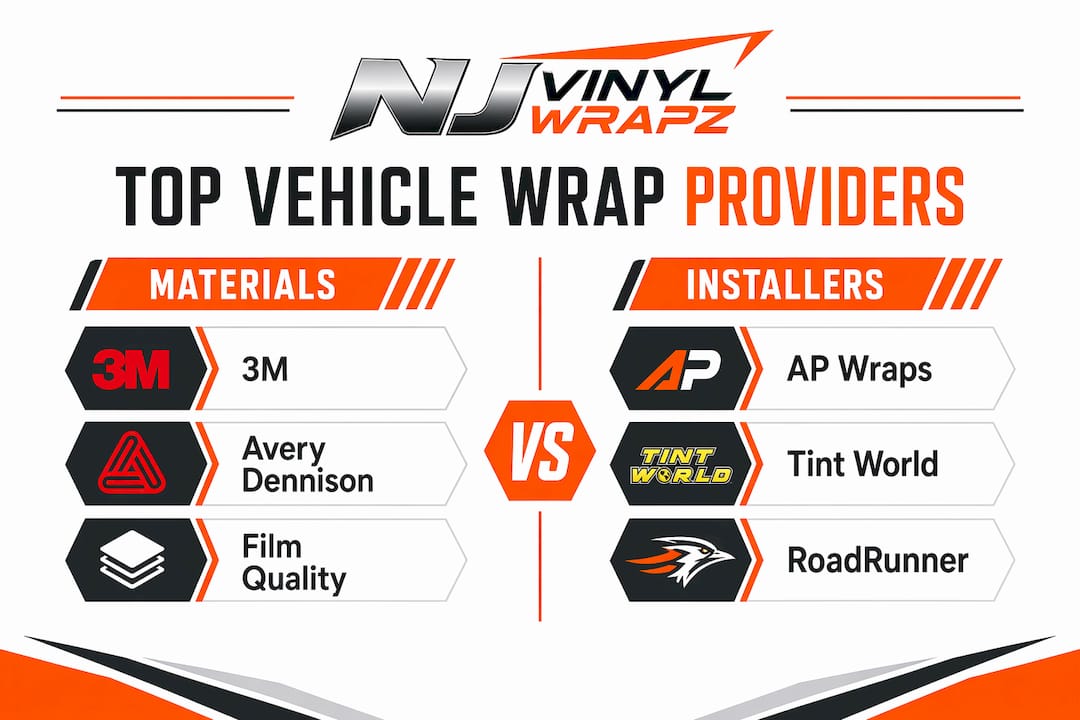
RoadRunner is built for speed and fleet volume. Fleet managers running delivery vans or service trucks on tight schedules will find RoadRunner’s turnaround times and residue-free removable film options particularly useful. Fleet work demands a different approach than retail, and fleet-focused removable films are often a contractual requirement for leased vehicles.
Baltimore Graphics suits local business owners who want hands-on design collaboration. The shop’s bespoke approach and strong local reputation make it a natural fit for a small business that wants its brand identity treated carefully, not templated.
Full Throttle Wraps & Graphics focuses on full vehicle wraps with high design customization, using certified wrap materials. It is a strong choice for clients who want creative graphic work on a full wrap rather than a partial or lettering-only job.
Njvinylwrapz operates with over 10 years of experience, licensed and insured, with 3M and Avery material partnerships and climate-controlled installation facilities. For commercial fleets and businesses across New Jersey, it offers the combination of certified materials, custom design, and fast turnaround that fleet managers need. Its fleet branding services cover everything from single-vehicle color changes to multi-van commercial campaigns.
How do you design and customize a vehicle wrap?
Good wrap design starts with the vehicle, not the logo. The panel layout, door seams, wheel arches, and window placement all dictate where graphics can and cannot live. A design that ignores those constraints forces the installer to stretch or cut through critical brand elements, which hurts both the visual result and the install time.
The core design workflow:
- Pull the vehicle’s exact make, model, and year dimensions from a template library (Flexi, EFI, or manufacturer-supplied templates).
- Map the usable panel space, noting door handles, mirrors, fuel caps, and window lines.
- Place the primary brand element (logo or headline message) on the largest flat surface, typically the side panels or rear doors.
- Add contact information, website, and secondary graphics in supporting zones.
- Choose a finish: gloss for maximum color vibrancy, matte for a modern understated look, satin as a middle ground, or specialty finishes like color-shift and chrome for premium retail jobs.
- Export print-ready files at the correct resolution and color profile for the film being used.
- Submit a proof for client approval before printing.
The difference between full wraps, partial wraps, and lettering is not just cost. A full wrap covers every painted surface and gives the most complete brand presence. A partial wrap covers 25–50% of the vehicle, usually the rear and sides, and delivers roughly 80% of the visual impact for about 50% of the cost. Vehicle lettering applies cut vinyl text and logos only, which suits tight budgets and simple branding needs.
Pro Tip: Design for production, not the portfolio. Avoid ultra-fine text below 14pt, gradients that bleed across panel seams, and chrome finishes on vehicles with heavy body curves. Production-friendly designs install faster, waste less material, and hold up longer in the field.
Specialty finishes deserve a separate note. Color-shift and chrome films are the most visually striking options available, but they are also the most unforgiving. Every imperfection in the surface prep or the install shows up immediately. Reserve them for clients who understand the premium cost and the maintenance requirements.
What does the vehicle wrapping process look like from start to finish?
The wrapping process has four distinct phases, and skipping or rushing any one of them is where most quality problems originate.
Phase 1: Design proofing and approval. The client reviews a digital mockup on their actual vehicle template. Changes happen here, not after printing. Once approved, the file goes to print.
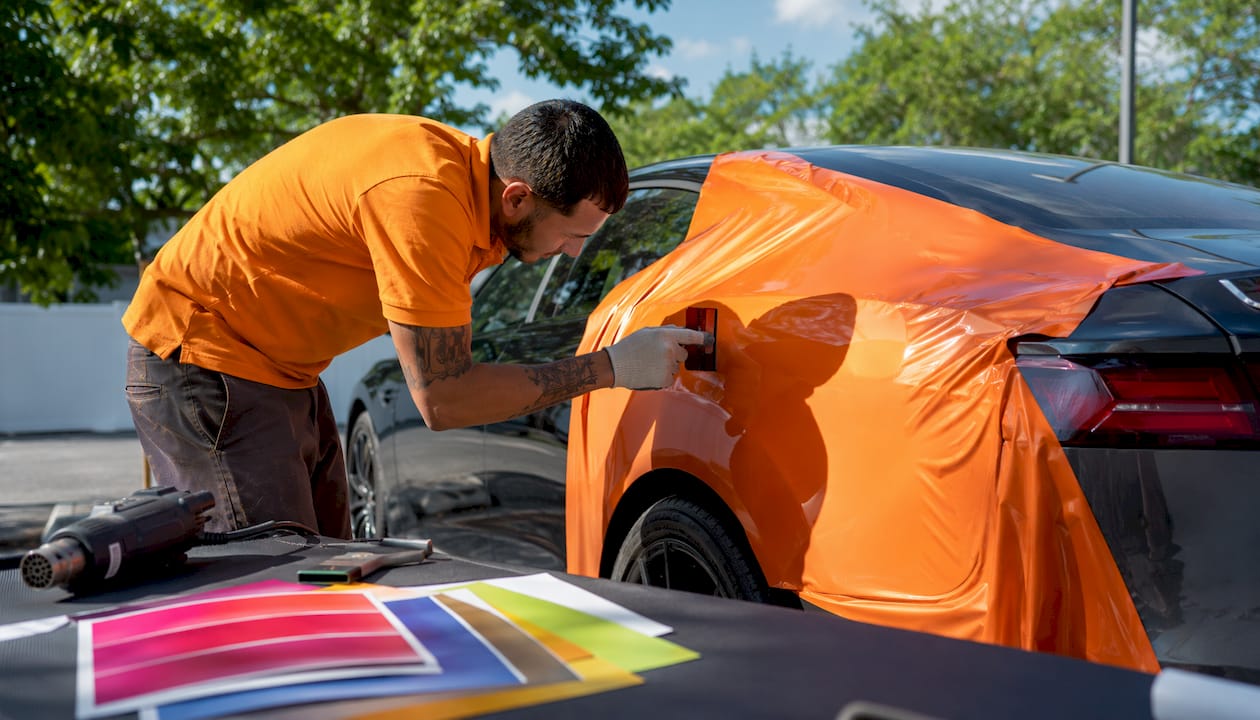
Phase 2: Surface preparation. The vehicle gets a full decontamination wash, followed by a clay bar treatment to remove embedded contaminants. All trim, badges, and door handles are removed where possible. The surface is wiped down with isopropyl alcohol to eliminate any residue that would prevent adhesion. This step is not optional: a contaminated surface causes lifting and bubbling within weeks.
Phase 3: Film application. The installer applies the printed vinyl panel by panel, using heat guns to conform the film around curves and recesses, knifeless tape to cut clean seams at panel edges, and squeegees to eliminate air pockets. A 3M-certified installer completes a full sedan wrap typically within a day of work. An untrained installer may take over 30 hours and still produce lifting edges, turning a profitable job into a rework situation.
Phase 4: Post-heat and finishing. The entire wrap gets a final pass with a heat gun to lock the film’s memory and seal the edges. Trim and badges go back on. The vehicle is inspected panel by panel before delivery.
| Phase | Typical Duration | Key Quality Factor |
|---|---|---|
| Design and proofing | 1–3 days | Client approval, print-ready files |
| Surface preparation | 2–4 hours | Contamination removal, panel degreasing |
| Film application | 8–10 hours (certified) | Installer skill, climate control |
| Post-heat and finishing | 1–2 hours | Edge sealing, final inspection |
Maintenance extends wrap life significantly. Hand wash only, no pressure washers aimed at seams, no automatic car washes with abrasive brushes. Park out of direct sunlight when possible. A properly maintained cast vinyl wrap from 3M or Avery lasts 5–7 years.
Climate control during installation is not a preference. Vinyl requires moderate temperatures and low humidity to adhere correctly. A non-climate-controlled shop will produce premature lifting, bubbling, and voided warranties.
What vehicle wrap styles work best for business branding?
The style you choose should match your budget, your vehicle type, and how aggressively you want the brand to show up on the road.
Full wraps cover every painted surface and work best on box trucks, Sprinter vans, and cargo vans with large flat panels. The flat sides of a Sprinter or box truck are essentially a moving billboard, and a full wrap turns that surface into a seamless brand canvas. Full wraps also protect the factory paint underneath, which matters at lease return time.
Partial wraps cover the rear and sides, leaving the roof and hood in the original paint color. For small businesses testing fleet branding for the first time, partial wraps are the practical starting point. They cost roughly half of a full wrap while delivering most of the visual impact.
Vehicle lettering applies cut vinyl text and logos without any background coverage. It is the lowest-cost entry point and works well for sole traders and service businesses that need basic identification rather than full brand immersion. SUVs and sedans used by sales reps often use lettering to stay professional without a full commitment.
Specialty finishes including matte, satin, color-shift, and chrome are primarily retail and personal vehicle territory, though premium service brands do use matte finishes on fleet vehicles for a high-end aesthetic. Matte and satin finishes are gaining traction on commercial fleets as brands move away from the glossy look.
Fleet consistency matters as much as the individual vehicle design. A fleet of ten vans with identical wraps creates far more brand recall than ten vehicles with slight variations. When fleet branding ROI is the goal, uniformity across the fleet is the single biggest multiplier.
What does it take to run a profitable vehicle wrap business?
Profitability in a vehicle wrap business comes down to systems, not just skill. The shops that thrive in 2026 are not necessarily the most artistic. They are the most operationally consistent.
Wrap installation training takes days to learn at a basic level, but full-vehicle proficiency requires weeks to months of supervised practice. Paint protection film (PPF) has an even steeper curve, typically several months of reps before a technician reaches a sellable standard. The certification path matters: 3M’s Preferred Installer program and Avery’s CWI credential are the two credentials that signal real competence to commercial clients.
Critical success factors:
- Operate a climate-controlled bay of 1,500–2,500 sq ft, maintained at 60–80°F year-round.
- Hit a volume of at least four full wraps per month by month six to cover fixed costs.
- Price on value, not on undercutting competitors. Material price compression has made low-price competition a losing strategy.
- Build a portfolio fast. Five strong portfolio wraps on a Google Business Profile and Instagram generate more inbound leads than any paid ad in the first 90 days.
- Target fleet accounts early. A single fleet contract for 10 vans books your schedule for weeks and creates predictable recurring revenue.
Common pitfalls:
- Underestimating the skill gap. An untrained installer taking 30+ hours on a job that should take 8–10 hours turns a profitable project into a loss after rework costs.
- Skipping surface prep. Shops that rush the decontamination phase produce early wrap failures, which destroy reputation faster than any competitor can.
- Relying on talent instead of systems. A shop that depends entirely on one skilled installer cannot scale, cannot take vacations, and cannot survive that installer leaving.
The first 90 days are the hardest. New wrap shops should not expect profitability until around month six due to the combination of startup costs, skill development, and client acquisition time. The shops that survive that window are the ones that treated installer certification, climate control, and a consistent sales process as non-negotiable from day one.
Legal considerations and best practices for U.S. vehicle wrap businesses
Running a vehicle wrap business in the United States requires more than installation skill. The legal and compliance side is straightforward but non-negotiable.
Business licensing and insurance are the baseline. Every wrap shop needs a general business license from its state or municipality, and garage-keepers liability insurance to cover client vehicles while they are in the shop’s care. Providers like Hiscox and The Hartford offer policies specifically structured for automotive service businesses. Operating without garage-keepers coverage exposes the business to catastrophic liability if a client vehicle is damaged or stolen on the premises.
Material compliance is increasingly relevant. California’s Air Resources Board (CARB) regulations on solvent-based adhesives are pushing the industry toward water-based and low-VOC formulations. Shops serving federal fleet contracts or operating in California need to verify that their vinyl suppliers meet CARB compliance standards. 3M and Avery Dennison both publish technical data sheets confirming VOC compliance for their commercial film lines.
Leased vehicle wraps require a specific protocol. Most commercial vehicle leases allow wraps provided they are professionally removed before the vehicle is returned. Using a removable cast film and documenting the removal process protects both the shop and the client from lease-return disputes. Clients should always check their lease agreement before authorizing a wrap.
Contracts and client agreements protect both parties. A written work order should specify the film brand and grade, the warranty terms, the scope of surface prep, and the client’s responsibility to disclose any prior paint repairs or body filler that could affect adhesion. Shops that skip written agreements invite disputes over warranty claims.
For shops adding paint protection film services alongside wraps, the same licensing and insurance framework applies, but the skill and liability exposure are higher given PPF’s premium price point and the vehicles it typically covers.
Njvinylwrapz brings fleet-grade wrapping to New Jersey businesses
Fleet managers and business owners in New Jersey who want certified, fast, and professionally managed vehicle wrapping have a direct option in Njvinylwrapz. Rather than working with a national franchise where quality varies by location, Njvinylwrapz operates from a single climate-controlled facility with over 10 years of experience, licensed and insured, using 3M and Avery Dennison materials on every job.
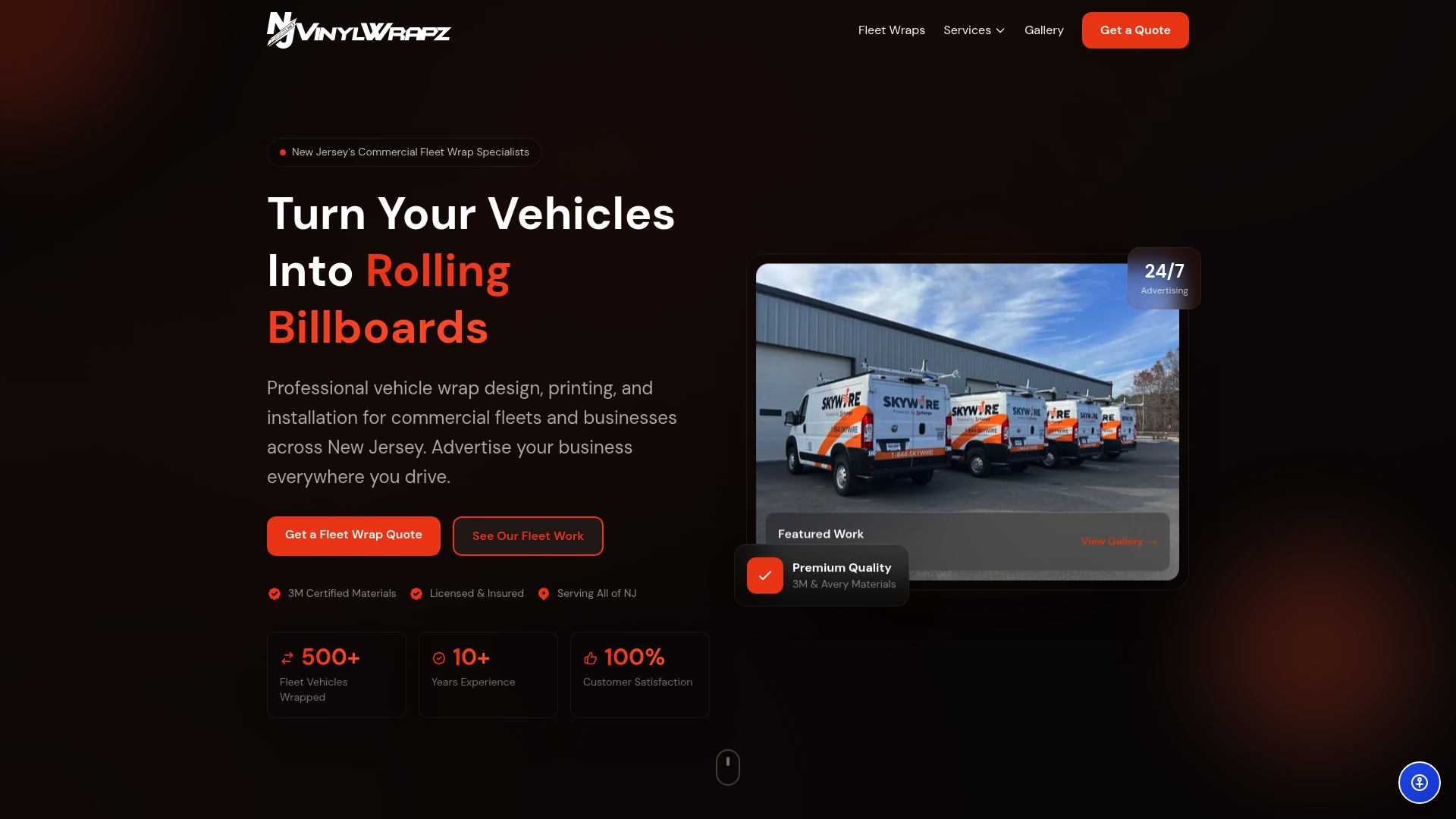
The practical difference is consistency. Every vehicle that goes through Njvinylwrapz gets the same surface prep protocol, the same certified film, and the same post-heat finishing process. For a business running five or ten vehicles, that uniformity is what makes fleet branding actually work. Njvinylwrapz handles full vehicle wraps for commercial fleets, partial wraps, vehicle lettering, color change wraps, window tinting, PPF, and ceramic coatings, covering both commercial branding and personal vehicle upgrades. Explore the full range of wrap options to find the right fit for your fleet or vehicle.
FAQ
Is a vehicle wrap business profitable?
Yes, with the right setup. An owner-operator booking multiple full wraps per month can realistically take home a substantial income in year one with strong revenue and healthy net margins, according to industry data.
Is car wrapping hard to learn?
The basics take days, but full-vehicle proficiency to a sellable standard requires weeks to months of supervised practice. PPF installation has an even steeper curve, typically several months of reps before reaching a consistent standard.
What vehicles are best to wrap for business?
Sprinter vans, cargo vans, and box trucks offer the largest flat panel surfaces and the best return on a wrap investment. SUVs work well for sales and service fleets that need everyday branding without a full commercial vehicle.
How much do vehicle wrap installers earn?
A solo wrap installer in a major U.S. metro can gross a six-figure income in year two, based on several vehicles wrapped weekly. Owner-operators managing the business side can expect a solid take-home income in year one.
Key Takeaways
A profitable vehicle wrap business in 2026 requires certified installers, a climate-controlled bay, fleet account targeting, and operational systems that produce consistent results regardless of who is on the install floor.
| Point | Details |
|---|---|
| Certification is the baseline | 3M Preferred Installer or Avery CWI certification separates professional shops from low-quality competitors. |
| Climate control is non-negotiable | Vinyl requires 60–80°F and low humidity; a non-climate-controlled bay voids warranties and produces early failures. |
| Partial wraps offer strong ROI | Partial wraps deliver roughly 80% of full wrap visual impact at about 50% of the cost, ideal for small business fleets. |
| Systems beat talent alone | The most profitable wrap shops in 2026 run repeatable operational systems, not just skilled individual installers. |
| Njvinylwrapz for NJ fleet branding | Njvinylwrapz offers licensed, insured, 3M and Avery-backed fleet wrapping with climate-controlled installation across New Jersey. |
Recommended
- Car Wrap Financing for Business Fleets: 2026 Guide | NJ Vinyl Wrapz
- Mobile Vehicle Wrapping Near Me: A Fleet Manager’s Guide | NJ Vinyl Wrapz
- Wrap Options | Vehicle Lettering, Partial & Full Wraps | NJ Vinyl Wrapz | NJ Vinyl Wrapz
- Why Professional Wrap Installation Matters for Your Brand | NJ Vinyl Wrapz