
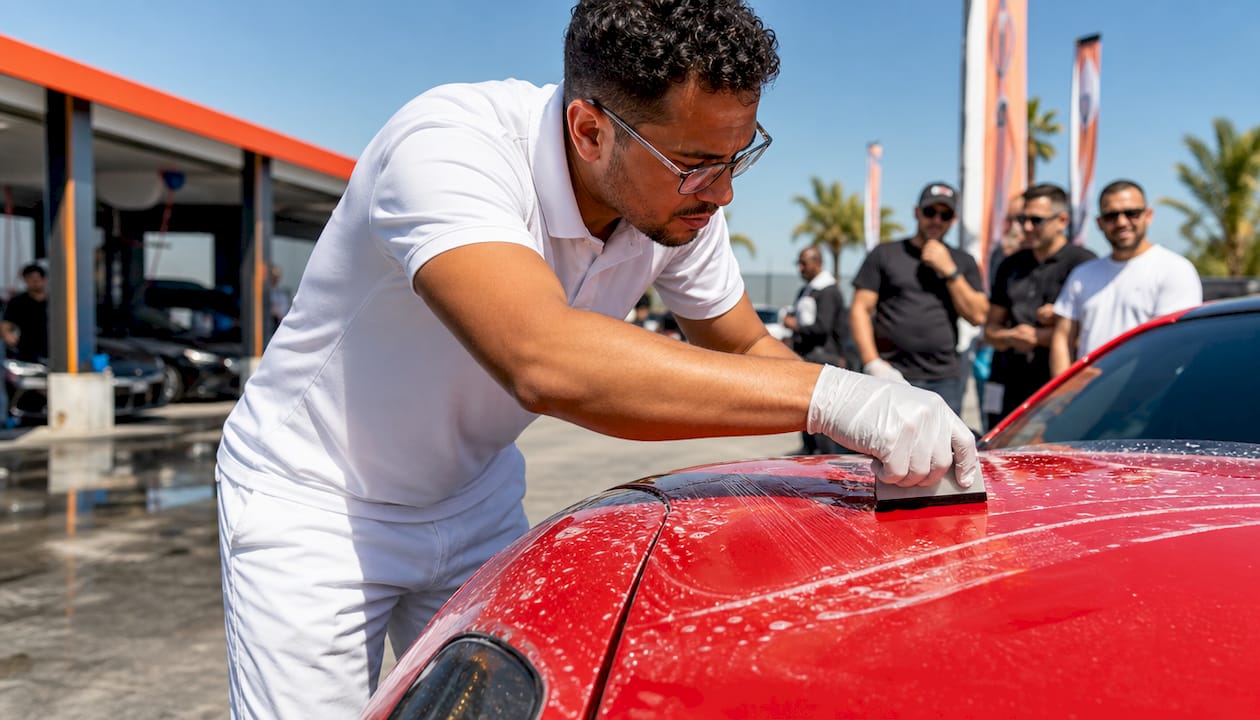
Paint protection film (PPF) is defined as a clear or tinted thermoplastic film applied directly to a vehicle’s painted surfaces to shield against rock chips, scratches, UV damage, and chemical stains. The three primary types of PPF solutions on the market in 2026 are Thermoplastic Polyurethane (TPU), Thermoplastic Polyolefin (TPH), and Polyvinyl Chloride (PVC), each with distinct lifespans, performance profiles, and ideal applications. TPU leads as the industry standard for premium protection, while TPH serves budget-conscious buyers, and PVC has largely been phased out of serious automotive applications. Njvinylwrapz works with premium TPU films to deliver professional PPF installation for both personal vehicles and commercial fleets across New Jersey.
1. What are the main types of PPF solutions?
The three core PPF materials define the entire market. Each one behaves differently under stress, UV exposure, and daily driving conditions.
TPU (Thermoplastic Polyurethane) is the premium choice. It is flexible, optically clear, and capable of self-healing minor scratches when exposed to heat. TPU films last 5–10 years, making them the go-to material for luxury vehicles, daily drivers, and anyone who wants long-term paint preservation. High-end TPU films use aliphatic chemistry, which resists yellowing far better than cheaper alternatives.
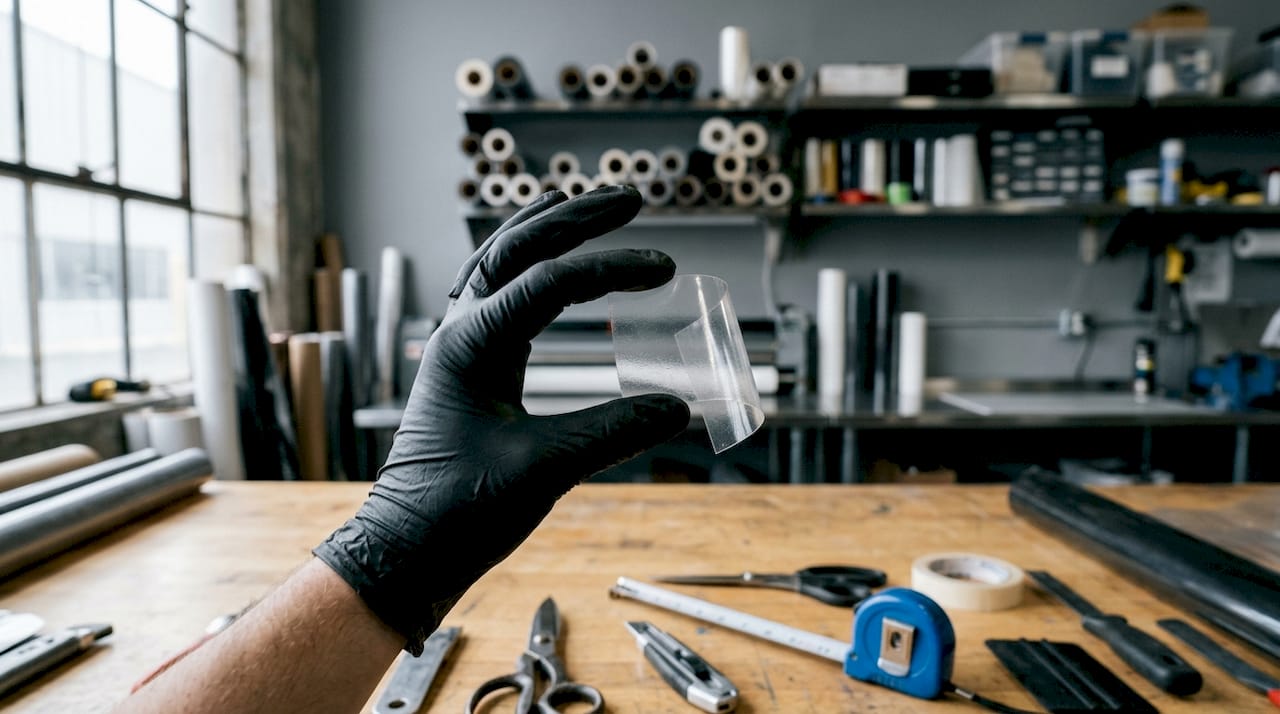
TPH (Thermoplastic Polyolefin) is a hybrid material that sits between TPU and PVC in both price and performance. TPH films typically last 2–5 years and offer moderate protection at a lower cost. They work well for secondary panels, short-term ownership scenarios, or budget-focused fleet applications where full TPU coverage is not financially practical.
PVC (Polyvinyl Chloride) is the oldest film type and the least recommended for modern vehicles. PVC films last only 1–2 years and are prone to yellowing due to weak UV stabilizers. Budget films may look clear initially but degrade quickly. Most professional installers have moved away from PVC entirely for paint protection applications.
- TPU: best clarity, self-healing, 5–10 year lifespan
- TPH: moderate protection, 2–5 year lifespan, lower cost
- PVC: short lifespan, yellowing risk, not recommended for premium use
Pro Tip: Always request the Technical Data Sheet (TDS) before committing to any film. The TDS lists elongation, peel strength, and UV transmission, which are the metrics that actually predict real-world performance, not the marketing brochure.
2. How do PPF thickness and durability impact vehicle protection?
Film thickness is measured in mils (thousandths of an inch), and the right thickness depends entirely on how and where you drive. Thicker is not always better. The relationship between thickness, flexibility, and installation quality is more nuanced than most buyers realize.
Standard industry thickness is 8 mil, which balances impact resistance with enough flexibility to conform to curved body panels. Entry-level films run 6–6.5 mil and suit urban drivers who face light debris and minor abrasion. Heavy-duty applications, such as off-road vehicles or highway fleet trucks, benefit from 10–12 mil films that absorb larger impacts without cracking.
Thickness alone does not tell the full story. Elongation at break should ideally exceed 300% for a film to conform properly to complex curves without lifting at the edges. Poor thickness distribution across the film causes edge curling and premature failure regardless of the advertised mil rating. A film with uniform distribution and high elongation outperforms a thicker film with inconsistent manufacturing quality.
| Thickness | Best Use Case | Key Trade-off |
|---|---|---|
| 6–6.5 mil | Urban driving, entry-level protection | Less impact resistance |
| 8 mil | Daily drivers, standard fleet vehicles | Best balance of flexibility and protection |
| 10–12 mil | Off-road, highway fleets, high-speed use | Harder to install on tight curves |
Pro Tip: Ask your installer two questions before approving any film: What is the elongation at break? And how thick is the topcoat layer? Those two numbers reveal more about real protection than the total mil thickness.
3. What PPF finishes and special features should you know about?
PPF finishes go well beyond standard clear gloss. The finish you choose affects both the look of your vehicle and the long-term integrity of the underlying paint.
Gloss finish is the most common option. It enhances the depth and shine of factory paint, and premium TPU gloss films can improve paint gloss by 20–30%. Gloss PPF suits the majority of vehicles with standard factory paint and is the easiest finish to source and install.
Matte and satin finishes serve a specific and critical purpose. Applying a standard gloss film over factory matte paint damages the finish and may void the manufacturer’s warranty. Matte-specific PPF preserves the flat, non-reflective look that factory matte paint is designed to deliver. If you own a vehicle with a factory matte or satin finish, this is not optional. It is the only correct choice.
Self-healing topcoats are a defining feature of premium TPU films. Self-healing properties depend on the topcoat polymer, with some films healing at low temperatures through ambient sunlight and others requiring warm water or direct heat to activate. This distinction matters for owners in colder climates, where passive healing may be slower or less reliable.
Ceramic-infused PPF combines the impact protection of TPU with the hydrophobic properties of a ceramic coating. The result is a film that repels water, resists chemical stains, and requires less frequent washing. For fleet managers who want to reduce vehicle maintenance costs, ceramic-infused PPF offers a measurable advantage over standard clear film.
- Gloss: enhances shine, most widely available
- Matte/satin: required for factory matte paint, preserves intended aesthetics
- Self-healing: topcoat-dependent, healing trigger varies by product
- Ceramic-infused: adds hydrophobicity and stain resistance
- Color and custom films: available for styling, not just protection
Pro Tip: Match the PPF finish to your existing paint before ordering. A gloss film on matte paint creates a permanent sheen that cannot be reversed without removing the film and potentially damaging the surface underneath.
4. How to choose the best PPF solution for your vehicle
Choosing the right film comes down to three factors: how you use the vehicle, how long you plan to own it, and what your budget allows. Getting this decision right upfront saves significant money and frustration over time.
For luxury vehicles and long-term ownership, TPU is the only material worth considering. The self-healing TPU film suits daily drivers who accumulate swirl marks and light scratches over time. Full-front protection, covering the hood, fenders, mirrors, and bumper, is the most popular configuration for personal vehicles because those panels take the most road debris impact.
For fleet vehicles and commercial applications, the calculus shifts. Fleet managers need to weigh the cost of PPF installation against the cost of repainting or rebranding a vehicle. TPU on high-exposure panels like bumpers and hoods protects the wrap or paint underneath, extending the life of the entire vehicle graphic. TPH is a reasonable choice for secondary panels or vehicles with shorter replacement cycles. Njvinylwrapz offers fleet-specific protection options designed for businesses that need consistent appearance across multiple vehicles.
For vehicles with custom or factory matte paint, the finish decision is non-negotiable. Consult a professional installer about the specific paint type before selecting any film. Pairing a custom paint color with the wrong PPF finish is an expensive mistake that requires full removal and reinstallation to correct.
Climate and driving environment also influence the right choice. Vehicles in high-UV regions benefit from aliphatic TPU films with strong UV stabilizers. Budget films may yellow within 1–2 years in high-sun environments, which defeats the purpose of protecting the paint beneath. Drivers in gravel-heavy or highway-heavy environments should prioritize thicker films with higher elongation ratings.
| Vehicle Type | Recommended Film | Priority Feature |
|---|---|---|
| Luxury/sports car | Premium TPU, gloss or matte | Self-healing, clarity, long warranty |
| Daily driver | Standard TPU, 8 mil | Impact resistance, value |
| Fleet truck/van | TPU on key panels, TPH secondary | Durability, cost efficiency |
| Factory matte vehicle | Matte-specific TPU | Finish preservation, warranty protection |
| Short-term ownership | TPH | Lower upfront cost |
Consulting a professional installer is not optional for complex vehicles. An experienced installer evaluates panel geometry, existing paint condition, and your driving patterns before recommending a specific film and thickness. Warranty tiers also vary significantly. Economy TPU carries a 3-year warranty, standard a 5-year, and premium a 10-year. That gap in coverage reflects real differences in film chemistry and manufacturing quality.
Key takeaways
TPU is the definitive choice for long-term vehicle paint protection, with superior clarity, self-healing capability, and warranty coverage that TPH and PVC cannot match.
| Point | Details |
|---|---|
| Material determines lifespan | TPU lasts 5–10 years; TPH lasts 2–5 years; PVC degrades within 1–2 years. |
| Thickness requires context | 8 mil suits most drivers; elongation at break above 300% matters more than raw thickness. |
| Finish must match paint | Matte-specific PPF is required for factory matte paint to avoid damage and warranty issues. |
| Self-healing varies by product | Healing trigger depends on topcoat chemistry; cold-climate drivers need heat-activated films. |
| Fleet buyers need a cost model | TPU on high-exposure panels with TPH on secondary panels balances protection and budget. |
Why I think most PPF buyers focus on the wrong thing
Most vehicle owners walk into a PPF consultation asking about brand names. That is the wrong starting question. After years of working in vehicle protection and wrapping, I have seen expensive films fail early because the installer did not account for elongation, and I have seen budget films outlast their expected lifespan because the application was flawless.
The film material matters. But the installer’s skill and the quality of the prep work matter just as much. A premium TPU film applied over contaminated paint or installed in a dusty environment will lift at the edges within months. The controlled installation environment that Njvinylwrapz uses is not a marketing detail. It directly affects how long the film bonds to the surface.
I also think the self-healing conversation gets oversold. Self-healing topcoats are genuinely useful for swirl marks from washing, but they do not reverse deep scratches or rock chip craters. Buyers who expect self-healing to make their car maintenance-free will be disappointed. Think of it as a recovery mechanism for light surface stress, not a replacement for careful ownership.
The most underrated factor in any PPF decision is the warranty verification process. Get the warranty in writing, confirm it covers yellowing and delamination, and verify that the installer is authorized by the film manufacturer to issue that warranty. An unauthorized installer cannot back a manufacturer warranty, regardless of what they tell you at the counter.
The future of PPF is moving toward thinner, more conformable films with longer-lasting ceramic topcoats. Watch for films that combine self-healing with true ceramic hardness in a single layer. That combination does not fully exist at scale yet, but it is where the technology is heading.
— Krunal
Njvinylwrapz PPF and vehicle wrap services
Njvinylwrapz has over 10 years of experience installing premium TPU paint protection film for personal vehicles and commercial fleets across New Jersey. Every installation takes place in a climate-controlled facility, which eliminates the dust and temperature variables that cause early film failure.

For fleet managers, Njvinylwrapz offers full vehicle wrap solutions that integrate PPF protection with branded graphics, so your vehicles stay looking sharp and protected at the same time. Whether you need a single luxury vehicle wrapped in premium matte TPU or a full fleet covered for long-term durability, the team at Njvinylwrapz will match the right film to your specific use case. Reach out for a consultation and get a recommendation grounded in real technical specs, not marketing claims.
FAQ
What is the best PPF material for daily drivers?
TPU is the best material for daily drivers because it offers self-healing capability, optical clarity, and a lifespan of 5–10 years. It handles the swirl marks and light chips that accumulate with regular use better than any other film type.
How long does PPF last on a vehicle?
PPF lifespan depends on the material: TPU lasts 5–10 years, TPH lasts 2–5 years, and PVC lasts only 1–2 years before yellowing and degrading. Premium TPU films with 10-year warranties offer the longest documented protection.
Does PPF work on matte paint?
Standard gloss PPF damages matte paint and can void the manufacturer’s warranty. Matte-specific PPF is required to preserve the flat finish and protect the underlying paint without altering the vehicle’s intended appearance.
What thickness of PPF should I choose?
8 mil is the standard thickness for most vehicles and daily driving conditions. Vehicles exposed to heavy highway debris or off-road use benefit from 10–12 mil films, while urban drivers can use 6–6.5 mil entry-level options.
Is PPF better than a vinyl wrap for paint protection?
PPF and vinyl wraps serve different primary purposes. PPF is designed specifically for paint protection against physical damage and UV exposure. Vinyl wraps prioritize color change and branding. Many vehicle owners and fleet managers use both together, applying PPF under or alongside a protective vehicle wrap for maximum coverage.