
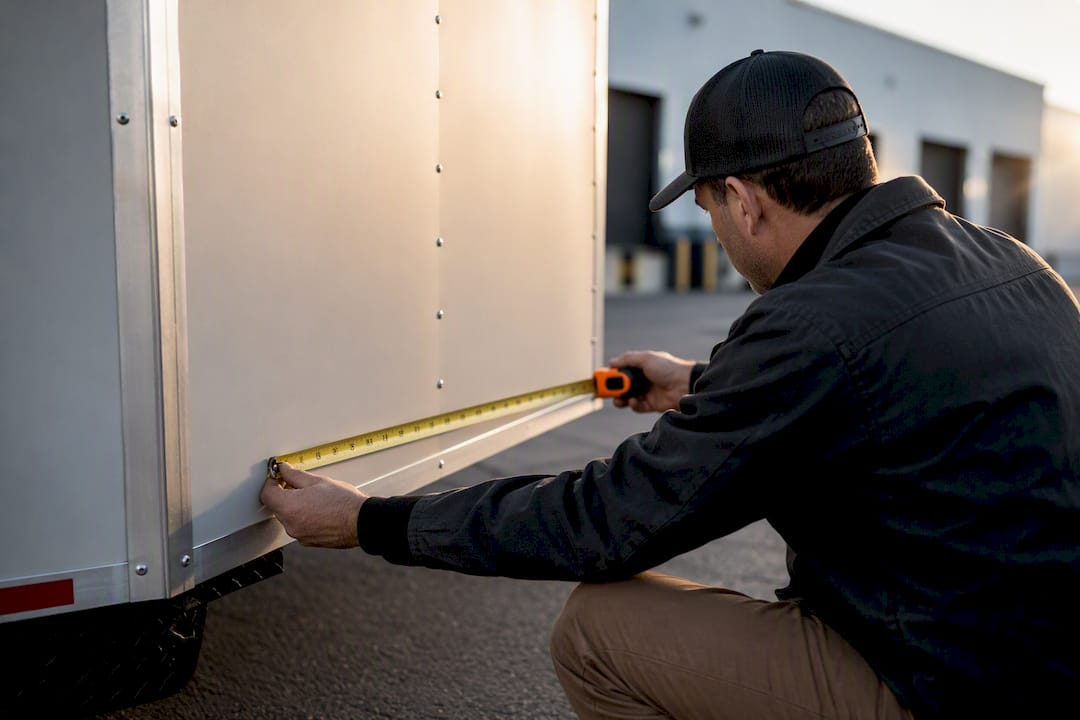
Trailer wrap cost runs from around $300 for basic lettering to $6,000 or more for a full wrap on a large enclosed or semi trailer, with most small business owners landing somewhere between $1,200 and $4,500. The two things that move that number the most are coverage level (lettering vs. partial vs. full) and how riveted or corrugated the trailer’s surface is. Measure your trailer’s square footage and photograph its panels before you call a shop, since itemized quotes vary widely without that groundwork.
TL;DR:
- Trailer wrapping costs vary widely depending on coverage, surface complexity, and trailer size, with full wraps on large trailers reaching $6,000 or more.
- Material choice significantly impacts durability, as cast vinyl lasts 5 to 7 years whereas cheaper calendared vinyl may fail in 1 to 3 years, affecting long-term value.
- Labor complexity, especially around rivets, curves, and existing damage, can account for up to half of the total price, making detailed surface assessment essential.
- Obtaining an itemized quote based on accurate measurements, photos, and clear scope helps prevent surprise costs like surface prep or damage repair.
- Regionally, higher costs stem from urban wages, material logistics, and lower competition, but quality and material grade influence lifespan more than location.
Table of Contents
- How Much Does a Trailer Wrap Cost by Type and Size?
- What Actually Drives Trailer Wrap Pricing?
- Full Wrap vs. Partial Wrap vs. Lettering: What Fits Your Budget?
- How to Estimate What Your Trailer Wrap Will Cost
- How Long Does a Trailer Wrap Last, and What Does That Cost You Per Year?
- How to Cut Trailer Wrap Cost Without Cutting Corners
- How NJ Vinyl Wrapz Prices a Trailer Wrap
- What Extra Fees Show Up on a Trailer Wrap Invoice?
- Why Does Trailer Wrap Pricing Vary by Region?
- The Real Lesson on Trailer Wrap Budgeting
- Get a Measured Quote From NJ Vinyl Wrapz
- Sources
- FAQ
How Much Does a Trailer Wrap Cost by Type and Size?
Price bands shift fast once you factor in trailer size, panel material, and how much surface gets covered. A 6x12 utility trailer and a 53-foot dry van are not remotely the same job, and shops usually quote them using different methods entirely.
Smaller trailers often get a flat project fee, while larger commercial units get priced per square foot, then adjusted for labor complexity. Per-square-foot estimates commonly fall in a moderate range for enclosed trailers, which is a useful sanity check when a quote comes back with no breakdown at all.
Here’s how the numbers typically shake out across common trailer types:
Those semi-trailer figures track closely with industry pricing guides for 53-foot dry vans, which break material and labor into separate line items rather than one flat number. Full RV and large travel-trailer wraps follow a similar pattern, often running from a few thousand dollars up to premium pricing depending on curved surfaces, slide-outs, and overall length.
A few things push any single trailer toward the high end of its band:
- Heavy rivet patterns that require dozens of small vinyl cuts instead of clean sheets
- A rounded nose cone or curved corners that demand extra heat-forming
- Multiple access doors, vents, or reflective tape that has to be worked around
- Faded or oxidized paint underneath that needs extra adhesion prep
Ask a shop directly whether they’re quoting per square foot or as a flat project fee. Per-square-foot numbers are easier to compare across vendors, but a flat fee can be smarter once labor complexity gets factored in, since a low square-foot rate on a heavily riveted trailer can balloon once the shop actually starts cutting vinyl around every seam.
What Actually Drives Trailer Wrap Pricing?
Materials and labor are where your money goes, and the split isn’t even close to fifty-fifty on most jobs.
Vinyl grade matters more than most people expect. Cast vinyl is thinner, more flexible, and holds up on curves and rivets without lifting; calendared vinyl is cheaper to produce but stiffer and more prone to shrinking or cracking within a couple of years. A shop quoting noticeably below market rate is often doing so with calendared film, which is fine for a short-term promotional wrap but a poor fit for a five-year fleet investment.
Labor is the biggest swing factor on complex trailers. Surface prep and rivet work commonly account for 35 to 50 percent of total project cost on corrugated or heavily riveted units, since installers have to hand-trim and heat-set vinyl around every raised bump rather than laying flat sheets.
Other line items that show up on a real invoice:
- Design and proofing fees, which climb with color complexity and multi-panel layouts
- Large-format printing limits, since most printers cap roll width and need seams on oversized panels
- Prep work like dent repair, rust treatment, and degreasing before vinyl goes down
- Optional add-ons like edge sealing or a layer of paint protection film on high-wear corners
- Sales tax, travel fees for mobile installs, and disposal charges for old vinyl removal on re-wraps
Pro Tip: Ask whether removal of an old wrap is included in the quote. Stripping degraded vinyl off a riveted trailer can add several hours of labor, and shops that don’t mention it upfront tend to add it as a surprise line item later.
Full Wrap vs. Partial Wrap vs. Lettering: What Fits Your Budget?
Coverage level is the single biggest lever you control, and it’s worth thinking about before you ask for a quote rather than after.
Vinyl lettering covers your company name, logo, and contact info on doors or side panels, typically running $300 to $1,000. It’s the cheapest way to look professional and legal on the road, but it doesn’t turn the trailer into a moving billboard.
Partial wraps cover roughly 40 to 60 percent of visible surface, usually the sides and rear, and land between $500 and $3,500 depending on trailer size. This is often the smarter budget move: a well-designed partial wrap on the two most visible panels captures most of the attention a full wrap would, at a fraction of the material and labor cost.
Full wraps cover the entire exterior, typically $2,000 to $6,000 or more on larger units, and deliver the strongest brand impact with no bare panels breaking up the design.
- Fleets that need consistent branding across many vehicles often standardize on partial wraps to control per-unit cost
- Concession and event trailers usually go full wrap since the whole trailer is the storefront
- Personal or hobby trailers rarely need more than lettering unless resale value or curb appeal matters
- Premium cast vinyl on any coverage level extends visible lifespan by several years over budget film
How to Estimate What Your Trailer Wrap Will Cost
Getting an accurate, comparable quote starts before you ever call a shop.
- Measure every face you want covered — length, height, and width for sides, rear, and nose, then add them up for total square footage. Don’t skip the roof or the tongue area if you want those wrapped too.
- Photograph the trailer from multiple angles, including close-up detail shots of rivets, hinges, door seams, and any existing damage or rust. Shops price blind quotes conservatively when they can’t see the surface.
- Request an itemized breakdown, not a single number: materials, print cost, design hours, install labor, and warranty terms should all appear separately.
- Ask about warranty length and what voids it. A shop confident in its install will typically back the wrap for at least a couple of years against lifting or peeling.
- Watch for vague “labor included” lines with no hour estimate, and be wary of any quote that skips a written warranty entirely. Both are signs the shop hasn’t actually assessed your trailer’s complexity.
How Long Does a Trailer Wrap Last, and What Does That Cost You Per Year?
Lifespan is where the sticker price stops telling the whole story.
Premium cast vinyl films from brands like 3M and Avery typically hold up for 5 to 7 years with reasonable care, while budget calendared films often fade, crack, or lift within 1 to 3 years. That gap changes the real math: a $4,000 full wrap lasting six years costs about $667 per year, while a $2,500 budget wrap lasting two years costs $1,250 per year, despite the lower upfront price.
Basic maintenance stretches that lifespan and keeps warranty coverage intact: hand-washing instead of high-pressure automated car washes, avoiding petroleum-based cleaners, and re-sealing edges as needed.
Cost-per-impression context: Local advertising cost comparisons consistently show wrapped trailers delivering a far lower cost per thousand impressions than static billboards over the life of the wrap, since the advertising cost is fixed while the vehicle keeps racking up daily exposure for free.
- Full wraps generally justify the highest per-mile ROI on high-visibility routes
- Partial wraps offer a middle ground when budget matters more than maximum coverage
- Lettering delivers the lowest cost per year but also the lowest visual reach
How to Cut Trailer Wrap Cost Without Cutting Corners
You don’t need to sacrifice quality to bring the number down, but a few choices matter more than others.
- Focus premium coverage on the sides and rear, where most people actually see your trailer, and skip wrapping the roof or undercarriage
- Reserve top-tier cast vinyl for high-wear panels near wheel wells and doors; standard-grade film works fine on flat, protected sides
- Bundle multiple trailers or pair a wrap job with another service, like window graphics, to negotiate a per-unit discount
- Skip rush installs when possible and clean the trailer yourself beforehand to shave prep labor off the invoice
Pro Tip: If you’re wrapping several trailers for a small fleet, ask the shop for a per-unit rate rather than pricing each trailer separately. Print setup and design work often get reused across units, and a shop that won’t pass along any of that savings is worth questioning.
How NJ Vinyl Wrapz Prices a Trailer Wrap
A transparent shop breaks down its quote the same way every time: materials, print production, design hours, installation labor, and warranty terms listed separately, not buried in one number.
This shop has installed vehicle and trailer wraps for many years, works exclusively with 3M and Avery films, and operates as a licensed and insured shop with climate-controlled installation bays. That environment matters more than it sounds: dust, humidity, and temperature swings during install are a common cause of bubbling and premature lifting.
Professional installation reduces the odds of a costly re-wrap in year two, which is where the real savings show up. If you’re ready to see what your trailer would actually cost, use the measurement and photo checklist above and request a quote directly.
What Extra Fees Show Up on a Trailer Wrap Invoice?
Beyond the wrap itself, a handful of line items catch people off guard if a shop doesn’t mention them upfront.
Surface prep is the most common add-on. Rust spots, old adhesive residue, and oxidized paint all need treatment before vinyl will adhere properly, and that can add a few hundred dollars depending on trailer condition. Damage repair goes a step further: dents or cracked panels sometimes need bodywork before wrapping makes sense at all, since vinyl won’t hide structural flaws and may lift faster over an uneven surface.
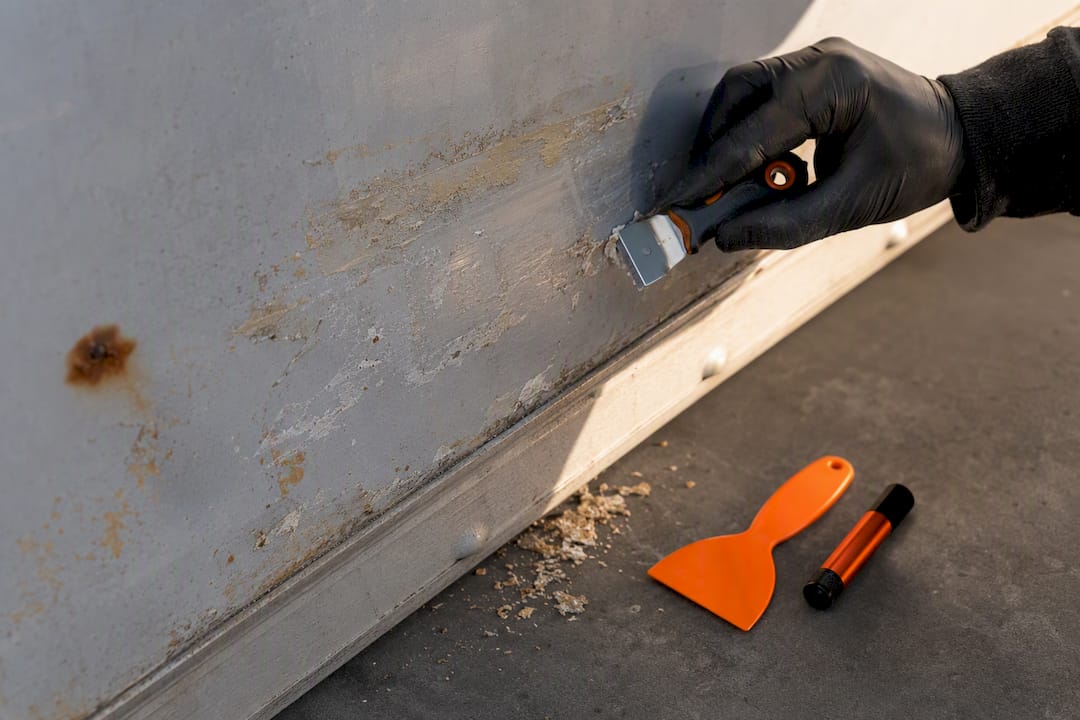
Cleanup and disposal fees typically apply to re-wraps, where the shop has to strip and dispose of old vinyl before starting fresh. This labor is easy to underestimate and worth asking about specifically if your trailer already has graphics on it.
Permits are rarely required for standard commercial wraps, but a few municipalities restrict certain graphic content on vehicles used for advertising on public roads, so it’s worth a quick check with local regulations if your design includes anything unusual, like flashing colors or oversized lettering visible from a distance. Most standard fleet branding never runs into this issue.
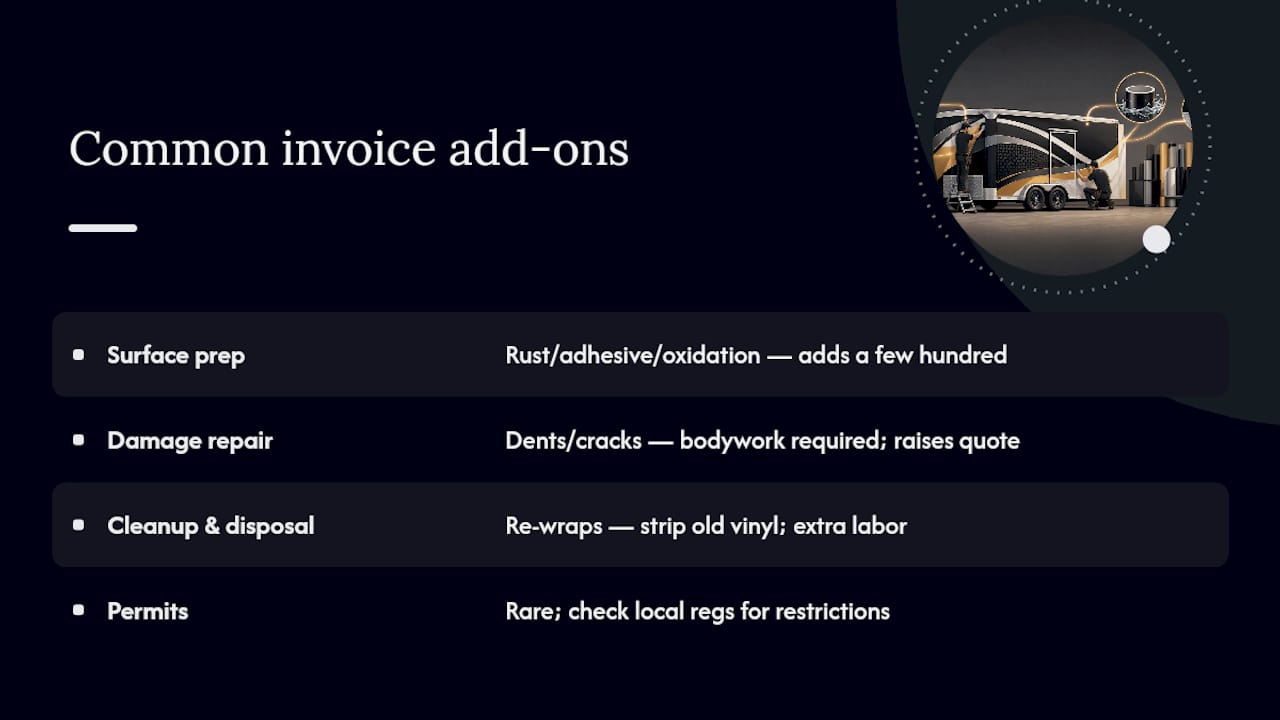
Ask for these potential charges in writing before work starts. A quote that mentions “prep as needed” without an estimated range is one of the more common ways a final invoice ends up higher than expected.
Why Does Trailer Wrap Pricing Vary by Region?
Location changes trailer wrap cost more than most people assume, and it’s not just about labor rates.
Shops in higher cost-of-living metro areas typically charge more per square foot simply because rent, insurance, and technician wages run higher there than in smaller markets. A shop in a dense urban area also tends to carry higher liability insurance costs, which factor into overhead pricing across every job.
Material availability plays a role too. Shops that buy 3M or Avery film in bulk, or that partner directly with regional distributors, often pass modest savings along compared to smaller shops ordering in smaller batches at higher per-yard costs.
Competition density matters as well. Markets with several established wrap shops tend to see more consistent, competitive pricing, while areas with only one or two providers sometimes see wider price spreads on comparable jobs. Travel distance for mobile installs adds its own line item in more rural areas, where a shop might need to factor in drive time to reach a trailer that can’t come to the shop.
None of this means you should chase the cheapest quote across state lines. Installation quality and material grade affect your wrap’s lifespan far more than a small per-square-foot difference between neighboring markets.
The Real Lesson on Trailer Wrap Budgeting
Most budgeting advice treats trailer wraps like a single line-item purchase, and that’s the wrong frame entirely. The number on the invoice only matters in relation to how long the wrap survives and how much attention it earns per mile. A $2,000 lettering job and a $5,000 full wrap can both be the right call, depending on whether your trailer sits mostly in a lot or logs highway miles every week.
Where most first-time buyers go wrong is comparing quotes without comparing coverage and material grade at the same time. A cheap full wrap using calendared film and an expensive lettering job using premium cast vinyl aren’t competing offers; they’re solving different problems.
Prioritize getting an itemized quote before anything else. Once you can see materials, labor, and design broken out separately, the actual decision, coverage level, material grade, timeline, becomes a lot easier to make with confidence instead of guesswork.
— NJ Vinyl Wrapz
Get a Measured Quote From NJ Vinyl Wrapz
This provider handles full and partial trailer wraps, vinyl lettering, and fleet branding packages for businesses in the region, all backed by 3M and Avery materials and climate-controlled installation. The difference for a small business owner comparing shops is straightforward: you get an itemized quote built from your actual trailer measurements and photos, not a generic per-square-foot guess.
Most projects move from measurement to installed wrap within one to two weeks, depending on design complexity and current shop schedule. Whether you need a single lettering job or a full fleet rollout, the process starts the same way: send your trailer’s dimensions and photos, and get back a written breakdown of materials, labor, and warranty coverage. Visit the full vehicle wraps page to request your itemized quote and see real turnaround windows for your trailer size.
Sources
- Cost of Wrapping an RV in 2026 - RV Wrap Pricing
- Semi Trailer Wrap Cost Guide and Pricing – Current Cost
- How Much Does It Cost to Wrap an Enclosed Trailer? 2024 Guide
- Trailer Wraps & Graphics: Cost, Design Ideas & ROI
FAQ
How much does it cost to wrap a trailer?
Trailer wrap cost typically ranges from $300 for basic lettering to $6,000 or more for a full wrap on a large enclosed or semi trailer, with most small utility and enclosed trailers falling between $1,200 and $3,500.
Is it cheaper to wrap or paint a trailer?
Wrapping is almost always cheaper upfront than a high-quality commercial paint job, though paint can last longer in some cases, making wraps the better choice for businesses that want to update branding every few years.
What is the 60/40 rule on trailers?
Definitions of this rule vary by shop and region, so it’s worth confirming directly with whichever installer you’re quoting rather than assuming a fixed industry standard.
How long does a trailer wrap last?
Premium cast vinyl from brands like 3M and Avery typically lasts 5 to 7 years with proper care, while budget calendared films often need replacement within 1 to 3 years.