
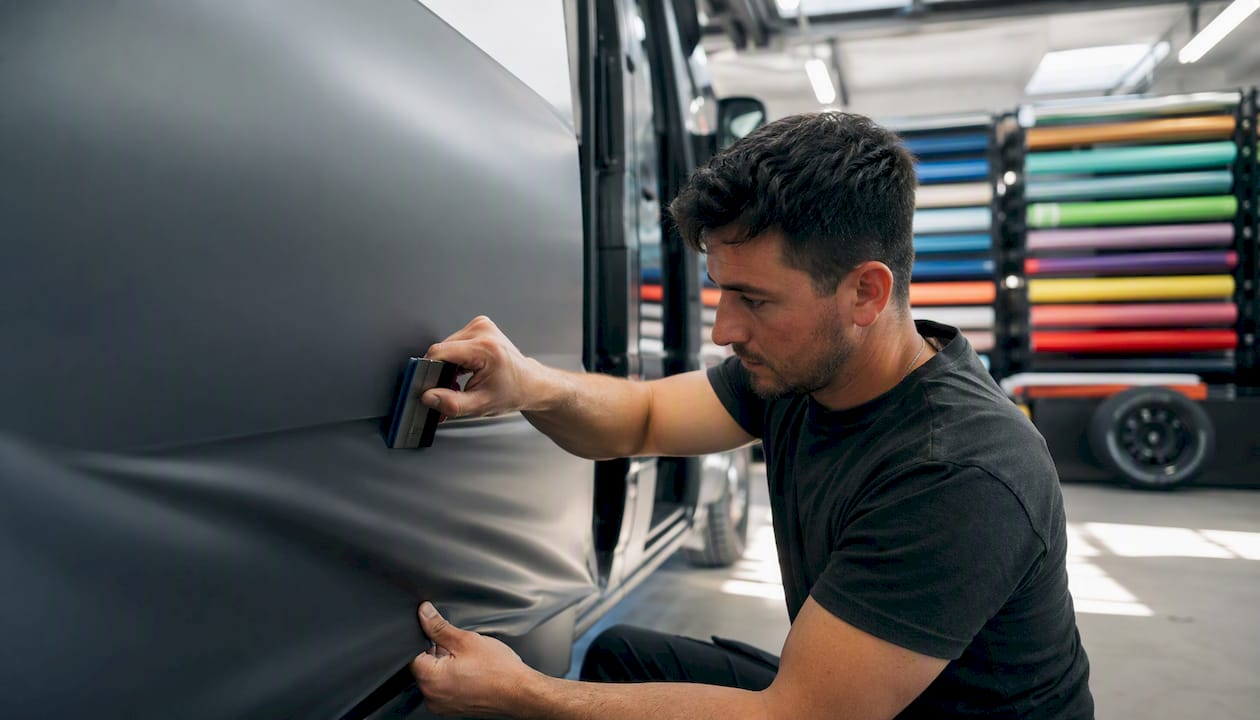
Hire a Fort Myers vehicle-wrap installer by confirming three things in your first call: a climate-controlled shop, manufacturer-grade materials (3M, Avery Dennison, or ORAFOL), and a verifiable fleet portfolio.
Why those three? Temperature swings during installation cause bubbling and edge lift. Off-brand calendered films fail in Florida sun within two years. And a portfolio without fleet work means you’re their test case. Before you sign anything:
- Request before-and-after photos of at least three fleet projects.
- Ask which film brand and product line they use, and confirm it’s cast vinyl.
- Get the installation environment in writing, along with the warranty terms.
Table of Contents
- How much do vehicle wraps cost in Fort Myers?
- What’s the typical timeline for fleet wrap projects?
- Key Takeaways
- What Njvinylwrapz recommends Fort Myers buyers verify
- Njvinylwrapz serves Fort Myers fleets without a local shop
- Manufacturer and industry sources worth reading before you sign
- FAQ
How much do vehicle wraps cost in Fort Myers?
Coverage level drives price more than anything else. Full van wraps run roughly $2,500–$5,000; lettering packages start around $500–$1,500. Fleet discounts apply when you’re wrapping five or more vehicles, but only if the shop has the capacity to batch them.
Material choice is the second biggest variable. Cast vinyl from 3M or Avery Dennison costs more upfront than calendered film, but it conforms to curves without lifting and lasts years longer in direct sun. For a Fort Myers fleet, that tradeoff is straightforward. Partial wraps and spot graphics sit between lettering and full coverage on price, and they’re worth considering for vehicles that only need one branded panel.
Design complexity, vehicle size (cargo van vs. sedan), and whether you supply print-ready files all shift the final number. Get itemized quotes that separate design, materials, and labor.
What’s the typical timeline for fleet wrap projects?
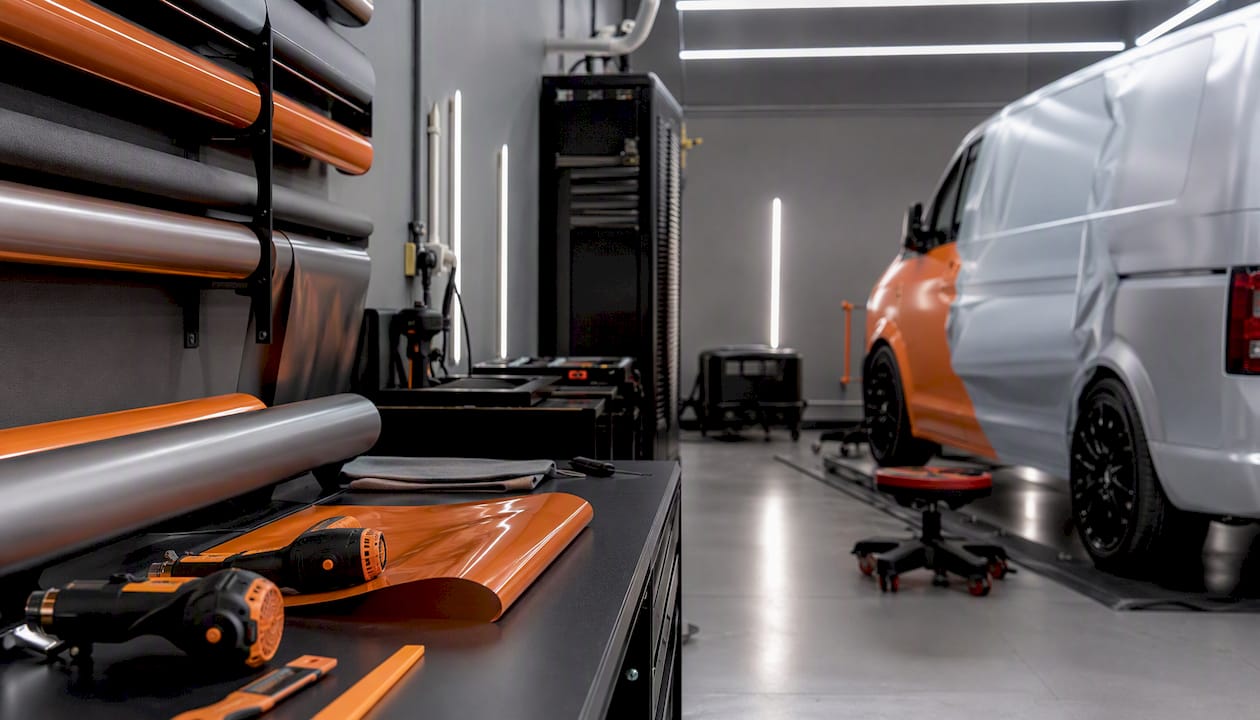
A single vehicle takes one to three days in a properly equipped shop, including surface prep, installation, and cure time. Climate-controlled installation isn’t optional for quality work — it controls adhesion and prevents premature failure.
Fleets of five to ten vehicles typically run two to three weeks, depending on scheduling and whether vehicles can be released from service in batches. Larger programs need a production calendar agreed on before the deposit clears. Shops that can’t give you a written schedule are usually undersized for fleet work.
Scheduling earlier in the week and avoiding peak summer months can reduce lead times. Rush jobs cost more and cut corners on cure time.
Key Takeaways
A vetted installer with manufacturer materials and a climate-controlled shop is the single non-negotiable for fleet wraps that last 5–7 years in Florida conditions.
| Point | Details |
|---|---|
| Vetting checklist | Require portfolio, cast-vinyl film brand, written warranty, and proof of climate-controlled installation. |
| Cost expectations | Full van wraps run roughly $2,500–$5,000 per vehicle; lettering packages start around $500–$1,500; fleet volume typically reduces per-unit cost. |
| Maintenance commitment | Clean every two weeks per Avery Dennison guidance; avoid petroleum solvents and high-pressure washing. |
| Lifespan | Garaged vehicles reach 5–7 years; outdoor-parked fleets average 3–5 years with proper care. |
| Njvinylwrapz option | For managed fleet programs with 3M/Avery materials and climate-controlled installs, Njvinylwrapz is a vetted national alternative. |
What Njvinylwrapz recommends Fort Myers buyers verify
The right approach for any fleet program: insist on cast vinyl, a controlled install environment, and a written warranty before any deposit changes hands.
Njvinylwrapz fleet programs use 3M and Avery Dennison materials, climate-controlled facilities, and over a decade of fleet installation experience. Portfolio and warranty documentation are standard, not optional extras.
Installation quality markers to confirm with any shop:
- Certified installers (3M Preferred Installer status is a documented standard)
- Temperature-controlled bay, not an open garage
- Surface decontamination before film application
- Lamination on printed graphics
- Documented removal plan at end of wrap life
Red flags: no portfolio, no written warranty, vague answers about insurance, or installation in an uncontrolled environment.
Pro Tip: Schedule a maintenance review at the six-month mark. Protecting vinyl wraps early catches edge lift before it spreads across a panel.
For finishes, cast vinyl outperforms calendered in every outdoor condition. Matte films require gentler cleaning products — Avery Dennison specifically warns against petroleum distillates and abrasive brushes on structured finishes.
| Film type | Best for | Lifespan (outdoor) | Notes |
|---|---|---|---|
| Cast vinyl | Full wraps, complex curves | 5–7 years (garaged) | Preferred for fleet longevity |
| Calendered vinyl | Flat panels, short-term | 2–3 years | Lower cost, less conformable |
| Matte finish | Premium branding | Matches base film | Requires gentler cleaning |
| Gloss finish | High visibility, color pop | Matches base film | Easier to maintain |
Njvinylwrapz serves Fort Myers fleets without a local shop
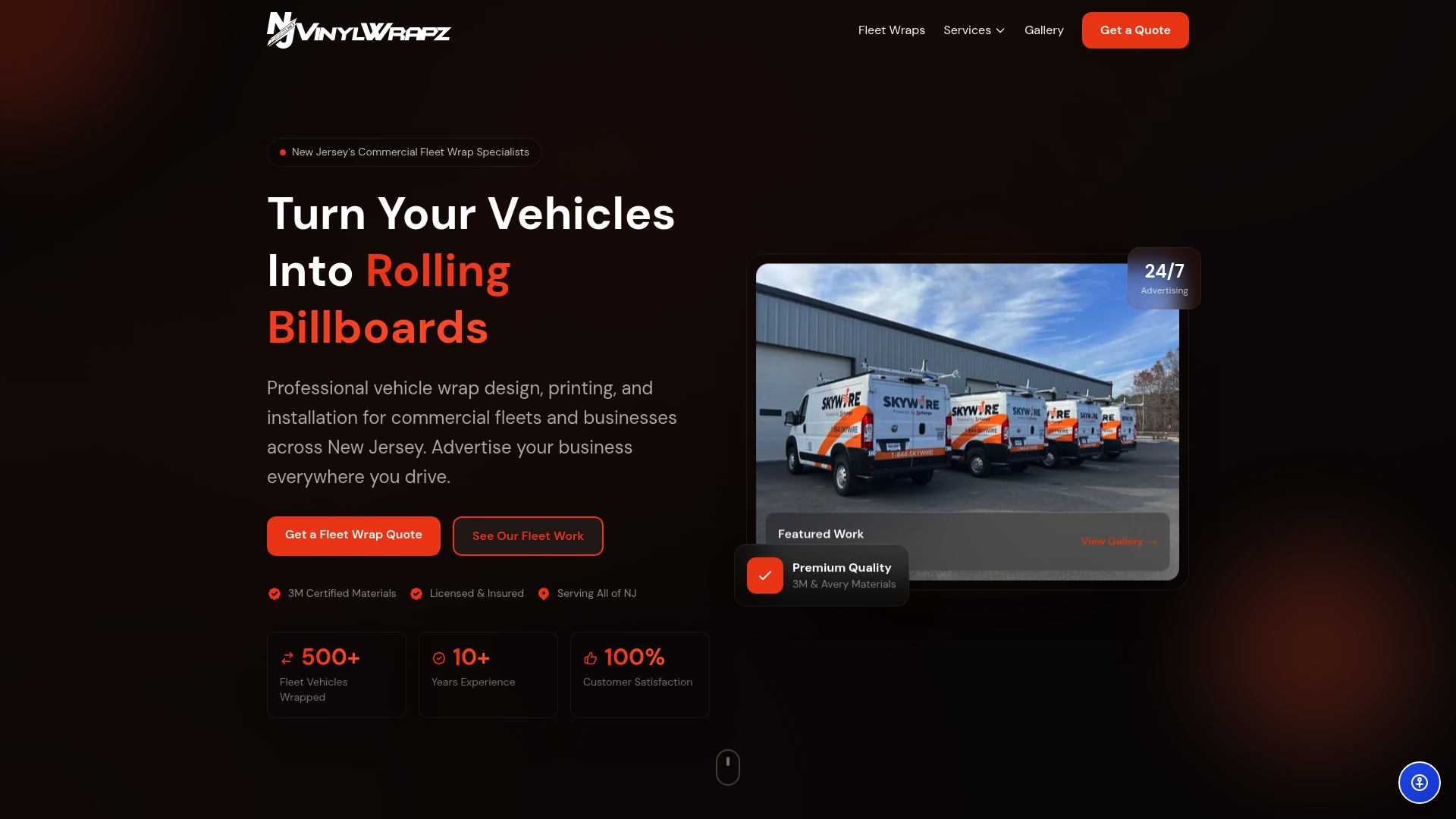
When a trusted local installer isn’t available in Fort Myers, Njvinylwrapz offers managed fleet programs with remote coordination and regional installation partners. The concrete difference: you get manufacturer-backed materials, a documented warranty, and a single project manager handling production across multiple vehicles — without sourcing that yourself locally.
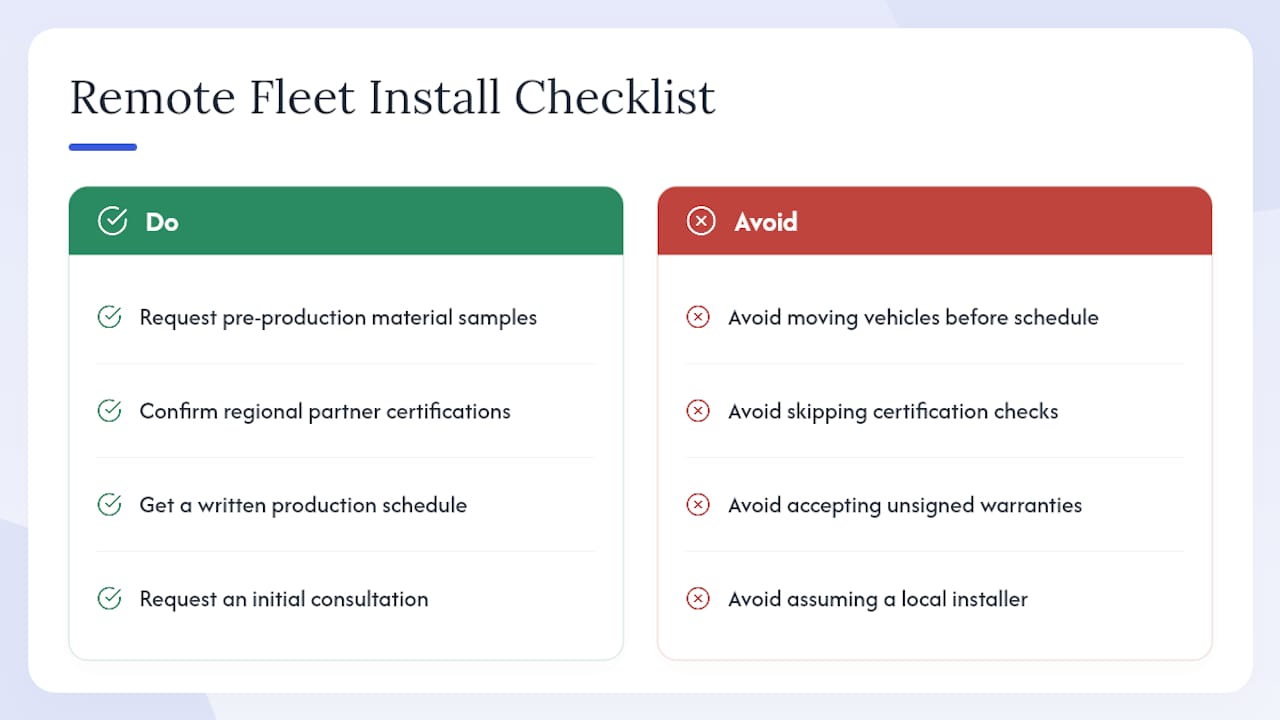
Tradeoffs are real. Non-local installs may involve vehicle transport or coordinating with a regional partner shop. Lead times can run slightly longer. Mitigation steps: request pre-production material samples, confirm the regional partner’s certifications, and agree on a written production schedule before vehicles move.
To get started, review the full vehicle wrap packages and request an initial consultation. Confirm local permit and insurance requirements with your municipality before finalizing any fleet program.
Manufacturer and industry sources worth reading before you sign
Avery Dennison’s IB1.50 bulletin is the clearest maintenance reference available. It specifies cleaning every two weeks, approved products (including Supreme Wrap Care Cleaner and Sealant), and what to avoid on matte and structured films. Any installer who can’t reference it is worth questioning.
ORAFOL’s care terms go further: application and removal must be performed by trained specialists, and initial impregnation with ORACAL Long-Lasting Seal is recommended to maximize service life. High-pressure washing and acetone-based solvents can void the warranty outright.
| Source | Key guidance | Cleaning cadence | Expected lifespan |
|---|---|---|---|
| Avery Dennison IB1.50 | Approved cleaners; avoid petroleum distillates | Every 2 weeks | 5–7 years (garaged) |
| ORAFOL care terms | Specialist install/removal; initial sealant | Gentle, specialist | Varies by exposure |
| Fleet ROI guide | Cast vinyl preferred; $2,500–$5,000 full van | Per manufacturer | 3–7 years |
FAQ
What materials should a Fort Myers wrap installer use?
Cast vinyl from 3M, Avery Dennison, or ORAFOL is the standard for fleet work. Calendered film is cheaper but fails faster under Florida sun exposure.
How long does a fleet vehicle wrap last?
Garaged vehicles reach 5–7 years with proper maintenance; outdoor-parked fleets average 3–5 years. Extreme sun and frequent washing shorten that range.
What maintenance does a vehicle wrap require?
Clean every two weeks using manufacturer-approved products, per Avery Dennison guidance. Avoid petroleum solvents, abrasive brushes, and high-pressure washing, which can void warranties.
Can Njvinylwrapz handle Fort Myers fleet projects remotely?
Yes. Njvinylwrapz coordinates managed fleet programs with regional installation partners and handles project management, materials, and warranty documentation regardless of location.
What are the biggest red flags when vetting a wrap shop?
No portfolio of fleet work, no written warranty, unverified installer certifications, and installation in an open or uncontrolled environment are the four clearest warning signs.