

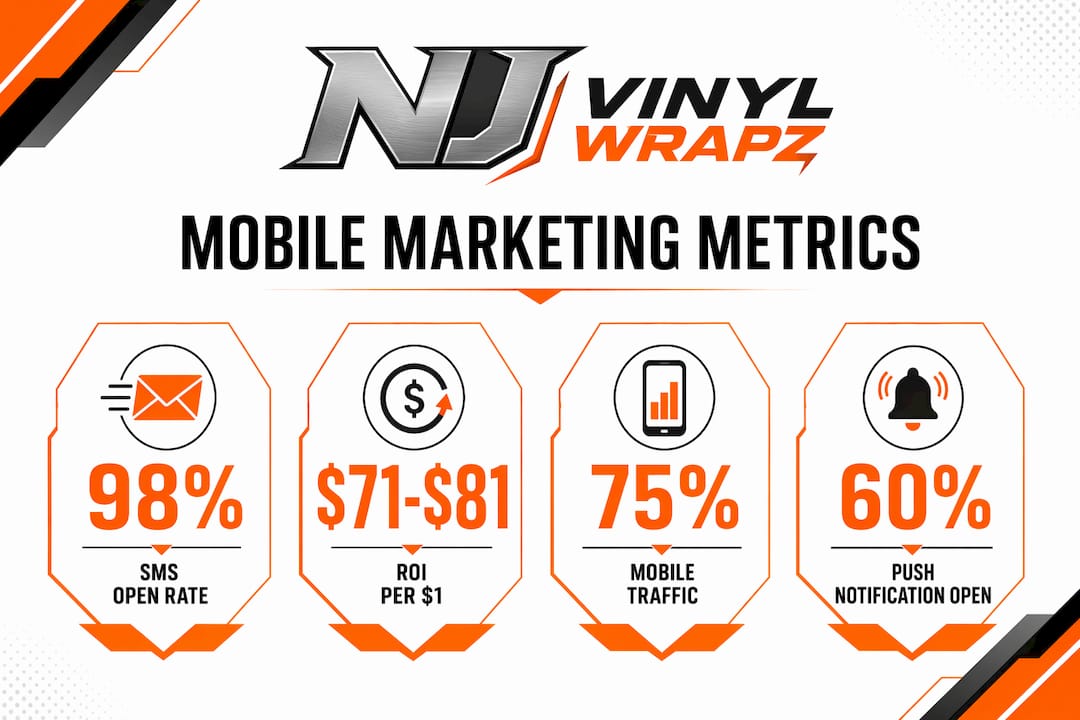
Mobile marketing is the practice of promoting products and services directly through smartphones and tablets, using their ubiquity and interactivity to reach consumers at every stage of the buying journey. The role of mobile marketing in brand visibility has never been more direct: mobile devices generate 75% of global e-commerce traffic and account for 60.7% of all internet traffic. That number tells you where your customers already are. Mobile advertising now represents 74% of all digital ad spending, projected to exceed $430 billion in 2026. For marketing professionals and business owners, ignoring mobile is not a gap in strategy. It is a structural disadvantage.
What are the primary benefits and measurable impacts of mobile marketing?
Mobile marketing delivers reach, speed, and measurable return that no other channel matches at scale. The benefits of mobile marketing are not theoretical. They show up directly in open rates, conversion data, and revenue per dollar spent.
SMS marketing is the clearest proof. SMS achieves a 98% open rate and returns an average of $71 to $81 for every $1 spent. That ROI figure dwarfs most paid digital channels. The reason is simple: people read text messages almost immediately, and the format forces brevity and clarity.

Personalization compounds those results. Personalized mobile messages score 3.64 on a 5-point receptivity scale, compared to 3.46 for generic messages. That 5% gap in receptivity translates directly into higher click-through rates and lower churn. Consumers do not just prefer relevant messages. They act on them more often.
The core benefits of mobile marketing for business owners include:
- Reach at scale: Mobile reaches consumers across income levels, geographies, and age groups through a single device they carry constantly.
- Speed to market: SMS and push notifications deliver messages within seconds of send, making them ideal for time-sensitive promotions.
- Cost efficiency: Mobile channels, especially SMS and in-app messaging, cost a fraction of traditional media per impression.
- Measurable ROI: Mobile campaigns generate trackable data at every touchpoint, from open to click to conversion.
- Personalization at volume: AI-driven segmentation lets brands send relevant messages to thousands of subscribers without manual effort.
Pro Tip: Build your SMS list before you need it. A subscriber list of 1,000 engaged customers is worth more than a paid audience of 100,000 cold impressions.
Which mobile advertising strategies deliver the most consumer engagement?
The most effective mobile advertising strategies treat each channel as a distinct tool with a specific job, then connect them under one customer view. No single channel wins alone.
SMS marketing as a high-engagement owned channel
SMS is the highest-performing owned channel in mobile marketing. Its 98% open rate is not a fluke. It reflects the behavioral reality that people check text messages before email, before social feeds, and often before anything else on their phone. Brands that build disciplined SMS lists and send relevant, time-bound offers consistently outperform those relying on rented social audiences.
Push notifications and in-app engagement
Push notifications reach users who have already installed your app and opted in, making them a warm audience by definition. The revenue-to-volume ratio from push is high precisely because these users have demonstrated intent. The key is frequency discipline. Too many pushes train users to ignore them or uninstall the app entirely.
Location-based targeting
Zipvertising, or hyper-local mobile ad targeting, combines SMS with secure payment links to function as digital flyering for service businesses. A plumber, a fleet operator, or a retail store can target consumers within a specific zip code and drive them to a frictionless checkout. This approach reduces checkout abandonment by removing the steps between discovery and payment.
Cross-channel integration
Mobile marketing works best when SMS, push, and email operate under a unified customer view rather than separate dashboards. When a customer opens an SMS offer but does not convert, a follow-up email or push notification closes the loop. The mobile channel becomes the bridge from discovery to transaction, not just an isolated touchpoint.
The four channels that drive the most consistent engagement, ranked by immediacy:
- SMS: Highest open rate and fastest read time of any digital channel.
- Push notifications: Best for re-engaging existing app users with personalized triggers.
- In-app messaging: Ideal for onboarding, upsells, and feature adoption within your product.
- Location-based ads: Most effective for service businesses with a geographic footprint.
Pro Tip: Do not treat mobile as a broadcast medium. Use mobile-first engagement strategies that turn messages into two-way conversations. An SMS with a reply option outperforms a static ad every time.
How have privacy changes reshaped mobile marketing in 2026?
Privacy regulation has fundamentally changed what mobile marketers can measure and who they can target. Apple’s App Tracking Transparency framework removed the default ability to track users across apps, cutting off the third-party data pipelines that most mobile ad platforms depended on for years.
The practical impact is a loss of attribution signal. Marketers can no longer see the full path from ad impression to app install to purchase with the same precision they had before 2021. The shift away from third-party tracking forces brands to build first-party data assets and treat the user journey itself as a marketing product.
The brands winning in mobile right now are not the ones with the biggest ad budgets. They are the ones with the cleanest first-party data, the most disciplined event taxonomies, and the best onboarding experiences. Owned signal is the new targeting infrastructure.
The key shifts every marketing professional needs to understand:
- Probabilistic attribution: Without deterministic device IDs, platforms now use statistical modeling to estimate campaign performance. Results are directionally accurate but less precise.
- Event taxonomy audits: Algorithmic learning depends on clean data signals, including well-structured event names and conversion values tied to lifetime value. Messy data produces poor algorithm decisions.
- First-party data as infrastructure: Email lists, SMS subscribers, and app user profiles are now the most valuable targeting assets a brand owns.
- Creative as the new targeting lever: When audience targeting weakens, creative quality determines which ads the algorithm serves to the right people. Volume and variation in creative output matter more than they did three years ago.
What practical steps can you take to maximize mobile marketing results?
The importance of mobile marketing is clear. The harder question is execution. These five practices separate brands that grow through mobile from those that spend without return.
Treat onboarding as a revenue channel
First-session friction predicts user retention and lifetime value more reliably than any post-install metric. A user who completes onboarding in under two minutes is far more likely to convert than one who abandons halfway through. Audit your onboarding flow quarterly. Remove every step that does not directly move the user toward their first value moment.
Build and protect your SMS subscriber list
SMS is an owned channel, but only if you manage it with discipline. Require explicit opt-in, honor opt-outs immediately, and segment your list by behavior rather than demographics alone. A list of 500 highly engaged subscribers generates more revenue than 5,000 passive ones.
Consolidate ad sets around creative variation
Creative volume and refresh velocity are now primary drivers of mobile ad performance. Algorithms need enough creative variation to find the best-performing combinations. Running three ad sets with ten creative variants each outperforms thirty ad sets with one creative each.
Build owned media properties
Founder-led media properties and branded newsletters build audience trust that compounds over time. A brand with 10,000 newsletter subscribers and an active SMS list is far less exposed to platform algorithm changes than one that depends entirely on paid social.
Use AI personalization as a baseline, not a differentiator
AI-driven personalization is no longer a competitive advantage. It is the minimum expectation. Consumers who receive generic messages from a brand they have purchased from before interpret that as a signal that the brand does not know them. Use behavioral data to trigger messages based on actions, not just demographics.
| Practice | What it does |
|---|---|
| Onboarding optimization | Reduces first-session drop-off and increases lifetime value |
| SMS list discipline | Keeps engagement rates high and unsubscribe rates low |
| Creative variation | Feeds algorithm learning and improves ad delivery efficiency |
| Owned media building | Reduces dependence on paid acquisition and platform changes |
| AI personalization | Meets consumer expectations for relevance at every touchpoint |
Pro Tip: Run a data taxonomy audit before your next campaign launch. Misnamed events and missing conversion values cost you algorithm efficiency that no budget increase can fix.
Key Takeaways
Mobile marketing is the highest-leverage channel available to business owners and marketing professionals, combining unmatched reach, measurable ROI, and direct consumer access through devices people use constantly.
| Point | Details |
|---|---|
| Mobile dominates digital traffic | Mobile devices drive 75% of e-commerce traffic, making mobile the primary consumer channel. |
| SMS delivers the strongest ROI | A 98% open rate and $71–$81 return per $1 spent make SMS the most efficient owned channel. |
| Personalization increases engagement | Personalized messages score measurably higher on receptivity than generic broadcasts. |
| Privacy changes demand owned data | First-party data, clean event taxonomies, and owned media now replace third-party targeting. |
| Creative quality drives algorithm performance | Ad variation and refresh velocity determine mobile ad efficiency more than audience targeting alone. |
Why mobile is no longer optional for serious marketers
I have watched brands treat mobile as a line item in their media plan for years. That mindset is what separates businesses that grow from those that plateau. Mobile is not a channel. It is the primary surface where consumers discover, evaluate, and buy. Every other channel feeds into it or depends on it.
The brands I see winning right now share one trait: they treat mobile as a product, not a placement. Their onboarding flows are tested as rigorously as their ad creative. Their SMS lists are managed with the same care as their customer database. They do not spray push notifications and hope for engagement. They build behavioral triggers that feel like service, not advertising.
The privacy shift has actually helped disciplined marketers. When third-party data was abundant, lazy targeting masked weak creative and poor product experiences. Now, the brands with clean first-party data and genuinely useful mobile experiences have a structural advantage that money alone cannot buy. The vehicle wrap approach to mobile marketing is a good example of this thinking applied offline. A wrapped fleet vehicle is a mobile ad surface that requires no algorithm, no opt-in, and no platform fee. It works every mile it travels.
The businesses that will own their markets in the next five years are the ones building owned signal today. That means SMS lists, branded apps, newsletters, and physical mobile assets like fleet vehicles. The cost of building those assets now is a fraction of what paid acquisition will cost you later.
— Krunal
How Njvinylwrapz turns your fleet into a mobile ad platform
Every vehicle in your fleet is a mobile marketing asset that works around the clock without a media budget. Njvinylwrapz specializes in transforming commercial vehicles into high-visibility brand platforms using premium materials from 3M and Avery, installed in climate-controlled facilities by a licensed and insured team with over 10 years of experience.
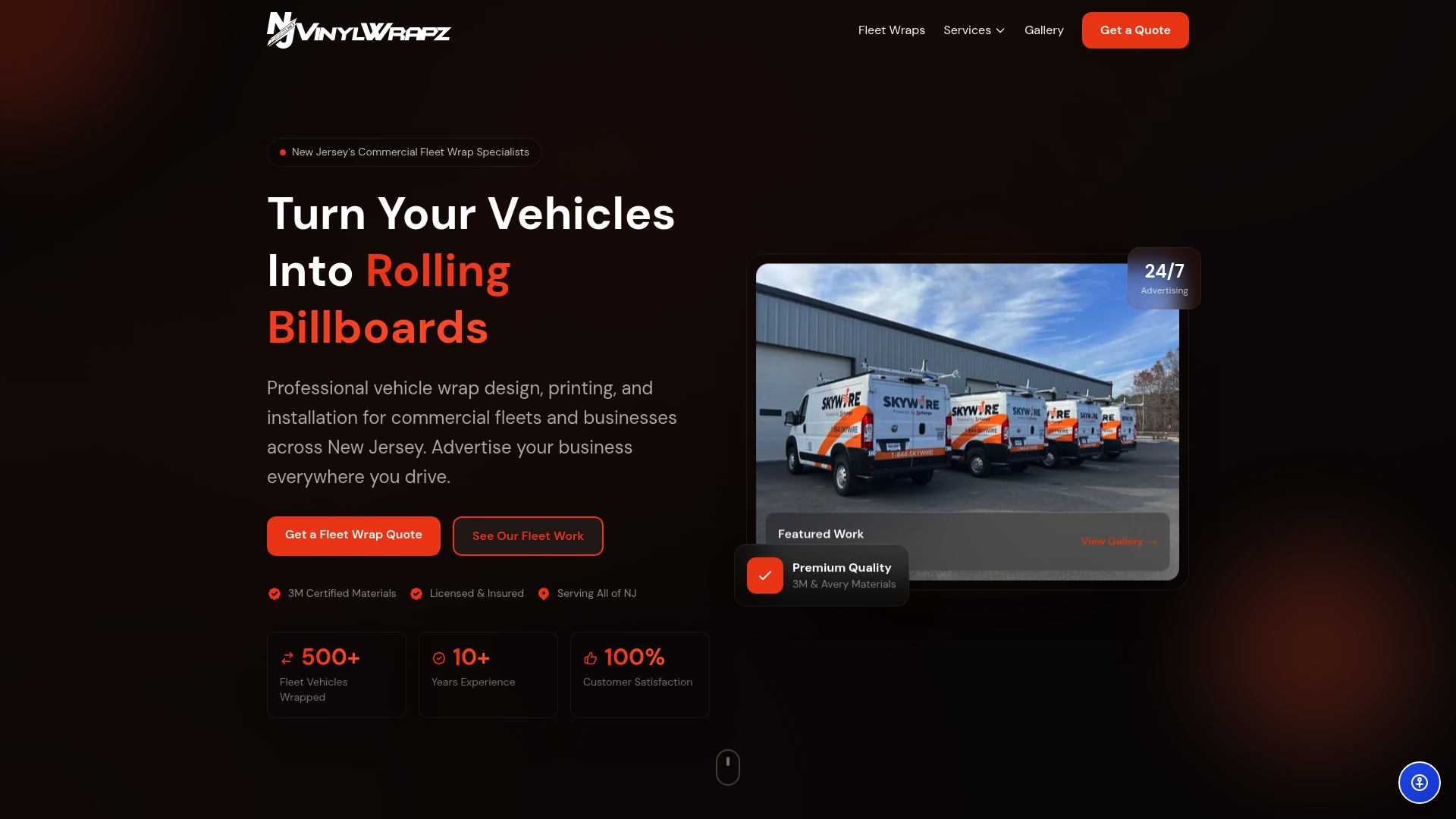
A full vehicle wrap puts your brand in front of thousands of local impressions every day, with geographic targeting built in by the routes your vehicles travel. For fleet managers and marketing professionals who want consistent branding across every vehicle, Njvinylwrapz offers custom design, fast turnaround, and wrap options from full wraps to vehicle lettering. Your fleet already covers the ground. Make it work harder.
FAQ
What is the role of mobile marketing in consumer engagement?
Mobile marketing connects brands to consumers through the devices they use most, enabling personalized, timely communication that drives higher engagement than traditional channels. Personalized mobile messages score measurably higher on receptivity scales than generic broadcasts.
What ROI can businesses expect from SMS marketing?
SMS marketing returns an average of $71 to $81 for every $1 spent, supported by a 98% open rate that no email or social channel consistently matches.
How does privacy regulation affect mobile advertising strategies?
Apple’s App Tracking Transparency removed default cross-app tracking, forcing marketers to shift from third-party data to first-party data assets like SMS lists, app user profiles, and behavioral event data.
What mobile marketing best practices improve campaign performance?
Auditing your event taxonomy, building creative variation into every campaign, and treating onboarding as a revenue channel are the three practices with the most direct impact on mobile campaign efficiency.
How do vehicle wraps function as a mobile marketing channel?
Vehicle wraps turn fleet vehicles into mobile ad surfaces that generate local impressions along every route they travel, combining geographic targeting with consistent brand visibility at a fixed cost.