
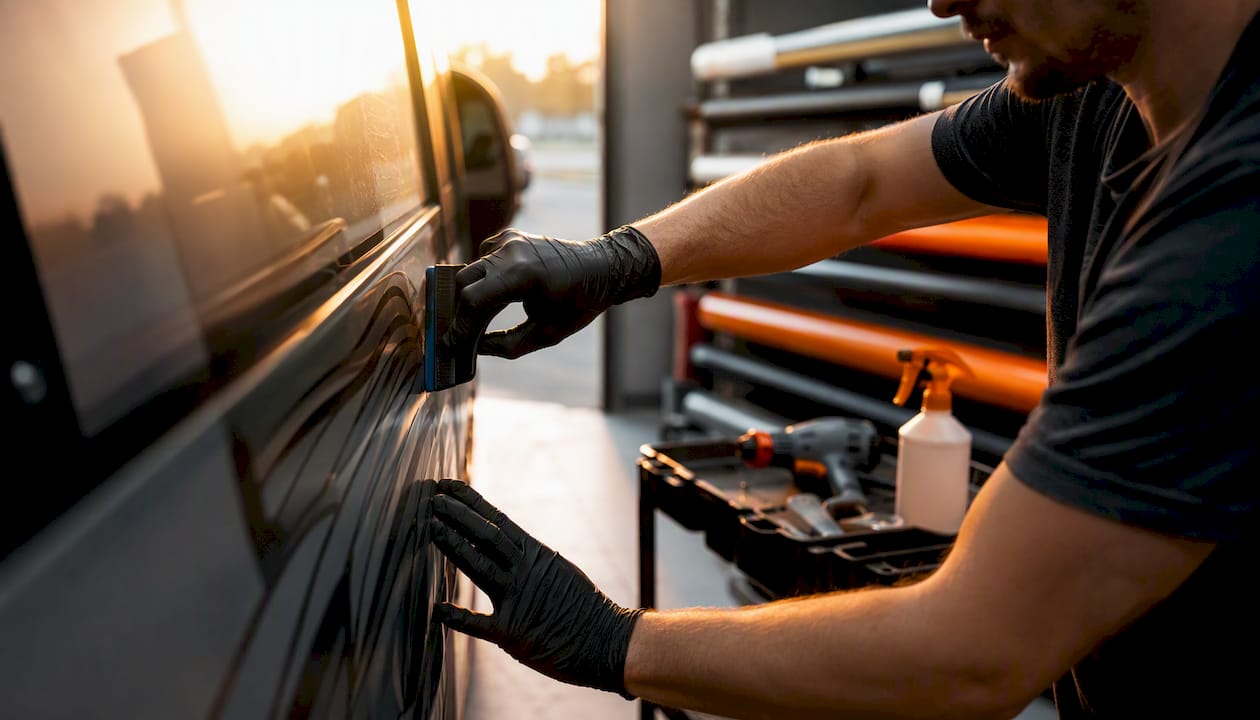
For New Jersey fleet managers and business owners, NJ Vinyl Wrapz is the recommended provider for vehicle signage — covering full and partial wraps, cut vinyl lettering, decals, window graphics, paint protection film (PPF), and ceramic coatings. In this article, “sign and post” means getting your brand onto your vehicles: the design, print, and installation of commercial graphics that turn a van, truck, or service car into a moving billboard. Your first move: request an itemized quote at NJ Vinyl Wrapz or call for a fleet assessment.
Key Takeaways
Vehicle signage remains one of the lowest-CPM advertising channels available to New Jersey businesses, with a single wrapped vehicle generating 30,000–70,000 daily impressions at roughly $0.04–$0.05 per thousand over a five-year lifespan.
| Point | Details |
|---|---|
| Impressions per vehicle | A single wrap generates 30,000–70,000 daily impressions; metro routes can reach 80,000. |
| Cost and lifespan | Full wraps run $2,500–$5,000; premium cast vinyl lasts 5–7 years with proper care. |
| Partial wraps save money | Partial wraps cost 40%–60% less than full wraps and still deliver strong brand reach. |
| Vendor trust signals | Confirm licensed and insured status, 3M/Avery materials, climate-controlled facility, and a written warranty. |
| NJ Vinyl Wrapz | Recommended New Jersey provider: 10+ years experience, 3M/Avery materials, itemized quotes, and fleet staging support. |
Table of Contents
- Why vehicle signage delivers better ROI than most ad channels
- What sign and post services actually include for vehicles
- What does the design-to-install process look like?
- What drives the cost of vehicle signage?
- How long do commercial vehicle graphics actually last?
- How do you evaluate a vehicle signage vendor?
- How to plan fleet installations without disrupting operations
- NJ Vinyl Wrapz: get a quote for your fleet
- What fleet managers actually value in a wrap partner
- Sources
- FAQ
Why vehicle signage delivers better ROI than most ad channels
A single wrapped vehicle generates 30,000–70,000 daily impressions, with metro-area routes pushing that figure toward 80,000. Spread a $3,500 investment across five years and you’re looking at roughly 73 million impressions — an effective CPM near $0.048. Billboards and digital display rarely come close to that number.
A wrapped vehicle running a typical urban route can deliver impressions at roughly $0.04–$0.05 per thousand — a fraction of what most businesses pay for digital display or out-of-home placements. Industry data put recall rates around 97% for wrapped vehicles.
The business case breaks down into four practical benefits:
- Brand reach: your fleet covers territory 24/7, including nights and weekends when paid ads go dark
- Passive advertising: no recurring media spend once the wrap is installed
- Vehicle protection: quality vinyl shields paint, supporting resale value
- Tax treatment: vehicle graphics typically qualify as an advertising expense — confirm with your accountant
Two common entry points: a single-vehicle partial wrap or lettering package (low upfront cost, fast proof of concept) and a coordinated full-wrap fleet program (maximum visual impact, consistent brand identity across every vehicle). The fleet-wrap ROI guide from NJ Vinyl Wrapz walks through both scenarios with real design examples.
What sign and post services actually include for vehicles
Vehicle signage covers more ground than most buyers expect, including optional window tinting services that enhance both privacy and heat reduction. Here’s what a full-service provider should offer:
- Full vehicle wraps: printed vinyl covering the entire exterior surface
- Partial wraps: coverage on panels, doors, or the rear only
- Spot graphics and decals: logo placements, door badges, or numbered fleet decals
- Cut vinyl lettering: die-cut text for phone numbers, URLs, and business names
- Window graphics: perforated or solid vinyl for rear and side glass
- Paint protection film (PPF): clear urethane film protecting high-impact zones
- Ceramic coating: hydrophobic surface treatment extending paint and wrap life
- Chrome delete: replacing chrome trim with matte or satin vinyl
Materials matter as much as the service. 3M and Avery Dennison are the two industry-standard film suppliers, and the distinction between cast vinyl and calendared vinyl is worth knowing. Cast vinyl is thinner, more conformable around curves and rivets, and carries longer warranties — typically 5–7 years on vertical surfaces. Calendared vinyl is thicker, less flexible, and better suited to flat panels with shorter expected lifespans. Cast vinyl now dominates the commercial fleet segment, and any serious vendor should default to it for fleet work.
| Graphic type | Best for | Ballpark price range | Typical turnaround | Expected lifespan |
|---|---|---|---|---|
| Partial wrap | Budget-conscious entry | $900–$2,500 | 3–7 business days | 3–5 years |
| Cut vinyl lettering | Phone, URL, business name | $150–$600 | 1–3 business days | 3–5 years |
| Window graphics | Rear/side glass branding | $150–$600 | 2–4 business days | 2–4 years |
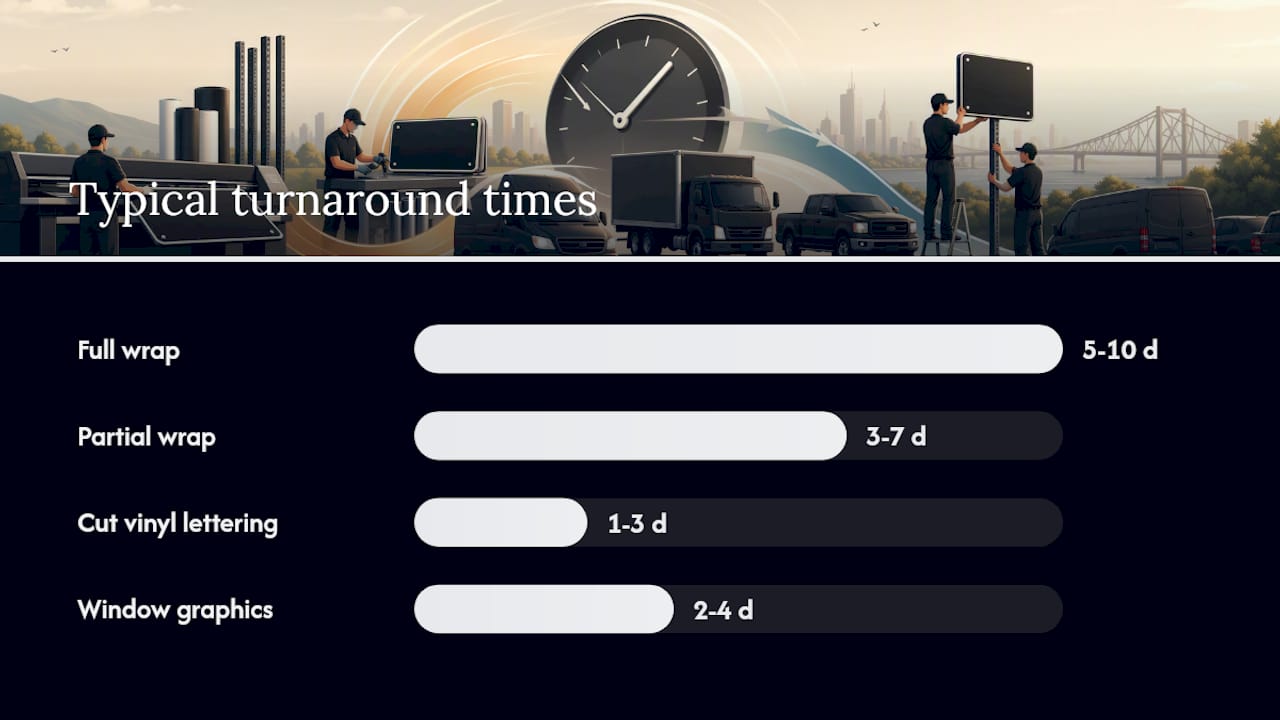
A vendor should propose a package that bundles design, print, lamination, installation, and a written warranty — not just materials and labor as separate line items.
What does the design-to-install process look like?

Single vehicle: 5–10 business days total. Small fleet (2–10 vehicles): 2–4 weeks. Large fleet (10+ vehicles): 4–8 weeks depending on staging and approval cycles.
The workflow runs in five stages:
- Intake and measurements: vehicle photos, VIN or exact dimensions, logo vector files (AI, EPS, or high-res PDF), and your preferred tracking phone number or URL
- Creative mockups and approvals: the shop renders a 3D proof on your vehicle template; expect 1–3 revision rounds and a 2–5 day window for client sign-off
- Production: printing on cast vinyl, lamination, and cutting; typically 2–4 days for a single vehicle, longer for fleet batches
- Pre-install prep: surface cleaning, paint correction if needed, PPF application on high-impact zones
- Installation and QA: a skilled installer takes 6–16 hours per vehicle depending on complexity; final walkthrough and photo documentation before handoff
Delays most often come from color-approval bottlenecks (get a single decision-maker to approve mockups), vehicles arriving dirty or with body damage, and last-minute scope changes. Bring your vehicle clean and confirm the design is locked before production starts.
What to have ready at intake: vehicle photos (all four sides), VIN or body dimensions, vector logo files, brand color codes (Pantone or CMYK), and the phone number or URL you want on the wrap.
What drives the cost of vehicle signage?
The five biggest cost drivers, in order of impact:
- Vehicle size and complexity: a cargo van costs more than a sedan; a box truck more than a van
- Full vs. partial coverage: full wraps run $2,500–$5,000; partial wraps typically cost 40%–60% less
- Vinyl grade: cast vinyl costs more upfront but lasts longer and holds warranty coverage
- Lamination and protective films: gloss or matte overlaminate, PPF, and reflective materials add to material cost
- Labor and facility: climate-controlled installation takes longer and costs more than a garage job — for good reason
When you request a quote, ask for these line items separately:
| Line item | What to confirm |
|---|---|
| Material (vinyl + laminate) | Brand, grade (cast vs. calendared), and square footage |
| Print and production | Per-square-foot rate or flat fee |
| Installation labor | Hours estimated and hourly rate or flat install fee |
| Design fee | Included or billed separately; revision rounds covered |
| Surface prep / removal | Whether old graphics removal is included |
| Warranty | Duration, what’s covered, and who backs it |
For vehicle lettering on a service pickup, budget $150–$600. A partial wrap on a cargo van runs $900–$2,500. A full wrap on a box truck can reach $5,000 or more. These ranges shift based on market, vehicle condition, and the complexity of the design.
Pro Tip: Ask vendors to break out material cost from labor cost. A low total quote that bundles everything often hides calendared vinyl and a rushed install — two things that cut years off your wrap’s life.
How long do commercial vehicle graphics actually last?
Premium cast vinyl from 3M or Avery Dennison, properly laminated and installed in a climate-controlled facility, typically lasts 5–7 years on vertical surfaces. Horizontal surfaces (hoods, roofs) see more UV exposure and usually hit 3–5 years. PPF and ceramic coatings extend the underlying paint’s life regardless of wrap status.
Routine care makes a real difference:
- Hand wash with pH-neutral soap; avoid automated brush washes
- Skip high-pressure nozzles aimed directly at wrap edges
- Park in shade or a covered lot when possible
- Schedule an annual inspection to catch lifting edges early
What shortens a wrap’s life: prolonged sun exposure without UV-protective laminate, chemical contact (fuel spills, harsh degreasers), and poor original installation that leaves air pockets or lifted seams.
A written warranty from a reputable vendor should cover delamination, excessive fading, and installation defects. Manufacturer certifications from 3M and Avery Dennison tie warranty length to installer certification status — ask for proof of that certification before signing. For guidance on protecting vinyl wraps long-term, NJ Vinyl Wrapz publishes a detailed maintenance guide.
When to replace vs. repair: spot-repair a small lifted edge or isolated damage.
How do you evaluate a vehicle signage vendor?
The top trust signals: licensed and insured, uses 3M or Avery Dennison materials, installs in a climate-controlled facility, has a portfolio with fleet case studies, offers a written warranty, and provides itemized quotes. Any vendor missing two or more of those is a risk.
Vendor checklist:
- Portfolio showing fleet work (not just personal vehicles)
- Confirmed material brand and grade (cast vinyl, not just “premium”)
- Climate-controlled install bay (temperature and humidity affect adhesion)
- Fleet capacity: can they stage multiple vehicles without a 6-week backlog?
- Post-install support: do they handle warranty claims in-house?
- Proof of insurance on file
Questions to ask on the first call:
- What vinyl brand and grade do you use for fleet work?
- Can I see photos of your install facility?
- What’s your current lead time for a fleet of [X] vehicles?
- Is removal of existing graphics included in the quote?
- What does your written warranty cover, and who backs it — you or the manufacturer?
- Do you install a dedicated tracking number or URL on wraps?
Pro Tip: Request a sample swatch of the vinyl they plan to use. A confident installer hands one over without hesitation. Hesitation usually means they’re sourcing whatever is cheapest that week.
For a deeper look at why certified installation matters, see why professional installers make the difference.
How to plan fleet installations without disrupting operations
Staggered rotation is the answer. Pull vehicles in batches of 2–4, install while the rest of the fleet stays operational, and rotate through until every vehicle is wrapped. A fleet signage manager’s guide covers the full staging framework.
Staging plan:
- Start with your highest-visibility vehicles (route trucks, client-facing vans)
- Get mockup approval on one vehicle before committing the full fleet to production
- Schedule drop-off windows in 2–3 day blocks to match the shop’s install capacity
- Designate one internal QA contact who signs off on each vehicle before it returns to service
Operational checklist before each vehicle goes in:
- Vehicle cleaned inside and out (installers won’t wrap a dirty surface)
- Keys and fuel card available for the install window
- Dispatch notified of the vehicle’s downtime window
- Temporary magnetic signs ready for vehicles pulled from service mid-campaign
Pro Tip: Schedule installs by vehicle type in batches — all cargo vans together, all pickups together. Color matching across a fleet is tighter when the same vinyl lot runs through production consecutively. Mixed batches from different production runs can show subtle color variation under direct sunlight.
NJ Vinyl Wrapz: get a quote for your fleet
NJ Vinyl Wrapz brings over 10 years of licensed and insured vehicle-wrap experience to New Jersey fleets, with a climate-controlled installation facility and exclusive use of 3M and Avery Dennison materials. The shop handles the full scope: full vehicle wraps, partial wraps, cut vinyl lettering, window graphics, PPF, ceramic coatings, and coordinated fleet programs from single vehicles to large commercial fleets.
Fleet managers get an itemized quote broken out by material, labor, design, and warranty — no bundled mystery pricing. After approval, you receive a production timeline, install schedule, and a sample warranty template before a single panel gets printed.
Request your free fleet assessment or full-wrap quote at NJ Vinyl Wrapz and get your vehicles working as hard as your team does.
What fleet managers actually value in a wrap partner
Reliability beats everything else. A fleet manager’s job gets harder when a vendor misses a deadline, delivers inconsistent color across vehicles, or goes quiet after the invoice is paid. The shops that earn repeat fleet business are the ones that communicate proactively, flag paint or body issues before they become installation problems, and treat a tight deadline as a logistics challenge to solve rather than a reason to cut corners on prep.
When a vehicle arrives with unexpected surface damage or a previous wrap that wasn’t fully removed, the right move is a phone call before the install starts, not a surprise on the final invoice. That transparency is what separates a one-time vendor from a long-term partner.
Sources
- Fleet Wrap Effectiveness - Fleet Graphics and Signage | 3M US
- 4over4
- Are Truck Wraps Worth It? The ROI Math for Contractors
- Vehicle Graphics ROI: Why $0.04 CPM Beats All Other Ads
- Car Wrap Industry Statistics | 2026 Edition
For manufacturer certification and installer verification, contact 3M and Avery Dennison directly or ask your vendor to provide their certified-installer documentation. NJ Vinyl Wrapz portfolio materials, fleet case studies, and warranty templates are available on request.
FAQ
How many impressions does a wrapped vehicle generate daily?
What is the typical cost for a full vehicle wrap in New Jersey?
How long does a commercial vehicle wrap last?
Premium cast vinyl from 3M or Avery Dennison with proper lamination typically lasts 5–7 years on vertical surfaces; horizontal surfaces average 3–5 years.
What should I ask a vendor before signing a wrap contract?
Ask for the vinyl brand and grade, proof of a climate-controlled install facility, itemized pricing, written warranty terms, and certified-installer documentation from 3M or Avery Dennison.
Can NJ Vinyl Wrapz handle a multi-vehicle fleet installation?
Yes. NJ Vinyl Wrapz offers staggered fleet staging, batch production scheduling, and coordinated design programs for fleets of all sizes across New Jersey.