
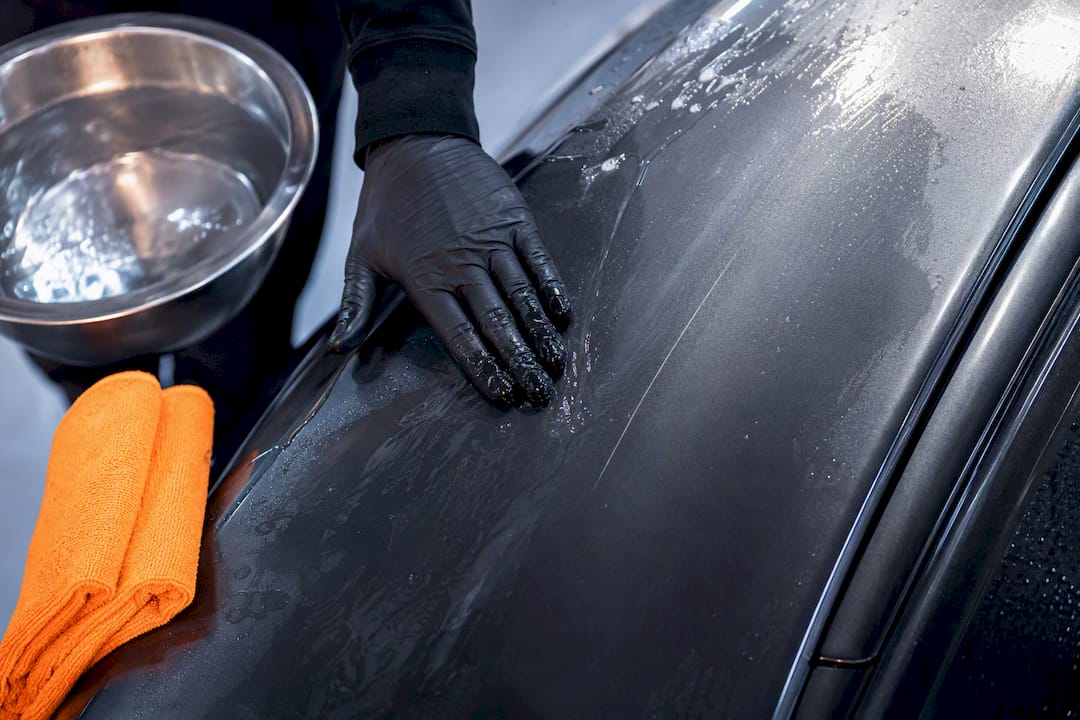
Yes, premium self-healing paint protection film reliably removes light surface scratches once it’s warmed. It won’t repair deep cuts, rock chips that puncture the film, or embedded debris. The mechanism is heat: sunlight, warm water, or a hair dryer all work, with the film’s elastomeric top coat reflowing at roughly 100 to 150 degrees Fahrenheit to smooth over the damage.
TL;DR:
- Self-healing PPF effectively repairs light surface scratches through heat from sunlight, warm water, or a hair dryer, but remains ineffective against deep cuts or embedded debris.
- The film’s top coat becomes pliable at 100 to 150°F, with healing times ranging from minutes to half an hour depending on temperature, but stalls below 60°F.
- Proper installation in a climate-controlled facility and careful maintenance are crucial for preserving the film’s self-healing ability and longevity.
- The protective capabilities diminish after 7 to 10 years due to UV exposure, with signs of failure including persistent scratches and surface yellowing.
- Heat guns should be avoided for DIY repairs, as excessive heat risks warping the film, while professional installation ensures longevity through sealed edges and correct adhesive application.
Table of Contents
- How Self-Healing PPF Works: TPU, Top Coats, and Heat
- What Self-Healing Film Fixes (and What It Won’t)
- How to Activate Self-Healing PPF Without Damaging It
- Washing, Cleaners, and Coatings: Keeping PPF Performing
- PPF Lifespan and Warranty: When to Replace the Film
- Why Professional Installation Still Matters
- What Gets Overlooked About Self-Healing PPF
- Protect Your Paint the Right Way With NJ Vinyl Wrapz
- Sources
- FAQ
How Self-Healing PPF Works: TPU, Top Coats, and Heat
Self-healing PPF isn’t one material. It’s a stack of them, and each layer does a different job.
At the bottom sits an adhesive layer that bonds the film to your car’s paint. Above that is the thermoplastic polyurethane (TPU) body, which gives the film its strength and clarity. On top is the part that actually does the healing: a thin elastomeric polyurethane coating engineered to be flexible at low heat.
Here’s the physics in plain terms. That top coat has what chemists call a glass transition zone, the temperature range where a polymer shifts from rigid to pliable. For most self-healing films, that zone sits around 100 to 150 degrees Fahrenheit, depending on the formulation. Below that range, the coating stays stiff and any scratch stays put. Above it, the polymer chains loosen up enough to flow back into place, closing over swirls and light scuffs like a scab closing over a scrape.
Three heat sources reliably push the film into that zone:
- Direct sunlight on a warm day, which can take 20 to 30 minutes at room temperature
- Warm water poured or sprayed directly on the mark
- A hand-held hair dryer aimed at the damaged area
Cold weather is the enemy here. Below roughly 60°F, the top coat barely moves, and healing essentially stalls until temperatures climb back up.
What Self-Healing Film Fixes (and What It Won’t)
Self-healing PPF earns its name on cosmetic damage, not structural damage. Think of it as a repair system for the film’s surface, not its substance.
What it heals:
- Fine swirl marks from hand-washing or automatic car washes
- Light scuffs from brushing against branches, shopping carts, or curbs
- Faint wash marks and light rub marks from everyday driving
What it does not heal:
- Cuts or slices that go all the way through the film
- Rock chips that gouge material out rather than just displacing it
- Embedded debris like tar or metal shavings stuck in the surface
- Adhesive contamination underneath the film
There’s a fast way to tell which category you’re dealing with. Run a fingernail lightly across the mark. If your nail catches on a groove or edge, that’s a cut, not a scratch, and heat won’t close it. At that point you’re looking at a spot repair or, in bad cases, a full panel replacement.
Pro Tip: Don’t wait months to check a stubborn mark. If a scratch survives two or three warm-weather driving days without fading, book an inspection instead of assuming it’ll eventually heal on its own.
How to Activate Self-Healing PPF Without Damaging It
Getting a scratch to disappear is usually a five-minute job if you use the right heat, in the right amount, on the right spot.
- Park in direct sun for 20 to 30 minutes. At room temperature, light scratches typically heal in that window without you doing anything else.
- Pour warm water over the mark. Water around 120°F speeds healing down to seconds or minutes and works well on shaded panels where sunlight alone won’t cut it.
- Use a hair dryer on medium heat, held 6 to 8 inches away. Move it steadily rather than holding it still on one spot.
- Skip the heat gun. Heat guns run far hotter than a hair dryer and can overheat or warp the film if you’re not experienced with one.
Temperature matters more than most people realize. Between 80 and 100°F, expect healing in 30 to 60 minutes; between 100 and 130°F, minutes; from 130 to 150°F, near-instant results. Stay away from edges and seams when applying direct heat, and go easy on matte-finish film, which can lose its texture under excessive or uneven heat. If a mark doesn’t budge after a couple of honest attempts, that’s your signal to stop and get it looked at by a professional rather than cranking up the heat further.
Washing, Cleaners, and Coatings: Keeping PPF Performing
Aftercare decides how long your film keeps healing well, and most of the mistakes here are avoidable.
Wait at least a couple of days after installation before the first wash. That gives the adhesive time to fully cure against the paint. After that, wash normally but stay alert for bug splatter, which should come off as soon as possible using a film-safe cleaner or diluted isopropyl alcohol solution, since bug residue is acidic and can etch the top coat if it sits too long. A dedicated splatter remover applied before scrubbing makes this a lot easier on the film.
Pressure washers are fine for general rinsing but keep the nozzle at least a foot from any film edge or seam. High-pressure water forced under an edge can lift the film over time.
Ceramic coatings pair well with self-healing PPF. A ceramic layer adds gloss, sheds water and grime faster, and gives the surface extra chemical resistance, none of which interferes with the film’s ability to heal underneath it. Most installers recommend a ceramic boost roughly every six months to maintain that slickness, and it’s part of why a lot of PPF customers add a ceramic coating to the same project.
Pro Tip: Skip automatic touchless car washes with strong chemical soaps in the first two weeks. They’re not dangerous long-term, but they can interfere with the adhesive’s final cure.
PPF Lifespan and Warranty: When to Replace the Film
Self-healing performance doesn’t last forever, and knowing the decline curve helps you plan ahead instead of getting surprised by it.
Premium films generally hold their self-healing ability well through most of a typical warranty period, but UV exposure gradually breaks down that top coat. Expect a noticeable drop in healing speed and clarity after 7 to 10 years, with the exact timeline depending heavily on climate. Cars in sun-heavy states like Florida or Arizona see faster UV wear than cars garaged in cooler, cloudier regions.
Watch for these signs that a panel needs replacing rather than another round of warm water:
- Scratches that no longer fully disappear after heat, even with repeated attempts
- Visible yellowing or hazing across the film’s surface
- Edges lifting, curling, or showing gaps where dirt collects
If you’re weighing whether your film still has useful life left, our breakdown of PPF lifespan expectations covers the timeline in more detail.
Why Professional Installation Still Matters
Self-healing chemistry is only half the story. How the film gets applied determines whether that chemistry ever gets a fair shot.
A climate-controlled install bay keeps dust and debris out of the adhesive layer during application, something a garage or driveway install can’t guarantee. Clean edge work matters just as much: a sloppy edge trim leaves a lip where water and grime work their way underneath, which is how films fail years before their warranty runs out.
Before you commit to an installer, ask a few pointed questions:
- What film brand are you installing, and what’s the manufacturer’s self-healing warranty window?
- Is the install done in a climate-controlled facility?
- What maintenance guidance do you give customers after install?
- What’s your policy if a panel needs replacement down the line?
NJ Vinyl Wrapz has spent more than a decade installing protective film and wraps across New Jersey, working with established material partners like 3M and Avery, and operating as a licensed and insured shop. That combination of proper facility conditions and manufacturer-backed film is what keeps self-healing performing the way it’s supposed to for years, not just the first season.
What Gets Overlooked About Self-Healing PPF
Most explainers treat self-healing like magic. It isn’t. It’s a polymer doing exactly what it was engineered to do within a specific temperature window, and the film that heals beautifully at 130°F will sit there stubbornly scratched at 45°F. That single fact changes how you should think about buying self-healing film in a cold climate. It’s not a downgrade. It just means you’ll be reaching for warm water more often in January than you would in July.
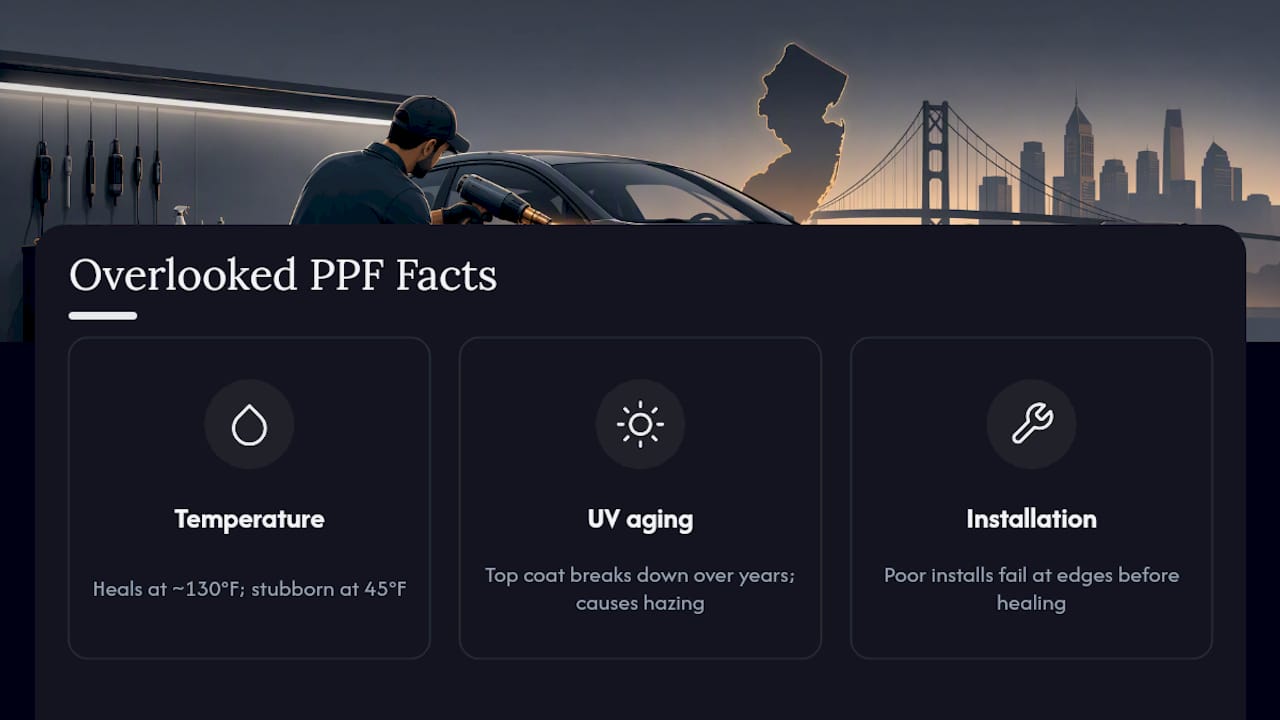
The bigger blind spot is UV, not scratches. Owners fixate on whether a scratch will heal, when the real long-term risk to the film is the slow breakdown of that top coat from sun exposure over years. A film that heals perfectly for eight years and then starts hazing isn’t defective. It’s aging the way every polymer eventually does.
What actually moves the needle is installation quality, not brand loyalty to one film over another. A mediocre install of a great film will fail at the edges before the self-healing chemistry ever gets tested. Get the install right first.
— NJ Vinyl Wrapz
Protect Your Paint the Right Way With NJ Vinyl Wrapz
Warm water and a hair dryer handle the light scratches, but the film’s edges, adhesion, and long-term warranty depend entirely on how it’s installed in the first place. Paint protection film installed in a climate-controlled facility with quality materials ensures sealed edges and a clean application needed for long-lasting performance.

If you’re weighing whether a DIY kit or a professional install makes more sense for your situation, the honest answer usually comes down to edge work and adhesive quality, two things a shop environment controls far better than a driveway. NJ Vinyl Wrapz also pairs PPF projects with ceramic coatings for owners who want extra gloss and easier cleanup on top of the film’s protection. If you’re considering a broader vehicle refresh alongside PPF, our full vehicle wrap services are worth a look too. Reach out for an inspection or a quote on your vehicle, and we’ll walk you through which film and coating combination fits your driving conditions.
Sources
- XPEL product care
- PPF Self-Healing Technology — How Does It Actually Work?
- PPF Self-Healing Technology: How It Works and What to Expect
- PPF Maintenance Guide: How to Care for PPF (2026)
- PPF Aftercare Guide: Washing, Maintenance and Common Mistakes - FUNO PPF
FAQ
Can Self-Healing PPF Fix a Rock Chip?
No. Self-healing film restores surface-level scratches and swirls, but it can’t repair rock chips that puncture or remove material from the film. Those need a spot repair or panel replacement.
How Long Does Self-Healing PPF Take to Heal a Scratch?
At room temperature, light scratches typically heal in 20 to 30 minutes. Warm water or direct sunlight can speed that up to seconds or a few minutes, depending on temperature.
Is It Safe to Use a Hair Dryer on PPF?
Yes, a hair dryer on medium heat held several inches away is one of the safest DIY activation methods. Avoid heat guns, which run hot enough to damage the film or adhesive if mishandled.
How Long Does Self-Healing PPF Last Before It Needs Replacing?
Most premium films hold strong self-healing performance for much of their warranty period, with a noticeable decline after 7 to 10 years due to UV exposure. Climate plays a big role in how fast that decline happens.
Does Self-Healing PPF Work in Cold Weather?
Healing slows significantly below roughly 60°F and can stall completely in cold conditions. Warm water or a hair dryer becomes necessary to trigger healing when outdoor temperatures aren’t cooperating.