
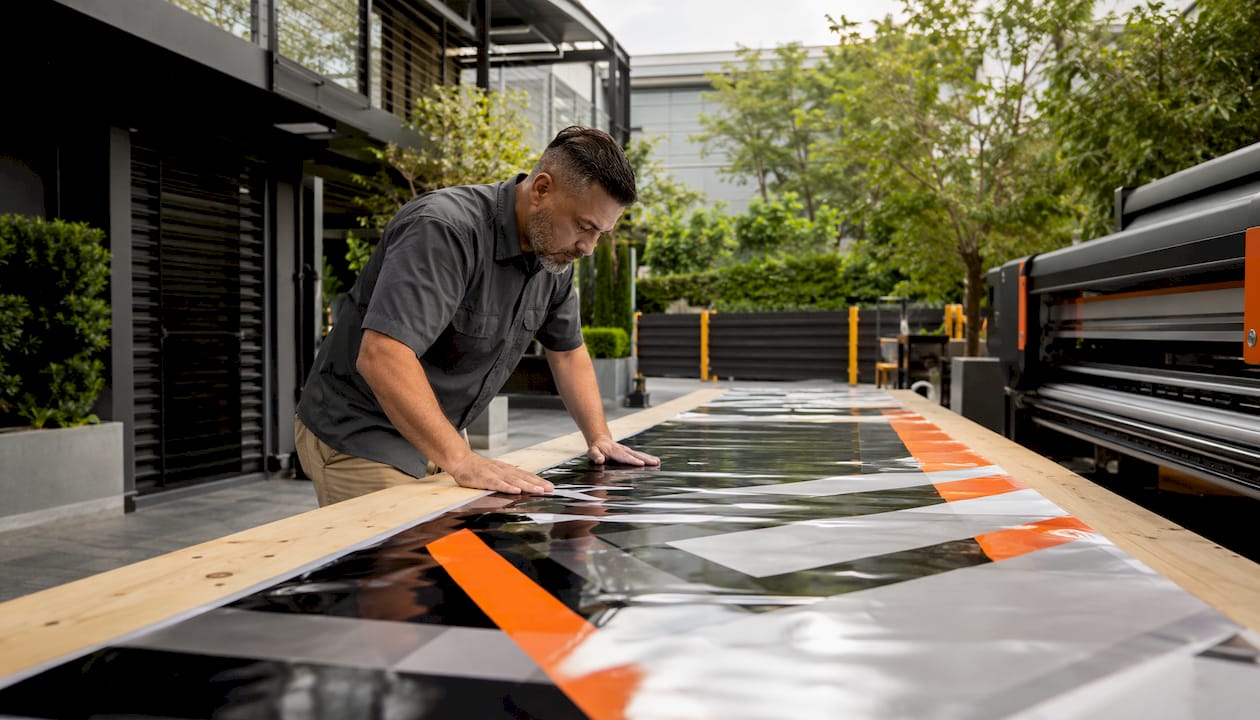
What are the best vinyl wrap printing options in the US?
The strongest options for printing vinyl wraps in the US span two categories: material manufacturers who set the quality standard, and online printing services that handle production for you. Here is what each tier actually offers.
Material manufacturers (film and ink):
- Avery Dennison supplies cast vinyl films like the MPI 1105 series, engineered specifically for vehicle contours with no shrinkage or lifting on compound curves
- 3M offers a full range of printable vinyl films backed by advanced adhesive technology and one of the largest certified installer networks in the country
- WePrintWraps Printed Wrap Film (Avery, 3M) combines these top-tier films with professional printing and finishing, so you get brand-name material quality without sourcing film separately
Full-service printing providers:
- WePrintWraps.com ships custom-printed wraps nationwide with no order minimums, making it practical for single-vehicle jobs or prototype runs
- Printmoz handles wide-format vehicle and object wraps with full lamination and multiple finishing options at competitive price points
- Alwan Wraps focuses on custom vehicle graphics with flexible design options and fast turnaround
All professional services in this space print on wide-format roll-to-roll printers supporting widths of 54–64 inches, using eco-solvent, latex, or UV-curable inks. Desktop printers top out at 8.5–13 inches and cannot produce seamless vehicle wrap panels.
How do these vinyl wrap printing services compare?
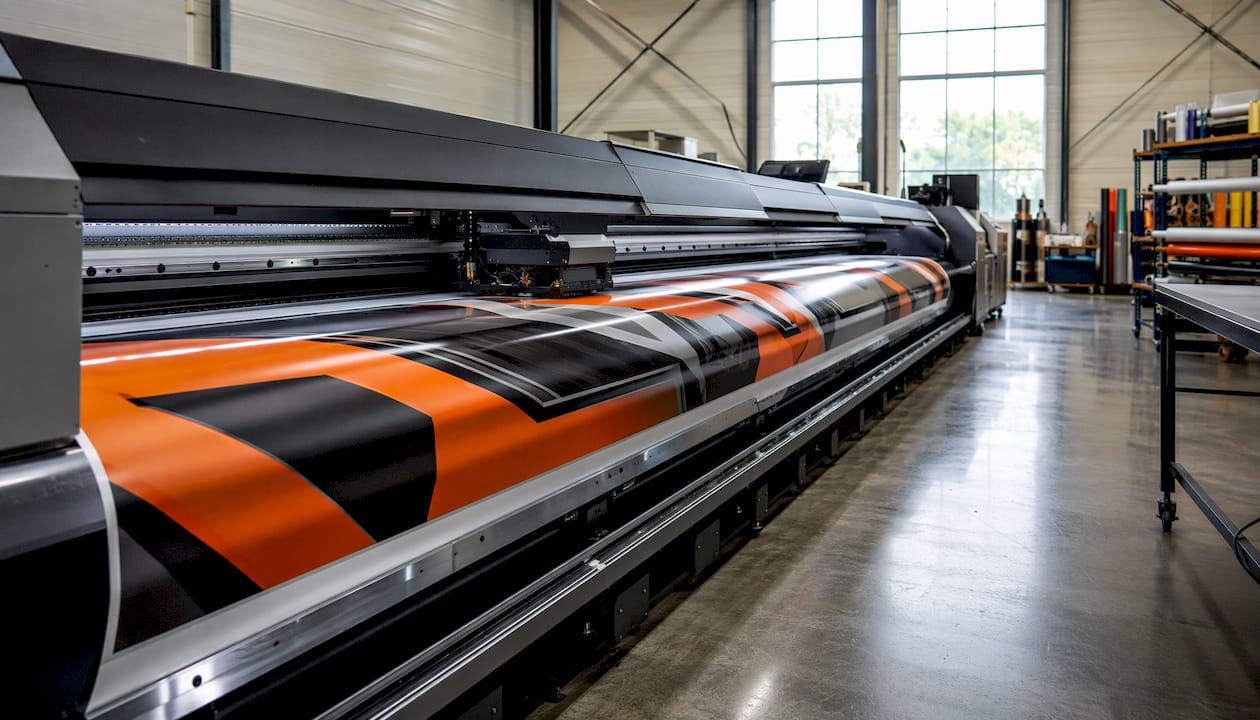
The film type and printing technology a provider uses determines how long your wrap lasts and how well it conforms to a vehicle’s curves.
| Provider | Film Type | Printing Technology | Customization | Lamination/Finishing | Turnaround | Best For |
|---|---|---|---|---|---|---|
| Avery Dennison | Cast vinyl (MPI 1105 series) | Solvent, latex, flexible UV | ICC-profiled color, full design specs | Cast overlaminates | Varies by installer | Durable fleet and full vehicle wraps |
| 3M | Cast and polymeric films | Eco-solvent, latex | Wide color range, installer-spec’d | Matched 3M overlaminates | Varies by installer | Commercial fleet graphics |
| Alwan Wraps | Cast and polymeric | Eco-solvent | Custom design upload, varied shapes | Gloss and matte lamination | Fast turnaround | Custom individual and business wraps |
| WePrintWraps.com | Cast printable film | Eco-solvent | Online design tool, no minimums | Gloss, matte, satin | Quick production | DIY designers, small-quantity orders |
| Printmoz | Polymeric and cast | Eco-solvent, UV | Full color, contour cut options | Full lamination, multiple finishes | Competitive | Commercial wraps, varied object sizes |
| WePrintWraps Printed Wrap Film (Avery, 3M) | Cast (Avery or 3M sourced) | Eco-solvent | Professional spec printing | Cast-matched overlaminates | Per order | Premium material with expert printing |
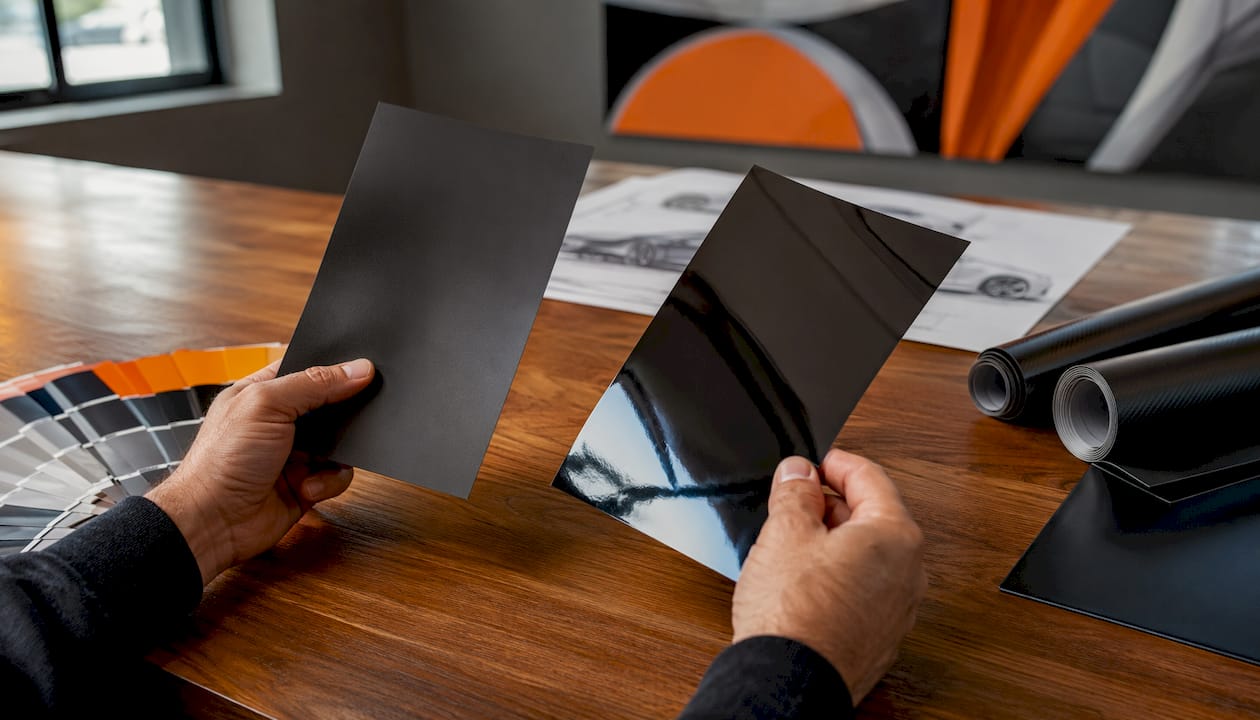
Film type is the decision that matters most. Cast vinyl conforms to 3D vehicle contours without shrinkage, making it the correct choice for full wraps. Monomeric vinyl suits flat surfaces and lasts 4–6 years; polymeric handles simple curves at 6–8 years; cast delivers 8–10 years on full vehicle wraps with complex shapes.
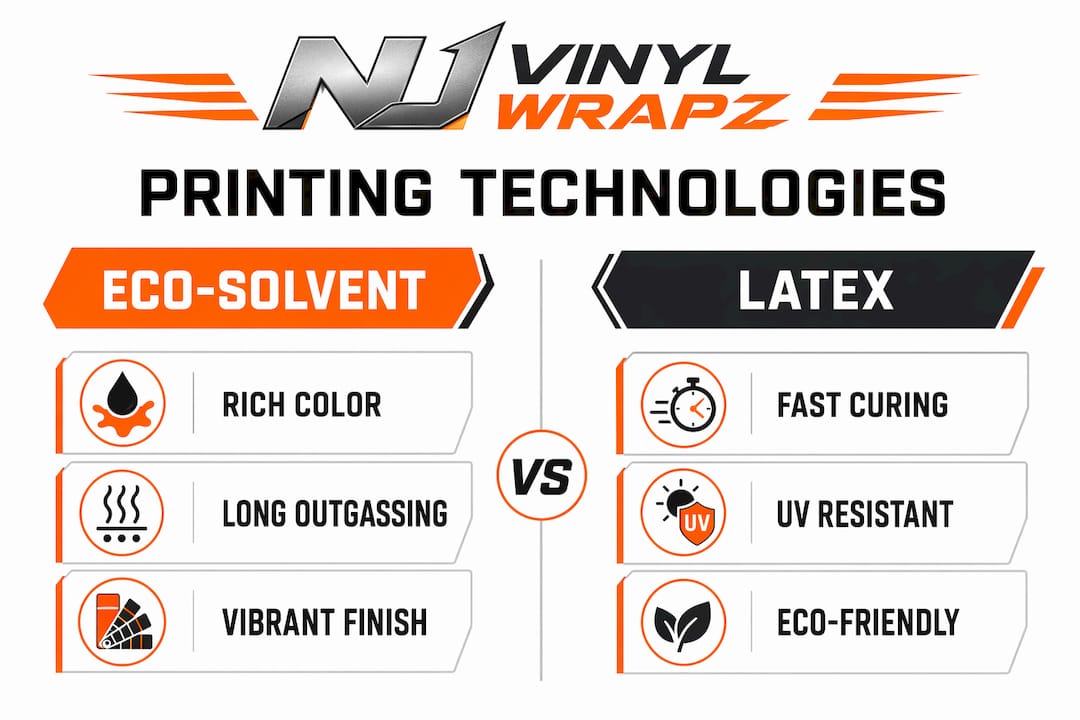
On the ink side, eco-solvent produces rich color but requires an outgassing period before lamination. Latex inks cure faster, allowing quicker lamination, though with a slightly narrower color range. UV-curable inks work well on flat surfaces but need flexible formulations for wrap applications where the film must stretch.
WePrintWraps.com stands out for anyone ordering a single vehicle or testing a design before committing to a fleet run. No minimums and a built-in online design tool remove the usual friction of small-quantity orders. Printmoz suits businesses that want finished, laminated panels shipped ready to install. For clients who want Avery or 3M film specifically, WePrintWraps Printed Wrap Film delivers that material quality with professional printing already applied.
How to choose a professional vinyl wrap printing service
The right service depends on your project type, not just price. A few criteria separate reliable providers from ones that will cost you more in reprints.
What to evaluate:
- Film type offered. Any provider printing full vehicle wraps should offer cast vinyl. A shop that only stocks monomeric or generic calendered film is not equipped for curved surfaces.
- Printing technology. Eco-solvent and latex are the proven choices for vehicle graphics. Ask specifically which ink system they run and whether their workflow includes RIP software for color management and contour cut registration. Printing directly from basic design software causes alignment failures on large panels.
- Lamination. Every professional wrap should be laminated. A provider that skips lamination or offers it only as an add-on is cutting corners that will show up as fading and scratching within a year.
- Turnaround and support. Ask whether they can handle your panel count in your timeline and whether they offer design review before printing. A provider who will flag a file problem before running 60 feet of film is worth more than one who ships fast and lets you discover the error on delivery.
Red flags to avoid:
- No mention of lamination options
- Vague answers about which vinyl film type they use
- No RIP software in their workflow
- Operations outside the US with no domestic support contact
Pro Tip: Ask any prospective printer whether they use ICC color profiles matched to their specific film and ink combination. A shop that profiles correctly will produce consistent color across panels printed days apart. One that does not will give you panels that visibly mismatch on the vehicle.
Checking customer reviews for mentions of color accuracy and installation-ready panels tells you more than star ratings alone. Certifications from Avery Dennison or 3M indicate a provider has been vetted on material handling, which matters for warranty coverage on the film itself. For long-term vehicle care after installation, resources like automotive care tips can help you maintain wrap appearance between professional services.
What does the professional vinyl wrap printing process actually involve?
A finished wrap is a layered product, not just printed vinyl. Rushing or skipping any stage creates problems that show up during installation or within months of application.
The production stages:
- Digital design on vehicle templates. Artwork is built around actual vehicle measurements, body lines, panel gaps, and curves. A flat rectangle design will not align correctly on a real vehicle.
- RIP software processing. The RIP translates design files into printer instructions, controls ink limits, manages color profiles, and generates contour cut registration marks. Without it, color consistency across panels is guesswork.
- Vinyl acclimation. Rolls are conditioned to room temperature and humidity for approximately 24 hours before printing. Skipping this step causes dimensional shifts that throw off registration on multi-panel jobs.
- Wide-format printing. Panels are printed on roll-to-roll printers at 54–64 inches wide. Print operators run nozzle checks and monitor color throughout the run.
- Outgassing. Solvent and eco-solvent prints must rest before lamination. Avery Dennison’s guidelines specify a minimum of 24 hours drying time; conforming and fleet applications may require 72 hours. Trapping solvents under laminate causes bubbles, adhesion failure, and edge lifting.
- Cold lamination. A clear protective film is applied through pressure rollers. The laminate must be compatible with the printed vinyl so both stretch together on curves. A mismatched laminate will lift or crack.
- Contour cutting and panel trimming. Panels are cut to shape, with extra material left at edges for installers to align, stretch, and tuck. Cutting too tight before installation makes the job significantly harder.
- Staging and packaging. Panels are labeled, rolled correctly, and separated by position so the installer knows which piece goes where and in what order.
Understanding this workflow helps you evaluate a printing service honestly. A provider who can explain each stage and tell you their outgassing protocol is operating at a professional level. One who cannot is probably skipping steps. For a deeper look at vehicle wrap design before you submit files, preparation makes a measurable difference in the final output.
Why Njvinylwrapz is a trusted name in professional wrap printing
Njvinylwrapz brings over 10 years of commercial fleet and custom wrap experience to every project, working with material from Avery Dennison and 3M exclusively. That means every print runs on film engineered for vehicle applications, not generic calendered stock.
Key points that set Njvinylwrapz apart for commercial and fleet clients:
- Licensed and insured operations with climate-controlled installation facilities, which directly affects adhesion quality and wrap longevity
- Premium 3M and Avery Dennison materials across all projects, with lamination matched to the specific film being used
- Expert design support for clients who need artwork built to vehicle templates, not just a file upload portal
- Fast turnaround for fleet orders, with consistent color management across multiple vehicles
- Full service scope covering fleet graphics workflow from design through installation, not just print-and-ship
For businesses managing multiple vehicles, consistent branding across a fleet requires a provider who controls the full process. Njvinylwrapz handles design, printing, and installation under one roof, which eliminates the handoff errors that cause color mismatches between vehicles wrapped at different times.
Njvinylwrapz: full-service wraps for fleets and custom builds
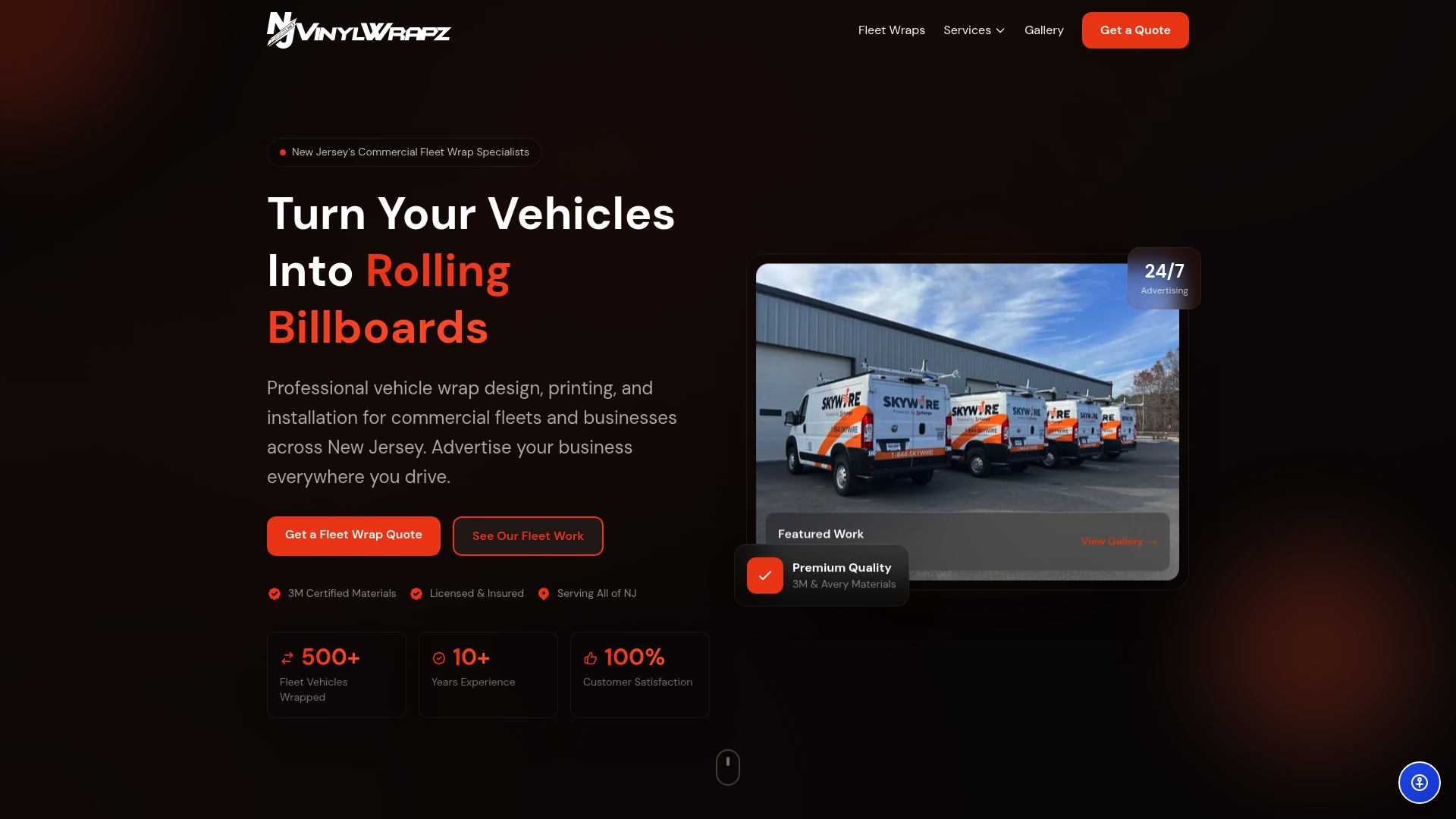
The providers compared above handle printing well. What they do not offer is end-to-end accountability from design file to installed wrap on your vehicle. Njvinylwrapz does. With over a decade of fleet branding experience across New Jersey and beyond, Njvinylwrapz prints on genuine Avery Dennison and 3M cast vinyl, laminates in-house, and installs in a climate-controlled facility where temperature and humidity are managed throughout.
For commercial fleets, that matters. A single vendor controlling every step means your vehicles match, your timeline holds, and your warranty is not voided by a handoff between a printer in one state and an installer in another. Explore full vehicle wrap services or browse wrap options to see what fits your project.
FAQ
What kind of printer is used for car wraps?
A roll-to-roll wide-format printer is standard for vehicle wraps, typically running eco-solvent or latex inks at 54–64 inches wide. These widths are necessary for seamless panel coverage across hoods, doors, and roofs.
Can I use a regular printer to print on vinyl?
No. Desktop printers are limited to 8.5–13 inches and lack the ink flexibility and media handling required for vehicle-grade vinyl. Professional wrap printing requires wide-format equipment with compatible ink systems.
How do I design my own vinyl wrap?
Design files should be built on vehicle-specific templates using vector software, then processed through RIP software before printing. RIP controls color profiles and generates the registration marks needed for accurate contour cutting.
How to print your own vinyl wrap at home?
Home printing is not practical for full vehicle wraps. The film widths, ink durability, and outgassing requirements all demand commercial equipment. For partial graphics or decals, a professional print service with no minimums, like WePrintWraps.com, is a more realistic option.
Key Takeaways
Cast vinyl on a properly calibrated wide-format printer, with correct outgassing and matched lamination, is the only production path that delivers a vehicle wrap built to last many years.
| Point | Details |
|---|---|
| Film type determines lifespan | Cast vinyl is suitable for long-lasting full wraps; monomeric vinyl is best for flat surfaces with a shorter lifespan. |
| Outgassing is non-skippable | Avery Dennison specifies a minimum 24-hour dry time before lamination to prevent bubbles and adhesion failure. |
| RIP software is required | Without RIP processing, color consistency across panels and contour cut accuracy both fail. |
| Wide-format printers only | Professional wrap printing requires 54–64 inch roll-to-roll printers; desktop equipment cannot produce vehicle panels. |
| Njvinylwrapz for full-service fleet work | Njvinylwrapz prints on Avery Dennison and 3M cast vinyl, laminates in-house, and installs in climate-controlled facilities across New Jersey. |
Recommended
- Commercial Vinyl Services NJ | Window Graphics, Wall Murals & More | NJ Vinyl Wrapz | NJ Vinyl Wrapz
- Top 6 wrapestate.com Alternatives Providers 2026 | NJ Vinyl Wrapz
- Top 4 Wrapz.us Alternatives Vehicle Wrapping Providers 2026 | NJ Vinyl Wrapz
- Why Choose 3M or Avery Materials for Vehicle Wraps | NJ Vinyl Wrapz