
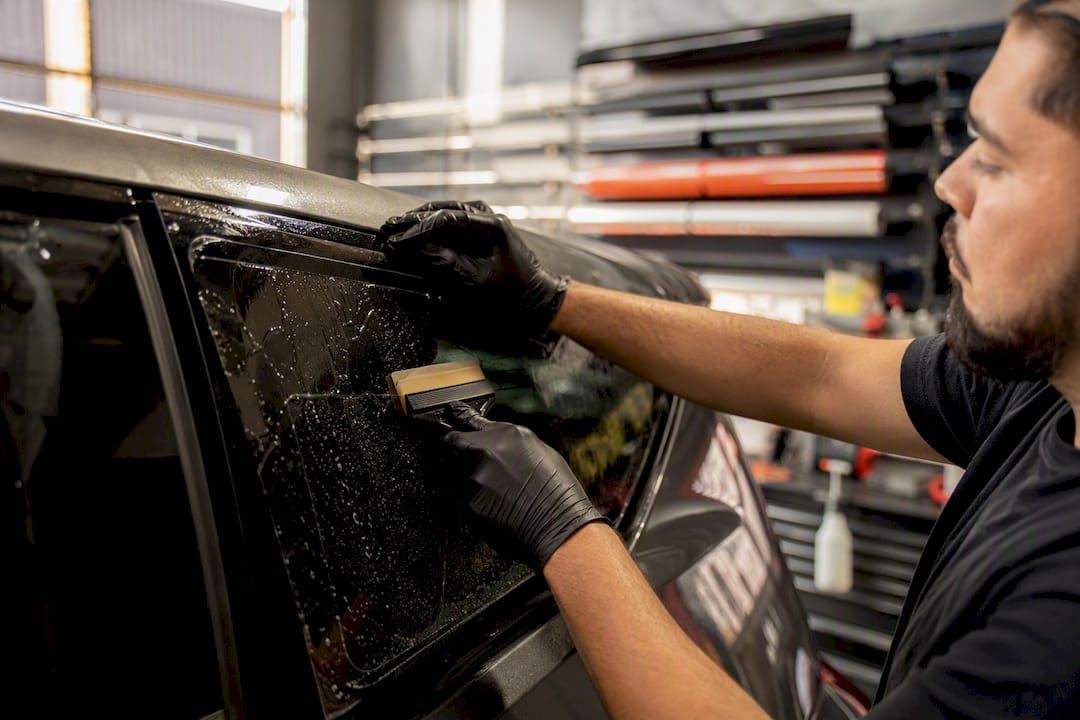
Aftermarket window tint on your windshield or front side windows is illegal in New Jersey unless you hold a medical exemption issued by the Motor Vehicle Commission. Rear side windows and the rear window can carry tint of any darkness. Getting an exemption means applying through the MVC before any film goes on your glass, not after. If you’re checking whether your current tint or a planned install is legal, the limits below and the MVC’s own forms are the only sources that matter.
TL;DR:
- Front side windows and windshields must have at least 60% and 70% transmittance respectively, unless a medical exemption is approved beforehand.
- Medical exemptions require a specific application process through the MVC, including temporary approval and installer confirmation, and only apply to one vehicle at a time.
- Installing tint before obtaining MVC approval or on non-approved installers can lead to violations, fines, and complications with insurance or vehicle inspections.
- Dark tint on the front windows is a common reason for police stops and can result in citations unless supported by valid exemption documentation.
- Rear side and rear windows can be tinted any darkness legally, but the driver must comply with transmittance and reflectance limits on the front glass.
Table of Contents
- What Are the Legal Tint Limits in New Jersey?
- How Do You Get a Medical Exemption for Window Tint in NJ?
- Who Can Legally Install Your Tint?
- What Happens if You Get Pulled Over With Illegal Tint?
- Your Quick-Reference Checklist
- Do Commercial Trucks Follow the Same Tint Rules as Passenger Cars?
- Are There Exceptions Beyond Medical Sunscreening?
- How Severe Are the Penalties for Illegal Tint?
- Does Window Tint Affect Buying or Selling a Car in NJ?
- Why Professional Installation Actually Protects You
- Get Compliant Tint Installed the Right Way
- Sources
- FAQ
What Are the Legal Tint Limits in New Jersey?
New Jersey’s tint rules come down to light transmittance, which measures how much visible light passes through the glass and film combined. The lower the percentage, the darker the tint.
The windshield can’t carry aftermarket tint at all, except above the AS-1 line, the manufacturer-marked strip near the top of the glass. Below that line, combined transmittance has to stay at 70% or higher, which in practice means clear glass with no film. Front side windows follow the same no-tint default, with combined transmittance required to hit at least 60% unless you have a medical exemption on file.
Rear side windows and the rear window have no minimum transmittance. You can go as dark as you want back there, which is why so many NJ drivers with legal front glass still run near-limo tint in back.
Reflectance and color matter too. Regulatory text caps visible light reflectance on the windshield and front side windows at 8%, ruling out mirrored or metallic-looking films up front. Windshield film, where permitted above the AS-1 line, must be clear. Front side film can be clear or tinted, but only within an approved medical exemption.
A few things worth keeping straight:
- “Combined transmittance” means the glass and film together, not the film alone.
- The AS-1 line strip is the only place aftermarket windshield tint is legal without a medical exemption.
- Reflective or mirrored tint up front is banned outright, exemption or not, once it exceeds the 8% cap.
- For a sense of how tint percentages actually look and feel in daylight versus at night, this VLT breakdown is a useful reference before you pick a film.
How Do You Get a Medical Exemption for Window Tint in NJ?
New Jersey allows front-window sunscreening for drivers with documented photosensitive conditions, but the process runs through the MVC, not just a note from your doctor. State statute lists qualifying conditions such as polymorphous light eruption, porphyria, and lupus, among other photosensitive disorders confirmed by a physician.
Here’s the actual sequence:
- File MVC Sunscreening 1. This is the application, and it requires physician certification of your qualifying condition. Dermatological cases sometimes need photo-testing documentation to support the diagnosis.
- Wait for temporary authorization. The MVC reviews the application and, if approved, issues MVC Sunscreening 2, a temporary approval that lets you move forward with installation. Processing typically takes 10 to 14 days.
- Get the film installed by an approved installer. The installer completes MVC Sunscreening 3, the installation confirmation, and submits it back to the MVC.
- Receive your permanent card. Once MVC processes the installer’s confirmation, you get MVC Sunscreening 4, the permanent exemption card. It’s valid for 48 months before you need to renew.
Approval is tied to one vehicle. If you drive two cars regularly, you need two separate applications, even if it’s the same medical condition and the same patient.
Pro Tip: Don’t let a shop tint your front windows on the strength of a doctor’s note alone. The MVC requires its own vehicle-specific authorization first. A note gets you nowhere without Sunscreening 2 in hand.
Who Can Legally Install Your Tint?
Timing matters as much as paperwork here. You cannot let anyone install sunscreening on your front windows until MVC issues that temporary authorization. Installing first and applying later doesn’t work. It puts you in violation from the moment the film goes on.
Once you have approval, the installer has to be one the MVC recognizes for this work. Keep these rules in mind:
- Confirm your installer is on the MVC’s approved list before scheduling the appointment.
- Windshield film above the AS-1 line must be clear; front side film can be clear or tinted, but reflectance can’t top 8% either way.
- The installer files MVC Sunscreening 3 directly with the MVC. If that confirmation never gets submitted, your temporary authorization can lapse without you knowing.
- Ask for a copy of the confirmation for your own records before you leave the shop.
A shop that knows this process saves you a second trip to the MVC and a possible gap in your legal coverage.
What Happens if You Get Pulled Over With Illegal Tint?
Traffic stops, not inspection stations, are where NJ tint violations almost always surface. Routine safety and emissions inspections generally don’t measure window tint, so plenty of drivers go years without a problem, right up until an officer notices dark front glass during a stop for something else entirely, or sees it as reason enough on its own.
If you’re cited, expect a fine and a mandatory order to remove or correct the tint. If you’re claiming a medical exemption but can’t produce your MVC Sunscreening 4 card or valid temporary paperwork, the officer has no way to verify the exemption on the spot, and that usually means a citation stands until you sort it out with the MVC.
There’s a bigger risk that doesn’t show up on the ticket. Illegal front tint can complicate an insurance claim after a crash, particularly if visibility becomes a factor in how the accident is reconstructed. An insurer or investigator reviewing the incident may flag the tint as a contributing issue even when it had nothing to do with the collision.
A few practical notes:
- Officers commonly ask drivers to roll down front windows during a stop, tinted or not.
- Carrying your permanent card or temporary notice in the vehicle avoids a lot of back and forth.
- One tint citation often invites closer scrutiny of the rest of the stop, from registration to insurance.
Roughly one in three drivers cited for illegal tint statewide also walk away with a second violation from the same stop, according to enforcement patterns LegalClarity describes. Dark front glass tends to draw a longer look at everything else.
Your Quick-Reference Checklist
- Before installing: Confirm which windows you’re tinting. Rear glass, go ahead. Front side or windshield, stop and apply for MVC sunscreening first if you have a qualifying condition.
- During a stop: Roll down your windows without being asked twice, and hand over your MVC Sunscreening 4 card or temporary authorization notice right away.
- If you already installed illegal tint: Have it removed or corrected before your next inspection or before selling the vehicle, and use an installer who can document the correction properly.
Do Commercial Trucks Follow the Same Tint Rules as Passenger Cars?
New Jersey doesn’t run a separate tint statute for commercial vehicles, but the practical rules shift because of how those vehicles are built and used.
Where things diverge is the cargo and rear compartment. Many commercial vans and trucks come from the factory with limited or no rear glass, or with rear windows the driver doesn’t rely on for visibility the way a sedan’s rear window matters. Since NJ places no transmittance limit on rear windows for any vehicle class, fleet vehicles routinely run solid vinyl coverage, wraps, or dark film on rear and side cargo glass without running afoul of tint law, because that glass isn’t subject to the same standard as front-of-cab windows.
Fleet branding adds another layer that private drivers don’t deal with. A commercial wrap covering side or rear windows with perforated vinyl graphics is a different category from tint film, but installers still need to respect the front window rules if any wrap material extends onto driver or front passenger glass. Business owners managing multiple trucks should treat each vehicle’s front windows under the same medical exemption framework, since exemptions are issued per vehicle, not per fleet or per driver.
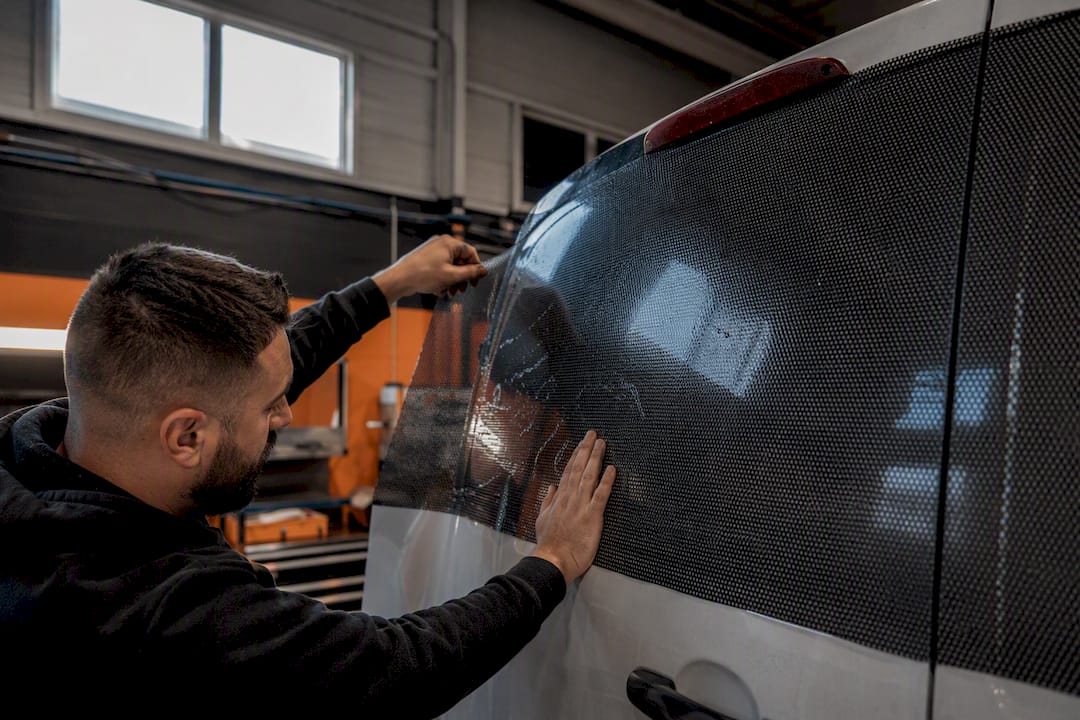
The practical takeaway for fleet managers: cab glass follows the standard passenger rules, cargo and rear glass gives you far more room to work with.
Are There Exceptions Beyond Medical Sunscreening?
Medical exemptions get most of the attention, but they’re not the only carve-out in New Jersey’s tint framework. Government and public-safety vehicles operate under different equipment standards than private passenger cars, and marked or unmarked law enforcement, corrections, and certain military vehicles routinely carry darker front glass than the standard N.J.A.C. limits would permit a private citizen.
That distinction exists because those vehicles serve operational purposes, officer safety during traffic stops, for one, that fall outside the consumer sunscreening statute entirely. It’s not a loophole available to private drivers, and claiming affiliation you don’t have to justify illegal tint carries its own separate legal exposure.
Outside of government vehicles, New Jersey doesn’t recognize broad exceptions the way some states do for things like limousine services or livery vehicles. If you’re driving a private passenger vehicle, whether it’s your daily commuter or a company pickup, the medical exemption route through MVC Sunscreening 1 through 4 is the only legal path to darker front glass.
One narrow scenario worth knowing: window film applied purely for security or shatter-resistance (not visible tint) on certain commercial or institutional vehicles can fall under different equipment considerations, but this isn’t a shortcut for cosmetic tinting and shouldn’t be treated as one. If you’re unsure whether a specific vehicle use case qualifies for anything beyond standard sunscreening rules, that’s a question for the MVC directly, not a guess based on what you’ve seen on the road.
How Severe Are the Penalties for Illegal Tint?
Penalties for illegal window tint in New Jersey scale with how the violation gets handled, and they reach further than just the ticket itself. At the base level, a citation for illegal front tint typically comes with a fine and a correction order, meaning you’re legally required to have the tint removed or brought into compliance, often within a set window of time.
Ignore a correction order, and the consequences escalate. Unresolved equipment violations can affect your ability to pass a future vehicle inspection, and outstanding fines tied to a registered vehicle can create complications at renewal time if they go unpaid long enough to trigger administrative holds.
The insurance angle deserves separate attention because it’s the part drivers underestimate most. Illegal tint isn’t automatically an insurance violation on its own, but if you’re in a crash and the police report notes illegal window tint, an insurer reviewing the claim may treat that as a factor worth investigating, particularly in disputes over visibility, fault, or contributing circumstances. That scrutiny can slow down a claim even when the tint had nothing to do with causing the accident.
If you’re claiming a medical exemption but your documentation lapsed, expired past the 48 month renewal, or was never filed for that specific vehicle, you’re treated the same as a driver with no exemption at all. The card protects you only while it’s current and matches the vehicle you’re driving.
Bottom line: the fine is rarely the expensive part. The downstream friction with inspections, registration, and insurance claims is where illegal tint actually costs drivers money and time.
Does Window Tint Affect Buying or Selling a Car in NJ?
Illegal front window tint follows the vehicle, not just the driver who installed it, which matters a lot if you’re buying or selling. New Jersey doesn’t require a specific tint disclosure form in a private vehicle sale the way some states mandate for other equipment issues, but that doesn’t mean tint is irrelevant to the transaction.
If you’re selling a vehicle with illegal front tint, that violation transfers to the new owner the moment they take the wheel. A buyer pulled over shortly after purchase with dark front glass and no exemption on file is going to eat that citation regardless of who installed the tint or when. Sellers who want a clean handoff should have illegal front tint removed before listing the vehicle, both to avoid disputes after the sale and because a car with compliant, factory-appropriate glass is simply easier to sell without questions.
Buyers should check front window darkness during any pre-purchase inspection, right alongside the usual mechanical checklist. If the front windows look tinted and the seller can’t produce a valid medical exemption card tied to that vehicle, treat it as tint you’ll need to remove yourself.
Medical exemptions add a wrinkle here too, since approvals are tied to a specific vehicle and don’t transfer between owners. If you buy a car with legally tinted front windows under someone else’s exemption, that authorization doesn’t carry over to you. You’d need to file your own MVC Sunscreening 1 application if you want to keep that tint and you qualify, or have it removed if you don’t.
Why Professional Installation Actually Protects You
We push customers toward MVC-approved installers because the paperwork trail matters just as much as the film itself. A shop that skips MVC Sunscreening 3 leaves you holding a temporary authorization that never converts to a permanent card, and you won’t find that out until you’re pulled over. Getting the AS-1 line placement and film type right the first time, backed by a portfolio of installs that have actually passed MVC review, is what keeps a legal exemption legal.
— NJ Vinyl Wrapz
Get Compliant Tint Installed the Right Way
Sorting out MVC forms while trying to figure out what film is even legal for your front windows is a lot to manage on top of daily driving. NJ Vinyl Wrapz handles both sides of that equation: we work within New Jersey’s transmittance and reflectance limits on every install, and we know the Sunscreening 1 through 4 paperwork well enough to file the installer confirmation correctly the first time, so your temporary authorization actually converts into a permanent card.

Beyond medical sunscreening, we also handle rear window and rear side tinting with no legal darkness restriction, plus paint protection film and ceramic coatings if you’re looking to protect the vehicle beyond the glass. Every install is licensed and insured, using materials from partners like 3M and Avery. If you’re checking a current tint job for compliance or planning a new one, start with our window tinting service page and request an estimate. We’ll tell you straight whether what you have (or want) fits within NJ’s limits before any film touches your glass.
Sources
- NJ MVC | Window Sun-screening For Medical Reasons
- N.J. Rev. Stat. § 39:3-75.1 - Certain tinting materials permitted for medical reasons (Justia)
FAQ
Are 20% Tints Legal in NJ?
Only on rear side and rear windows, where there’s no transmittance minimum. On front side windows or the windshield, 20% tint is illegal without an MVC medical exemption, since those windows require at least 60% and 70% transmittance respectively.
Do Police Pull People Over for Tint in NJ?
Yes, illegal front window tint is a valid reason for a traffic stop on its own, and it frequently leads to closer scrutiny of the rest of the vehicle and driver’s paperwork.
Is Window Tint Legal in New Jersey in 2026?
The rules haven’t changed: rear windows can be tinted to any darkness, while windshields and front side windows stay tint-free unless you hold a current MVC Sunscreening 4 card for that specific vehicle.
Can I Use My Medical Exemption on a Different Car?
No. MVC sunscreening approval is issued per vehicle, so switching cars means filing a new MVC Sunscreening 1 application even if your medical condition and documentation haven’t changed.