
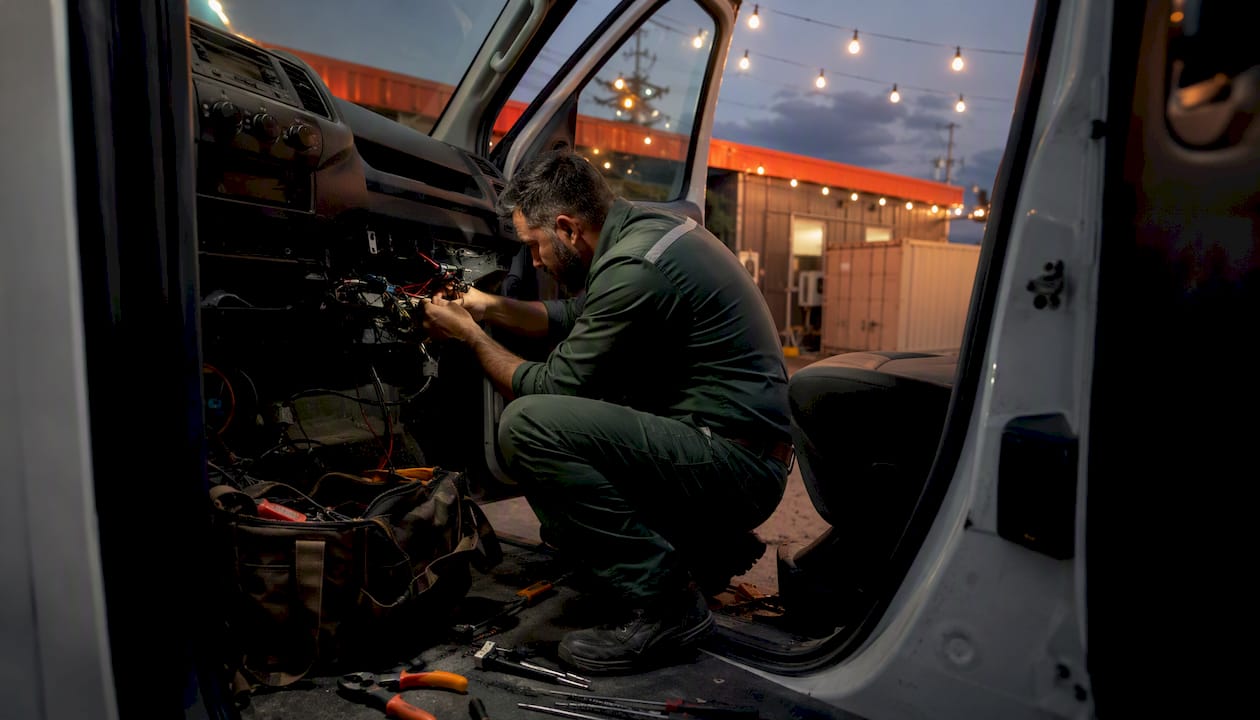
For any fleet, the right move is to hire a professional installer who delivers a CAN-bus-aware immobilizer plus telematics integration. A vehicle is stolen every 48 seconds in the U.S. Audible alarms won’t stop a determined thief. A hard immobilizer will.
Immediate action steps:
- Request a CAN-bus immobilizer and telematics integration from any installer you consider
- Confirm the installer has CAN-bus experience before booking
- Schedule security installs to align with wrap or PPF work to avoid rework
- Get a written SLA, proof-of-installation paperwork, and warranty terms in writing
Table of Contents
- What does a professional car alarm installation actually include?
- Which alarm system type fits your vehicle?
- What are the legal rules for aftermarket alarm installs?
- Can a professional alarm install lower your insurance premiums?
- Njvinylwrapz keeps your fleet secure and on the road
- Key Takeaways
- FAQ
What does a professional car alarm installation actually include?
CAN-bus integration quality matters more than the feature list on the box. Poor wiring triggers factory faults, voids warranties, and creates electrical shorts that cost more to fix than the original install.
Hardware your installer must provide:
- CAN-bus immobilizer: Blocks engine-start messages at the network level. Immobilizers repeatedly stopped simulated theft attempts where audible alarms failed entirely.
- Relay-attack blocker: Prevents signal amplification attacks on keyless entry systems.
- OBD port lock or relocation: Closes the easiest diagnostic bypass thieves use.
- Hidden GPS with anti-jam fallback: Trackers are supplementary; they can be jammed, so the immobilizer is your primary line.
- Smart sensors: Shock, tilt, and glass-break sensors calibrated on-site.
Professional installers use vehicle-specific T-harnesses that plug into factory connectors rather than splicing OEM wiring. The control unit gets mounted deep in the dash, away from heat and obvious access points, to reduce tampering risk. After install, a technician should test and tune sensor sensitivity to prevent false alarms from city vibrations while keeping real deterrence intact.
Installer deliverables checklist:
- Hardware model numbers and serial numbers
- Wiring diagram or T-harness documentation
- Control-unit location note
- Immobilizer PIN or override procedure
- Telematics provisioning details
- Proof-of-installation paperwork
- Written warranty covering parts and labor
Fleet managers get the most value when security hardware feeds directly into fleet-management platforms to automate alerts and cut manual reconciliation.
Vetting an installer — questions to ask:
- Are you manufacturer-authorized or a certified technician?
- Do you carry proof of insurance and a business license?
- Will you provide a written SLA for monitoring and alerts?
Red flags: no CAN-bus knowledge, insisting on cutting OEM wiring, no written warranty.
DIY: Acceptable on older pre-CAN vehicles for low-value personal projects. On any modern fleet vehicle, DIY risks warranty voids, CAN-bus faults, and broken telematics data feeds. Don’t do it.
Coordinating with wraps and PPF: Security hardware hidden under the dash should go in first. When wiring must route under vinyl panels, wrap first, then wire. Ask for a joint prep checklist from both shops before either job starts.
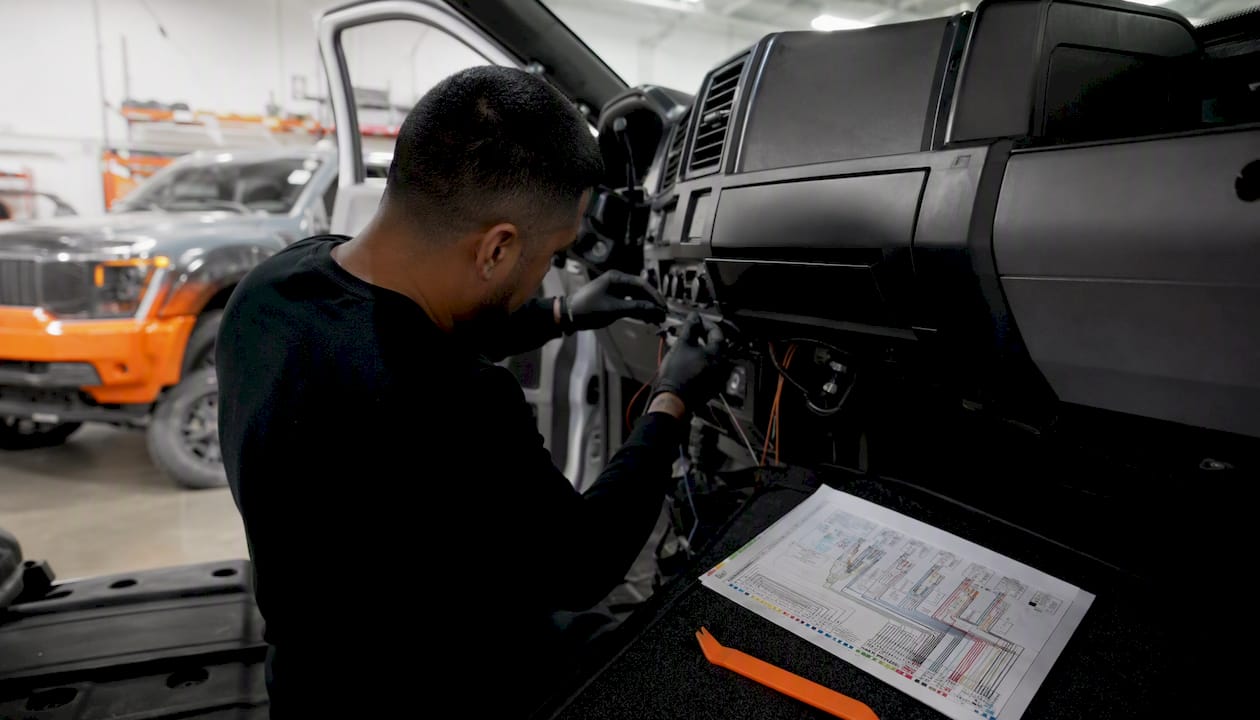
Pro Tip: Ask your installer for a local alarm installer who can coordinate scheduling with your wrap shop. One phone call between shops prevents a week of rework.
| Feature | Basic audible alarm | CAN-bus immobilizer + telematics |
|---|---|---|
| Best for | Low-value, older vehicles | Modern fleets, high-value vehicles |
| Theft prevention | Weak — largely bypassed quickly | Strong — blocks engine start at network level |
| CAN-bus compatibility | None required | Required; must be vehicle-specific |
| Telematics integration | No | Yes — automated alerts, location data |
| Recurring fees | None | Monthly telematics/monitoring fee |
| Warranty impact | Minimal risk | Safe when T-harnesses used correctly |
Which alarm system type fits your vehicle?
The NHTSA categorizes vehicle security into three families: audible/visible devices, immobilizing devices, and vehicle recovery systems. Each serves a different purpose.
Audible alarms draw attention. They work on opportunistic thieves but are widely ignored due to false-alarm fatigue. Best suited to older vehicles or low-risk parking environments.
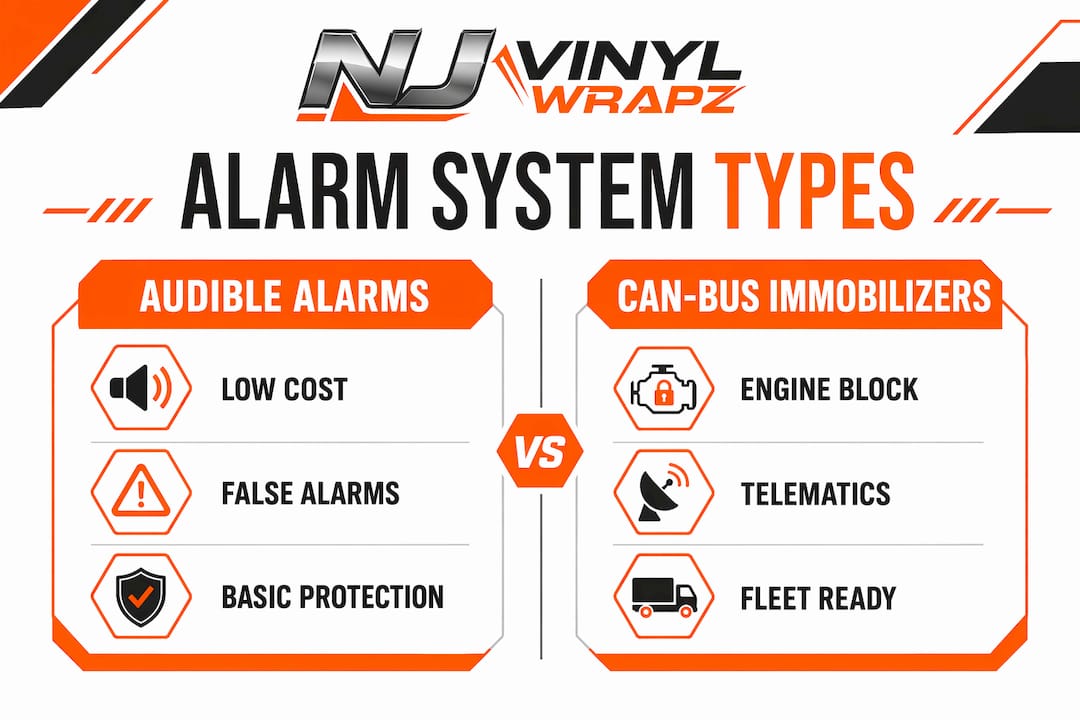
Immobilizers physically prevent engine start. Factory-fitted transponder immobilizers are standard on most vehicles built in the last two decades. Aftermarket CAN-bus immobilizers add a second layer for fleet vehicles where the factory unit alone isn’t enough.
GPS and recovery systems help locate a stolen vehicle but don’t prevent the theft. Pair them with an immobilizer, never use them as a standalone solution.
For commercial vans and fleet trucks, the practical answer is a layered setup: CAN-bus immobilizer plus GPS tracker plus OBD port lock.
What are the legal rules for aftermarket alarm installs?
No federal law prohibits aftermarket alarm or immobilizer installation in the U.S. State-level noise ordinances do apply to audible alarms. Many municipalities cap alarm duration and penalize repeat false alarms, so sensor calibration isn’t just a convenience issue.
Aftermarket installs must not interfere with federally mandated safety systems. NHTSA regulations require manufacturers to label major components for theft tracing, and they encourage passive immobilizers as standard equipment. Any aftermarket work that disables or bypasses those systems creates liability.
Always confirm your installer carries a valid business license and general liability insurance. For commercial vehicles, check whether your state requires any specific documentation for aftermarket electronic modifications.
Can a professional alarm install lower your insurance premiums?
Yes, though the discount varies by insurer and system. Adding anti-theft hardware, particularly GPS trackers and immobilizers, can reduce comprehensive insurance premiums. Some insurers require specific approved hardware categories and documented professional installation to honor a discount or a theft claim.
Check with your carrier before you buy. Ask specifically whether they require manufacturer-authorized installation and what documentation they need. A professional installation that includes proof-of-install paperwork, hardware serials, and a signed technician record gives you exactly what most insurers ask for.
For fleet policies, the math compounds fast. Even a modest per-vehicle premium reduction across a 20-vehicle fleet adds up to real savings annually.
Njvinylwrapz keeps your fleet secure and on the road
When you’re managing a fleet, the last thing you need is a security install that forces a wrap redo or a wrap job that buries wiring you haven’t run yet. Njvinylwrapz coordinates both.

With over 10 years in commercial vehicle work, licensed and insured operations, and premium 3M and Avery materials on every job, Njvinylwrapz handles full fleet wraps and related services while coordinating the scheduling sequence that keeps alarm installs and vinyl work from conflicting. You get written documentation, a clear handover process, and no cross-shop finger-pointing when something needs to be adjusted. Fleet managers get a single point of contact for branding, PPF, tint, and the scheduling coordination that protects every aftermarket investment. Request a coordinated fleet quote at njvinylwrapz.com.
Key Takeaways
A CAN-bus immobilizer paired with telematics integration is the most effective and fleet-practical approach to vehicle security installation.
| Point | Details |
|---|---|
| Immobilizer over alarm | CAN-bus immobilizers block engine start; audible alarms are bypassed rapidly. |
| T-harness wiring | Professional installers use T-harnesses to avoid cutting OEM wiring and preserve warranty. |
| Telematics integration | Security hardware should feed directly into fleet-management platforms for automated alerts. |
| Theft rate urgency | A vehicle is stolen frequently in the U.S., indicating a high theft risk, making layered protection a fleet priority. |
| Njvinylwrapz coordination | Njvinylwrapz schedules alarm and wrap installs together, providing written documentation and a clear fleet handover. |
FAQ
Does a car alarm actually prevent theft?
Basic audible alarms are largely ineffective against determined thieves, who can bypass them quickly. A CAN-bus immobilizer is the reliable prevention layer.
How long does a professional fleet alarm installation take?
A basic install usually takes a few hours per vehicle; advanced systems with full telematics provisioning can require additional time. Fleet managers should stagger scheduling to minimize downtime.
Is DIY alarm installation safe on modern vehicles?
Not for modern fleet vehicles. CAN-bus systems require vehicle-specific integration; a wiring mistake can trigger ECU faults, void the manufacturer warranty, and break telematics data feeds.
What paperwork should I request after installation?
Ask for hardware model numbers and serials, a wiring diagram, control-unit location, immobilizer override procedure, telematics provisioning details, and a signed proof-of-installation document.
Can I bundle alarm installation with a fleet wrap job?
Yes. Coordinate the sequence carefully: hidden under-dash hardware goes in before vinyl panels are installed. Njvinylwrapz manages this scheduling to prevent rework across both jobs.