
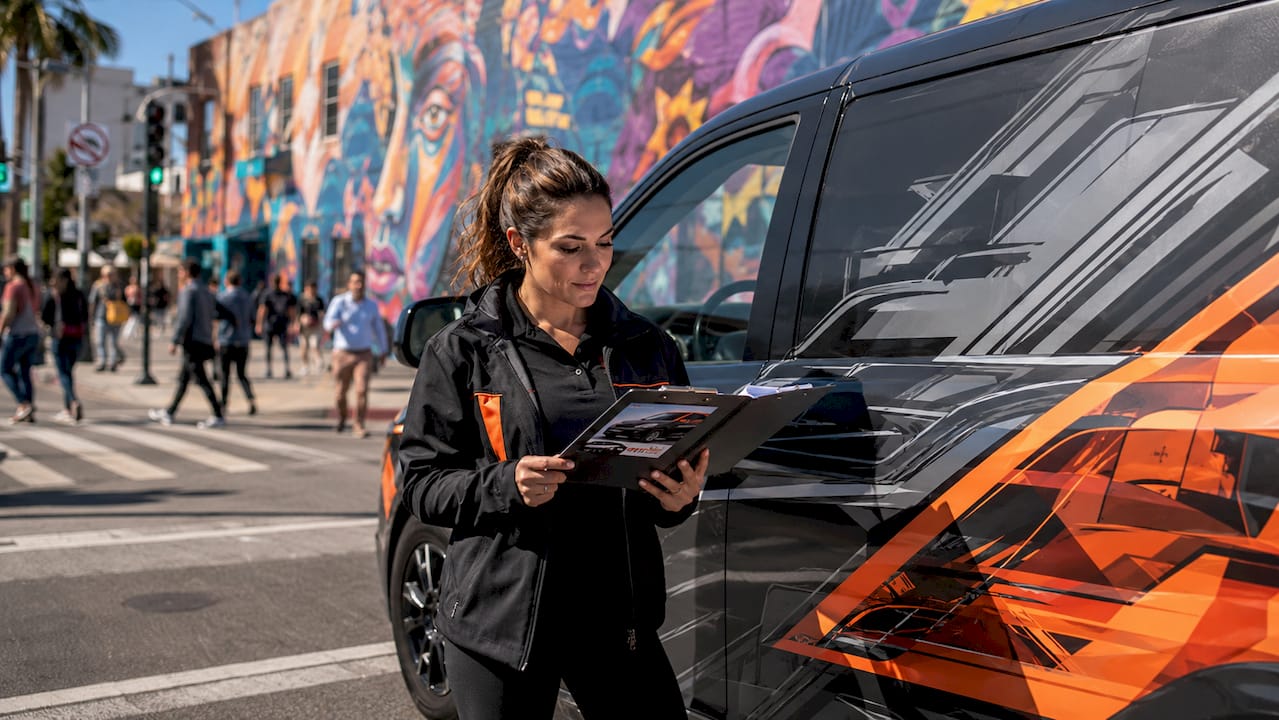
Vehicle wraps are defined as mobile advertising assets that transform company vehicles into full-time, locally targeted lead generation machines. The role of wraps in lead generation is direct: a single wrapped vehicle generates 30,000 to 80,000 impressions daily at a cost-per-thousand as low as $0.04. That same wrap delivers a 97% brand recall rate, compared to just 19% for digital ads. One construction firm turned a $4,000 wrap investment into 400 qualified leads. For marketing professionals and business owners running local service operations, no other single advertising asset comes close to that math.
How do vehicle wraps generate leads better than digital ads?
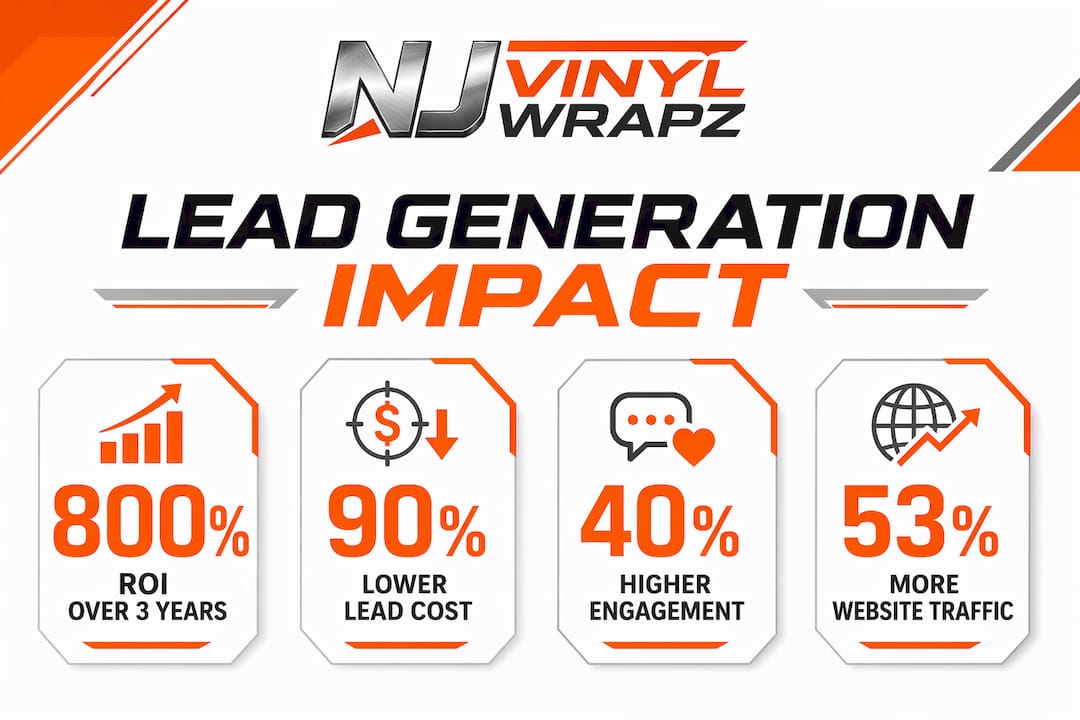
Vehicle wraps outperform most digital lead generation techniques on three measurable dimensions: cost, recall, and persistence. Digital ads stop the moment your budget runs out. A wrap keeps working 24 hours a day, 7 days a week, for 3–7 years without a recurring spend.
The cost comparison is stark. Wraps cost 90% less per lead than direct mail campaigns and generate five times more local leads than Google Ads. That figure reflects the compounding nature of physical impressions in a defined geographic area. Every mile your vehicle travels adds to a cumulative exposure count that no pay-per-click budget can replicate.

Engagement numbers reinforce this. Wraps achieve 40% higher engagement than email marketing and drive 53% more traffic than traditional billboards. The reason is simple: a wrapped vehicle moves through neighborhoods where your prospects actually live and work, not just where they happen to browse online.
| Advertising Channel | CPM Range | Brand Recall | Lead Cost vs. Wraps |
|---|---|---|---|
| Vehicle Wraps | $0.04–$0.20 | 97% | Baseline |
| Google Ads (local) | $2.00–$10.00 | ~19% | 5x higher |
| Direct Mail | $15.00–$30.00 | Low | 90% higher |
| Email Marketing | Variable | Low | 40% lower engagement |
The average ROI over three years for a wrapped vehicle is 800%. That number accounts for the one-time installation cost spread across years of continuous exposure. No digital channel offers a fixed-cost, always-on equivalent.
Pro Tip: Track your wrap’s lead contribution by assigning a unique phone number or QR code landing page to each vehicle. This gives you hard attribution data, not just impressions.
What design elements actually convert viewers into leads?
Wrap design is where most businesses lose the ROI they paid for. A cluttered wrap with ten service categories, three phone numbers, and a paragraph of fine print generates zero leads. Viewers have roughly 3 seconds of attention at a traffic light or intersection. Your design must work within that window.
The most effective wrap designs follow a strict hierarchy:
- Brand name and logo: Largest element, immediately recognizable at distance
- Single core service or tagline: One clear statement of what you do
- Call to action: A phone number, website, or QR code, nothing else
- QR code linked to a landing page: Captures leads from pedestrians and slow traffic
Overloading wraps with service lists destroys readability and brand recall simultaneously. A plumbing company that lists emergency repairs, drain cleaning, water heater installation, and pipe relining on one panel gives the viewer nothing memorable. The same company with “Emergency Plumber” in bold and a QR code to a booking page converts far more viewers into actual inquiries.
Color contrast matters as much as copy. High-contrast combinations like white text on dark backgrounds read at greater distances and in more lighting conditions than low-contrast designs. Fonts must be bold and sans-serif. Script fonts look attractive in mockups and fail completely at 40 miles per hour.
Pro Tip: Test your design by viewing it as a thumbnail on your phone from across the room. If you cannot read the name and call to action in under three seconds, the design needs simplification before it goes on a vehicle.
QR codes deserve specific attention as an effective lead capture strategy. Link them to a dedicated landing page, not your homepage. A landing page with a single form or click-to-call button converts at a dramatically higher rate than a general website. This is the connection point between your physical wrap and your digital sales funnel.
Why does integrating wraps with digital marketing multiply results?
Vehicle wraps do not operate in isolation. They function as the top-of-funnel brand awareness layer that makes every other marketing channel perform better. When a prospect sees your wrapped truck in their neighborhood three times before they search for your service online, they already recognize your brand. That recognition converts to higher click-through rates on paid ads and stronger organic search engagement.
The integration process works in a specific sequence:
- Wrap exposure builds familiarity. Repeated sightings in a target neighborhood create implicit trust before any direct contact occurs. This is not a passive benefit. It is a measurable warm-up period that shortens your sales cycle.
- Digital ads reinforce the physical impression. A prospect who has seen your truck and then encounters your Google or Meta ad converts at a higher rate than a cold prospect. The wrap pre-qualifies them.
- SEO and local search capture the intent. When that same prospect searches “plumber near me” or “HVAC repair NJ,” your local SEO ranking captures the lead that your wrap already warmed up.
- Social media extends the reach. Posting photos of your wrapped fleet on Instagram or Facebook creates additional impressions among followers who may not live on your route. It also signals professionalism and scale.
Wraps work best as part of a multichannel approach that includes SEO, paid ads, and social media. Businesses that treat wraps as a standalone tactic miss the compounding effect. The wrap is the anchor. Digital channels are the amplifiers.
The warm-up period matters here. Most businesses see measurable lead growth after about six months of consistent wrap presence in their service area. This is not a failure of the medium. It reflects how brand familiarity actually builds in human psychology. Patience during this period, combined with active digital marketing, produces the strongest long-term lead volume.
Which industries see the strongest ROI from wrap-based lead generation?
Home services, construction, and commercial fleet businesses consistently report the highest returns from vehicle wrap advertising. These industries share a common trait: their customers make purchase decisions based on local trust and visibility, not national brand recognition.
The numbers from real campaigns confirm this pattern. A construction firm generated 400 leads from a single $4,000 wrap. A gym using wrapped vehicles as part of a local awareness campaign added 1,200 new members. These are not outlier results. They reflect the hyper-local targeting advantage that wraps provide in dense residential and commercial areas.
Service businesses in particular benefit from the neighborhood pattern effect. When multiple wrapped vehicles operate in the same zip code, residents begin to perceive the brand as dominant in their area. Todd Stuart, a contractor marketing specialist, notes that scaling multiple vehicles produces a pattern effect that builds trust rapidly within a service territory. A single truck creates awareness. Three trucks create the impression of market leadership.
| Business Type | Reported Outcome | Key Benefit |
|---|---|---|
| Construction / Contracting | 400 leads from $4,000 wrap | Hyper-local job site visibility |
| Fitness / Gym | 1,200 new members | Neighborhood saturation |
| Home Services (HVAC, Plumbing) | 75%+ callers cite wrap discovery | Trust-based local recognition |
| Commercial Fleet Businesses | Consistent brand across all vehicles | Unified identity at scale |
For fleet businesses, the commercial wrap branding benefits extend beyond lead generation into brand equity. A fleet of ten consistently wrapped vehicles signals operational scale and professionalism that a single vehicle cannot. Prospects who see your branded fleet at multiple job sites in their neighborhood draw conclusions about your company’s size and reliability before they ever call.
Pro Tip: For home service businesses, prioritize wrapping vehicles that operate in your highest-value zip codes first. Concentrated exposure in a defined area builds recognition faster than spreading the same vehicles across a wide region.
Key takeaways
Vehicle wraps generate leads most effectively when combined with strong design, consistent local presence, and integration with digital marketing channels.
| Point | Details |
|---|---|
| Impressions and recall | Wraps deliver 30,000–80,000 daily impressions and a 97% brand recall rate, far above digital ads. |
| Cost efficiency | Wraps cost 90% less per lead than direct mail and produce 5x more local leads than Google Ads. |
| Design simplicity | Limit wrap content to logo, one service line, and a QR code to maximize 3-second readability. |
| Digital integration | Wraps warm up prospects for digital ads and SEO, shortening the sales cycle over a 6-month period. |
| Fleet scaling | Multiple wrapped vehicles in one service area create a pattern effect that accelerates local trust. |
What i’ve learned after watching hundreds of wraps perform in the field
Most businesses approach a vehicle wrap the way they approach a business card: they want everything on it. That instinct kills results. The wraps I have seen generate the most leads share one quality. They are almost uncomfortably simple. A name, a service, a number. That is it.
The other lesson that takes time to internalize is the warm-up reality. Clients who wrap their vehicles in January and expect a flood of calls by February are measuring the wrong thing. The first six months are about building a presence in your service area, not harvesting leads. The leads come after recognition builds. Businesses that understand this invest in the process rather than abandoning it.
Integrating wraps with a CRM is something almost no small business does, and it is a significant missed opportunity. When a caller says they found you from your truck, that data point should go into your CRM tagged to that vehicle. Over time, you build a geographic picture of where your wrap is generating the most inquiries. That data tells you where to concentrate your fleet and where to run supporting digital ads.
Scalability is the final argument I make to every fleet manager I work with. One wrap is a marketing expense. Five wraps in the same territory are a market position. The cost per vehicle drops as you scale, and the impression density in your service area compounds. That is the math that turns a good marketing tactic into a durable competitive advantage.
— Krunal
How Njvinylwrapz turns your fleet into a lead generation asset
Njvinylwrapz has spent over 10 years transforming commercial vehicles across New Jersey into high-performance advertising assets. Whether you need a single full vehicle wrap or a complete fleet branding program, the team handles custom design, premium printing with 3M and Avery materials, and professional installation in climate-controlled facilities.
Every wrap Njvinylwrapz produces is built for legibility, durability, and measurable brand impact. The design process prioritizes the exact elements that drive lead generation: clear identity, strong calls to action, and QR code integration. If you are ready to put your vehicles to work as full-time marketing assets, contact Njvinylwrapz for a consultation on the right wrap solution for your business and budget.
FAQ
How many leads can a vehicle wrap realistically generate?
Results vary by industry and location, but documented cases show a single $4,000 wrap generating 400 leads for a construction firm. Service businesses in dense residential areas consistently report the strongest returns.
How long does it take for a vehicle wrap to start generating leads?
Most businesses see measurable lead growth after approximately six months of consistent wrap presence in their service area. This reflects the time needed for brand familiarity to build among local prospects.
What is the cost per impression for a vehicle wrap?
Vehicle wraps deliver impressions at a CPM of $0.04–$0.20, making them one of the lowest-cost advertising formats available to local businesses. That rate holds for the full 3–7 year lifespan of the wrap.
Do vehicle wraps work better with digital marketing?
Wraps perform best as part of a multichannel strategy. They build brand familiarity that increases conversion rates on Google Ads, local SEO, and social media by warming up prospects before they encounter digital touchpoints.
What design mistakes reduce a wrap’s lead generation effectiveness?
Listing multiple services, using script fonts, and including too much text are the most common errors. Effective wraps limit content to a brand name, one core service, and a single call to action designed for 3-second readability.