

The fastest way to get consistent mobile advertising and recognizable branding across a franchise fleet is professional vehicle graphics built on a franchise-standard template and installed by certified technicians using MCS-rated films. A single branded commercial vehicle can generate 30,000 to 70,000 daily visual impressions, and warranty-backed materials protect that investment for years. Start by requesting a fleet-spec template and a quote scoped to your vehicle count and rollout timeline.
TL;DR:
- For interstate vehicles, fix the USDOT number and legal or trade name on both sides of the template, legible from 50 feet in daylight.
- MCS warranty coverage applies to a verified combination of film, ink, and overlaminate installed by a certified technician, not to film alone.
- Partial wraps typically cost $1,500 to $3,000 per vehicle, while lettering and decals suit support vehicles with shorter service lives.
- Pilot the template on 5 to 10 vehicles, make lessons mandatory changes to the master file, and only then begin regional installations.
Table of Contents
- Choosing the Right Graphic Type for Your Fleet
- Materials, Film Types, and What an MCS Warranty Actually Covers
- Design Specs That Keep Graphics Legible at Speed
- Installation Standards and Simple Maintenance That Protect the Wrap
- Rolling Out Branding Across Every Franchise Location
- Why Certified Materials and Installers Matter for Franchise Brands
- What Most Franchise Branding Advice Gets Wrong
- How We Help Franchises Roll Out Consistent Fleet Graphics
- FAQ
- Sources
Choosing the Right Graphic Type for Your Fleet
Franchise fleets rarely need the same graphic treatment on every vehicle. A full wrap covers the entire body and delivers the strongest brand presence, which makes it the right call for flagship vehicles or high-visibility routes. Partial wraps cover key panels (hood, rear, sides) at a lower cost while still carrying logo and color identity. Decals and lettering work for service vans and support vehicles where budget matters more than full coverage. Window graphics add messaging without blocking driver visibility when properly perforated, and reflective accents improve nighttime recognition for vehicles that run early or late routes.
Matching the graphic type to the vehicle’s job keeps spend proportional to visibility:
- Full wraps suit customer-facing vehicles that need maximum brand recall on every route.
- Partial wraps fit mid-visibility vehicles where budget and coverage need balancing.
- Lettering and decals work for support or delivery vehicles with shorter service lives.
- Window graphics add messaging space without obstructing driver sightlines.
- Reflective accents improve recognition for vehicles running dawn, dusk, or night shifts.
- Match expected vehicle lifespan to film lifespan so you’re not re-wrapping early.
Run each vehicle through a short checklist before specifying: what’s the visibility goal, what role does the vehicle play in the fleet, what’s the budget per unit, and how long do you expect to keep the vehicle in service. That answer determines whether a full wrap or a simpler lettering package is the better fit.
Materials, Film Types, and What an MCS Warranty Actually Covers
Film choice determines how long a franchise wrap holds its color and edge adhesion. Cast vinyl films conform to curves and complex body panels better than calendered films, which makes cast vinyl the standard for full wraps on vehicles with contours. Calendered films work fine for flat panels and short-term decals. Printable pigmented films carry the ink layer for custom graphics, and an overlaminate on top adds UV and abrasion resistance that extends color life significantly.
- Cast films handle curves and complex shapes without shrinking or lifting at edges.
- Calendered films cost less and suit flat-panel, shorter-term applications.
- Overlaminates add scratch and UV resistance, which matters for fleets parked outdoors.
- Matte and satin finishes hide minor surface imperfections better than gloss.
MCS certification matters because it ties the film manufacturer’s warranty to a verified combination of film, ink, and overlaminate, installed by a certified technician. That combination is what actually qualifies for warranty coverage, not the film alone.
A branded vehicle can generate 30,000 to 70,000 impressions per day, with some estimates putting annual impressions per vehicle as high as 16 million. That volume is why durable, warranty-backed film matters more over a multi-year franchise rollout than it does on a single vehicle.
Design Specs That Keep Graphics Legible at Speed
Graphics designed for a static mockup often fail on the road. Letters need enough height and stroke width to read at a glance, and contrast between text and background matters more than color matching brand guidelines exactly. A franchise brief should give designers firm rules, not just a logo file.
- Set minimum letter heights and stroke widths based on typical viewing distance for the vehicle type, not just panel size.
- Prioritize contrast over decoration: dark text on light panels (or the reverse) reads faster than subtle tonal pairings.
- Build mandatory markings into the template as fixed elements, including any required USDOT number and trade name, which federal guidance requires to be legible from at least 50 feet in daylight on both sides of the power unit.
- Supply designers with vehicle photos, dielines, and a proofing step before any file goes to print.
- Lock a master template per vehicle class so franchisees can’t alter required content during local customization.
Pro Tip: Mock up new designs at highway viewing distance, or run them through visual attention software, before approving a template for fleet-wide printing.
Designing for legibility first and brand decoration second is standard practice across the signage industry, and it applies directly to anything moving at speed.
Installation Standards and Simple Maintenance That Protect the Wrap
Material quality only pays off if installation is done right. Require installers with 3M preferred installer status or an equivalent certification, a climate-controlled facility for application, and clear insurance and warranty terms in the contract. Temperature and dust control during install are what prevent the most common failures.
- Edge lifting usually traces back to inadequate surface prep or rushed curing time.
- Film memory (visible panel lines or bubbling) often means the wrong film was chosen for a complex curve.
- A post-install QA checklist (seam check, edge seal, panel alignment) catches issues before the vehicle leaves the shop.
- Driver aftercare guidance (hand-wash only, no high-pressure wands directly on edges) extends usable wrap life.
Washing frequency and exposure conditions should factor into film and finish choice from the start, since fleets that run long routes or frequent washes need tougher overlaminates than vehicles parked most of the week.
Pro Tip: Add paint protection film over high-wear zones like door edges and rocker panels on vehicles that see heavy daily use.
Rolling Out Branding Across Every Franchise Location
Consistency across a multi-location franchise depends on governance, not goodwill. Lock PMS colors, logo placement grids, and the limits of any local customization into one master brand standard before a single vehicle gets wrapped.
- Pilot the template on 5 to 10 vehicles first and treat what you learn as mandatory changes to the master file, not optional tweaks.
- Sequence installs by region through hub locations rather than trying to wrap the entire fleet at once.
- Centralize artwork version control so no franchisee is printing from an outdated file.
- Track percent of fleet branded, average install downtime per vehicle, and estimated daily impressions as rollout KPIs.
A small, deliberate pilot phase catches template or installer issues while the cost of fixing them is still low, before they get repeated across dozens of vehicles.
Why Certified Materials and Installers Matter for Franchise Brands
Franchise rollouts carry more risk than a single-vehicle wrap because errors repeat across every location. Working with an installer carrying over 10 years of experience, licensed and insured operations, and a climate-controlled facility reduces the odds of rework spreading across a fleet. Partnerships with 3M and Avery Dennison materials give franchise brands access to warranty-backed film systems rather than unverified combinations.
These capabilities shorten install timelines because the facility and crew are already set up for volume work, and they protect brand consistency because every vehicle gets the same material specification. Franchise groups evaluating a rollout partner should ask to see portfolio examples, request a pilot quote for a small batch of vehicles, and review warranty terms in writing before committing to a full fleet schedule.

What Most Franchise Branding Advice Gets Wrong

Most guidance on vehicle branding leans heavily on the marketing pitch: impressions, brand recall, mobile billboards. That’s true as far as it goes, but it skips the operational reality that actually determines whether a franchise rollout succeeds. The real risk in multi-location branding isn’t creative quality, it’s inconsistency: one location using the wrong film, another skipping required DOT markings, a third approving a design tweak that breaks the template.
A franchise brand survives contact with 20 locations only if the template is locked down before installation starts, not adjusted location by location. Legibility and regulatory markings deserve the same priority as logo placement, since a wrap that looks sharp but obscures a required marking creates compliance exposure, not brand equity. The reader’s first move should be building a strict master template and a pilot plan, not shopping for the flashiest design concept. Rollout discipline, not creative ambition, is what makes fleet branding pay off at scale.
— NJ Vinyl Wrapz
How We Help Franchises Roll Out Consistent Fleet Graphics
We build franchise vehicle branding programs around one locked template, premium 3M and Avery Dennison materials, and installation in a climate-controlled facility, so every location gets the same result instead of 20 slightly different ones.
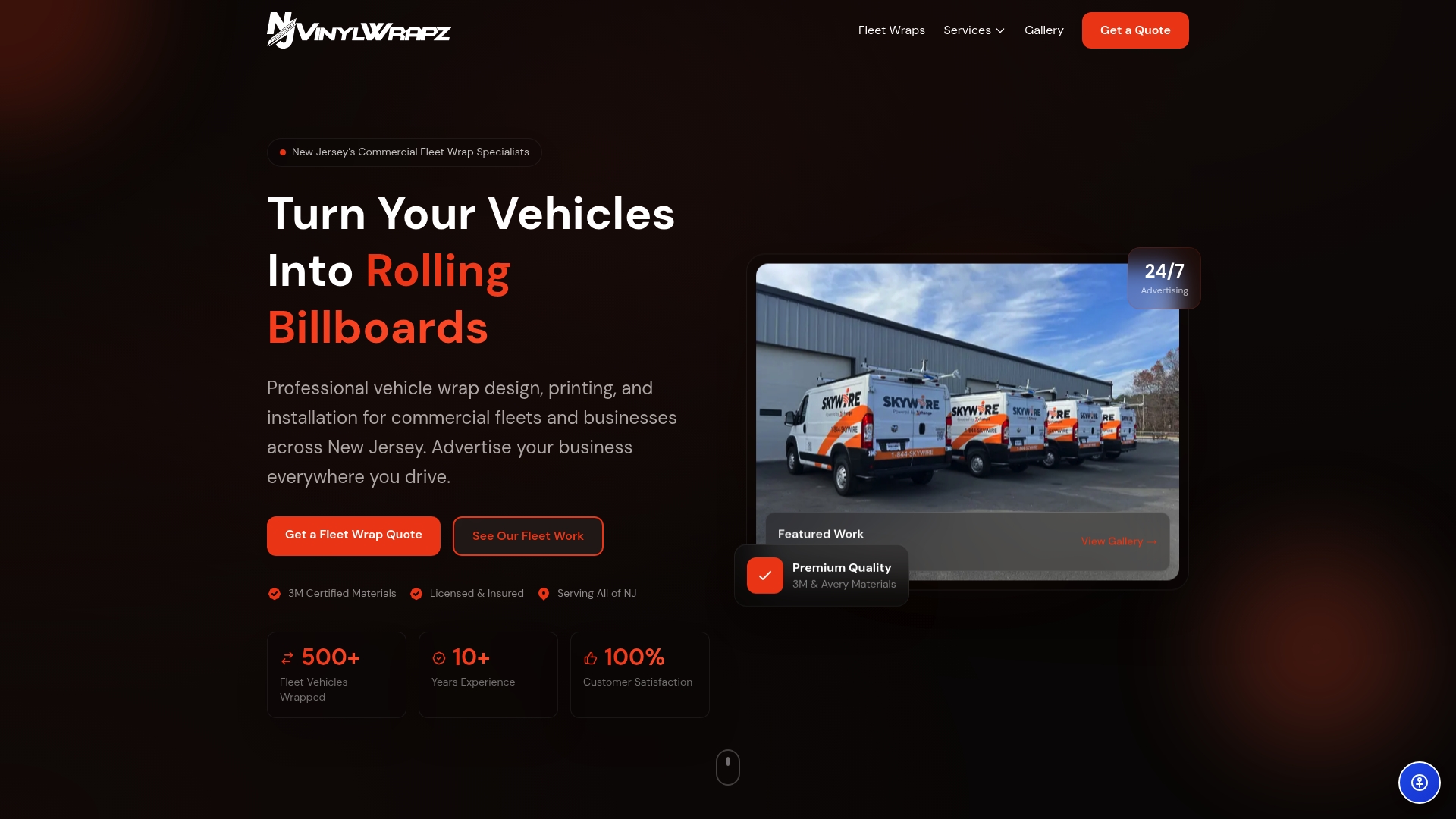
Our core services for franchise fleets include full wraps, partial wraps, and vehicle lettering, dedicated fleet wraps programs for multi-vehicle rollouts, and window graphics, floor graphics, and wall murals for locations that need branding beyond the vehicle itself.
To start a quote, send us:
- Your vehicle inventory (make, model, count per location).
- Your current brand standard (logo files, PMS colors, required markings).
- Your target timeline and rollout sequence.
All work ships with warranty-backed, MCS-certified materials. Request a fleet quote or pilot run through our fleet wraps page to get a scoped proposal for your locations.
FAQ
What’s the difference between a full wrap and a partial wrap?
A full wrap covers the entire vehicle body for maximum brand visibility, while a partial wrap covers select panels like the hood or rear to balance cost against coverage. Partial wraps typically run $1,500 to $3,000 per vehicle, making them a common choice for support fleets.
How long does a vehicle wrap typically last?
Lifespan depends on film quality, finish, and exposure, with MCS-certified films and proper installation supporting several years of service under normal conditions. Vehicles washed frequently or parked outdoors benefit from an added overlaminate to extend that life.
Are there legal requirements for what has to appear on a branded commercial vehicle?
Commercial vehicles operating in interstate commerce generally must display a USDOT number and legal or trade name on both sides of the power unit, legible from at least 50 feet in daylight. These should be built into the brand template as fixed elements so local customization never obscures them.
Can vehicle wrap costs be deducted as a business expense?
Advertising and graphics costs directly related to a trade or business are generally treated as ordinary and necessary expenses deductible under Section 162(a), according to IRS guidance. A tax professional should confirm treatment for your specific situation.
What should a franchise ask for before approving a fleet-wide template?
Ask for a pilot run on 5 to 10 vehicles, a locked master file with fixed brand and regulatory elements, and written warranty terms covering both materials and installation. Reviewing pilot results before full rollout catches design or installation issues while they’re still cheap to fix.
Sources
- MCS warranty application for vehicle graphics (3M multimedia PDF)
- DOT number registration and marking guidance (FMCSA registration resource)
- IRS guidance on business vehicle expenses (Publication 463)
- 3M fleet graphics overview and installer programs