
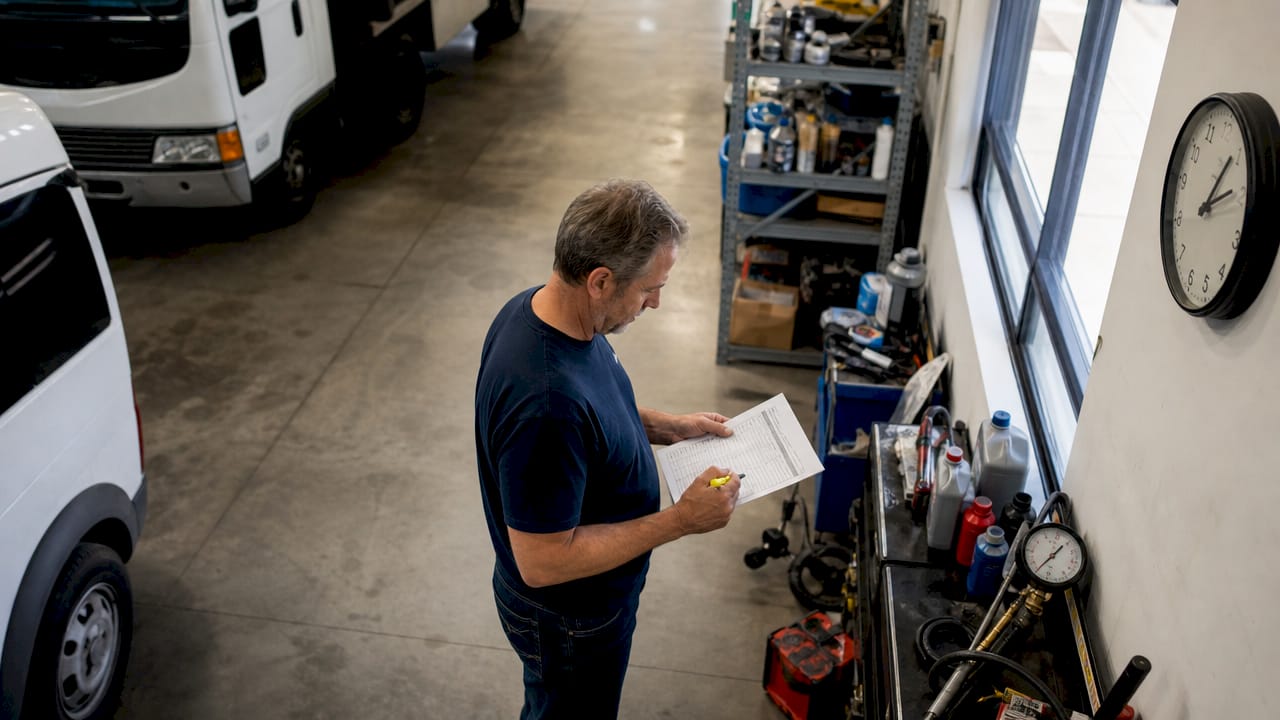
A fleet vehicle maintenance checklist is a structured, frequency-based inspection system covering all critical vehicle systems to maximize uptime, reduce repair costs, and keep your commercial vehicles legally compliant. In fleet management, this tool goes by the industry term “preventive maintenance program” (PM program), and the two terms are used interchangeably throughout this guide. Without a documented PM program, reactive repairs cost 3 to 4 times more than scheduled servicing. Fleet managers using digital checklists, AI-powered CMMS platforms, and OBD telematics are turning maintenance from a cost center into a competitive advantage.
1. How to organize your fleet vehicle maintenance checklist by frequency
The most effective PM programs break tasks into four time-based tiers: daily, weekly, monthly, and quarterly or annual. Separating these tiers by frequency prevents task overlap, reduces missed inspections, and assigns the right level of expertise to each job. A driver handles daily checks. A certified mechanic handles the deeper work.
Daily checks focus on immediate safety and roadworthiness. Drivers inspect fuel levels, tire pressure and condition, all exterior lights, mirrors, and visible fluid leaks before every shift. These take five to ten minutes and catch the issues most likely to cause a roadside breakdown or accident.
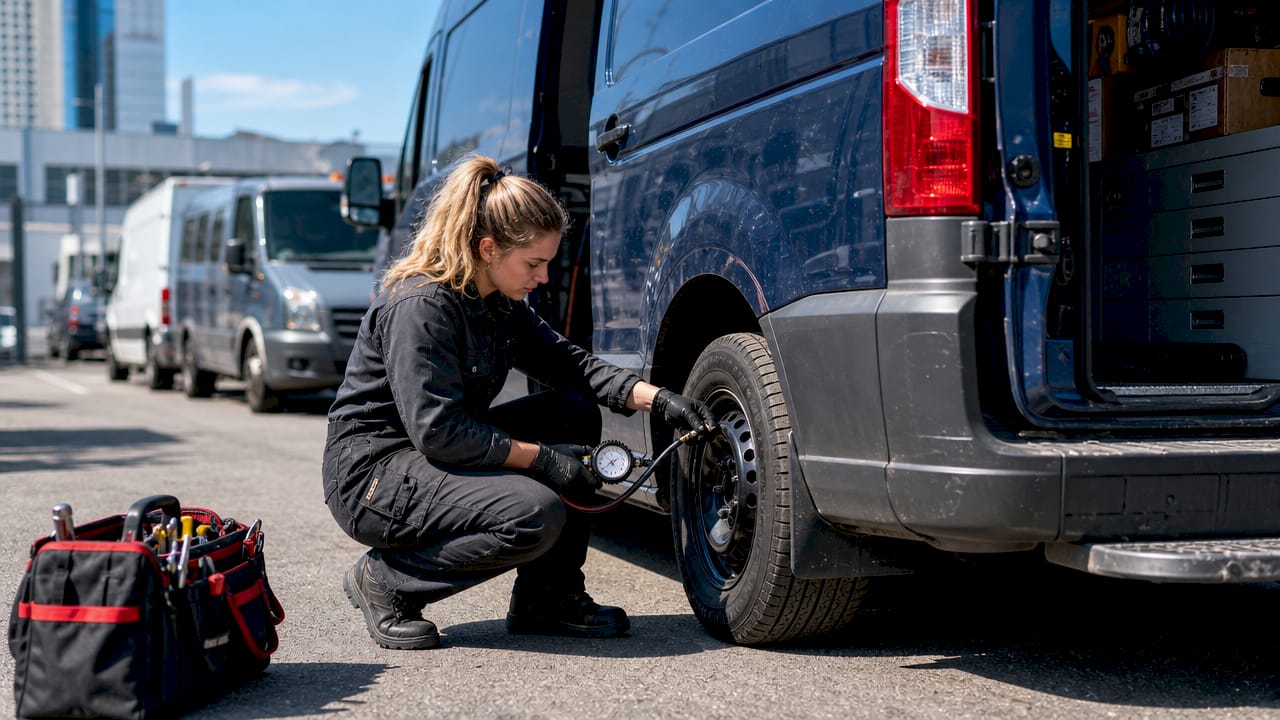
Weekly checks go one layer deeper. Fluid levels (engine oil, coolant, brake fluid, power steering fluid), battery terminals, belts, and brake pedal feel all need a trained eye once per week. A driver may notice a soft brake pedal, but a technician confirms whether it signals air in the line or a failing master cylinder.
Monthly checks cover brakes, transmission condition, diagnostic scans via OBD port, air filters, and suspension components. These require shop time and tools. Monthly intervals catch wear patterns before they become failures.
Quarterly and annual tasks include emissions testing, full brake service, wheel alignment, and suspension overhaul. Mileage-based triggers also apply here. Oil changes every 5,000 miles, brake and filter service every 15,000 miles, and fluid and belt replacement every 30,000 miles are the standard intervals for most commercial fleets.
Pro Tip: Severity-based prioritization matters. Vehicles operating in stop-and-go urban delivery routes wear brakes and tires faster than highway fleets. Adjust your intervals accordingly rather than applying one schedule to every vehicle.
2. The 12 core vehicle systems every fleet checklist must cover
A complete PM checklist covers 12 vehicle systems to prevent mechanical failure and protect your total cost of ownership. Missing even one system creates a gap that compounds over time.
The 12 systems and their key inspection points are:
- Engine: Oil level and condition, air filter, spark plugs, fuel injectors, and belts
- Transmission: Fluid level and color, shift quality, and signs of slipping or hesitation
- Brakes: Pad thickness, rotor condition, brake lines, fluid level, and parking brake function
- Steering and suspension: Tie rods, ball joints, shocks, struts, and steering play
- Electrical system: Battery voltage, alternator output, fuses, and wiring integrity
- Tires: Tread depth, pressure, sidewall condition, and rotation schedule
- Cooling system: Coolant level, hose condition, radiator cap, and thermostat function
- Exhaust system: Pipe integrity, catalytic converter condition, and emissions output
- HVAC: Heating and cooling function, cabin air filter, and refrigerant level
- Body and cab: Door seals, mirrors, windshield condition, and structural integrity
- Fluid systems: Power steering, differential, and transfer case fluid levels
- Lighting and safety: All interior and exterior lights, horn, wipers, and seatbelts
OBD telematics systems like those integrated into Samsara or Geotab platforms monitor several of these systems in real time, flagging fault codes before a driver even notices a symptom. AI-powered CMMS platforms such as UpKeep or Fleetio then convert those alerts into scheduled work orders automatically. This combination turns your checklist from a paper form into a live diagnostic feed.
| System | Key check | Recommended interval |
|---|---|---|
| Engine | Oil level, filter, belts | Every 5,000 miles |
| Brakes | Pad thickness, fluid, lines | Every 15,000 miles |
| Tires | Pressure, tread, rotation | Weekly and every 7,500 miles |
| Transmission | Fluid color, shift quality | Every 30,000 miles |
| Cooling | Coolant level, hoses | Monthly and every 30,000 miles |
3. How to customize your checklist for different vehicle types
Checklists must be tailored to vehicle type and duty cycle to be effective. A one-size-fits-all form fails a refrigerated delivery van, a flatbed truck, and a company sedan equally. The vehicle’s operational environment determines which systems wear fastest and which intervals need shortening.
Heavy-duty vehicles on severe-duty cycles, such as construction or waste management trucks, need shorter service intervals across the board. Severe-duty operation accelerates wear on brakes, tires, cooling systems, and transmissions. Light-duty vehicles in urban delivery routes face high brake and tire wear but lower engine stress than long-haul trucks. Long-haul vehicles accumulate mileage fast, making oil and filter intervals the primary scheduling driver.
Here is how to build a customized checklist:
- Start with the manufacturer’s recommended service intervals as your baseline
- Layer in operational adjustments based on load weight, terrain, and daily mileage
- Create separate checklist templates for each vehicle class in your fleet
- Assign daily walk-around forms to drivers and mechanic-level forms to your service team
- Log every defect with a severity rating (critical, major, minor) and photographic evidence
- Store all records digitally for audit readiness and compliance documentation
Digital templates tracked in CMMS software give you a timestamped audit trail that paper logs cannot match. Platforms like Fleetio, Whip Around, and RTA Fleet Management generate compliance reports automatically, which matters when regulatory audits arrive without warning.
Pro Tip: Treat your checklist as a living document. Review it quarterly and update intervals whenever telematics data shows a pattern of early wear or repeated failures in a specific system.
You can also explore fleet customization strategies that go beyond mechanics, covering how vehicle type and use case should shape every decision you make about your fleet.
4. What business impact does a structured maintenance checklist deliver?
Unplanned fleet downtime costs $448 to $760 per vehicle per day. For a fleet of 20 vehicles, a single day of widespread unplanned downtime can cost over $15,000. That number makes a PM program one of the highest-return investments a fleet manager can make.
The financial case for structured maintenance goes beyond avoiding breakdowns. Vehicles maintained on schedule consume less fuel because clean filters, properly inflated tires, and tuned engines operate at peak efficiency. Extended vehicle lifespan reduces capital replacement cycles, which directly lowers total cost of ownership. A well-maintained commercial vehicle can serve your fleet three to five years longer than a neglected one.
“Preventive maintenance is not a cost. It is the price of avoiding a far larger bill. Fleets that treat their PM program as optional discover this the hard way, usually at the worst possible time.”
Compliance readiness is another direct benefit. Regulatory bodies require documented inspection records, and a digital checklist system produces those records automatically. Fleets without documentation face fines, failed audits, and in some cases, vehicle impoundment. A structured PM program protects your operating license as much as it protects your vehicles.
The ROI compounds over time. Fleets that implement preventive maintenance programs consistently report lower per-mile operating costs, fewer emergency repair events, and higher driver satisfaction because drivers trust that their vehicles are safe and reliable.
5. Integrating digital tools and telematics into your checklist system
Modern fleet maintenance is no longer driven by calendar dates alone. AI and telematics shift maintenance from reactive to predictive, using real-time vehicle data to trigger service alerts before failures occur. This is the most significant shift in fleet management practice in the past decade.
OBD telematics devices plug into the vehicle’s diagnostic port and transmit fault codes, engine load data, idle time, and mileage to a central dashboard. When the system detects a pattern consistent with brake wear or a cooling system anomaly, it flags the vehicle for inspection before the driver reports a problem. This cuts the gap between a developing issue and a scheduled repair from weeks to hours.
CMMS platforms integrate with telematics to automate work order creation, parts ordering, and technician scheduling. The result is a checklist system that updates itself based on actual vehicle condition rather than fixed calendar intervals. For fleet managers overseeing 50 or more vehicles, this automation is the difference between staying ahead of maintenance and constantly reacting to it.
Reviewing fleet maintenance software options is a practical next step if you are still managing your PM program with spreadsheets or paper forms. The right platform pays for itself within the first year through reduced downtime and labor savings.
Key takeaways
A structured fleet vehicle maintenance checklist built on frequency-based scheduling, 12 core system coverage, and digital tracking is the most reliable method to reduce fleet downtime and control operating costs.
| Point | Details |
|---|---|
| Frequency-based scheduling | Organize tasks into daily, weekly, monthly, and annual tiers to assign the right expertise to each job. |
| 12 core systems coverage | Inspect all 12 vehicle systems consistently to prevent mechanical failure and protect asset value. |
| Customize by vehicle type | Tailor intervals to duty cycle and vehicle class. Severe-duty vehicles need shorter service windows. |
| Digital tracking and CMMS | Use platforms like Fleetio or Whip Around to automate records, work orders, and compliance documentation. |
| Downtime cost prevention | Unplanned downtime costs $448 to $760 per vehicle per day. Proactive maintenance eliminates most of it. |
Why I think most fleet maintenance programs fail before they start
Most fleet managers I talk to have a checklist. What they do not have is a system. There is a real difference. A checklist is a form. A system is a process with accountability, digital records, and scheduled reviews built in.
The biggest mistake I see is treating the PM checklist as a driver responsibility. Drivers are not mechanics. Their daily walk-around is critical, but it is the first layer of a multi-layer process. When fleet managers collapse all maintenance responsibility onto the driver, the deeper mechanical checks never happen consistently. Brakes, transmission fluid, and suspension wear go unnoticed until a vehicle is off the road.
The second mistake is using static forms that never change. A checklist written in 2020 for a diesel van does not apply to a 2025 electric or hybrid commercial vehicle without significant revision. Battery thermal management, regenerative braking systems, and high-voltage safety checks are not on any legacy form.
My strong recommendation is to audit your current checklist against the 12 core systems framework, then map every task to a frequency tier. If a task has no assigned frequency, it will not get done. If a system is not on your list, it will not get inspected. The protection of vehicle graphics is a good example of a maintenance task that most fleet managers overlook entirely, even though wrap condition directly affects brand perception and surface protection.
Predictive maintenance powered by telematics is not a luxury for large fleets anymore. The cost of an OBD device and a basic CMMS subscription is a fraction of one day of unplanned downtime. Start there, and build your checklist system around real data instead of guesswork.
— Krunal
How Njvinylwrapz supports your fleet beyond the engine bay
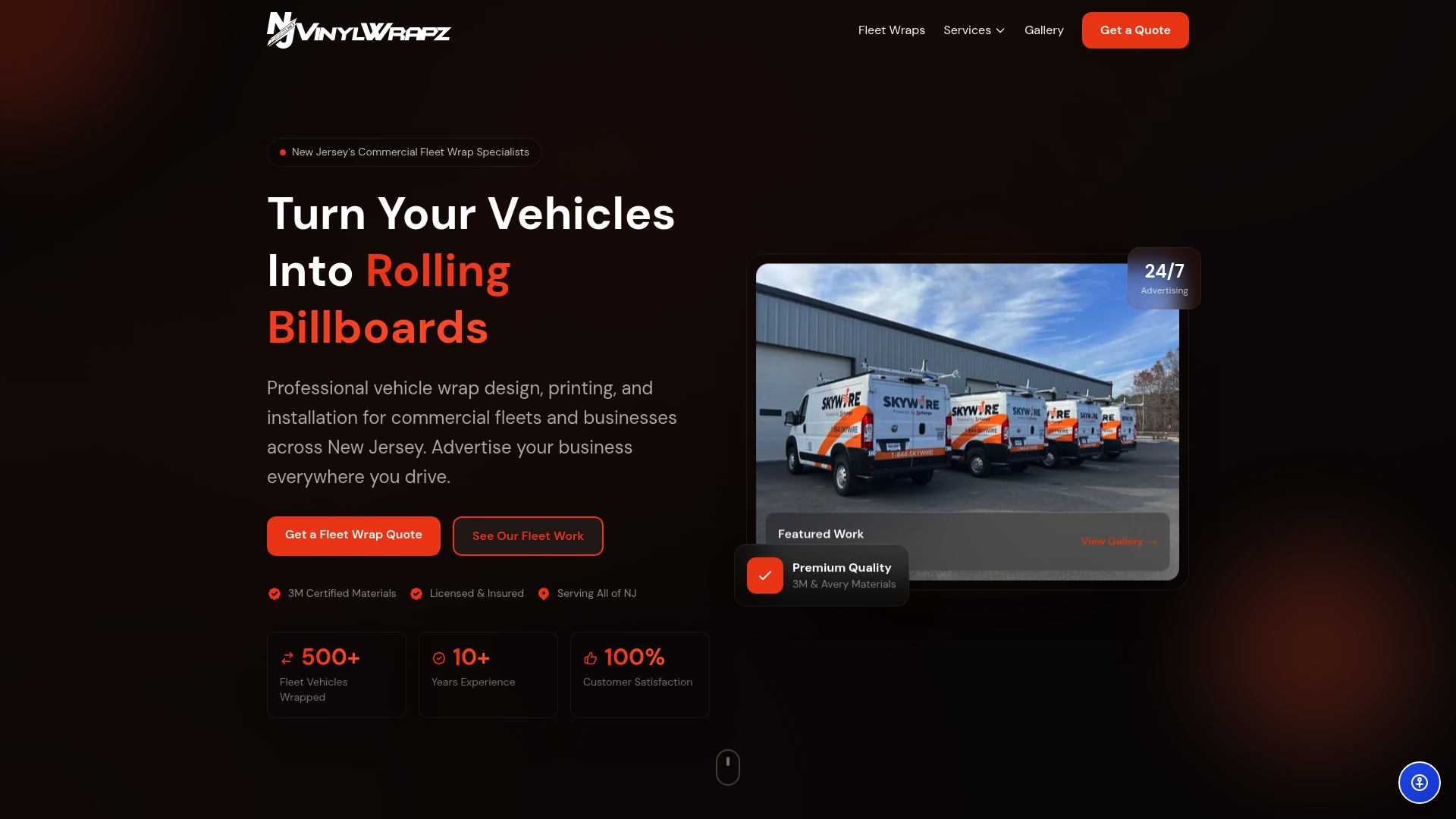
A well-maintained fleet is only half the picture. Your vehicles are moving billboards, and their exterior condition communicates your brand’s professionalism every mile they travel. Njvinylwrapz has spent over 10 years wrapping commercial fleets across New Jersey, using 3M and Avery materials installed in climate-controlled facilities for maximum durability. A quality wrap also adds a protective layer to your vehicle’s paint, reducing surface wear and making exterior maintenance easier. If your fleet wrap is showing wear, fading, or peeling, that is a maintenance issue as much as a branding one. Explore Njvinylwrapz’s fleet wrap services to protect your vehicles and keep your brand sharp on every route.
FAQ
What is a fleet vehicle maintenance checklist?
A fleet vehicle maintenance checklist is a structured PM program that organizes inspection and service tasks by frequency, covering all 12 core vehicle systems to prevent breakdowns and reduce operating costs.
How often should fleet vehicles be inspected?
Daily driver walk-arounds cover safety basics, while weekly, monthly, and quarterly mechanic-level inspections address deeper mechanical and electrical systems. Separating these inspection tiers by frequency and expertise extends vehicle life significantly.
What does unplanned fleet downtime actually cost?
Unplanned downtime averages $448 to $760 per vehicle per day for U.S. fleets. For a 20-vehicle fleet, a single day of widespread failures can exceed $15,000 in lost productivity and emergency repair costs.
Should I use software to manage my fleet maintenance checklist?
Yes. Digital CMMS platforms like Fleetio and Whip Around automate work orders, track service history, and generate compliance records that paper logs cannot replicate. They also integrate with OBD telematics for condition-based maintenance alerts.
How do I customize a maintenance checklist for different vehicle types?
Start with manufacturer-recommended intervals, then adjust based on duty cycle, load weight, terrain, and daily mileage. Severe-duty vehicles need shorter service intervals than standard passenger-type vehicles to avoid premature mechanical wear.