
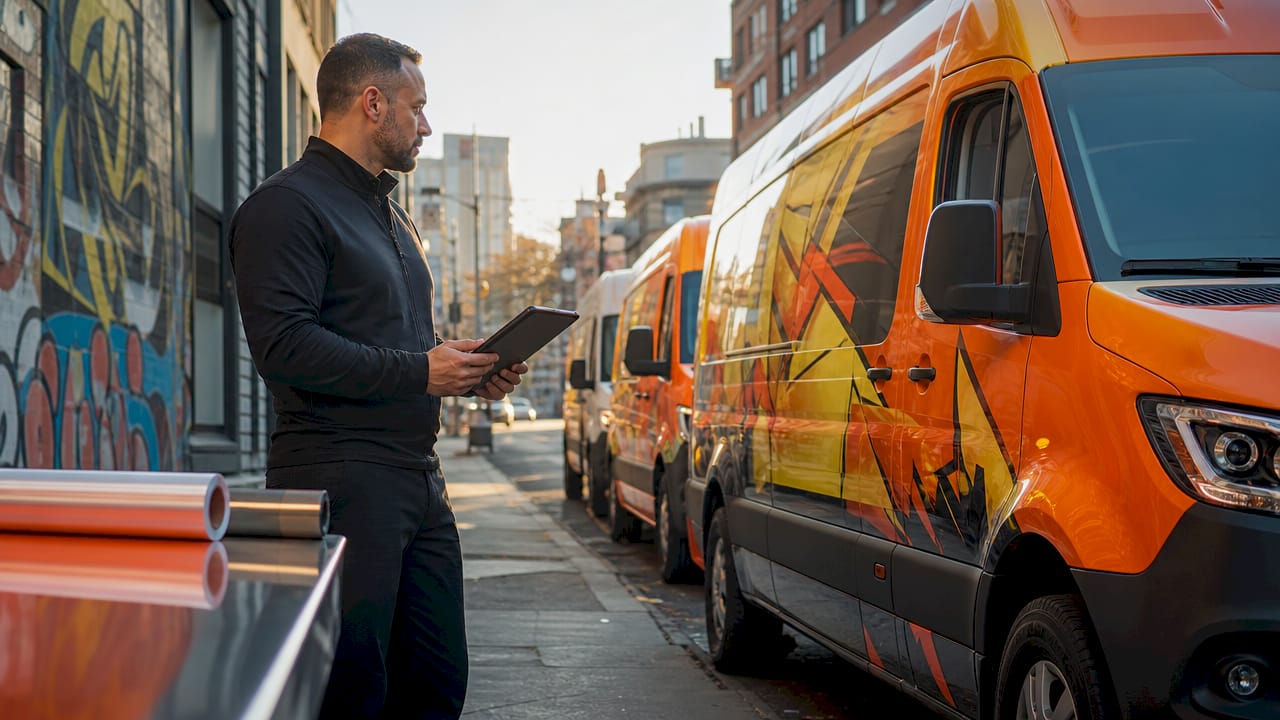
Fleet marketing, known in the industry as fleet vehicle advertising, is the practice of turning commercial vehicles into mobile billboards that generate brand impressions around the clock. A single wrapped delivery van can generate 30,000 to 70,000 visual impressions per day. That reach rivals a prime billboard location at a fraction of the ongoing cost. The fleet marketing ideas in this article cover everything from vinyl wrap types and QR code integration to telematics-triggered campaigns, giving business owners and marketing professionals a complete playbook for 2026.
1. What are the most effective types of fleet advertising wraps?
Fleet vehicle wraps fall into three main categories: full wraps, partial wraps, and vehicle lettering. Each serves a different budget and branding goal.
Full wraps cover the entire vehicle surface. They deliver the strongest visual impact and work best for businesses that want maximum brand recall, such as food delivery services, HVAC contractors, and consumer goods distributors. Fleet vehicle graphics provide 5 to 10 times greater cost efficiency than traditional billboard advertising over the wrap’s lifespan. That math makes full wraps the highest-return option for fleets with consistent routes.
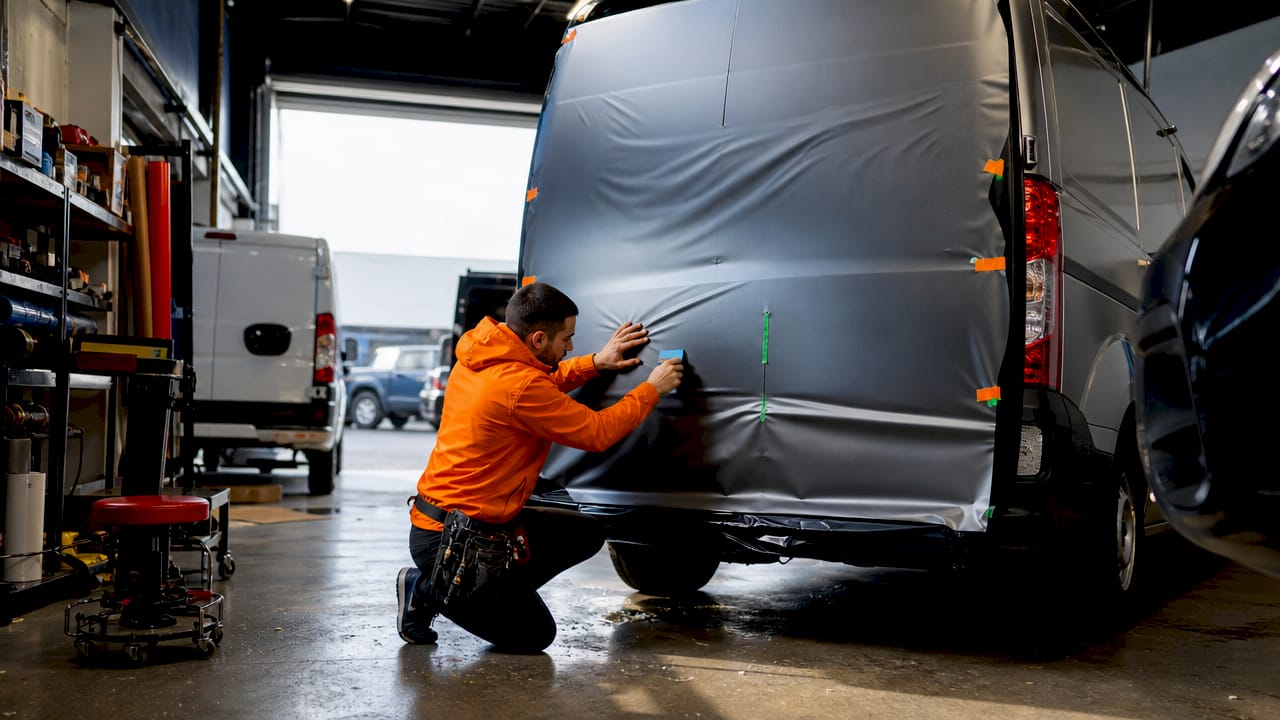
Partial wraps cover 25–75% of the vehicle. They cost less than full wraps and still create strong visual contrast, especially when the base vehicle color complements the design. Partial wraps suit businesses that want professional branding without committing to a full redesign.
Vehicle lettering uses cut vinyl text and simple graphics. It is the most affordable entry point and works well for service businesses like plumbers, electricians, and landscapers who need contact information visible at a glance.
- Full wraps: highest impact, best for consumer-facing brands with high daily mileage
- Partial wraps: cost-effective balance of coverage and budget
- Vehicle lettering: minimal investment, strong local service credibility
- Specialty finishes: chrome, gloss, matte, and textured films add premium appeal for luxury or lifestyle brands
Materials matter as much as design. Wraps printed on 3M or Avery vinyl hold color longer, resist UV fading, and peel cleanly at end of life. Choosing quality materials protects the vehicle’s resale value while keeping the brand looking sharp for years.
Pro Tip: Create a vehicle branding guideline document before ordering any wraps. Include approved color codes, logo placement rules, font sizes, and minimum clear space. This single document prevents costly reprints and keeps every vehicle in your fleet visually consistent.
2. How can QR codes and interactive elements enhance fleet campaigns?
QR codes convert a passive vehicle graphic into a direct response channel. 102.6 million U.S. consumers are projected to scan QR codes by the end of 2026. That number represents a massive pool of potential customers who already carry the scanning habit in their pockets.
Dynamic QR codes are the right choice for fleet vehicles. Unlike static codes, dynamic QR codes let you change the destination URL without reprinting the wrap. You can redirect the same code to a seasonal promotion in december, a new product launch in march, or a local service area page without touching the vehicle.
Placement strategy determines scan rates. The most effective positions are:
- Rear bumper and tailgate: captures attention from drivers stopped behind the vehicle at traffic lights
- Side panels near the rear: visible to pedestrians and parked-vehicle observers
- Door panels at eye level: works for vans and box trucks parked at job sites or storefronts
Avoid placing QR codes on the hood, roof, or front bumper. Those surfaces are rarely stationary and face the wrong direction for scanning.
Pro Tip: Always link fleet QR codes to a campaign-specific landing page, not your homepage. A dedicated page with a clear offer and a single call to action converts far better than a general website.
3. What role does messaging strategy play in effective fleet marketing?
A fleet vehicle traveling at 35 mph gives a viewer roughly two seconds of reading time. That constraint demands a strict visual hierarchy. Brand first, service second, contact third is the proven structure for fleet vehicle messaging. Every element that does not fit this hierarchy belongs off the vehicle.
Contact method placement follows the same logic. Side panels work best for phone numbers and website URLs because drivers and pedestrians have more time to read them. Rear panels should carry the single most memorable element, typically the brand name or a short tagline, because rear-panel viewing time is brief and unpredictable.
Key rules for readable fleet messaging:
- Use no more than three lines of text on any single panel
- Choose bold, sans-serif fonts at sizes readable from 50 feet away
- Avoid dark text on dark backgrounds regardless of how the design looks on screen
- Never list more than one phone number or one website address
- Keep taglines under six words
Industry-specific tailoring sharpens results. A logistics company benefits from a route-specific message like “Same-day delivery in [city].” A contractor gains more calls with “Licensed. Insured. Available now.” than with a generic slogan. The message should answer the viewer’s unspoken question: “Why should I call you instead of someone else?”
Over 75% of delivery decisions happen within the hour. Fleet messaging that speaks directly to urgency and local availability converts that high-intent moment into an inbound call.
4. How can telematics and real-time data improve fleet marketing?
Telematics-ready fleet marketing uses vehicle location data, duty cycles, and maintenance schedules to trigger timely, localized marketing offers. Telematics data enables hyper-localized campaigns that outpace broad generic messaging by reaching the right audience at the right moment.
A concrete example: a plumbing company’s fleet management system shows that three vans operate in a specific zip code every tuesday and thursday morning. The marketing team schedules a geo-targeted digital ad campaign for that zip code on those days, reinforcing the brand that residents already see on the street. The vehicle presence and the digital ad work together to build recall faster than either channel alone.
Key applications of telematics in fleet marketing:
- Location triggers: activate local social media ads when vehicles enter a new service territory
- Maintenance windows: schedule wrap refresh or decal updates during planned downtime to avoid revenue loss
- Route analysis: identify high-traffic corridors and prioritize those routes for vehicles with the freshest, most visible wraps
- Seasonal alignment: use mileage data to time promotional message updates before peak demand periods
Pro Tip: Pair telematics location data with a dedicated tracking phone number on each vehicle. When a call comes in, your CRM can log the vehicle zone and time, giving you direct evidence of which routes and markets drive the most inbound leads.
Data privacy is a real consideration. Telematics data collected from drivers must comply with applicable state and federal regulations. Consult your legal team before building customer-facing campaigns on employee location data.
5. How to build a consistent and scalable fleet branding program
Brand consistency across a fleet is not a design preference. It is a credibility requirement. Centralized and standardized artwork templates prevent the logo mismatches, outdated contact details, and color variations that erode customer trust. A fleet where every vehicle looks slightly different signals internal disorganization to the very customers you are trying to impress.
The table below compares the two most common approaches to fleet branding management:
| Approach | Strengths | Weaknesses |
|---|---|---|
| Centralized template system | Consistent visuals, faster approvals, lower reprint costs | Requires upfront design investment |
| Vehicle-by-vehicle design | Flexible for unique vehicle types | High risk of inconsistency, higher long-term cost |
A centralized system wins for any fleet with more than three vehicles. The upfront design cost pays back quickly through fewer reprints and faster onboarding of new vehicles.
Measuring ROI closes the loop on every investment. Dedicated tracking numbers and vehicle-specific QR codes let you trace inbound calls and web visits directly to specific vehicles or routes. That data tells you which vehicles work hardest and which routes deserve fresher graphics.
Wrap refresh cycles should align with vehicle lifecycle planning. A wrap on a high-mileage delivery van typically needs replacement every three to five years due to UV exposure and physical wear. Budgeting for proactive updates prevents the credibility damage of a faded, peeling wrap still representing your brand on the road.
Pro Tip: Build wrap replacement into your vehicle depreciation schedule. When a vehicle hits 80,000 miles or three years of service, flag it for a wrap audit. Catching wear early costs less than emergency reprints and keeps every vehicle looking its best.
Key takeaways
Fleet vehicle advertising turns every mile driven into a measurable brand impression, making it one of the most cost-efficient marketing channels available to businesses with commercial vehicles.
| Point | Details |
|---|---|
| Wrap type drives ROI | Full wraps deliver the highest daily impressions; partial wraps and lettering suit tighter budgets. |
| QR codes add measurability | Dynamic QR codes on rear and side panels convert passive viewers into trackable leads. |
| Visual hierarchy is non-negotiable | Brand, service, and contact in that order keeps messages readable at speed. |
| Telematics amplifies reach | Location and route data let you align digital campaigns with physical vehicle presence. |
| Consistency protects credibility | Centralized templates and tracking numbers turn a fleet from a cost center into a marketing asset. |
What I’ve learned after years of watching fleet wraps succeed and fail
Working in vehicle branding long enough means you see the same mistakes repeat. The biggest one is treating a fleet wrap as a one-time design project rather than an ongoing marketing channel. Businesses spend real money on a wrap, then never measure whether it generates calls, never update the message for a new service area, and never retire a faded graphic that now works against them.
The second mistake is ignoring the drivers. Authentic brand alignment with employee experience builds more trust than any clever tagline. Drivers who feel proud of their vehicles maintain them better and represent the brand more naturally in customer interactions. A wrap program that involves drivers in the design conversation produces better results than one handed down from a marketing department they never meet.
The third thing most articles miss: social media cross-promotion is free reach. A well-designed wrapped van photographed in front of a completed job site and posted to Instagram or Google Business Profile extends the vehicle’s impression count far beyond its physical route. The wrap becomes content. That content builds local SEO signals and brand familiarity simultaneously.
The businesses I see win with fleet marketing share one habit. They treat their vehicles the same way they treat their website: they measure performance, update the content regularly, and invest in quality materials because they understand the vehicle is always on. You can learn more about building fleet wrap ROI from a pure business case perspective if you want the numbers behind that argument.
— Krunal
Njvinylwrapz fleet wrap services for New Jersey businesses
Njvinylwrapz has spent over 10 years wrapping commercial fleets across New Jersey, using 3M and Avery materials installed in climate-controlled facilities that protect both the vehicle and the graphic.
Whether you need a single full vehicle wrap or a consistent branding program across a 20-vehicle fleet, Njvinylwrapz handles custom design, premium printing, and professional installation under one roof. Every project comes with a dedicated design consultation to align your wrap with the visual hierarchy and messaging strategy your brand needs. Explore the full range of fleet wrap options and request a quote directly from the Njvinylwrapz team.
FAQ
How much does a fleet vehicle wrap cost?
Full vehicle wraps for commercial vans typically range from $2,500 to $5,000 per vehicle depending on size, design complexity, and material grade. Partial wraps and lettering cost less and suit businesses with tighter budgets.
How long does a fleet wrap last?
A quality wrap using 3M or Avery vinyl lasts five to seven years under normal conditions. High-mileage vehicles or those with heavy sun exposure may need replacement closer to three to four years.
Can fleet wraps be removed without damaging the vehicle?
Yes. Professional-grade vinyl wraps remove cleanly from factory paint when installed and removed correctly. This makes wraps a reversible option compared to custom paint.
How do I measure the ROI of fleet vehicle marketing?
Dedicated tracking phone numbers and vehicle-specific QR codes are the most direct measurement tools. They connect inbound calls and web visits to specific vehicles and routes.
What is the difference between a full wrap and vehicle lettering?
A full wrap covers the entire vehicle with a printed graphic and delivers maximum visual impact. Vehicle lettering uses cut vinyl text and logos on a plain vehicle surface, costing less but covering less area.