
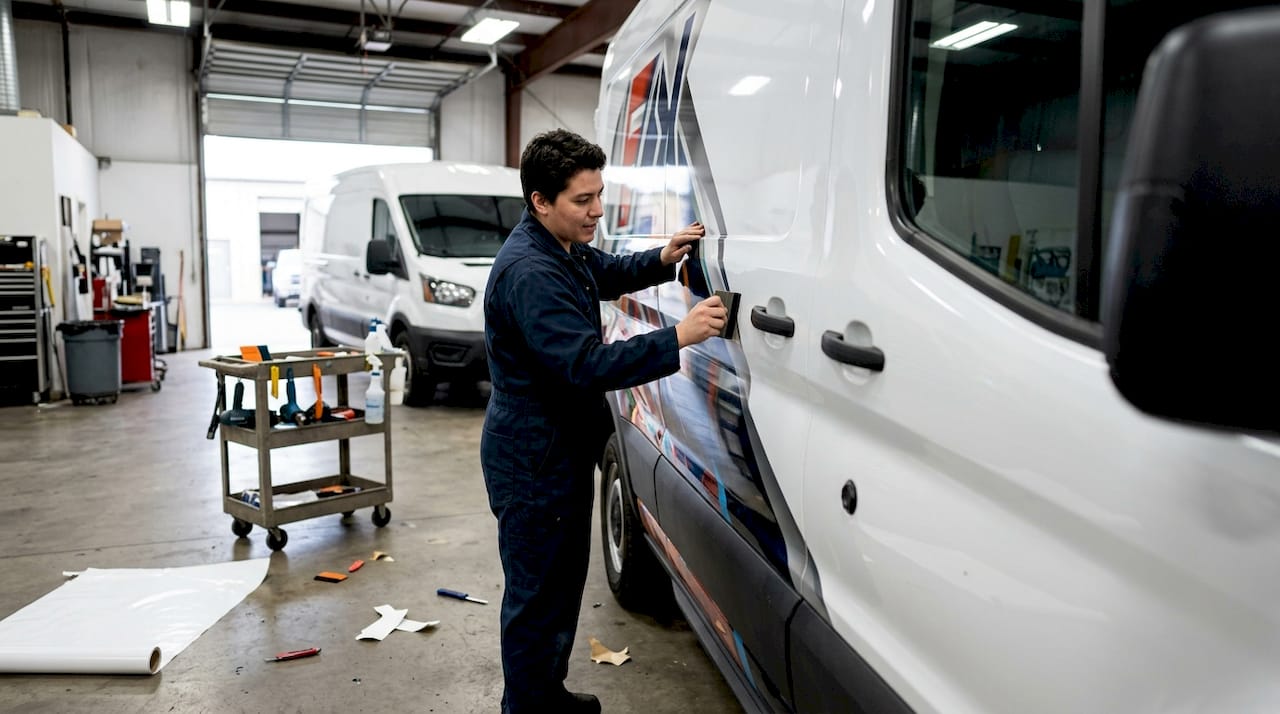
Not all vehicle wraps are created equal, and that gap in quality shows up fast on New Jersey roads. Many business owners invest in vinyl graphics expecting years of crisp, vibrant branding, only to watch colors fade or edges peel within months. The difference almost always comes down to one factor: durable vinyl printing. When done right, it protects your brand image, survives harsh weather, and turns every mile your fleet drives into a marketing impression. This article breaks down what makes vinyl printing truly durable, how the process works from design to installation, and why the right material choices directly impact your return on investment.
Table of Contents
- What is durable vinyl printing?
- Key materials and inks: What makes vinyl prints truly durable
- The durable vinyl printing process: From design to installation
- Why durability matters: Business benefits for vehicle branding
- Our take: What most guides miss about durable vinyl printing
- Get durable vinyl printing for your New Jersey fleet
- Frequently asked questions
Key Takeaways
| Point | Details |
|---|---|
| High-quality materials matter | Choosing the right vinyl and ink delivers vibrant, lasting vehicle branding that withstands New Jersey weather. |
| Professional process is critical | Expert design, lamination, and installation ensure your fleet graphics stay sharp and durable for years. |
| Durability drives business results | Durable printing reduces replacement costs and maximizes marketing impact and ROI for fleet owners. |
| Care extends wrap lifespan | Routine cleaning and proper maintenance can add years to your vinyl’s effective marketing life. |
What is durable vinyl printing?
Let’s clear up a misconception first. Durable vinyl printing is not just “better quality stickers.” The technology, materials, and workflow involved are fundamentally different from anything you’d find at a local print shop printing paper signs or cheap decals.
Durable vinyl printing is a digital printing process using large-format inkjet printers with eco-solvent, UV, or latex inks to apply high-resolution graphics onto specialized vinyl films, primarily cast or calendared PVC, for applications like vehicle wraps, signage, and fleet branding. That definition matters because each element, the printer type, the ink chemistry, and the vinyl film, plays a direct role in how long and how well your graphics perform.
Here’s what separates professional durable vinyl printing from generic alternatives:
- Material grade: Professional wraps use cast or calendared PVC vinyl engineered to flex, resist heat, and adhere cleanly to curved surfaces.
- Ink chemistry: Specialized inks bond more deeply with vinyl substrates, resisting UV degradation and moisture penetration.
- Protective laminates: A clear laminate layer shields the printed surface from abrasion, chemicals, and sunlight.
- Print resolution: Large-format inkjet printers produce graphics at resolutions that hold sharpness even at close distances on full vehicle wraps.
For fleet vehicles and commercial branding, commercial vinyl services go beyond a logo slapped on a door panel. We’re talking full coverage graphics that turn your truck, van, or car into a moving billboard with consistent brand colors, sharp imagery, and a finish that lasts years.
“The best vinyl printing investment isn’t the cheapest upfront. It’s the one that keeps your brand looking sharp at mile 50,000.”
Core applications include full and partial vehicle wraps, fleet graphics programs, outdoor and vehicle window signage, and branded decals for commercial vehicles. Each of these demands a specific combination of materials and methods to deliver lasting results.
Key materials and inks: What makes vinyl prints truly durable
Now that you understand the basics, let’s get into the specifics of what you’re actually buying when you choose durable vinyl printing for your fleet.
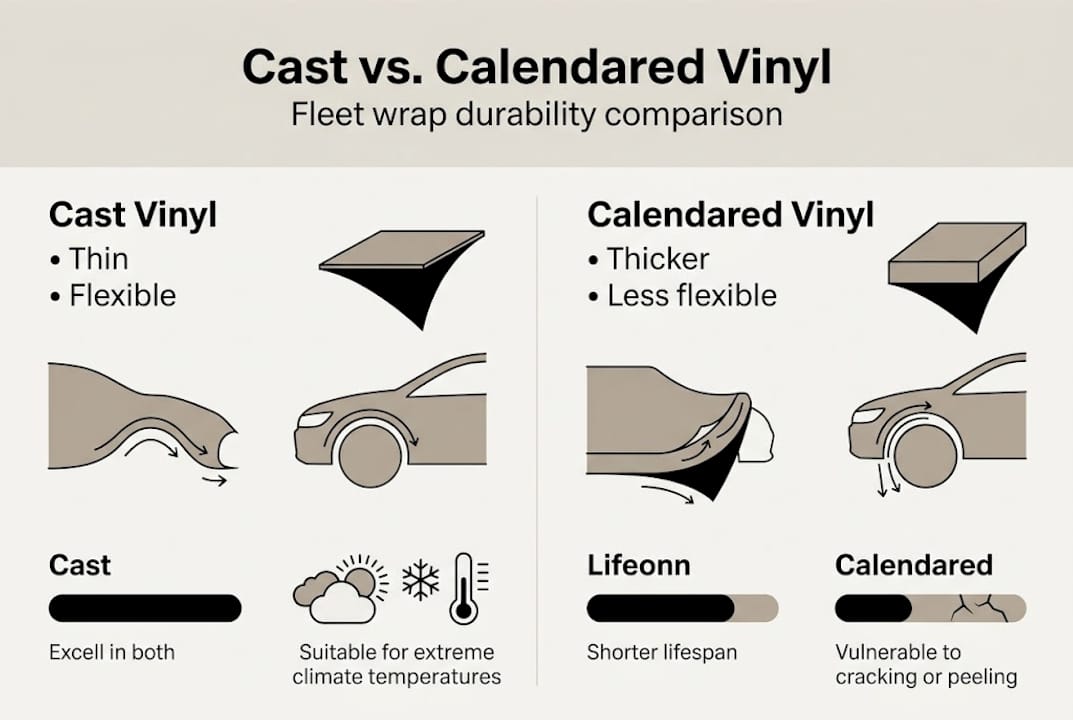
Cast vs. calendared vinyl: Know the difference
| Feature | Cast vinyl | Calendared vinyl |
|---|---|---|
| Thickness | Thinner, more flexible | Thicker, less flexible |
| Durability | 7+ years outdoors | 3 to 5 years outdoors |
| Conformability | Excellent on curves and rivets | Limited on complex curves |
| Price | Higher upfront cost | More budget-friendly |
| Best use | Full vehicle wraps, fleet branding | Flat panels, short-term graphics |
For fleet vehicles with curves, door handles, bumpers, and body lines, cast vinyl is the professional standard. It conforms without bubbling or lifting, which is exactly what you need for a wrap that keeps looking sharp on the road.
Ink types and what they deliver
Common ink types in professional vinyl printing include eco-solvent (vibrant colors, durable, ideal for outdoor use), UV-cured (instant cure, scratch-resistant, excellent fade resistance), and latex (eco-friendly, fast-dry, low odor). Each type has a specific performance advantage:
- Eco-solvent inks produce rich, saturated colors and are widely used for vehicle graphics due to their outdoor durability.
- UV-cured inks are ideal for high-wear applications where scratch resistance is critical.
- Latex inks offer faster turnaround and are more environmentally responsible, making them popular for large fleet programs.
Laminates: The unsung hero of wrap longevity
A quality laminate layer is what stands between your graphics and New Jersey’s UV rays, car wash chemicals, road grime, and salt air. Gloss laminates intensify color vibrancy. Matte laminates deliver a premium, modern look. Both protect the ink layer from abrasion and UV fading far longer than unprotected prints.
Pro Tip: When planning your fleet wrap, match your vinyl grade, ink type, and laminate to the specific vehicles in your fleet. A delivery van covering 40,000 miles a year in harsh conditions needs cast vinyl with UV-cured ink and a heavy-duty gloss laminate. Explore your full vehicle wrap options and color change wraps to understand what combination fits your vehicles best.
The durable vinyl printing process: From design to installation
Knowing the right materials is only half the equation. How those materials are processed and installed determines whether your wrap looks great for six months or six years.
Here’s the professional workflow, step by step:
- Digital design: Your brand assets are built or adapted in vector-based design software at print-ready resolution, accounting for bleed areas and vehicle panel dimensions.
- Printing: Graphics are printed on a vinyl roll or sheet using large-format inkjet printers with your selected ink type.
- Cutting and contouring: Precision plotters cut the vinyl to exact shapes, including contour cuts for logos and lettering.
- Laminating: A protective laminate is applied over the printed surface before installation.
- Surface preparation: The vehicle is cleaned, degreased, and sometimes lightly prepared to ensure proper adhesion.
- Installation: Skilled installers apply the vinyl using heat and pressure tools to conform it to the vehicle’s body, removing air bubbles and ensuring clean edges.
This end-to-end process, from design to print to cut to laminate to install, must be followed completely. Skipping lamination, rushing curing time, or installing on a dirty surface are the most common shortcuts that cause early wrap failure.
Typical project timelines for NJ businesses:
| Wrap type | Design to install | Notes |
|---|---|---|
| Single vehicle partial wrap | 3 to 5 business days | Faster with existing brand assets |
| Full vehicle wrap | 5 to 7 business days | Includes cure and quality review |
| Fleet program (5+ vehicles) | 2 to 4 weeks | Staged installation for minimal downtime |
For fleet managers, choosing a provider with a climate-controlled installation facility matters. Temperature and humidity affect adhesive performance during installation. Review the fleet wrap process and ask about partial wrap application options if you’re working within a specific budget.
Why durability matters: Business benefits for vehicle branding
Let’s talk about what this all means for your bottom line.
Vehicle wraps on fleet vehicles in New Jersey face some tough real-world conditions: hot summers, cold winters, road salt, highway speeds, frequent car washes, and constant UV exposure. A low-quality wrap degrades visibly within a year, sending a message to potential customers that your brand doesn’t prioritize quality.
Laminated vinyl graphics provide critical protection against UV rays, abrasion, and weather, extending the life of your wrap investment significantly. Here’s what that means in practical terms:
- A high-durability wrap on a commercial van can last 5 to 7 years, generating thousands of daily brand impressions throughout its lifespan.
- Consistent branding across a fleet of vehicles builds customer recognition faster than most traditional advertising channels.
- Durable wraps resist fading and peeling, meaning fewer costly replacements and lower per-impression advertising costs over time.
- Professional-quality graphics signal credibility, which directly influences how potential customers perceive your business at first glance.
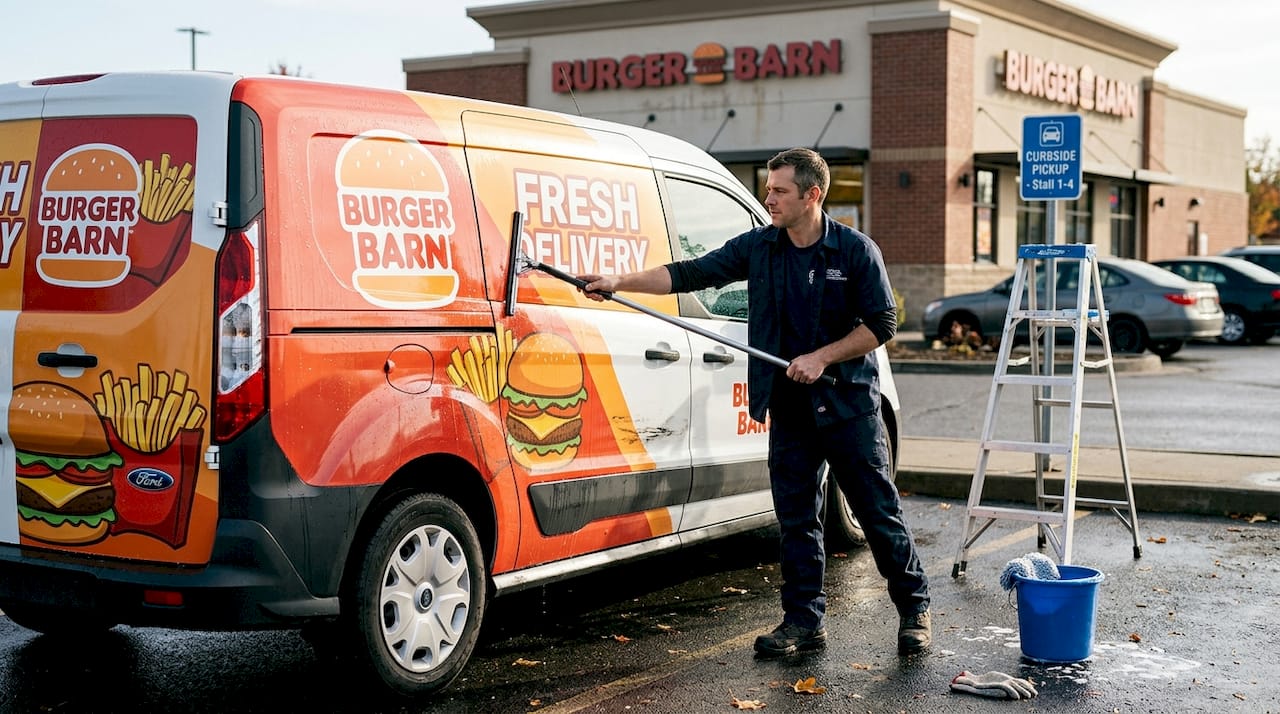
Pro Tip: Protect your wrap investment with regular hand washing using pH-neutral soap, avoid high-pressure jets aimed directly at edges, and schedule periodic inspections. Small lifting edges caught early can be resealed before becoming a full panel problem. Explore vehicle lettering solutions and window graphics to layer additional branding elements on top of your core wrap strategy.
When you calculate cost-per-impression for a vehicle wrap versus a billboard, radio ad, or social media campaign, durable vehicle wraps consistently deliver some of the lowest costs per impression in any local marketing strategy. The math only works, though, when the wrap actually lasts.
Our take: What most guides miss about durable vinyl printing
After more than 10 years working with New Jersey fleets, we’ve seen a consistent pattern. When wraps fail early, business owners blame the vinyl brand. Almost every time, the real cause is something else entirely.
Cutting corners on surface prep, skipping lamination, or rushing installation are the top reasons wraps peel, bubble, and fade prematurely. The vinyl brand is rarely the problem. An experienced installer using average materials will consistently outperform an inexperienced shop using premium vinyl.
We’ve also noticed that many providers in New Jersey skip the laminate curing step to turn jobs around faster. That shortcut might save a few hours, but it costs the customer a year or two of wrap life. True durability isn’t just about what goes on the vehicle. It’s about patience, skill, and not rushing the process.
Our advice: when evaluating vendors, ask specifically about their installation environment, whether they laminate in-house, and how long they let wraps cure before the vehicle goes back on the road. Those questions reveal more about quality than any material spec sheet. Browse wrap options and use that knowledge to ask the right questions before you commit.
Get durable vinyl printing for your New Jersey fleet
You now understand what separates a wrap that lasts from one that fades before its time. Applying that knowledge starts with choosing the right partner for your fleet branding program.
At NJ Vinyl Wrapz, we combine expert design, premium materials, and skilled installation in our climate-controlled facility to deliver wraps built for New Jersey’s demanding conditions. Whether you need full vehicle wraps for a single flagship vehicle or a complete fleet vinyl wraps program across dozens of commercial vehicles, our team is ready to help you turn your fleet into a high-impact marketing asset. Contact us today to discuss your project and get a tailored quote.
Frequently asked questions
How long does a durable vinyl wrap last on commercial vehicles?
A professionally installed, laminated vinyl wrap typically lasts 5 to 7 years with proper care, even under New Jersey’s demanding outdoor conditions. Skipping lamination or professional installation can cut that lifespan in half.
What’s the difference between cast and calendared vinyl for fleet wraps?
Cast vinyl is thinner, more flexible, and conforms better to vehicle curves, making it the right choice for full wraps. Calendared vinyl costs less but works best on flat surfaces or short-term applications.
Does UV printing make vinyl wraps more fade-resistant?
Yes. UV-cured inks create scratch-resistant, highly fade-resistant finishes compared to standard inks, making them ideal for commercial fleet vehicles exposed to daily sunlight and road conditions.
Can vinyl wraps be repaired if damaged?
Small damage like edge lifting or minor tears can often be patched locally. Larger tears or significant panel damage typically require a section or full panel rewrap to maintain a seamless, professional appearance.
Is durable vinyl printing only for vehicles, or can it be used for walls and windows?
Durable vinyl printing works across many applications including vehicle wraps, wall murals, window graphics, floor graphics, and outdoor signage wherever long-lasting, vibrant visuals are needed.