
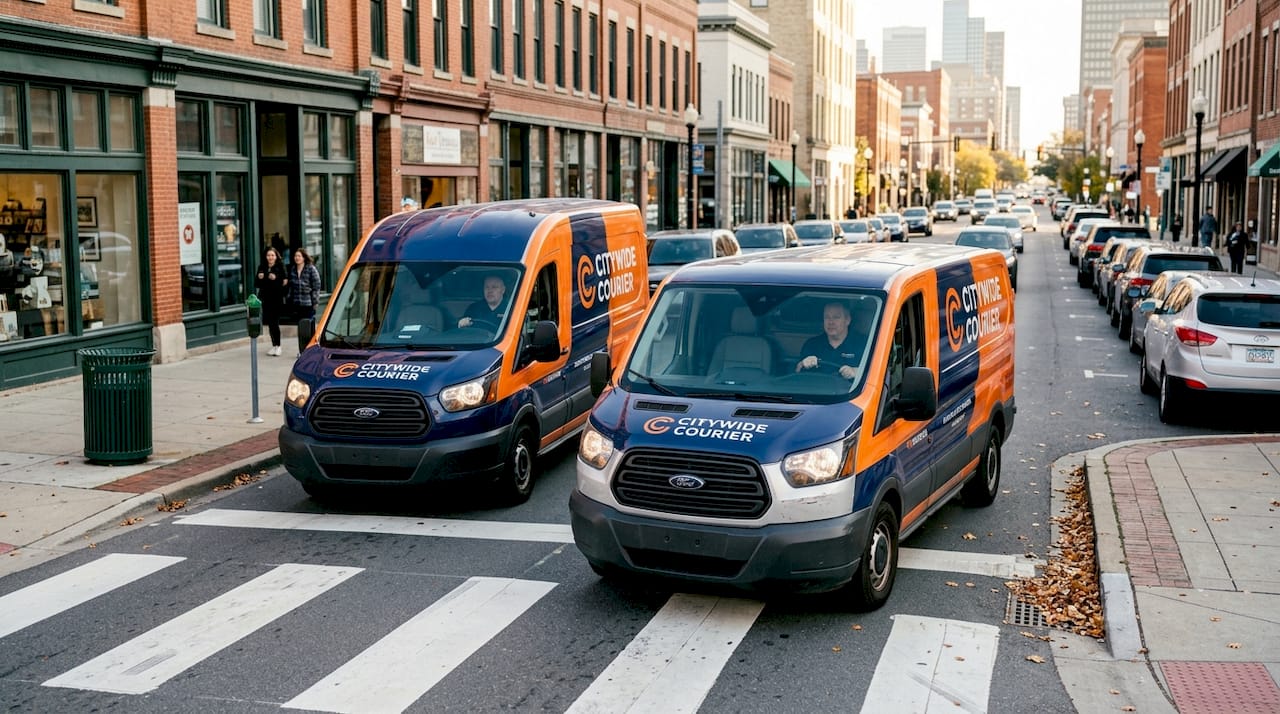
Most fleet managers assume that changing a vehicle’s color means scheduling a repaint, losing a vehicle for a week, and spending thousands per unit. That assumption is outdated. Color change wraps give New Jersey businesses a faster, smarter, and more flexible way to refresh their fleet appearance or build a recognizable brand presence on the road. Whether you manage three vans or thirty, understanding how wraps work and what they deliver can change how you think about vehicle branding entirely. This guide walks you through the process, the comparisons, the branding impact, and the maintenance reality.
Table of Contents
- What is a color change wrap and how does it work?
- Comparing paint jobs, partial wraps, and full color change wraps
- How color change wraps boost your fleet branding and visibility
- Care, maintenance, and lifespan: Getting the most from your wrap investment
- A fleet professional’s take: Why color change wraps are more than just looks
- Ready to transform your fleet? Discover your wrap options
- Frequently asked questions
Key Takeaways
| Point | Details |
|---|---|
| Wraps offer quick transformation | Color change wraps quickly update fleet appearance without paint downtime. |
| Better branding, higher visibility | Custom wraps boost local brand recognition and unify fleet imagery. |
| Lower lifetime cost | Wraps are reversible, protect original paint, and often cost less than new paint. |
| Easy maintenance and long lifespan | Proper care ensures wraps last 5–7 years and keep your fleet looking sharp. |
What is a color change wrap and how does it work?
A color change wrap is a full or near-full application of adhesive vinyl film over a vehicle’s existing painted surface. Unlike a paint job, it sits on top of the original finish and can be removed later without damaging what’s underneath. The result looks like a factory color change, but the process is completely different.
Color change wraps use high-quality vinyl engineered specifically for automotive applications. That means the material is designed to conform to curves, handle temperature swings, and resist UV fading. Products like 3M vinyl wrapping film are built to flex around body panels without lifting, bubbling, or cracking over time.
The installation process follows several distinct stages:
- Surface preparation: The vehicle is thoroughly cleaned and decontaminated. Any wax, grease, or debris must be removed so the vinyl bonds properly.
- Panel disassembly: Mirrors, trim pieces, and sometimes door handles are removed to allow clean edges and full coverage.
- Vinyl cutting and application: Large sections of film are cut to size, then applied using heat guns and squeegees to eliminate air pockets and conform to body lines.
- Post-heat treatment: Heat is applied to stretch the vinyl around edges and recesses, locking it into place.
- Reassembly and inspection: Panels are reinstalled and the entire vehicle is inspected for lifting edges or imperfections.
Compared to full vehicle wraps that include graphics and branding, a pure color change wrap focuses entirely on the base film layer. Most professional installations take two to three days for a standard passenger vehicle or van, compared to a week or more for a quality repaint.
Pro Tip: Surface prep is the single biggest factor in wrap longevity. Even minor contamination under the film can cause premature lifting. Always confirm your installer performs a full decontamination wash before touching the vinyl.
Comparing paint jobs, partial wraps, and full color change wraps
Choosing the right approach for your fleet comes down to four practical factors: cost, time, flexibility, and long-term maintenance. Here’s how the three main options stack up.
| Option | Avg. cost per vehicle | Install time | Reversible | Rebrand friendly |
|---|---|---|---|---|
| Full repaint | $3,000 to $10,000+ | 1 to 2 weeks | No | No |
| Partial wrap | $500 to $1,500 | 1 to 2 days | Yes | Yes |
| Full color change wrap | $1,500 to $5,000 | 2 to 3 days | Yes | Yes |
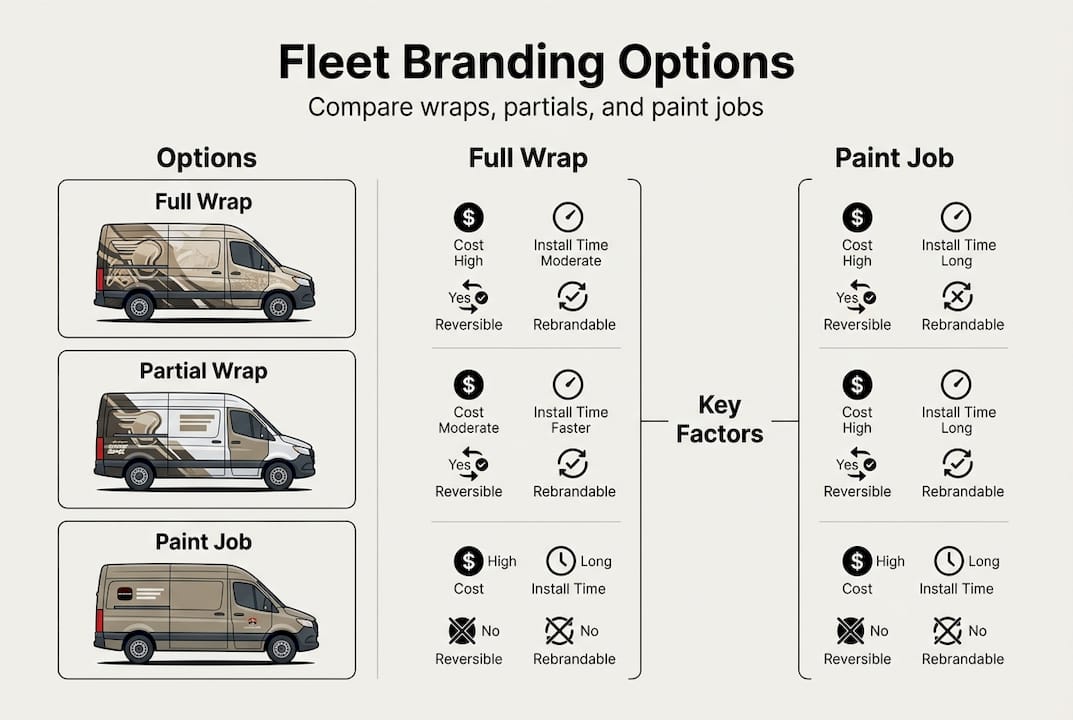
Vinyl wraps can often be completed in 2 to 3 days versus a week or more for painting, which matters enormously when you can’t afford downtime across a working fleet.
When deciding between options, consider these scenarios:
- Choose a partial wrap when you want branding on specific panels (doors, hood, rear) without covering the full vehicle. Partial wraps are cost-effective for smaller budgets and still deliver strong visual impact.
- Choose a full color change wrap when your goal is a complete aesthetic transformation, protecting the original paint, or presenting a unified fleet color across multiple vehicles.
- Choose a repaint only when the vehicle has significant body damage, rust, or when resale value with original color is a priority and branding is not.
For most New Jersey fleet operators, full wraps offer the best balance of cost, speed, and flexibility. The ability to remove or update the wrap when you rebrand or sell a vehicle is a real financial advantage that paint simply cannot offer.
A useful paint versus wrap guide breaks down additional technical considerations if you want to go deeper on material performance.
Pro Tip: Before committing to any option, calculate the full lifecycle cost. A wrap that lasts five to seven years and can be removed cleanly often beats a repaint when you factor in future rebranding needs and resale preparation.
How color change wraps boost your fleet branding and visibility
A wrapped vehicle is not just a good-looking truck. It’s a moving billboard that works every hour your driver is on the road. For New Jersey businesses operating in dense metro areas, that exposure adds up fast.
Vehicle graphics can generate 30,000 to 70,000 daily impressions in major metro areas, according to the Outdoor Advertising Association of America. No other advertising format delivers that kind of reach at a comparable cost per impression.
Here’s how impressions compare across vehicle types based on industry benchmarks:
| Vehicle type | Estimated daily impressions | Best use case |
|---|---|---|
| Cargo van (urban route) | 30,000 to 50,000 | Local service businesses |
| Box truck (highway) | 40,000 to 70,000 | Regional distribution |
| Passenger car (mixed) | 20,000 to 35,000 | Sales reps, client visits |
| Semi-truck (interstate) | 60,000 to 100,000+ | Long-haul freight brands |
Beyond raw numbers, wraps allow you to layer in specific vinyl graphics for business branding elements that paint alone cannot deliver:
- Logo placement on doors, hood, and rear panels
- Brand colors applied consistently across every vehicle in the fleet
- Slogans or taglines printed directly into the wrap design
- Contact information such as phone numbers and websites
- QR codes that drive traffic to landing pages or promotions
The fleet wrap benefits go beyond advertising reach. When every vehicle in your fleet looks identical, it signals professionalism and scale. A client who sees your branded van three times in a week remembers you. That kind of passive brand reinforcement is hard to replicate with any other marketing spend.
Outdoor advertising research from the FHWA also supports the effectiveness of moving vehicle displays compared to static signage, particularly in high-traffic corridors like those throughout New Jersey.
Care, maintenance, and lifespan: Getting the most from your wrap investment
Getting a wrap installed is the easy part. Keeping it looking sharp for years is where discipline pays off. The good news is that wrap maintenance is straightforward when you follow the right practices.
Most high-quality color change wraps last 5 to 7 years with proper care. That lifespan assumes consistent maintenance and reasonable exposure conditions. Vehicles parked outside in direct sun year-round will degrade faster than those kept in covered lots.
Here’s what your maintenance routine should include:
Do:
- Hand wash with a mild automotive soap and a soft microfiber cloth
- Rinse with low-pressure water and dry thoroughly
- Address bird droppings, tree sap, and fuel spills immediately
- Apply a wrap-safe sealant every few months for added UV protection
- Store vehicles under cover when possible
Don’t:
- Use automatic car washes with stiff brushes
- Apply wax or polish products not rated for vinyl
- Use high-pressure washers directly on seams or edges
- Let contaminants sit on the surface for extended periods
“Proper care of your vehicle wrap includes regular hand washing, avoiding harsh chemicals, and keeping the vehicle out of prolonged direct sunlight when not in use.” — Avery Dennison automotive wrap maintenance guidance
For fleets that operate in harsh conditions, consider adding wrap protection tips through a paint protection film layer over high-impact areas like the front bumper, hood, and side mirrors. This dramatically reduces stone chip damage and keeps the wrap looking new longer.
Pro Tip: Touchless car washes are acceptable if hand washing isn’t practical for large fleets, but spot-clean problem areas by hand immediately. A five-minute cleanup after a long route can prevent permanent staining.
A fleet professional’s take: Why color change wraps are more than just looks
After working with fleet operators across New Jersey, one pattern stands out. Businesses that treat wraps as a pure aesthetic upgrade miss about half the value. The real advantage is operational.
When you onboard a new driver or add a vehicle to your fleet, a wrap lets you bring that asset into brand compliance within days, not weeks. If a contract ends and you need to remove branding, it’s done cleanly. No repainting. No residual logos. The vehicle goes back to its original state and moves on.
There’s also an asset protection angle that doesn’t get enough attention. The original factory paint stays sealed under the wrap for the entire service life. When you eventually sell or trade in a fleet vehicle, that preserved paint condition can meaningfully improve resale value.
What surprises most fleet managers is the effect on driver behavior. Vehicles that look sharp and carry a consistent brand tend to be treated with more care. Drivers in branded vehicles feel accountable. It’s a subtle effect, but we hear it consistently from clients who track real fleet results over time.
Pro Tip: Don’t underestimate the internal culture impact. A well-branded fleet signals to your team that the company takes its image seriously, and that pride tends to reflect in how drivers represent you on the road.
Ready to transform your fleet? Discover your wrap options
You now have a clear picture of how color change wraps work, what they cost compared to alternatives, and how to protect your investment over time. The next step is putting that knowledge to work for your specific fleet.
At NJ Vinyl Wrapz, we specialize in color change wraps and fleet wrap services for businesses across New Jersey. With over 10 years of experience, climate-controlled installation facilities, and partnerships with 3M and Avery, we deliver results that hold up on the road and in front of clients. Whether you need one vehicle refreshed or an entire fleet rebranded, we can build a solution around your timeline and budget. Explore all available wrap options or contact us today for a custom quote.
Frequently asked questions
How long does a color change wrap last on company vehicles?
Most high-quality wraps last 5 to 7 years with regular care and protection. Vehicles stored in covered facilities and maintained with proper washing routines consistently reach the upper end of that range.
Can a color change wrap be removed without damaging the original paint?
Yes, when installed and removed professionally, a color change wrap typically leaves the underlying paint intact. Professional-grade vinyl is designed for clean removal, preserving your vehicle’s factory finish.
Is a wrap suitable for older or high-mileage fleet vehicles?
Yes, wraps can update the appearance of older vehicles and cover minor blemishes, extending useful fleet life. Wraps are a popular solution for businesses upgrading the look of high-mileage vehicles without the cost of replacement.
Do color change wraps require special cleaning procedures?
Regular hand washing and avoiding abrasive chemicals are recommended; no harsh brushes or automatic car washes. Following recommended maintenance practices helps ensure wrap longevity across your entire fleet.
Are there regulations or restrictions for vehicle wraps in New Jersey?
Color wraps are legal, but fleet branding must comply with DOT and local advertising guidelines. Businesses should verify compliance with New Jersey Motor Vehicle Commission rules and local municipality requirements before finalizing designs.