
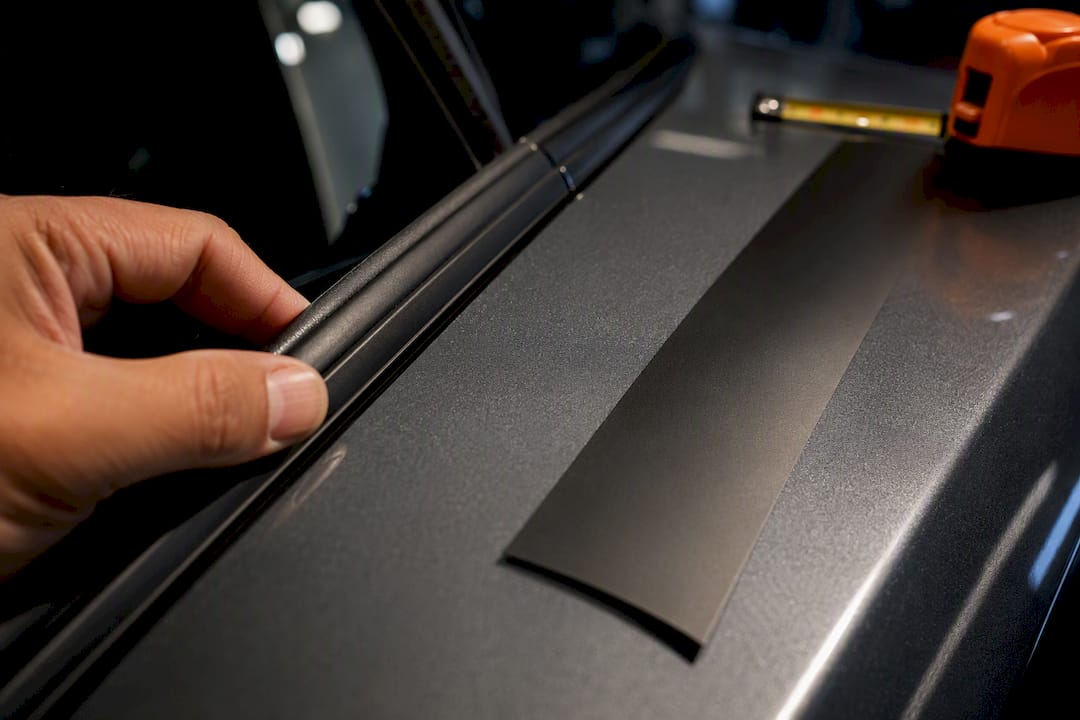
Expect to pay $75 to $400 for a DIY chrome delete, $500 to $1,500 for a professional job on a car (more like $1,200 to $2,000+ on an SUV or truck), and $60 to $300 per part for overlay kits. Professional vinyl gives the cleanest, longest-lasting result. DIY saves cash upfront but costs time and carries real risk of a redo. The right call depends on how much chrome you’re covering and whether you want this permanent.
TL;DR:
- Professional chrome delete on SUVs or trucks typically costs between $1,200 and $2,000, due to larger trim surface areas and removal requirements.
- DIY vinyl kits range from $75 to $400 but require 4 to 8 hours of work and carry a risk of imperfections.
- Overlay kits are the least expensive, costing $60 to $300 per part, but coverage is limited to specific trim components.
- The lifetime of a quality vinyl delete is around 3 to 7 years, with maintenance and material choice significantly affecting durability.
- Shops that include trim removal, use cast vinyl from brands like 3M or Avery Dennison, and offer warranties provide the most durable and cost-effective results long-term.
Table of Contents
- How Much Does Chrome Delete Cost by Method?
- DIY vs Professional vs Overlay: Which Costs Less Over Time?
- What Does Each Component Cost to Chrome Delete?
- What Factors Affect Chrome Delete Pricing?
- How Long Does a Chrome Delete Last?
- What Tools and Steps Does a DIY Chrome Delete Require?
- How Do You Choose a Professional for Chrome Delete?
- What We See Most Often Scoping Chrome Delete Jobs
- Ready to Get a Chrome Delete Quote?
- Sources
- FAQ
How Much Does Chrome Delete Cost by Method?
Here’s the quick math before you get into quotes.
- DIY kit: $75 to $400 in materials, tools, and supplies, depending on how many trim pieces you’re covering
- Professional partial delete (window trim plus badges): $200 to $600
- Professional full delete, sedan: $300 to $1,200
- Professional full delete, SUV or truck: $800 to $2,000+
- Overlay/snap-on components: $60 to $300 per piece, so total cost depends entirely on how many parts you buy
Chrome-heavy trucks and SUVs sit at the top of that range because they simply carry more trim surface: grille bars, larger mirror housings, roof rails, and bigger door handle sets all add up. For scale, a full chrome delete still runs far cheaper than a color-change wrap, which commonly starts around $2,500. If you’re only blacking out window trim and badges, you’re looking at the low end of every bracket above. Go full delete on a chrome-heavy pickup, and you’re near the top.
DIY vs Professional vs Overlay: Which Costs Less Over Time?
Sticker price and total cost aren’t the same thing here, and that gap is where most owners get it wrong.
DIY vinyl looks cheapest on paper. Kits run $50 to $150 in raw material, but once you factor in tools and inevitable waste, realistic total cost lands between $75 and $400. Expect 4 to 8 hours if you’ve done this before, longer if you haven’t. The most common failure mode is bubbling at recessed edges and trim you can’t fully remove without popping clips you weren’t expecting.
Professional vinyl install costs more upfront because you’re paying for prep work you don’t see: chrome pieces removed from the vehicle (not wrapped in place), edges tucked and heat sealed, and usually a written warranty against lifting or fading. That’s why two shops quoting the same car can differ by $300 or more. One is including removal and edge work; the other is wrapping in place and hoping for the best.
Overlay kits skip labor entirely. You snap or adhesive-mount a pre-formed piece over the chrome, no heat gun required. Per-part pricing runs $60 to $300, and they hold up well, but coverage is limited to parts with an overlay product made for your exact trim, model, and year.
| Method | Typical Cost | Labor | Skill Needed |
|---|---|---|---|
| DIY vinyl | $75–$400 | Your time (4–8+ hrs) | Moderate to high |
| Professional vinyl | $500–$1,500+ | Included | None (installer) |
| Overlay/snap-on | $60–$300 per part | None | Low |
Pro Tip: Get one professional quote even if you’re leaning DIY. It gives you a real number to weigh against your own time, and most shops will quote for free.
What Does Each Component Cost to Chrome Delete?
Not all chrome trim costs the same to cover, and knowing the breakdown helps you scope a partial job instead of paying for parts you don’t need blacked out.
- Window trim/surrounds: commonly costs a few hundred dollars
- Front grille: typically costs in the lower hundreds
- Door handles (full set): usually less than a few hundred dollars
- Mirror caps: generally range from tens to low hundreds
- Badges/emblems: tend to be priced in the lower tens to low hundreds range
These per-component ranges reflect labor and material differences more than raw size. A grille often costs more than a set of door handles despite being smaller, because grille pieces frequently need to come off the car entirely for a clean wrap. On a typical sedan, window trim plus badges (a common “starter” package) lands around $200 to $500. Add the grille and mirror caps for a full delete on an SUV, and you’re realistically in the $800 to $1,500 range once every piece is counted.
What Factors Affect Chrome Delete Pricing?
Quotes vary for reasons that have nothing to do with a shop trying to overcharge you.
- Chrome surface area and part count. Shops price by the number of pieces because trim density varies more by model than by overall vehicle size — counting your trim pieces is the fastest way to ballpark a quote.
- Recessed or curved trim takes longer to wrap cleanly and drives labor cost up.
- Material choice. Cast vinyl from 3M or Avery Dennison costs more than generic film, but it resists edge lift far better.
- Local labor rates and shop experience level shift the same job by hundreds of dollars city to city.
- Bundled add-ons like paint correction, ceramic coating, or PPF integration raise the total but often make sense to schedule together.
How Long Does a Chrome Delete Last?
A quality cast vinyl install typically holds up 3 to 7 years, and professional installs tend to land near the upper end of that window when the vehicle is maintained reasonably well. Cheaper calendered vinyl fades and lifts sooner, sometimes within a year or two, especially in direct sun.

What shortens the lifespan: automated car washes with aggressive brushes, prolonged UV exposure, and repeated freeze-thaw cycles all accelerate edge lift and fading.
Removal, when the time comes, adds its own cost. Budget for that when you’re modeling total ownership: an install now plus one rewrap in year five costs more upfront than a one-time overlay purchase, but it also gives you a factory-tight finish overlays can’t always match on curved surfaces. A detailed vinyl lifespan guide breaks down the maintenance habits that stretch cast vinyl toward that 7-year ceiling.
On resale, chrome delete is a style call, not a universal upgrade. It appeals strongly to some buyers and does nothing for others, so don’t count on it moving the needle on trade-in value either way.
What Tools and Steps Does a DIY Chrome Delete Require?
If you’re doing this yourself, budget for supplies beyond the vinyl itself, and plan your timeline honestly.
- Wash and decontaminate every surface you’re wrapping; leftover wax or grease ruins adhesion.
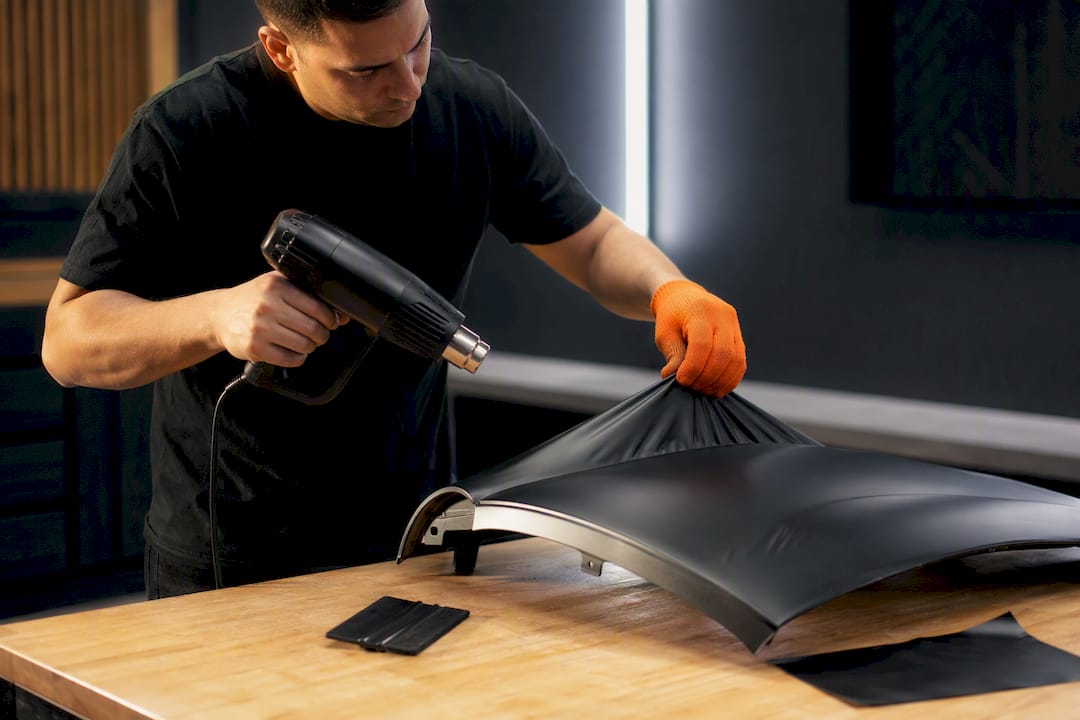
- Gather tools: heat gun ($30–$60), squeegee ($10–$20), knifeless tape ($15–$25), precision blades, and isopropyl degreaser.
- Remove trim where possible rather than wrapping in place. It’s slower but produces a far cleaner edge.
- Heat and stretch vinyl around curves gradually. Rushing this step is the number one cause of bubbling.
- Tuck and seal edges, then let the adhesive cure for 24 to 48 hours before a wash.
Set aside 4 to 8 hours for a car you’ve never wrapped before. A botched edge that lifts paint clear coat can turn a $150 DIY project into a $300+ professional repair bill, which erases the savings entirely.
Pro Tip: Practice your heat gun technique on a scrap piece of vinyl and a junk panel first. The difference between a clean tuck and a bubbled mess usually comes down to ten minutes of practice you skipped.
How Do You Choose a Professional for Chrome Delete?
A little vetting up front saves you from comparing quotes that aren’t actually for the same job.
- Ask what material they use. Cast vinyl from 3M or Avery Dennison outlasts generic film significantly.
- Confirm trim removal. Wrapping chrome in place, without pulling the piece, almost always fails faster at the edges.
- Get the warranty in writing, specifically covering adhesion and edge lift, not just “satisfaction.”
- Check for insurance and ask to see a photo portfolio of completed chrome deletes, not just full wraps.
- Walk away from vague, rock-bottom quotes. A shop that won’t itemize by component or mention removal is cutting corners somewhere.
The fastest way to get an apples-to-apples comparison is sending clear photos and your VIN to two or three shops and asking for an itemized quote by component, similar to how online price calculators estimate cost from vehicle size and trim complexity.
What We See Most Often Scoping Chrome Delete Jobs
Most customers start with a standard package, window trim and badges, then come back for the grille and mirrors once they see it in person. Working with 3M and Avery Dennison materials in a climate-controlled shop for over 10 years, we’ve found that upfront material quality is almost always the difference between a delete that still looks sharp in year five and one that’s peeling by summer two.
— NJ Vinyl Wrapz
Ready to Get a Chrome Delete Quote?
If you’ve weighed DIY against professional install and decided your time is worth more than the savings, NJ Vinyl Wrapz handles chrome delete jobs in a climate-controlled facility using 3M and Avery Dennison materials, the same standard we hold for full vehicle wraps.

Send us photos of your vehicle and your VIN, and list the parts you want covered, window trim, grille, mirrors, handles, badges, and we’ll build an itemized quote by component so you know exactly what you’re paying for and why. Many owners bundle chrome delete with ceramic coating or paint protection film for one combined install visit instead of scheduling separate appointments. If you’re also weighing a broader look change, our wrap options page covers everything from partial accents to full color change. Reach out through Njvinylwrapz to schedule an in-person estimate or request a quote by photo and VIN.
Sources
- Chrome Delete: Cost, Methods, and What Gets Blacked Out (2026)
- Chrome Delete Cost 2025 - How Much Does Chrome Delete Cost?
- Chrome Delete Blackout Price Calculator
FAQ
Is a chrome delete worth it?
For most owners who want a modern, blacked-out look and plan to keep the vehicle a few years, yes. Professional vinyl typically lasts 3 to 7 years and costs far less than a full wrap or repaint.
Why are chrome deletes so expensive?
Cost reflects labor, not just material. Professional shops remove trim pieces for a clean wrap, tuck and seal edges properly, and back the job with a warranty, which is why full deletes on SUVs and trucks can run $1,200 to $2,000 or more.
How long does a chrome delete last?
A quality cast vinyl install typically lasts 3 to 7 years, with professional installs often reaching the upper end of that range when maintained properly. Cheaper calendered vinyl and automated car washes both shorten that lifespan.
Does chrome delete add value?
It’s a style upgrade, not a guaranteed value boost. It appeals strongly to buyers who want that aesthetic and does little for buyers who don’t, so treat it as a personal customization rather than a resale investment.
What’s the cheapest way to do a chrome delete?
DIY vinyl kits are the lowest upfront cost at $75 to $400 including tools, but they demand real time and skill. Overlay kits at $60 to $300 per part are a solid middle ground if you want a no-tools install with decent durability.