
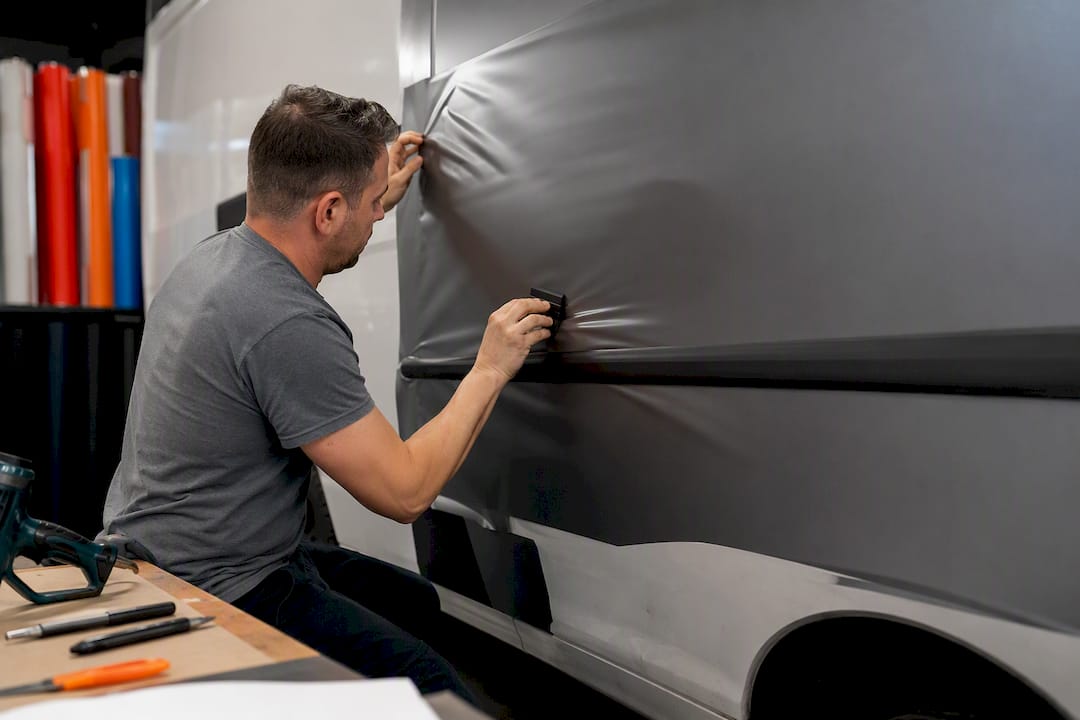
If you’re weighing how to brand or protect a vehicle, professional wraps are the move. Get an in-shop consultation covering material choice, coverage level, and timeline before committing to anything.
- Ask about 3M or Avery film specifically, not generic vinyl.
- Decide between spot graphics, partial wraps, or a full wrap.
- Confirm turnaround before you schedule around it.
NJ Vinyl Wrapz built its business on exactly this consultation model, and the numbers back the approach: 3M’s own fleet graphics research shows wrapped vehicles can generate advertising impressions for pennies on the dollar compared to digital ads.
Key Takeaways
Professional vehicle wraps deliver measurable marketing reach at a fraction of digital advertising’s cost while doubling as a protective layer for the vehicle underneath.
| Point | Details |
|---|---|
| Wraps outperform on CPM | Fleet graphics can run as little as $0.15 per thousand impressions versus far higher digital ad rates. |
| Match coverage to goals | Choose spot graphics for low-cost branding, partial wraps for balanced budget, or full wraps for maximum protection. |
| Budget for 2 to 5 weeks | Standard small fleet projects run 2 to 5 weeks end to end, longer for large rollouts. |
| Vet before you sign | Confirm 3M or Avery certification, insurance, a climate-controlled shop, and written warranty terms. |
| Work with an established installer | NJ Vinyl Wrapz combines certified materials, in-house design and print, and climate-controlled installation for fleet and personal wrap projects. |
Table of Contents
- Why Vehicle Wraps Still Deliver Measurable Business Value
- What Are the Different Types of Vehicle Wraps?
- How Long Does a Wrap Project Take and What Drives the Cost?
- How Do You Choose a Reliable Vehicle Wrap Installer?
- What Should You Expect Before, During, and After Installation?
- What Protective Services Get Bundled With a Wrap Project
- When Is the Best Time of Year to Schedule a Wrap Installation
- How Do You Spot a Reputable Wrap Provider
- What Happens During a Typical Wrap Service Appointment
- What Environmental Practices Should a Wrap Shop Follow
- Get a Wrap Consultation With NJ Vinyl Wrapz
- A Note From NJ Vinyl Wrapz on Fleet Programs
- Sources
- FAQ
Why Vehicle Wraps Still Deliver Measurable Business Value
A wrapped van parked outside a job site works whether or not anyone clicks anything. That’s the case for treating wraps as a marketing line item, not just a paint job.
3M reports fleet graphics can run as little as $0.15 per thousand impressions, against online ads that can climb to $21 per thousand. That gap holds up because a wrap keeps working on every trip, every red light, every parking lot, with no daily bid or budget cap.
The visibility numbers back this up:
- Many survey respondents said they noticed vehicle graphics.
- A single wrapped vehicle can generate an estimated 30,000 to 70,000 daily impressions, according to 3M’s data.
Fleet graphics deliver a CPM far below most digital and out-of-home channels while requiring zero ongoing media spend once installed.
Wraps work best as a complement to digital marketing, not a replacement. Your website closes the sale; your van gets you noticed in the first place. If you’re building out a broader fleet marketing plan, our ROI guide for business fleets walks through how design choices affect recall and response.
What Are the Different Types of Vehicle Wraps?
Not every vehicle needs the same coverage, and picking the wrong level wastes either budget or protection. Here’s how the options break down.
- Spot graphics and decals cover logos, phone numbers, and small design elements on limited panels. Fast to install, cheapest option, lowest paint protection.
- Partial wraps cover roughly a third to a majority of visible panels, usually the sides, hood accents, or rear doors. This is the sweet spot for most fleets balancing budget against branding impact.
- Full wraps cover close to 100% of the exterior, including a full color change if you want one. Maximum branding, maximum paint protection.
- Reflective accents or full reflective wraps add nighttime visibility, common on service vehicles and anything working roadside after dark.
Material matters as much as coverage choice. Premium 3M and Avery cast films, printed wrap film, and overlaminates resist UV fading and scratching far better than off-brand vinyl, and 3M’s own product guidance notes that certified films hold up longer and qualify for stronger warranty support. Beyond graphics, paint protection film (PPF), ceramic coatings, and window film round out a full protective package for personal vehicles or flagship fleet units.
Pro Tip: If any vehicles in your fleet are leased, lean toward full wraps over partial. A full wrap protects the entire panel uniformly, so you won’t face paint-shade mismatch or uneven weathering charges at lease turn-in.
How Long Does a Wrap Project Take and What Drives the Cost?
Budgeting a wrap program means understanding where the time and money actually go, not just the sticker price on the invoice.
A standard fleet wrap moves through five phases:
- Design and proofing — usually 1 to 2 weeks, faster if you arrive with print-ready files.
- Printing — the film gets produced to spec once art is approved.
- Surface preparation — vehicles get cleaned and inspected for damage.
- Installation — where most of the labor time lands.
- Curing — the film needs time to fully bond before aggressive washing.
Small fleets typically run 2 to 5 weeks end to end, with larger rollouts stretching further because installers can only handle so many vehicles at once. Per-vehicle install time itself varies sharply: decals finish in under 4 hours, partial wraps take 1 to 2 days, and full wraps often need multiple shop days depending on size.
Cost drivers include:
- Vehicle type and size (a box truck costs more than a sedan)
- Coverage level chosen
- Material selection, since premium film costs more than economy vinyl
- Design complexity and number of unique templates
- Surface condition, since dents or rust need repair first
- Phased rollout logistics for large fleets
To avoid delays, arrive with proof-ready art, pre-inspect the fleet for damage, and schedule installs in phases rather than trying to pull every vehicle off the road at once.
How Do You Choose a Reliable Vehicle Wrap Installer?
Picking the wrong installer costs you twice, once on the bad wrap and again on the redo. Run every candidate through this checklist before signing anything.
- Ask for proof of manufacturer certification with 3M or Avery.
- Confirm they carry liability insurance and are licensed to operate.
- Request photos of their climate-controlled installation facility.
- Review a portfolio of completed jobs, ideally with before-and-after shots.
- Ask for a physical material sample so you can see film quality firsthand.
- Get warranty documentation in writing, covering both material and installation.
- Ask how they handle a botched panel or bubbling within the warranty period.
- Request references from current fleet clients, not just single-vehicle jobs.
Beyond the checklist, ask these questions directly in your consultation or RFP:
- What film brand and product line will you use?
- How do you prep surfaces with existing damage or rust?
- What’s your realistic turnaround for our fleet size?
- Do you subcontract installation, or is it all in-house?
- What does removal look like when we’re ready to update the design?
- How do we maintain the wrap to keep the warranty valid?
Manufacturer certification and a real portfolio are the two strongest trust signals in this industry. Walk away from anyone who can’t produce insurance proof, won’t show a material sample, or gets vague when you ask about warranty terms.
What Should You Expect Before, During, and After Installation?
Installation day goes smoother when both sides know what’s coming. Here’s the sequence.
Before installation:
- Wash the vehicle and repair any dents, rust, or paint damage first, since wrap film won’t hide surface flaws, it highlights them.
- Remove antennas, mirrors caps, and loose accessories that interfere with film application.
- Confirm the exact material and color with your installer before printing starts.
- Block out the downtime on your calendar, and stagger it across the fleet if you can’t spare every vehicle at once.
During installation, expect the vehicle to sit in a climate-controlled bay while technicians clean, heat, and stretch the film panel by panel, followed by a quality check for bubbles or lifted edges. Curing time after install typically needs a day or two before the vehicle should face a hard wash or highway driving.
After installation:
- Hand wash only for the first week or two; skip automatic car washes with brushes.
- Use pH-neutral soap, never anything abrasive or petroleum-based.
- Pair a wrap with a ceramic coating for easier washing and added UV resistance, a combination detailing specialists frequently recommend for extending film life.
- Keep warranty paperwork on file. Most material warranties require documented professional installation to stay valid.
Pro Tip: Skip the automatic car wash for at least the first 10 days. The brushes and high-pressure jets common in tunnel washes can lift a fresh wrap’s edges before the adhesive has fully cured.
What Protective Services Get Bundled With a Wrap Project
Most fleet and personal vehicle projects don’t stop at graphics. Paint protection film shields high-impact zones like the front bumper, hood, and mirrors from rock chips and road debris, and it’s often applied underneath or alongside a wrap on vehicles that see heavy highway miles.
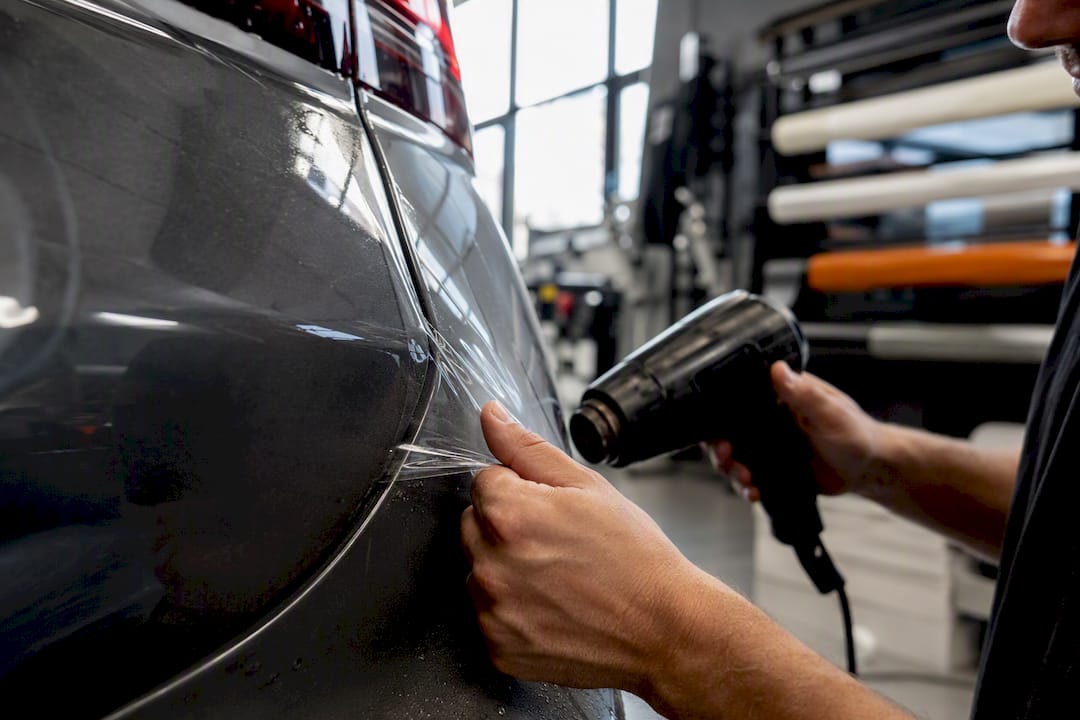
Ceramic coating adds a hydrophobic layer that makes washing faster and helps paint or film resist staining and UV fade over time. It’s a common add-on for flagship vehicles or personal cars getting a full color-change wrap, since the coating extends the finish’s clean appearance between washes.
Window tinting rounds out the package for owners who want interior privacy, heat reduction, and UV protection for upholstery. On commercial vehicles, tinting can also reduce glare for drivers on long routes.
Chrome delete is another popular add-on, swapping factory chrome trim for a matte or gloss black finish, often paired with a full wrap for a cohesive, upgraded look. None of these services require a separate shop visit if your installer offers them in-house. Scheduling PPF, ceramic coating, and window film alongside your wrap installation means one round of downtime instead of three, and it lets the same team coordinate curing times across every product applied to the vehicle.
When Is the Best Time of Year to Schedule a Wrap Installation
Climate matters more for vinyl wrap installation than most buyers expect. Vinyl film needs a stable temperature range to adhere properly, and extreme heat or cold both work against a clean install.
Spring and fall tend to be the most forgiving seasons for scheduling, since moderate outdoor temperatures reduce the swing between a heated shop bay and the vehicle’s eventual outdoor environment. That said, a professional installer working in a climate-controlled facility removes most of the seasonal guesswork entirely, since the bay temperature stays consistent regardless of what’s happening outside.
Summer heat can actually work in your favor during the curing phase, since warmer ambient temperatures help film bond faster once installation wraps up. The tradeoff is that direct sun exposure on a freshly wrapped panel before it’s fully cured can cause premature lifting at the edges, so shaded storage matters more in July than in October.
Winter installs aren’t a problem inside a properly heated shop, but plan for slightly longer curing windows before the vehicle goes back into cold outdoor storage or road salt exposure. If your fleet operates in a region with harsh winters, scheduling major wrap work before the first freeze gives the film more time to fully bond before it faces road salt and temperature swings.
The bottom line: a climate-controlled installation facility matters more than the calendar month. Ask any installer how they control shop temperature before you commit to a booking date.
How Do You Spot a Reputable Wrap Provider
Reputation signals in this industry are consistent whether you’re vetting a shop for a single color-change wrap or a 40-vehicle fleet program. Start with manufacturer certification. Installers trained and certified through 3M or Avery’s programs have demonstrated proficiency with the specific films they’re applying, and that credential typically comes with manufacturer-backed warranty eligibility that an uncertified shop can’t offer.
Experience shows up in the portfolio, not the sales pitch. A shop with years of fleet or wrap work will have before-and-after photos spanning multiple vehicle types, colors, and finishes, not just a handful of stock images. Ask to see jobs similar to yours specifically, a box truck fleet looks different from a single sports car color change, and technique varies between the two.
Customer reviews and direct references carry real weight here, since wrap quality is highly visible and dissatisfied clients tend to be vocal about bubbling, lifting, or mismatched colors. A provider confident in their work will offer references without hesitation.
Licensing and insurance protect you if something goes wrong during installation, whether that’s damage to the vehicle or an on-site accident. Never work with a shop that can’t produce proof of both. Combined with a climate-controlled shop and written warranty documentation, these signals separate an established provider from a garage operation working out of a driveway.
What Happens During a Typical Wrap Service Appointment
Most clients are surprised by how methodical a professional wrap appointment actually is. It starts with a consultation, either in-shop or over the phone, where the installer walks through material options, discusses your coverage goals, and inspects reference photos of your vehicle or fleet.
Once design is approved, the vehicle itself gets scheduled for a drop-off. On arrival, technicians perform a pre-install inspection, checking for existing dents, rust spots, or panel gaps that could affect adhesion. Any needed detailing or minor repair happens before a single sheet of film goes on.
Installation itself happens in stages. Technicians clean and degrease every panel, then apply film section by section, using heat guns to stretch material around curves, mirrors, and door handles. A quality check follows each panel, looking for trapped air bubbles or lifted edges before moving to the next section.
Clients typically don’t wait on-site for a full wrap, given the multi-day timeline for larger vehicles. Spot graphics and partial wraps move faster, sometimes same-day depending on scope. Before pickup, most shops walk the client around the finished vehicle for a final visual inspection, and hand over warranty paperwork along with care instructions for the first wash cycle.
What Environmental Practices Should a Wrap Shop Follow
Wrap and protective coating installation involves solvents, adhesives, and film waste, and how a shop handles that matters for anyone paying attention to environmental responsibility, not just for compliance reasons.
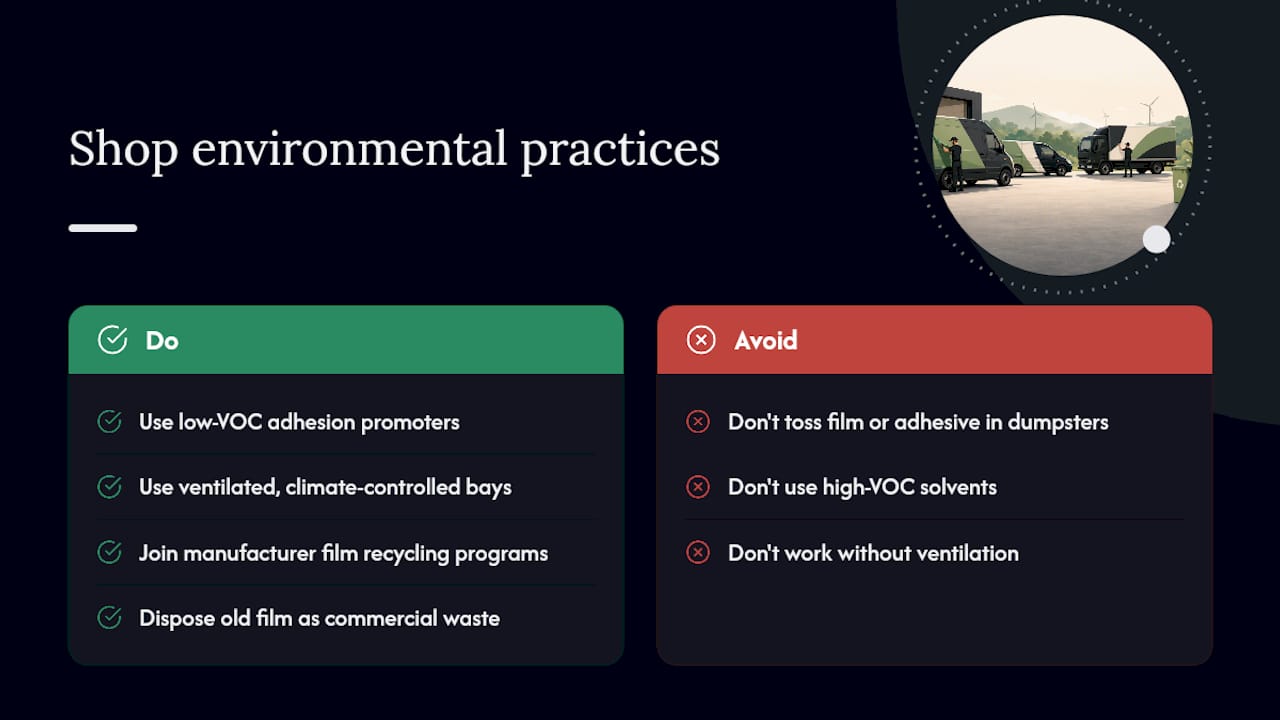
Reputable installers use low-VOC adhesion promoters and cleaning solutions where possible, reducing airborne emissions inside the shop and around the surrounding property. Ceramic coating and PPF installation similarly benefit from ventilated, climate-controlled bays that limit fume exposure for both technicians and anyone nearby during the process.
Vinyl film waste is a real consideration on any full wrap job, since trimming a large sheet to fit a vehicle’s contours generates offcuts. Some manufacturers, including 3M, have expanded recycling programs for graphic film scrap, and shops that participate keep material out of general waste streams. Ask a potential installer directly whether they recycle film waste or work with a manufacturer take-back program, since not every shop does.
Proper disposal extends to old film removal too. Stripping a previous wrap generates adhesive residue and vinyl backing that needs handling as commercial waste, not tossed in a standard dumpster. A shop with established waste-disposal procedures for both installation and removal reflects the same operational discipline that shows up in the quality of the wrap itself.
Get a Wrap Consultation With NJ Vinyl Wrapz
NJ Vinyl Wrapz skips the guesswork that comes with hiring an uncertified shop or a one-off installer working out of a garage. Over a decade of fleet and personal vehicle work means the team already knows how to plan around your downtime, not the other way around.
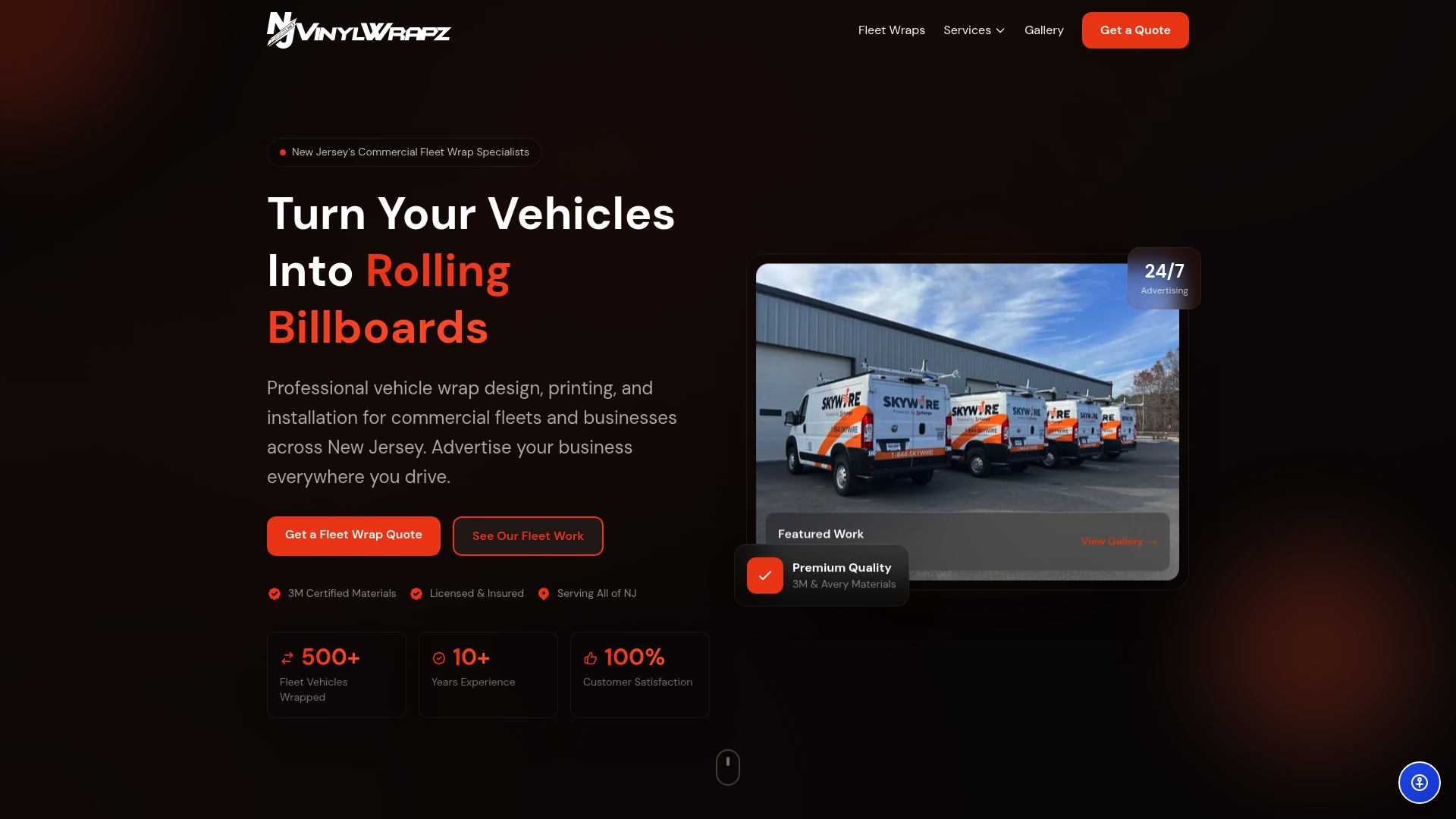
The credentials back it up: licensed and insured operations, certified installer partnerships with 3M and Avery, and climate-controlled facilities that remove seasonal risk from the equation entirely. That means design, printing, and installation all happen under one roof, with no handoffs between subcontractors that slow down a fleet rollout.
Services cover the full range this article walks through: full vehicle wraps and color changes, partial wraps and vehicle lettering, fleet program management, PPF, ceramic coating, and window graphics. Whether you’re branding a 30-truck fleet or protecting a single personal vehicle with a color-change wrap, the process starts the same way, with a consultation that covers material, coverage, and timeline before anything gets printed.
Ready to see what a wrap program looks like for your vehicles? Request a fleet quote or consultation and get a realistic timeline back within days, not weeks.
A Note From NJ Vinyl Wrapz on Fleet Programs
The most common breakdown we see in fleet wrap programs isn’t the design, it’s scheduling. Businesses try to pull every vehicle off the road at once, which creates operational chaos and installer bottlenecks.
Our recommendation: phase the rollout across a few vehicles at a time, and standardize one design template early. That combination cuts confusion, keeps trucks earning revenue, and makes future additions to the fleet simple to match.
Sources
FAQ
How much does a full vehicle wrap cost?
Cost depends on vehicle size, coverage level, and material choice, with full wraps costing more than partial wraps or spot graphics due to material volume and labor time.
How long does a vehicle wrap last?
Premium 3M or Avery cast film typically lasts several years with proper care, though exact lifespan depends on climate exposure and maintenance.
Can I remove a wrap without damaging the paint?
Professional-grade film is designed for clean removal when installed correctly, which is why working with a certified installer like NJ Vinyl Wrapz matters for long-term paint condition.
Is a partial wrap or full wrap better for a leased vehicle?
Full wraps generally work better for leased vehicles since they protect the entire exterior evenly and avoid paint-shade mismatch at lease return.
Do I need to wash a wrapped vehicle differently?
Yes. Hand washing with pH-neutral soap is recommended, especially in the first week or two after installation while the film fully cures.