
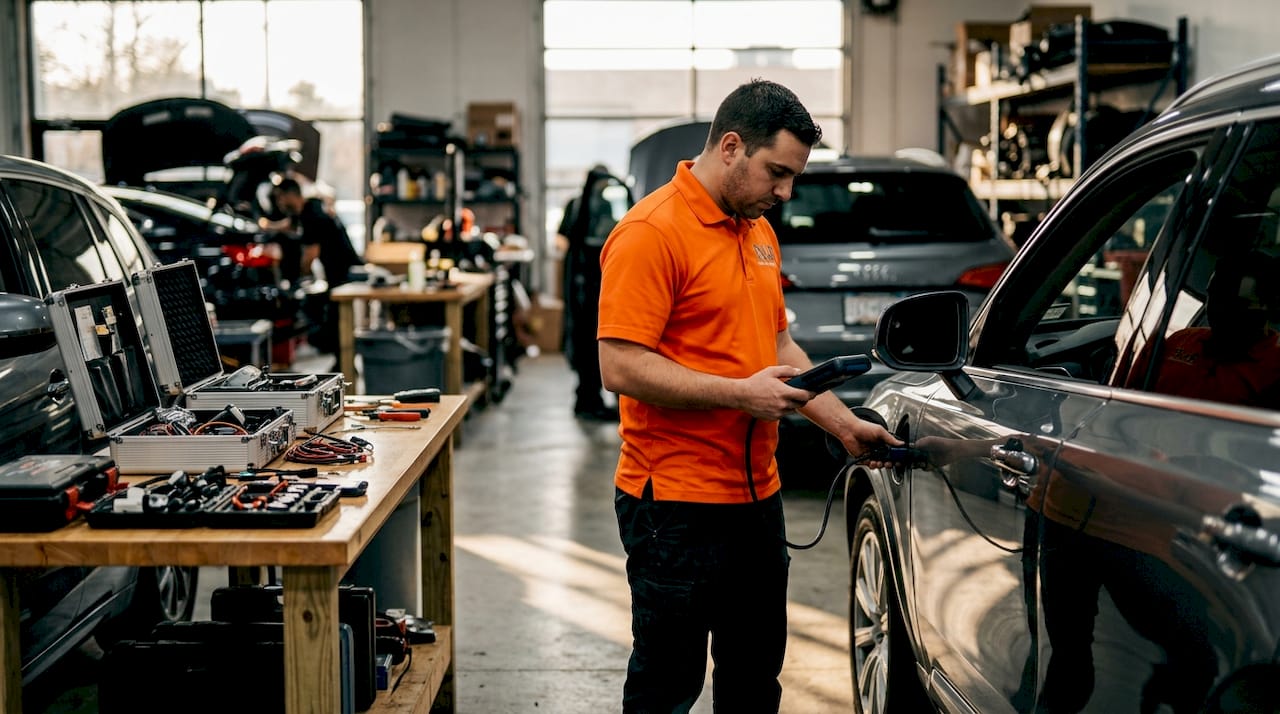
Car alarm shops near you provide professional vehicle security installation services that protect your car against theft, unauthorized access, and break-ins. The industry term for this service is “vehicle security installation,” and the quality of that installation matters far more than the brand of hardware you choose. Installer accreditation and experience are more critical than the alarm brand itself. Poor wiring and rushed work cause false alarms, electrical faults, and systems that fail when you need them most.
What to look for at car alarm shops near me
The single most important factor when choosing a local vehicle alarm retailer is installer certification. Accredited shops follow recognized industry standards, use proper diagnostic tools, and provide documentation that insurers accept. A shop without verifiable credentials is a liability, not a service provider.

Accreditation and technical expertise
Modern vehicles use CAN bus architecture, a communication network that connects every electronic module in the car. CAN bus integration requires specialized knowledge. Improper installation risks voiding your factory warranty and triggering permanent dashboard errors. Any shop you consider must demonstrate hands-on experience with your specific vehicle’s electrical system, not just generic alarm wiring.
Signs of a trustworthy auto alarm service include a physical address, verified Google or Yelp reviews, transparent pricing, and a written installation certificate. Shops that refuse to provide itemized quotes or post-installation documentation are worth avoiding. Just as selecting the wrong service provider in any automotive trade leads to costly rework, choosing an uncertified alarm installer often costs more to fix than the original job.
Mobile installation vs. static workshops
Mobile installation services offer convenience without sacrificing quality. Mobile technicians carry diagnostic equipment equivalent to a fixed workshop, and you can supervise the work at your home or office. Static workshops give you a controlled environment and sometimes faster turnaround for complex systems. Both options are valid. The deciding factor should be the technician’s credentials, not the location.
Pro Tip: Ask any prospective shop to show you their last three installation certificates. A shop that installs alarms professionally produces this paperwork as a matter of routine.
Questions to ask before booking:
- Are your technicians certified by a recognized industry body?
- Do you have experience with my specific make and model?
- Will you provide a written, itemized quote before work begins?
- What warranty do you offer on parts and labor?
- Do you carry insurance that covers vehicle damage during installation?
How much do local car alarm shops charge?
Professional vehicle security installation costs vary based on system complexity and vehicle type. Professionally installed systems typically cost between $350 and $700, with advanced systems exceeding $1,000. That range covers both hardware and labor. Labor rates for certified installers generally run between $100 and $150 per hour.
Installation time and vehicle type
Standard installation takes 2–4 hours of labor, depending on the vehicle’s electrical system. Luxury vehicles with complex CAN bus networks often require additional time and specialized bypass modules. A basic alarm on a standard sedan sits at the lower end of both cost and time. A full system with GPS tracking, a digital immobilizer, and remote start on a late-model SUV sits at the higher end.
| System type | Estimated cost | Typical labor time |
|---|---|---|
| Entry-level siren and sensor | $350–$500 | 2–3 hours |
| Mid-range with immobilizer | $500–$750 | 3–4 hours |
| Advanced with GPS and remote start | $750–$1,000+ | 4+ hours |
A useful budgeting rule: allocate 5%–10% of your vehicle’s market value for security installation. A $30,000 vehicle warrants a $1,500–$3,000 security investment when you factor in hardware, labor, and ongoing monitoring.
Hidden fees to watch for
Low advertised “package” prices often exclude necessary components like bypass modules or sensor calibration. Always request a fully itemized quote that lists every part, module, and labor charge separately. If a shop quotes a flat rate without line items, ask them to break it down. Surprises on the final invoice are a red flag that the shop prioritizes sales over transparency.
Pro Tip: Get at least three quotes from different car security shops before committing. Compare line items, not just totals. The cheapest total often hides the most missing components.
What features should a local car alarm shop offer?
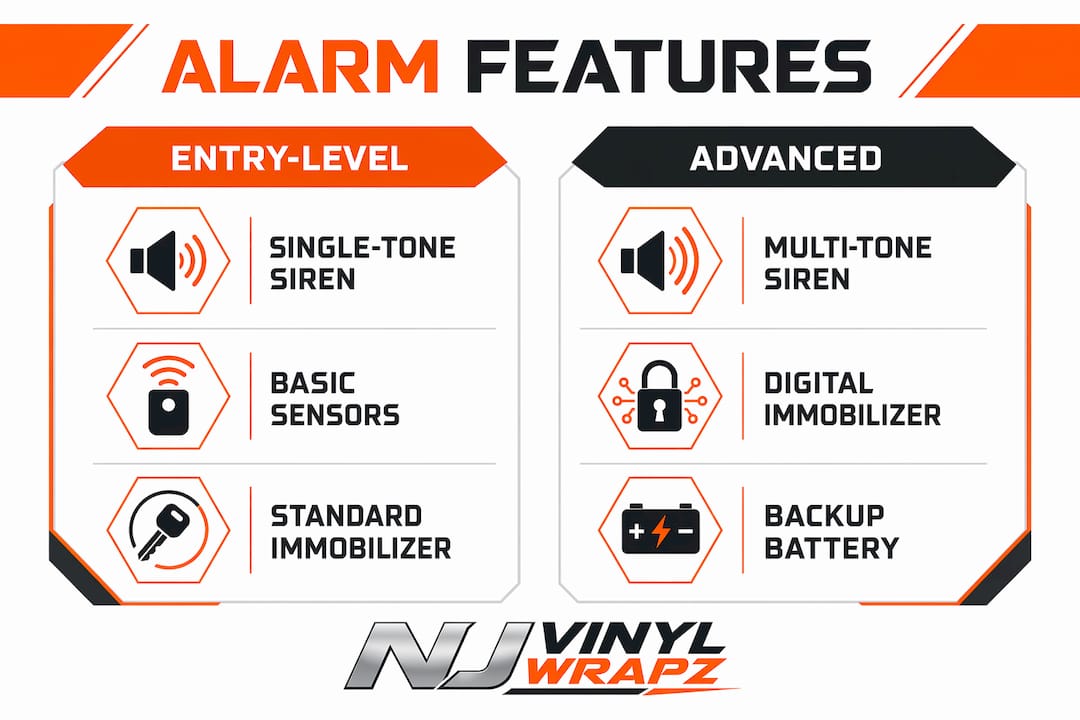
The best car alarm systems combine multiple layers of protection rather than relying on a single siren. A layered security approach combining alarms, immobilizers, and GPS trackers achieves stronger theft deterrence than any single component. A reputable shop will assess your vehicle’s vulnerability and your parking habits before recommending a system.
Core and advanced features
Core features every quality installation should include:
- Siren and shock sensor: The baseline deterrent that triggers on impact or glass break
- Immobilizer: Cuts the ignition circuit so the car cannot start without authorization
- Remote start and keyless entry: Adds convenience while integrating with the alarm system
- GPS tracker: Enables real-time location monitoring and recovery after theft
Advanced options worth discussing with your installer include digital immobilizers, which are harder to bypass than analog versions, and tilt sensors that detect wheel theft or towing attempts. Catalytic converter theft has risen sharply in recent years, and some shops now offer specific sensor configurations that detect the vibration pattern of a saw cutting underneath the vehicle.
Matching features to your risk profile
Customized alarm systems tailored to local theft risks and your vehicle’s use patterns outperform generic one-size-fits-all solutions. A vehicle parked overnight in an urban area needs different protection than a fleet van stored in a gated lot. Tell your installer where you park, how long the car sits unattended, and whether you have had any previous security incidents. That context shapes the right system configuration.
| Feature category | Entry-level | Advanced |
|---|---|---|
| Siren | Single-tone | Multi-tone with backup battery |
| Immobilizer | Basic relay cut | Digital, encrypted |
| Tracking | None | Real-time GPS with app |
| Sensor coverage | Shock only | Shock, tilt, glass break |
Compliance with insurance standards also matters. A professional installer provides a detailed invoice and installation certificate that insurers require for premium discounts. Certification from a recognized body is often a condition of coverage for high-value vehicles.
How to book and prepare for your installation appointment
Finding the right shop takes a structured approach. Rushing the selection process is the most common mistake vehicle owners make, and it leads to the exact problems, false alarms, electrical faults, and voided warranties, that a good installation is supposed to prevent.
- Research and shortlist. Search for auto alarm services nearby using Google Maps, then filter by verified reviews and check for any industry certifications listed on the shop’s website or profile.
- Request itemized quotes. Contact at least three shops and ask for written quotes that list hardware, labor, and any additional modules separately. Decline any shop that will only provide a verbal estimate.
- Verify credentials. Ask each shop for proof of certification and insurance. Cross-reference reviews on independent platforms rather than relying solely on the shop’s own testimonials.
- Choose your installation format. Decide between a mobile technician coming to you or visiting a static workshop. Mobile works well for straightforward systems. Complex installations on luxury vehicles may benefit from a controlled workshop environment.
- Prepare your vehicle. Clear the interior of personal items. Make sure the battery is in good condition, since a weak battery causes problems during installation and testing. Bring your vehicle registration and any existing alarm documentation.
- Attend the post-installation walkthrough. A professional installer will demonstrate every function of the system before you leave. Test the siren, the remote, the immobilizer, and any app-connected features while the technician is present.
- Collect your documentation. Obtain a signed installation certificate, a parts receipt, and the warranty terms in writing. Formal documentation builds trust and enables insurance benefits, including potential premium reductions.
Key Takeaways
Professional vehicle security installation delivers reliable theft protection only when the installer is certified, the system is customized to your vehicle, and the work is fully documented.
| Point | Details |
|---|---|
| Installer quality over brand | Accreditation and experience matter more than the alarm brand you choose. |
| Budget realistically | Expect $350–$1,000+ for professional installation; budget 5%–10% of vehicle value. |
| Demand itemized quotes | Low package prices often hide missing components; always get line-item breakdowns. |
| Match features to risk | Customized systems outperform generic setups; discuss your parking habits with the installer. |
| Get documentation | An installation certificate is required by most insurers for premium discounts. |
Why I think most vehicle owners get this completely wrong
Most vehicle owners treat a car alarm like a commodity purchase. They search for the lowest price, pick the first shop that comes up, and assume the hardware does all the work. That thinking leads to systems that trigger on a passing truck and stay silent during an actual break-in.
The part that surprises most people is how much the installation itself determines the outcome. I have seen vehicles with premium alarm hardware that offered almost no real protection because the wiring was sloppy and the sensors were miscalibrated. The alarm brand on the box is almost irrelevant if the person connecting it does not understand your vehicle’s electrical architecture.
Modern vehicles are particularly unforgiving. The CAN bus systems in late-model cars communicate constantly between modules. An installer who does not understand that architecture can trigger fault codes that cost hundreds of dollars to clear, and in some cases, those errors become permanent. That is a real risk that most budget shops will not mention until after the damage is done.
My honest advice: treat the installer selection the same way you would treat choosing a surgeon. Credentials, experience with your specific vehicle type, and a clear paper trail matter far more than a low hourly rate. The professional installer selection process applies equally whether you are adding a security system or any other modification to your vehicle. Get the documentation, verify the certification, and do not let price be the deciding factor.
— Krunal
Vehicle protection starts with the right professional
Njvinylwrapz has spent over 10 years working with vehicle owners and commercial fleets across New Jersey, and that experience makes one thing clear: the vehicles that hold their value and stay protected are the ones whose owners invest in professional services from certified specialists.

Whether you are adding a security system, a full vehicle wrap, window tinting, or paint protection film, the principle is the same. Quality installation from a credentialed professional protects your investment. Njvinylwrapz offers automotive services in NJ including window tinting, PPF, and ceramic coatings that complement any vehicle security setup. Reach out to the Njvinylwrapz team to discuss how professional vehicle modifications can work together to keep your vehicle looking great and protected.
FAQ
How much does professional car alarm installation cost?
Professional car alarm installation typically costs between $350 and $700, with advanced systems exceeding $1,000 depending on complexity and vehicle type. Labor rates for certified installers generally run $100–$150 per hour.
How long does a car alarm installation take?
Standard installation takes 2–4 hours of labor. Luxury vehicles with CAN bus systems often require additional time due to the complexity of electrical integration.
What should I ask a car alarm shop before booking?
Ask for proof of installer certification, an itemized written quote, experience with your specific vehicle make and model, and details of the warranty covering both parts and labor.
Does a professional installation certificate affect my insurance?
A professional installer provides a signed installation certificate that many insurers require for premium discounts. Certification from a recognized industry body is often a condition of coverage for high-value vehicles.
Is mobile car alarm installation as reliable as a workshop?
Mobile technicians use diagnostic equipment equivalent to static workshops, making mobile installation a reliable option for most vehicles. Complex luxury vehicle installations may still benefit from a controlled workshop environment.