
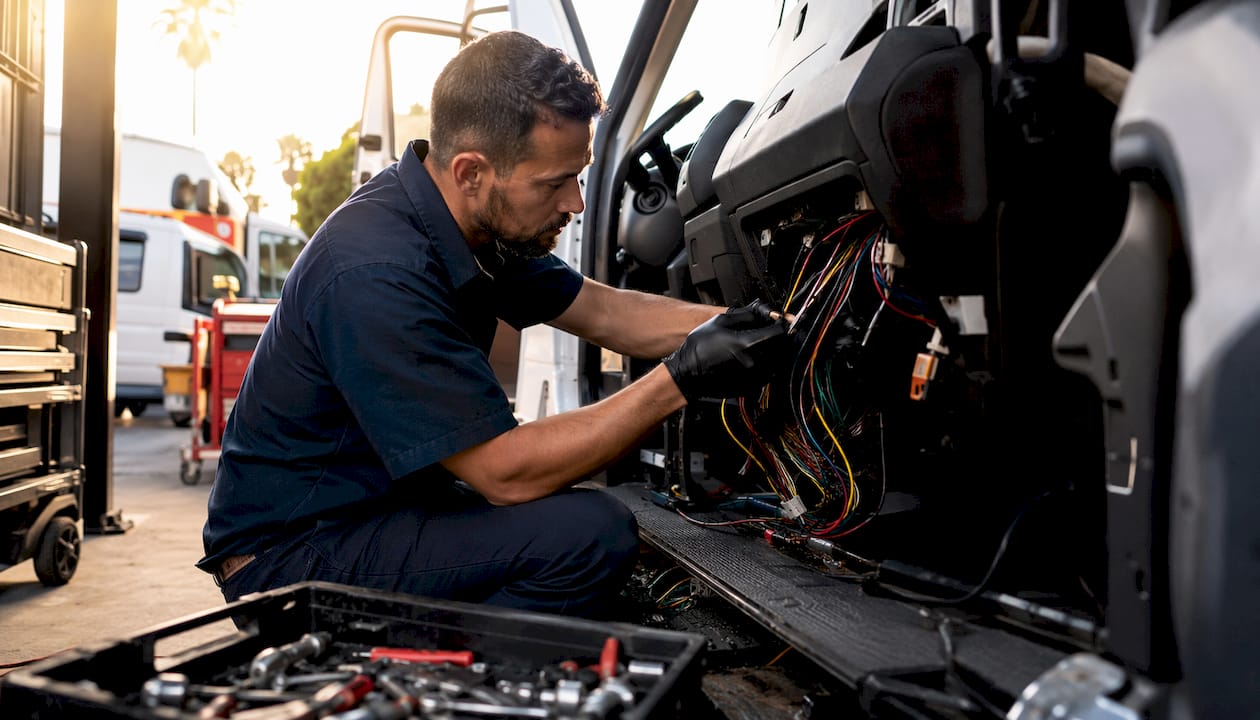
Hire a MECP-certified installer who delivers written installation certificates, a lifetime or multi-year labor warranty, and documented fleet references for every vehicle. That’s the short answer. For fleet managers coordinating alarm installs alongside wrap or branding work, Njvinylwrapz can align both projects under one schedule, cutting handling time and rework risk.
Before you accept any quote, verify these five things:
- MECP certification proof for the technician (not just the shop)
- Licensed and insured business status with public liability coverage
- Lifetime or multi-year labor warranty in writing
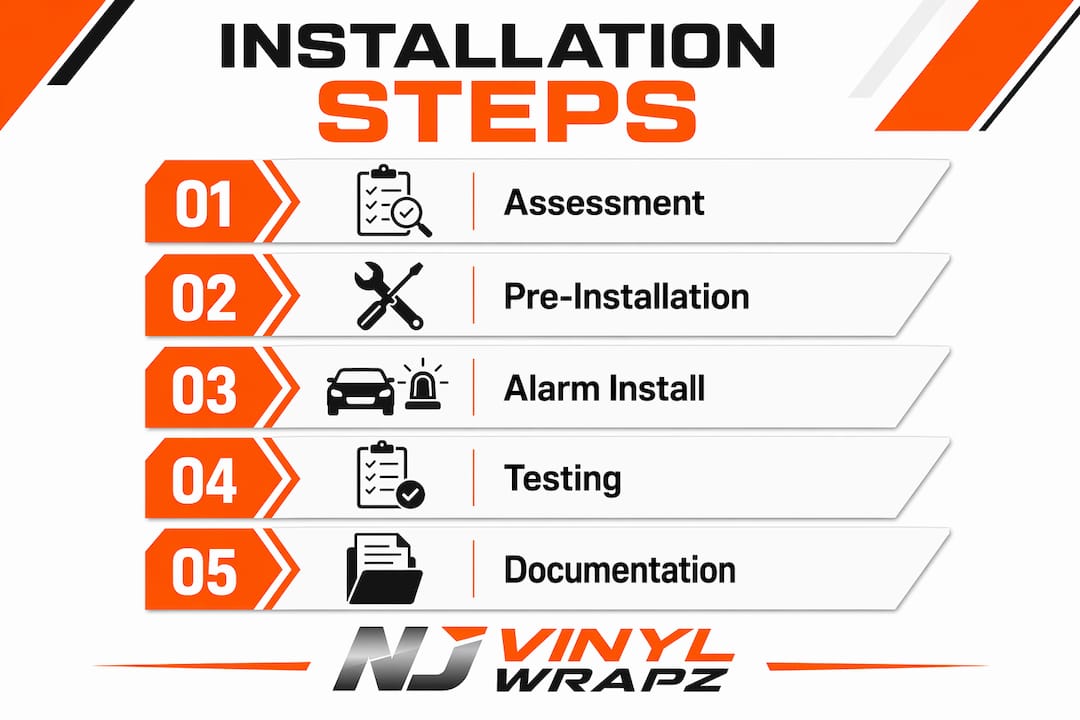
- Written scope of work including post-install test procedure
- Fleet references or documented case studies
“The quality of the installer is the single most important factor that determines if your system will be a daily luxury or a daily headache.” — Pro Car Sound & Security
A single-vehicle shop install typically runs several hours, depending on system complexity. Fleet rollouts change the math: on-site mobile installs reduce vehicle downtime but add a per-visit charge, while centralized shop batching lowers per-unit cost at the expense of logistics coordination. Common failure causes to demand proof against: weak grounding, incorrect sensor calibration, vampire/quick-tap connectors, and improper CAN-bus integration. Red flags include unusually low quotes, no certification or insurance proof, no post-install testing, grey-market hardware, and zero fleet references.
Table of Contents
- How do Njvinylwrapz services support coordinated alarm and wrap installs?
- What qualifications should a professional alarm installer for cars hold?
- What does car alarm installation cost, and how long does it take?
- What causes false alarms, and what tests should installers run?
- How should fleet managers plan on-site installs and recordkeeping?
- What questions should you ask before hiring a car alarm installer?
- Why alarm installs and vehicle wraps need to be sequenced carefully
- Njvinylwrapz: coordinated fleet wrap and installation projects in New Jersey
- Key Takeaways
- Why coordination beats the lowest bid
- FAQ
How do Njvinylwrapz services support coordinated alarm and wrap installs?
Fleet managers who need wrap and alarm work done on the same vehicles face a sequencing problem. Njvinylwrapz solves it by coordinating both workflows in climate-controlled facilities using premium 3M and Avery materials, with over 10 years of fleet project experience.
| Service | Best For | Standout Coordination Value | Fleet Experience |
|---|---|---|---|
| Full Vehicle Wraps NJ | Fleets needing wrap + alarm with one vendor | In-house wrap production aligns alarm install scheduling | 10+ years, licensed & insured |
| Commercial & Fleet Wraps | Decision-makers evaluating a full-service vendor | Company-level project management and fleet references | Fleet case studies available |
| Wrap Options | Managers choosing finish while coordinating electrical work | Finish choices affect electrical access sequencing | Partial, full, lettering options |
| Paint Protection Film | Protecting access points after alarm/wrap work | Reduces rework after in-vehicle electrical access | High-wear zone coverage |
| Ceramic Coating | Long-term finish protection post-install | Supports total-cost-of-ownership for integrated projects | Post-wrap durability |
PPF around door panels and trim edges is worth scheduling immediately after alarm installation. Electrical access during an alarm install can disturb adhesive edges; PPF applied after seals those zones and prevents peeling at high-contact points.
What qualifications should a professional alarm installer for cars hold?
MECP certification is the industry standard. It proves the technician understands modern CAN-bus architecture, bypass module integration, and safe wiring practices around airbag zones. Without it, you’re trusting someone to learn on your fleet.
Beyond MECP, demand these business-level trust signals:
- Proof of licensing and public liability insurance
- Documented fleet case studies or named references
- Formal installation certificates for every vehicle fitted
- Technician CVs showing relevant experience with your vehicle models
How to verify quickly: request certificate copies and insurance documentation before the site visit. Ask for a sample installation certificate from a previous fleet job. If they hesitate, move on.
Pro Tip: Insist on a Vehicle Register entry for every fitted asset. Get digital copies of installation certificates for your insurance file — fleet compliance and audits require serial numbers, warranty terms, and service logs in one place.
What does car alarm installation cost, and how long does it take?
A standard professional install runs 1–4 hours per vehicle. Add remote start, GPS tracking, or a CAN-bus immobilizer and that climbs. Fleet batching compresses per-unit time but requires staging coordination.
| Pricing Factor | Impact |
|---|---|
| Per-vehicle flat rate | Baseline for simple alarm-only installs |
| Tiered bulk discount | Reduces cost per unit for fleets of 5+ vehicles |
| On-site mobile install | Adds travel/setup charge; reduces fleet downtime |
| CAN-bus integration / bypass module | Increases parts and labor cost |
| Remote start + GPS tracking combo | Highest complexity tier |
Always request itemized quotes: parts list, labor hours, testing checklist, and an explicit per-vehicle bulk discount schedule. Shops that bundle everything into one number are harder to compare and easier to low-ball.
What causes false alarms, and what tests should installers run?
False alarms are almost always installation errors, not equipment failure. Grounding and sensor calibration are the two most common culprits.
- Weak grounding creates voltage fluctuations that trigger sensors randomly.
- Incorrect sensor sensitivity set too high for an urban environment causes nuisance trips from passing trucks or wind.
- Vampire/quick-tap connectors corrode over time and cause intermittent faults. Proper installs use soldering or quality crimping with loom protection.
- Improper CAN-bus taps generate bus errors that confuse the vehicle’s ECU.
- Parasitic battery draw from a poorly sleeping module drains batteries overnight.
Require this post-install test checklist before handover:
- Door, hood, and trunk trigger tests (each opening individually)
- Sensor sensitivity tuned to the vehicle’s typical parking environment
- Siren output test
- Current-draw measurement after the system enters sleep mode
- Full customer demo of all features
Pro Tip: Ask to leave one vehicle in its real environment, street or parking garage, for 24–48 hours before signing off the fleet batch. A parasitic drain or false alarm that doesn’t show in the shop will show there.
How should fleet managers plan on-site installs and recordkeeping?
On-site mobile installs keep vehicles in service longer but require the installer to bring full diagnostic equipment. Shop installs offer better quality control in a controlled environment. For fleets, the right answer usually depends on vehicle count and geographic spread.
- On-site installs: Lower downtime, higher per-visit cost, quality depends on technician discipline without a bay environment
- Shop installs: Better for complex systems (immobilizer + GPS + alarm combos), easier to batch and stage
- Telematics compatibility: Require a written compatibility check for OBD/telematics integrations before work starts. Alarm modules can conflict with existing fleet telematics if CAN-bus addresses overlap.
- Sequencing with wrap work: Schedule alarm installs before final wrap application. Electrical access after wrapping risks panel damage. Plan final calibration after PPF and ceramic work is complete.
- Vehicle Register: Maintain one record per vehicle with installation certificate, serial numbers, warranty terms, and service log. This is non-negotiable for insurance audits and fleet compliance. For theft prevention context, auto theft prevention resources from calibration specialists reinforce why documented installs matter.
What questions should you ask before hiring a car alarm installer?
Use this as your RFP skeleton: scope of work, vehicle list, testing requirements, warranty terms, scheduling plan, parts list, invoicing terms, and support SLA. Then ask these ten questions directly:
- Can you provide your MECP certification number for the technician doing the work?
- Do you offer a lifetime or multi-year labor warranty? What does it cover?
- Are you licensed and insured? Can I see your public liability certificate?
- Can you provide a sample installation certificate from a previous fleet job?
- Do you have fleet references I can contact?
- What parts brands do you use, and can you source OEM-compatible bypass modules?
- How do you approach CAN-bus integration on [our specific vehicle models]?
- Walk me through your post-install testing steps.
- What is your per-vehicle turnaround time, and can you batch our fleet?
- What is your emergency troubleshooting response time after handover?
Score bids on six axes: certifications, warranty terms, fleet experience, pricing model, compatibility with your vehicles, and troubleshooting response time. A checklist for vetting installers follows the same logic whether you’re evaluating wrap or alarm work. Finding qualified local installers starts with this same set of questions.
Why alarm installs and vehicle wraps need to be sequenced carefully
Alarm installation and vehicle wrapping interact more than most fleet managers expect. Electrical access points, door panels, and trim pieces that an alarm technician removes are the same surfaces a wrap installer needs clean and undisturbed.

The safest sequence: alarm install first, then wrap, then PPF, then ceramic coating. Doing it in reverse means the wrap installer has to work around or remove panels the alarm tech already routed wiring through, which risks adhesive contamination and surface damage. Block time for electrical testing before wrap application. Final sensor calibration should happen after all surface work is complete, because panel gaps and trim positions affect shock sensor behavior.
A single vendor capable of coordinating both services removes the scheduling gap entirely. Njvinylwrapz manages fleet wrap projects in climate-controlled facilities and can coordinate alarm installation timing with wrap schedules, so neither trade undoes the other’s work. For managers evaluating professional installation standards, the coordination argument applies equally to alarm and wrap work.
Njvinylwrapz: coordinated fleet wrap and installation projects in New Jersey
Fleet managers who’ve sorted their alarm installer still face one more problem: keeping the alarm install, wrap, PPF, and ceramic coating from conflicting with each other across a multi-vehicle rollout. That’s where Njvinylwrapz is the practical answer.
With over 10 years of fleet wrap experience, licensed and insured operations, and in-house production using 3M and Avery materials, Njvinylwrapz coordinates the full sequence: wrap, protective film, and coating, scheduled around your alarm installation windows. No rework from misaligned trades. No surface damage from out-of-order panel access. One project manager, one timeline.
For fleet managers ready to consolidate vendors and protect their finish investment, request a fleet wrap quote or review the full range of fleet branding services to see how Njvinylwrapz fits your rollout plan.
Key Takeaways
MECP certification, a lifetime labor warranty, and written installation certificates are the three non-negotiable requirements when hiring a car alarm installer for any commercial fleet.
| Point | Details |
|---|---|
| Require MECP certification | Verify the technician’s certification number, not just the shop’s claim. |
| Demand a written warranty | Lifetime or multi-year labor warranty is the minimum standard from a reputable installer. |
| Test before sign-off | Require door/hood/trunk trigger tests, current-draw measurement, and a 24–48 hour real-environment check. |
| Sequence installs correctly | Alarm install before wrap, PPF after electrical access, final calibration last. |
| Njvinylwrapz for coordination | Njvinylwrapz manages fleet wrap schedules around alarm installation windows, reducing rework and handling. |
Why coordination beats the lowest bid
The conventional wisdom in fleet management is to run separate RFPs for alarm installation and vehicle branding, then award each to the cheapest qualified bidder. That logic breaks down the moment a wrap installer has to remove panels an alarm tech already wired through, or when a sensor calibration has to be redone because PPF changed the panel gap.
The real cost of a misaligned rollout isn’t the rework invoice. It’s the vehicle sitting out of service while two vendors argue about who caused the damage. A low quote almost always signals grey-market hardware, skipped certification steps, or staff who aren’t equipped for modern CAN-bus vehicles. Security systems are not fit-and-forget installations. Providers who offer ongoing maintenance and lifetime labor warranties are telling you something about how they expect the system to perform long-term. That’s the signal worth paying attention to.
FAQ
What certification should a car alarm installer have?
MECP (Mobile Electronics Certified Professional) is the industry standard. It validates that the technician understands modern vehicle electronics, CAN-bus integration, and safe wiring practices.
How long does a professional car alarm installation take?
A standard install runs 1–4 hours per vehicle. Complex systems combining a remote start, GPS tracker, and immobilizer take longer, especially in specialist fleet workflows.
What causes false alarms after installation?
False alarms are almost always caused by weak grounding or incorrect sensor sensitivity calibration, not equipment failure. Calibrating sensors to the vehicle’s typical environment reduces nuisance trips significantly.
Should alarm installation happen before or after vehicle wrapping?
Alarm installation should happen before the final wrap. Electrical access after wrapping risks panel and adhesive damage; final sensor calibration should follow all surface work including PPF and ceramic coating.
Can Njvinylwrapz coordinate alarm installs with fleet wrap projects?
Njvinylwrapz manages fleet wrap schedules in climate-controlled facilities and can coordinate alarm installation timing with wrap, PPF, and ceramic coating work to prevent rework and surface damage.