
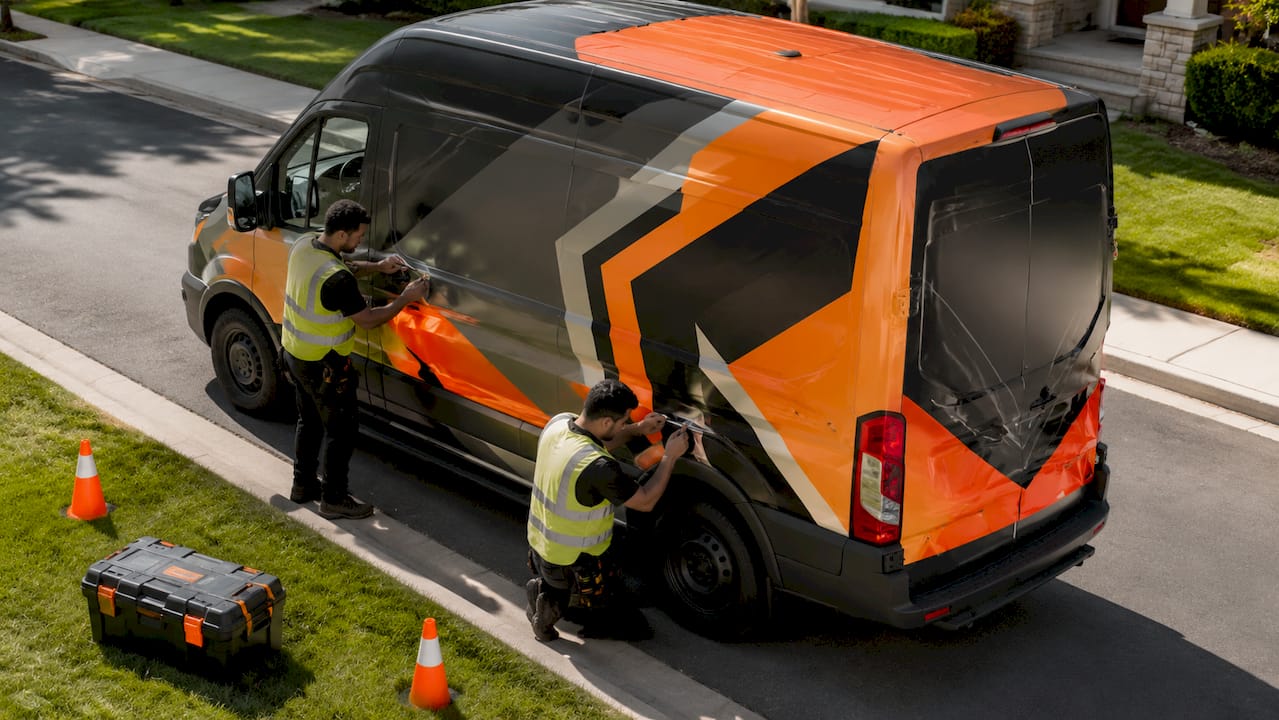
Brand visuals on vehicles are defined as the graphics, wraps, decals, and signage applied to commercial and fleet vehicles to function as mobile advertising platforms. The role of brand visuals on vehicles goes far beyond aesthetics. A single wrapped vehicle generates between 30,000 and 80,000 daily impressions with a 97% brand recall rate, numbers that no billboard or social media ad can match at the same cost. For business owners and marketing professionals, vehicle visual identity is one of the most underleveraged assets in the entire marketing mix.
How does vehicle branding boost recognition and ROI?
Vehicle branding delivers measurable advertising performance that most digital channels cannot replicate at scale. A wrapped vehicle achieves a cost per thousand impressions of $0.40 compared to $5 for television ads. That gap represents a 12x cost advantage for businesses that treat their fleet as a media channel.
The impact of vehicle branding extends beyond raw impressions. Wrapped fleets produce a 15% higher brand awareness lift and a 25% increase in perceived company size. That perception shift matters because customers associate a larger, more uniform fleet with reliability and professionalism, even when the business is a small local operation.
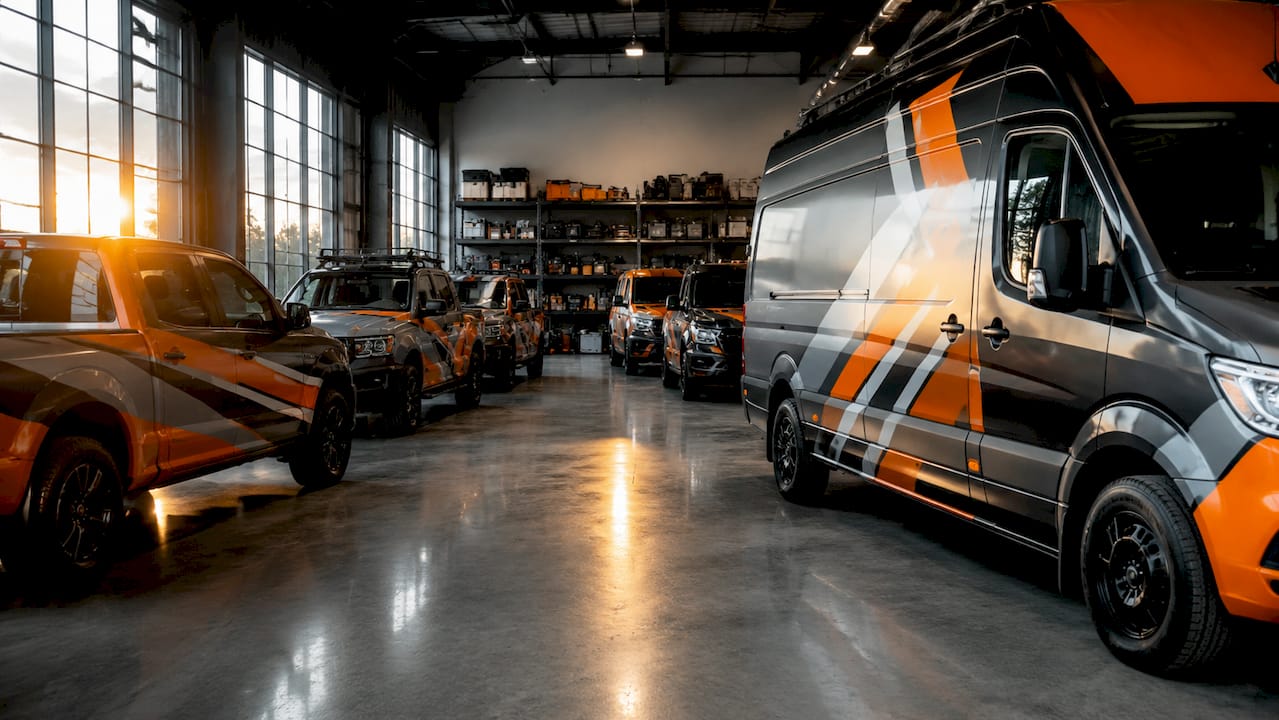
Vehicle wraps also cut through traffic 53% better than static billboards. A billboard sits in one location. A wrapped van travels through neighborhoods, parks outside job sites, and sits in traffic alongside potential customers every single day. The exposure compounds without additional spend.
| Advertising Channel | Cost Per Thousand Impressions | Brand Recall Rate |
|---|---|---|
| Vehicle Wrap | $0.40 | 97% |
| Television Ad | $5.00 | ~19% |
| Static Billboard | ~$3.50 | Moderate |
| Digital Display Ad | ~$2.00 | ~19% |
The table above shows why the impact of vehicle branding stands apart from traditional media. An 800% average ROI over three years makes a wrap one of the strongest capital investments a marketing budget can support.
Pro Tip: Treat your vehicle wrap as a depreciating asset with a defined lifecycle, not a one-time expense. Build wrap replacement into your annual capital planning the same way you schedule vehicle maintenance.
What design principles make vehicle branding effective?
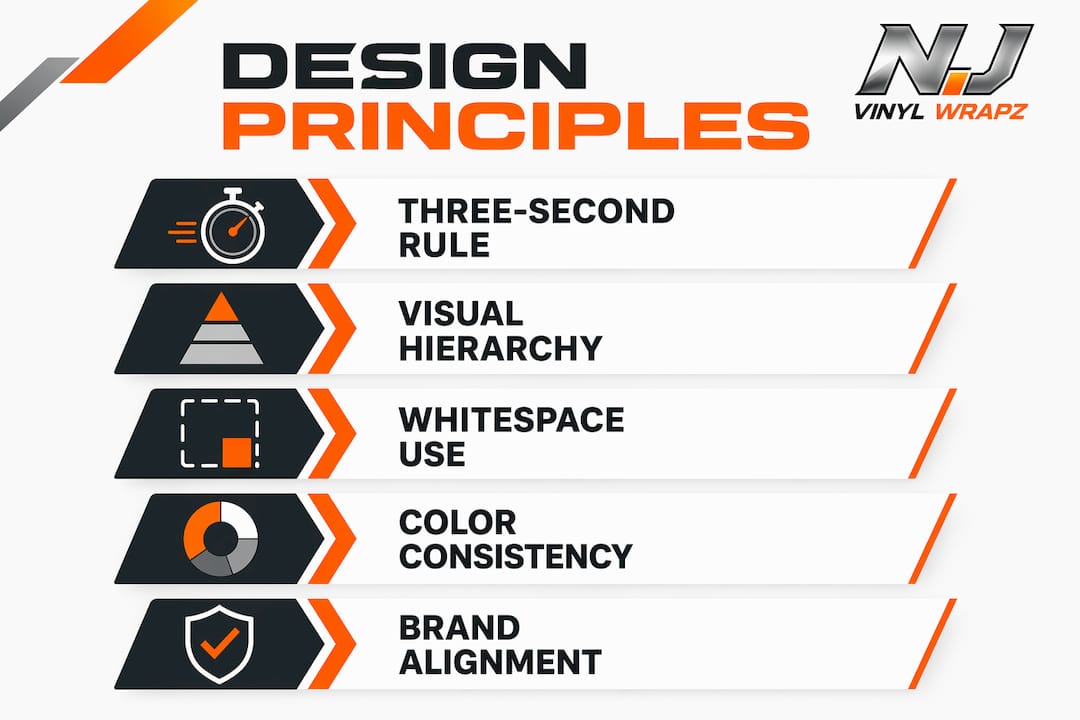
Effective vehicle design and branding follows one non-negotiable rule: the three-second rule. A driver or pedestrian has roughly three seconds to absorb your message. Your design must communicate your brand name, core service, and contact information in that window, in that order.
Visual hierarchy is the tool that makes this possible. Whitespace is not wasted space. It directs the eye and improves message absorption. Crowded layouts with too many colors, fonts, or competing graphics fail to convert viewers into leads, regardless of how much of the vehicle surface they cover.
Comparing wrap types by visual impact
| Wrap Type | Coverage | Best For | Visual Impact |
|---|---|---|---|
| Full Wrap | 100% of vehicle | Maximum brand presence | Highest |
| Partial Wrap | 25–75% of vehicle | Budget-conscious branding | High |
| Vehicle Lettering | Logo and text only | Simple service identification | Moderate |
Full wraps using premium materials from 3M or Avery deliver the strongest visual presence and protect the vehicle’s original paint. Partial wraps offer strong impact at a lower price point and work well when the vehicle’s base color complements the brand palette. Vehicle lettering suits businesses that need clean, professional identification without full coverage.
The most common design mistake is treating a vehicle like a website. A website can hold paragraphs of text. A vehicle wrap cannot. Limit your message to five to seven words of readable copy, a clear logo, and one phone number or URL.
Pro Tip: Photograph your wrapped vehicle next to your storefront signage and your website header. If the three do not look like they belong to the same brand, your visual identity has a consistency problem that will cost you recognition over time.
How does design language shape vehicle visual identity?
Design language is defined as the consistent set of visual elements, shapes, colors, and finishes that make a brand immediately recognizable across every surface it occupies. According to research on Changan Automobiles’ global expansion, consistent design language acts as a psychological trigger that builds trust before a customer reads a single word.
For fleet operators, this principle translates directly. When every vehicle in your fleet shares the same color palette, logo placement, and typography, the fleet functions as a unified brand statement. A customer who sees your van in their neighborhood on Monday and your truck on the highway on Friday registers both sightings as the same brand. That repetition builds familiarity, and familiarity builds trust.
Specialty vinyl finishes take this further. Chrome and brushed metal accents elevate brand perception and help premium service businesses stand out in competitive markets. A two-material wrap design combining gloss over matte creates visual depth that a single-finish wrap cannot achieve. These techniques are particularly effective for businesses in luxury services, high-end construction, or technology sectors where perceived quality directly influences purchase decisions.
Consider how wheel lighting aesthetics contribute to the overall visual signature of a vehicle. Even details at the wheel level reinforce brand distinctiveness when the design system is coherent.
- Use a single primary brand color as the dominant wrap color across all fleet vehicles.
- Reserve accent colors for logo elements and call-to-action areas only.
- Apply the same font family used in your digital and print materials.
- Specify exact Pantone or CMYK values in your brand guide to maintain color accuracy across print runs.
- Plan specialty finishes for high-visibility panels like the hood, doors, and rear.
Pro Tip: Refresh your wraps every 4–5 years, aligned with your vehicle replacement schedule. A faded or peeling wrap signals neglect to potential customers faster than no wrap at all.
How do you integrate vehicle visuals into your marketing strategy?
Vehicle branding works best when it connects to every other customer touchpoint your business controls. Visual consistency across signage, digital presence, and office branding reinforces reliability and makes future brand rollouts faster and cheaper. A customer who sees your wrapped van, visits your website, and walks into your office should experience one coherent brand, not three separate design decisions.
Branded vehicles generate leads without ongoing spend, making them one of the lowest-cost, highest-trust marketing channels for local service businesses. The key is amplifying that passive exposure with active tactics.
Here are five ways to maximize the return on your vehicle branding investment:
- Park strategically. Position fleet vehicles in high-traffic areas near your service territory during off-hours. A parked van on a busy street is a free billboard.
- Document and share. Photograph your wrapped vehicles in recognizable local locations and post them to Google Business Profile, Instagram, and LinkedIn. This extends geographic reach beyond physical routes.
- Align routing with target neighborhoods. Work with fleet managers to route vehicles through zip codes where your ideal customers live or work.
- Track wrap-driven inquiries. Use a dedicated phone number or landing page URL on your wrap to measure how many leads come directly from vehicle visibility.
- Audit wrap condition quarterly. Faded graphics, lifted edges, or cracked vinyl undermine the credibility your wrap is designed to build.
Wrap lifecycle management is the operational discipline most businesses skip. Wraps are depreciating assets. A wrap installed in 2021 on a vehicle scheduled for replacement in 2027 needs a mid-cycle refresh assessment in 2024 or 2025. Skipping that assessment risks sending vehicles into the field with visuals that no longer match your current brand standards. For businesses exploring fleet vehicle customization, building a refresh calendar into the fleet management plan is the single most overlooked step.
Key takeaways
Vehicle branding is a measurable, high-ROI marketing channel that requires consistent design, proactive lifecycle management, and integration with every other brand touchpoint to deliver maximum impact.
| Point | Details |
|---|---|
| Impressions and recall | Wrapped vehicles generate up to 80,000 daily impressions with a 97% recall rate. |
| Cost efficiency | Vehicle wrap CPM is $0.40 versus $5.00 for TV, delivering an 800% average ROI over three years. |
| Design hierarchy | Apply the three-second rule: brand name, service, and contact info in that order, with clear whitespace. |
| Design language consistency | Unified colors, fonts, and finishes across all fleet vehicles build trust and brand recognition. |
| Lifecycle planning | Refresh wraps every 4–5 years and track wrap-driven leads to protect and measure your investment. |
What i’ve learned after years of fleet branding projects
Most business owners come to us thinking about vehicle wraps as decoration. That framing costs them money. A wrap is a media placement with a defined cost, a measurable reach, and a lifespan that needs to be managed.
The biggest mistake I see consistently is overloading the design. A business owner wants to include every service they offer, three phone numbers, a website, a tagline, and a QR code. The result is a vehicle that looks busy from ten feet away and unreadable from fifty. The businesses that get the strongest results are the ones willing to strip the message down to its core: who you are, what you do, and how to reach you.
The second mistake is treating the wrap as a standalone tactic. The businesses I’ve seen generate real, trackable leads from their vehicles are the ones who connect the wrap to a dedicated landing page, a Google Business Profile with matching visuals, and a consistent presence on the routes their customers travel. The wrap opens the door. The rest of the brand experience closes the sale.
I’ve also watched companies skip the refresh cycle and pay for it in brand perception. A five-year-old wrap on a vehicle that’s still in daily service sends a message you don’t want to send. Staying current with vehicle branding trends is not vanity. It’s brand maintenance.
The businesses that treat vehicle branding as a system, not a one-time project, consistently outperform those that don’t.
— Krunal
Transform your fleet into a brand asset with Njvinylwrapz
Njvinylwrapz has spent over 10 years turning commercial fleets across New Jersey into mobile advertising platforms that generate real business results. Whether you need a single vehicle or a full fleet program, Njvinylwrapz designs, prints, and installs wraps using premium 3M and Avery materials in climate-controlled facilities built for consistent, professional results.
From full vehicle wraps that maximize brand coverage to partial wraps and lettering for targeted budgets, Njvinylwrapz offers wrap options matched to your goals and fleet size. Every project includes custom design consultation to make sure your vehicles reflect your brand accurately and consistently. Contact Njvinylwrapz today to get a quote and start building a fleet that works as hard as your team does.
FAQ
What is the role of brand visuals on vehicles?
Brand visuals on vehicles transform fleet and commercial vehicles into mobile advertising platforms that generate impressions, build brand recognition, and drive leads without ongoing media spend. A single wrapped vehicle can produce up to 80,000 daily impressions with a 97% recall rate.
How many impressions does a wrapped vehicle generate daily?
A branded vehicle wrap generates between 30,000 and 80,000 daily impressions depending on route density and geography. That reach far exceeds most local digital advertising placements at a fraction of the cost per impression.
What is the three-second rule in vehicle wrap design?
The three-second rule states that a viewer has roughly three seconds to absorb a vehicle’s message, so designs must prioritize brand name, service, and contact information in that order. Cluttered layouts with too many elements fail to communicate within that window.
How often should vehicle wraps be replaced?
Vehicle wraps should be refreshed every 4–5 years, aligned with the vehicle’s maintenance and replacement schedule. Neglecting this timeline results in faded or damaged graphics that harm brand perception rather than support it.
Does vehicle branding work for small businesses?
Vehicle branding is particularly effective for small and local service businesses because it builds trust and recognition in the specific neighborhoods where those businesses operate. Branded vehicles generate leads passively every day without requiring additional advertising spend.