
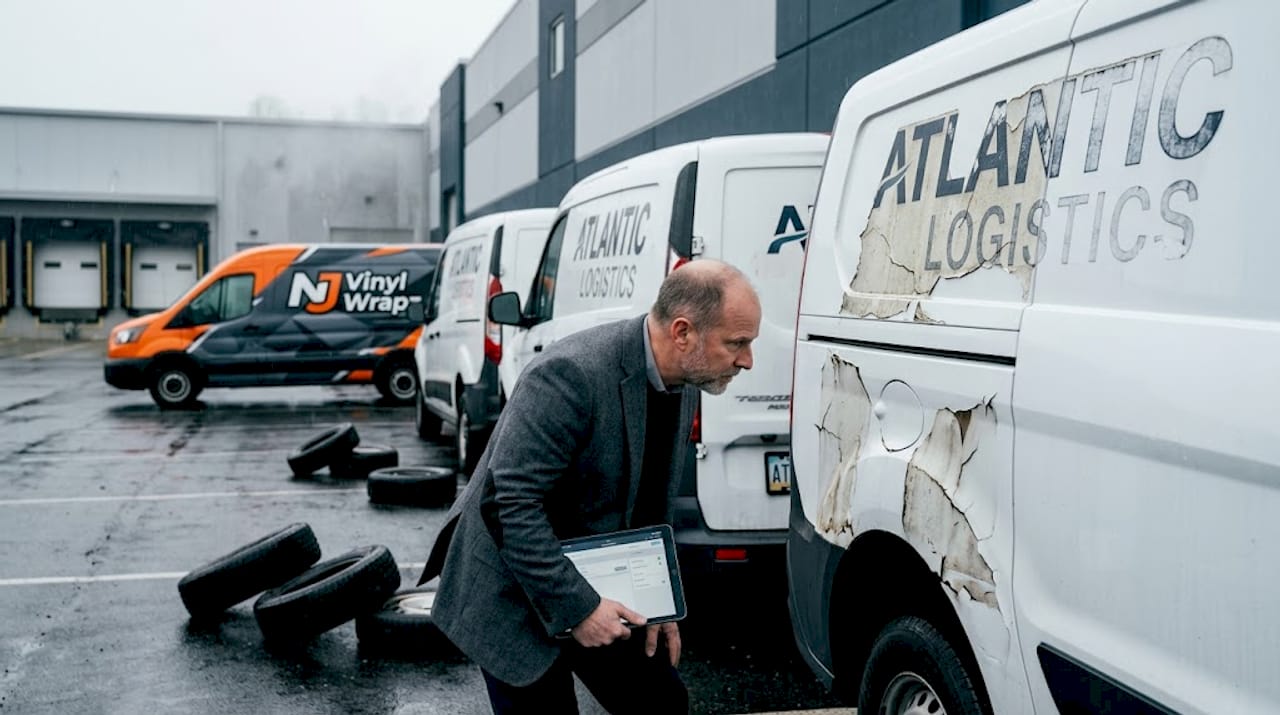
Every mile your fleet vehicles travel is a branding opportunity, and a deteriorating wrap can quietly cost you customers before a single word is spoken. When logos fade, edges peel, or graphics become unreadable, your vehicles stop working as mobile billboards and start broadcasting the wrong message. New Jersey businesses face some demanding conditions for vinyl wraps, from brutal winter salt spray to scorching summer humidity, making regular wrap evaluation critical. This article walks you through seven concrete warning signs your fleet wraps need replacing, so you can protect your investment and keep your brand sharp.
Table of Contents
- Why early detection of wrap issues matters
- The 7 key signs it’s time for a new vehicle wrap
- Comparing the impact: Old wrap vs. new wrap performance
- When should you schedule replacement? Decision triggers for NJ fleets
- The truth about wrap life cycles for NJ fleets: What most owners overlook
- Ready for a fresh look? Streamline your fleet wrap upgrade in New Jersey
- Frequently asked questions
Key Takeaways
| Point | Details |
|---|---|
| Edge lifting and peeling | These are early signs that your wrap is failing and risking long-term damage. |
| Act fast saves money | Prompt wrap replacement helps avoid paint repairs and costly fleet downtime. |
| Brand visibility matters | Wraps with cracks, fading, or stains reduce trust and hurt your business image. |
| Schedule proactively | Planning wrap replacement ahead of issues ensures your fleet always looks its best. |
Why early detection of wrap issues matters
Your fleet vehicles are rolling advertisements. In New Jersey’s dense commercial landscape, every delivery van, service truck, and company car represents a touchpoint with potential customers. A clean, vibrant wrap signals professionalism and reliability. A cracked, peeling, or faded one does the opposite.
The financial stakes are real. When wraps begin to fail, the costs are not limited to the replacement itself. A wrap left to deteriorate exposes the underlying vehicle paint to UV rays, moisture, and road grime trapped beneath loosened vinyl. This can lead to permanent paint damage that raises the total cost of vehicle ownership significantly. Ignoring early edge lift and letting contaminants remain on the vinyl can accelerate failure and increase downstream costs, including harder removal and a real risk of paint damage.
Brand perception is not a soft metric. Studies consistently show that vehicle wraps generate between 30,000 and 70,000 impressions per day, depending on the route and urban density. In a market like northern New Jersey, a faded or damaged wrap reaches tens of thousands of eyes daily, and not favorably.
Beyond paint damage, there is a less obvious but equally damaging cost: brand equity erosion. Each time a prospect or existing customer sees a truck with peeling graphics or blurry text, a small but real doubt forms about the quality and attention to detail your company brings to its work. That cumulative damage is hard to recover from.
Protecting fleet wraps through regular inspection and timely replacement is the most straightforward way to prevent these outcomes. Understanding the benefits of premium vinyl materials also helps fleet managers make informed decisions when choosing replacements. Acting early saves money, preserves paint, and keeps your brand consistent.
Now that you understand the real risks, let’s break down the seven signs you need a new wrap.
The 7 key signs it’s time for a new vehicle wrap
Knowing what to look for makes routine inspections fast and effective. Train your drivers or maintenance team to flag any of these issues immediately. Catching them early is always cheaper than waiting.
Let’s detail each sign so you can spot problems before they affect your fleet’s professional appearance.
-
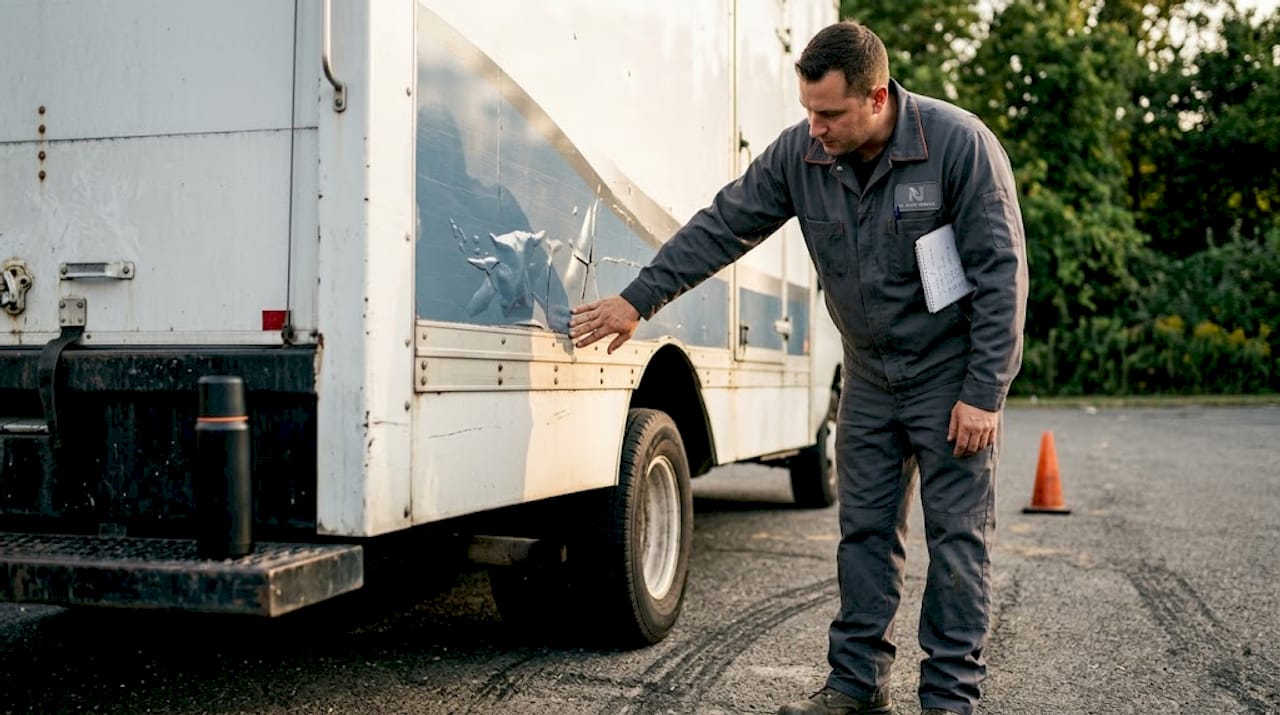
Edge lifting or peeling. This is usually the first visible failure point. When the adhesive along the edges and seams begins to release, corners curl upward and collect dirt, moisture, and road salt. Once lifting starts, it spreads. Peeling and edge lifting indicate the wrap is failing and put the vehicle’s paint at risk. For New Jersey fleets that operate through harsh winters, edge lift is especially common around wheel wells, bumpers, and door seams.
-
Visible cracks or splits. Vinyl expands and contracts with temperature changes. Over time, especially past the five-year mark, the material loses flexibility and cracks along high-stress areas like door handles, mirrors, and body curves. Cracking is a clear signal that the wrap’s structural integrity is gone.
-
Severe fading or discoloration. All wraps fade gradually, but when colors shift noticeably from their original specification, your branding becomes inconsistent across the fleet. A truck with a washed-out logo next to one with vibrant graphics looks like two different companies. Fading also reduces contrast, making your contact information harder to read at highway speeds.
-
Stains or contaminants trapped under the wrap. Fuel spills, chemical exposure, and industrial grime can work their way under compromised vinyl. These stains are rarely fixable without removal, and the longer they sit, the more they eat into your paint. This is one of the more insidious signs because it may not be obvious until you pull back a lifted edge.
-
Loss of readability in logos and text. Your phone number, website, and tagline are the entire point of the wrap. If fonts have blurred, colors have bled, or graphics have lost sharpness due to UV degradation or surface abrasion, the wrap is no longer doing its job. The fleet branding impact of clear, readable graphics cannot be overstated in competitive local markets.
-
Permanent bubbles or warping. Small installation bubbles can often be pushed out in the first few weeks. Permanent bubbles or warped sections, however, mean the adhesive bond has broken down. These create an uneven, unprofessional surface that also traps moisture against the paint.
-
The wrap is over five years old or past its warranty. Even a wrap that looks acceptable to the eye may be chemically compromised. Most premium vinyl materials carry a five to seven year warranty under normal conditions. Once a wrap passes that threshold, replacement is a smart preventative move rather than a reactive one.
Pro Tip: Walk your fleet during morning inspections when light is low and angled. Raking light from the side reveals bubbles, warping, and edge lift that are almost invisible in direct overhead sunlight. This five-minute habit can catch issues weeks before they escalate.
Comparing the impact: Old wrap vs. new wrap performance
But how do new wraps concretely benefit your fleet versus just keeping old graphics a bit longer? This table lays out the differences.
| Performance factor | Aging or failing wrap | New premium wrap |
|---|---|---|
| Brand readability | Faded, blurred text and logos | Crisp, vibrant graphics at full spec |
| Customer perception | Signals neglect and poor quality | Projects professionalism and reliability |
| Paint protection | Compromised; traps moisture and contaminants | Full adhesive bond; protects paint surface |
| Removal difficulty | Harder and more costly as adhesive degrades | Clean removal within warranty window |
| Compliance readiness | May not meet DOT or local commercial vehicle standards | Current, legible contact info and markings |
| Impression value | Reduced; negative associations | Maximum daily impressions with positive branding |
| Resale value impact | Lowers vehicle resale value | Preserved paint improves trade-in condition |
Discoloration and peeling undermine trust and readability, which directly reduces the brand visibility you are paying for. When you calculate the cost per impression over a wrap’s lifespan, a fresh wrap on a high-mileage vehicle is genuinely one of the most cost-effective marketing tools available to a New Jersey business.
Beyond what fits in a table, consider these secondary effects of letting wraps run past their useful life:
- Vehicle resale value drops when paint is damaged or contaminated by degraded vinyl adhesive.
- Compliance risks increase if your DOT numbers, contact information, or required markings become unreadable due to fading.
- Lead generation suffers because potential customers cannot capture your phone number or URL from a blurry or faded graphic at a traffic light.
- Employee morale can dip when drivers feel they are representing the company in a vehicle that looks run-down.
- Fleet cohesion disappears when some vehicles are fresh and others are visibly worn, creating an inconsistent brand image across your entire operation.
Investing in durable vinyl printing from the outset and replacing wraps on schedule keeps all of these risks low and your brand strong.
When should you schedule replacement? Decision triggers for NJ fleets
With the differences clear, the next step is knowing exactly when action is required, especially in New Jersey’s demanding conditions.
New Jersey’s climate is hard on vinyl. Coastal humidity, road salt from winter treatments, temperature swings from below freezing to over 90 degrees Fahrenheit, and heavy urban traffic create accelerated wear. Here is a practical reference for wrap lifespan planning:
| Vehicle use and environment | Expected wrap lifespan | Recommended inspection interval |
|---|---|---|
| Highway route, high UV exposure | 3 to 4 years | Every 6 months |
| Urban delivery, frequent door use | 3 to 5 years | Every 6 months |
| Covered parking, moderate use | 5 to 7 years | Annually |
| Coastal NJ routes (salt/humidity) | 2.5 to 4 years | Every 4 months |
| Mixed fleet, moderate conditions | 4 to 5 years | Annually |
Acting quickly when severe wrap issues appear helps avoid permanent damage and more costly repairs. Build your replacement schedule around these timelines rather than waiting for visible failure.
For New Jersey fleets, there are specific moments that should trigger proactive replacement planning:
Before major branding events or product launches. If your company is running a regional campaign or launching a new service, having fresh, consistent wraps across the fleet amplifies the message significantly. A spring refresh ahead of a summer campaign is a common and smart approach.
Before annual DOT inspections or commercial vehicle audits. Unreadable phone numbers, faded company names, or obscured registration information can create compliance headaches. Replacing wraps before audits keeps you clean.
When adding new vehicles to the fleet. This is a natural moment to refresh older vehicles to match, ensuring brand consistency.
Pro Tip: For fleets with ten or more vehicles, stagger your replacement schedule rather than replacing all wraps at once. Replace roughly a quarter of the fleet each year on a rolling basis. This keeps costs predictable, minimizes downtime, and ensures you always have fresh-looking vehicles without a massive one-time expense.
Expert wrap installation makes the replacement process faster and less disruptive. Professional installers working in climate-controlled facilities can often complete a vehicle in a single day, which reduces the time your trucks are off the road.
The truth about wrap life cycles for NJ fleets: What most owners overlook
Here is something we see consistently after working with New Jersey businesses for over a decade: almost every fleet manager who comes to us with a wrap failure situation says the same thing. They knew something was off weeks or months earlier, but replacement felt like a low-priority task.
That delay is almost always the most expensive decision they make.
Most businesses treat wrap replacement the way they treat replacing a worn tire tread instead of when a blowout happens. But a deteriorating wrap is not just an aesthetic problem. It is a daily branding liability, a slow paint-damage machine, and a signal to every person who sees your vehicle that your standards have slipped. The reactive approach costs more in every dimension: higher removal costs, paint repair bills, emergency scheduling fees, and the unmeasurable cost of lost impressions during downtime.
The businesses that get this right treat their wraps the way a sharp operations manager treats any other maintenance item. They track installation dates. They build replacement costs into annual budgets. They schedule inspections twice a year and act on what they find. They do not wait for a driver to report peeling graphics in a morning debrief.
There is also a brand equity angle that most wrap conversations skip entirely. A strategically timed refresh, not just a reactive replacement, is an opportunity. New graphics, updated contact information, refreshed color palettes aligned with a rebranded identity, all of these are possible when you plan ahead. Fleet managers who protect their wraps proactively and replace on schedule are the ones whose fleets look sharp in year five as much as they did in year one.
The mindset shift is simple: wraps are not a one-time expense. They are a recurring marketing investment with a predictable life cycle. Plan accordingly.
Ready for a fresh look? Streamline your fleet wrap upgrade in New Jersey
If any of the seven signs in this article sound familiar, your fleet is leaving branding opportunities on the table every single day.
At NJ Vinyl Wrapz, we work with commercial fleets of all sizes across New Jersey, from single-vehicle operations to large multi-truck organizations. Our team will evaluate your current wraps, help you prioritize replacements, and design graphics that make your vehicles impossible to ignore. Whether you need full vehicle wraps for a complete transformation or want to explore targeted fleet wrap solutions, we have the materials, the expertise, and the turnaround times to keep your fleet moving. Contact us today for a free consultation and quote.
Frequently asked questions
How long does a typical vehicle wrap last in New Jersey conditions?
Most vehicle wraps last 3 to 5 years in New Jersey, depending on maintenance, route type, and exposure to coastal humidity and road salt. Peeling and cracks become likely after about five years, and damage risk rises steadily past that point.
Will a damaged wrap harm my vehicle’s paint?
Yes, a wrap that is peeling, cracking, or trapping contaminants under the vinyl can cause permanent paint damage. Allowing contaminants under vinyl and ignoring early peeling can permanently harm the paintwork beneath.
Are faded wraps bad for branding?
Absolutely. Faded wraps reduce text and logo readability, lower customer trust, and create inconsistency across your fleet. Discoloration and peeling directly undermine brand visibility and the professional impression your vehicles are meant to create.
Do all vehicles in a fleet need wraps replaced at the same time?
Not necessarily. Each vehicle should be assessed individually based on its wrap’s age, condition, and exposure level. However, coordinating replacements in batches helps maintain consistent branding and makes scheduling with your installer more efficient.