
A 3M Preferred Installer is an individual who has passed 3M’s hands-on testing for a specific installation specialty, such as fleet graphics, vehicle color change, or window and wall film. It’s a personal skill credential, not a business certification, and it matters most as a verification step: proof that the person putting graphics on your vehicle actually demonstrated the technique to 3M’s standard.
TL;DR:
- The credential applies to individuals, not companies, so verifying recent testing and current specialty certification through official databases is essential.
- For warranty-critical projects or fleet rollouts, hiring a Certified Graphics Installation Company offers more accountability and insurance backing than a sole Preferred Installer credential.
- The training process involves multi-day hands-on courses at authorized centers, with real-world practice and a practical test, not just classroom instruction.
- Checking insurance coverage, recent certifications, and references is crucial before booking, as individual certification does not guarantee shop standards or business practices.
- NJ Vinyl Wrapz emphasizes strict verification, operating in climate-controlled facilities, and only hiring accredited staff for fleet and vehicle wrap installation projects.
Table of Contents
- What a 3M Preferred Installer Covers (and What It Doesn’t)
- How Do You Verify an Installer’s 3M Preferred Status?
- How to Become a 3M Preferred Installer: Training, Testing, and Cost
- Benefits and Limits of Hiring a 3M Preferred Installer
- What to Ask and Check Before Booking an Installer
- How NJ Vinyl Wrapz Approaches Installer Verification
- Individual Installer or Certified Company: Our Take
- Ready to Wrap Your Fleet or Vehicle With 3M Materials?
- Sources
- FAQ
What a 3M Preferred Installer Covers (and What It Doesn’t)
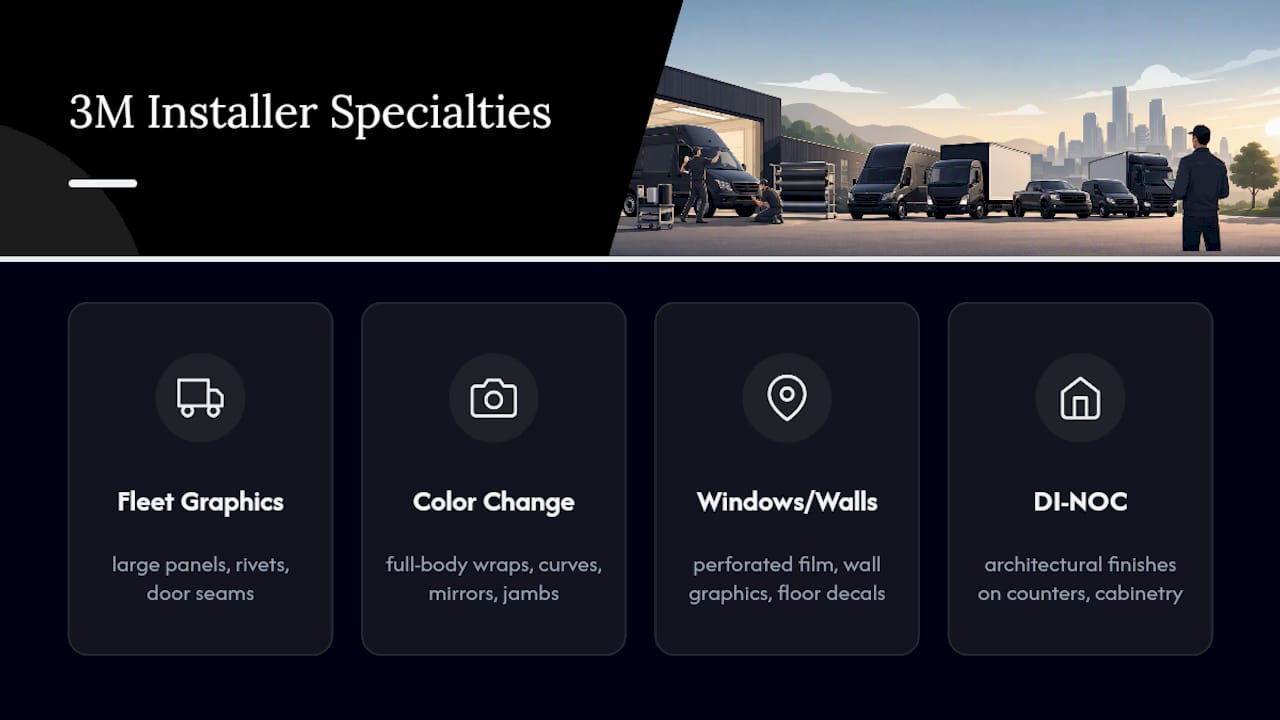
The credential is specialty specific. A person can be tested and accredited in Fleet Graphics, Vehicle Color Change, Windows/Walls/Floors, or DI-NOC Architectural Finishes, and each covers a distinct skill set. Fleet accreditation focuses on large flat panels, rivets, and door seams on box trucks and vans. Vehicle Color Change tests full-body wraps over compound curves, mirrors, and door jambs. Windows/Walls/Floors covers perforated window film, wall graphics, and floor decals, each with different adhesion and safety demands. DI-NOC is architectural finish work, mimicking wood grain or metal on surfaces like counters and cabinetry.
Passing one of these tests proves the installer can execute that specific application correctly under evaluation conditions. It does not mean 3M is vouching for the shop that employs them, the quality of their customer service, or their business practices.
That distinction trips up a lot of buyers. A Preferred Installer credential belongs to the person, not the company they work for. It doesn’t come with a company-wide audit, doesn’t guarantee insurance coverage, and doesn’t replace the due diligence you’d normally do on any contractor: checking references, confirming licensing, and reviewing recent work. Think of it as one strong data point in a hiring decision, not the whole decision.
How Do You Verify an Installer’s 3M Preferred Status?
Don’t take a certificate on a wall at face value. Verification takes about five minutes and it’s worth doing every time.
Start with the official installer locator, which lets you search by zip code and specialty to confirm whether a name or business shows up as accredited. If the installer claims company-level certification rather than individual Preferred status, cross-check the UASG directory, which lists 3M Certified Graphics Installation Companies along with their service areas and certification details.
Beyond the databases, ask directly:
- Which specialty are they certified in, and can they show the certificate or emblem?
- Where and when did they test? Recent testing (within the last few years) matters more than a credential from a decade ago.
- Are they eligible to register jobs under the MCS warranty, and what does that cover?
- What are their insurance limits, and can they provide a certificate of insurance?
Cross-reference what they tell you against photos of past work, actual customer references, and a walkthrough of their shop if possible. An installer who hesitates on any of these questions is telling you something.
How to Become a 3M Preferred Installer: Training, Testing, and Cost
For installers reading this instead of buyers: the path runs through 3M’s own training system, and it’s more rigorous than a weekend workshop.
3M’s training and testing structure typically runs as a multi-day course, often three days, with hands-on testing built into the schedule. The corporate training facility in St. Paul, Minnesota, runs the full range of courses across all specialties. Authorized regional partner centers host additional classes closer to installers who don’t want to travel, though the schedule and specialty offerings vary by location and season.
Here’s roughly how the process unfolds:
- Pick your specialty. Decide whether you’re pursuing Fleet, Vehicle Color Change, Windows/Walls/Floors, or DI-NOC based on the work you actually do.
- Enroll in an authorized course. Contact 3M or a regional partner center directly for current dates and course pricing, since costs vary by location and format.
- Complete the classroom and hands-on training. Expect real installation practice, not just slides.
- Sit for the hands-on test. Some specialties include a written component alongside the physical evaluation.
- Submit the Preferred Installer application, which requires agreeing to 3M’s identity and conduct standards, including 3M’s right to revoke accreditation for misuse.
3M itself cautions that introductory training alone is often not enough to pass the hands-on exam. The tests are built for people with real install experience, not beginners fresh out of a classroom.
Pro Tip: If you’re new to wraps, log real hours on scrap panels and low-stakes jobs before you schedule a test date. Showing up under-practiced wastes the course fee and the test slot.
Benefits and Limits of Hiring a 3M Preferred Installer
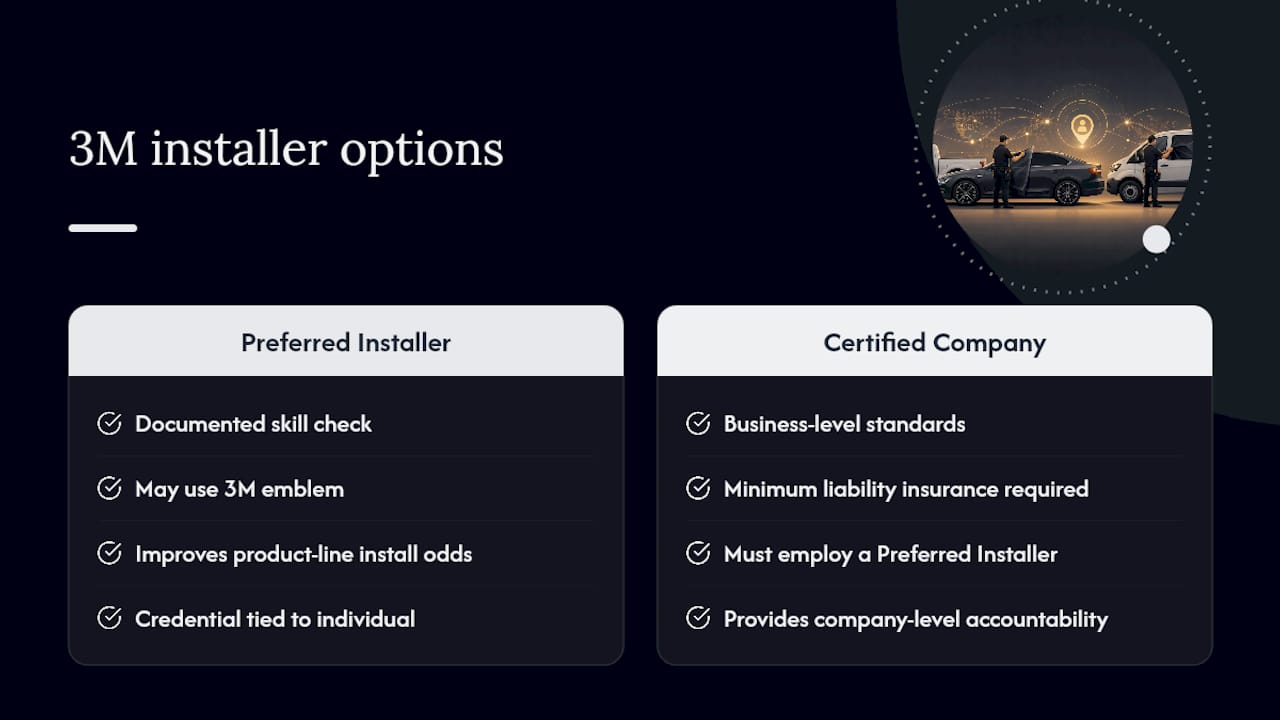
Hiring a Preferred Installer gets you a documented skill check most uncredentialed installers can’t offer. They’ve demonstrated technique under evaluation, they can legally use the 3M Preferred Installer emblem in their marketing, and their accreditation improves the odds of a correctly executed install on that specific product line. It’s also often a stepping stone toward company-level certification down the road.
The limits matter just as much. The credential lives with the individual, not the business, so if that installer leaves the shop, the shop’s Preferred status leaves with them. 3M doesn’t formally endorse the installer’s business practices, warranty policies, or insurance coverage, and those details still vary shop to shop.
For large fleet rollouts or warranty-critical installations, a 3M Certified Graphics Installation Company is usually the safer bet. That designation requires business-level standards, including a minimum liability insurance threshold and at least one Preferred Installer on staff, giving buyers a layer of accountability an individual credential doesn’t provide on its own.
What to Ask and Check Before Booking an Installer
Before signing anything, get straight answers on these:
- What specialty are they certified in, and can they show proof?
- When and where did they last test?
- What’s their insurance coverage, and will they provide a certificate?
- Does the job qualify for MCS warranty coverage, and who backs that warranty?
- Can they share recent photos and at least two references from similar jobs?
When you visit the shop, look for a climate-controlled workspace, sample rolls of the actual material they plan to use, a mockup or design-approval step before printing, a realistic timeline, and documentation you’ll receive after the job (photos, material lot numbers, warranty paperwork).
Roughly one in three fleet operators cite unclear warranty terms as their biggest regret after a wrap installation goes wrong, which tracks with how often “the warranty covers it” turns out to mean nothing specific once a panel starts lifting. If an installer can’t tell you, in plain terms, who backs the warranty and under what conditions, that’s the loudest red flag on this list.
How NJ Vinyl Wrapz Approaches Installer Verification
NJ Vinyl Wrapz has spent more than a decade installing fleet and vehicle wraps across New Jersey, working as a materials partner with 3M and Avery and running every install through a climate-controlled facility built for consistent adhesion and finish quality.
Every project gets checked against documented material specs, shop conditions, and installer technique before a vehicle leaves the bay. That includes verifying credentials on staff, auditing material lot numbers against job records, and operating under licensed and insured standards. It’s the same due diligence this guide asks buyers to run on any shop they’re considering.
Individual Installer or Certified Company: Our Take
For a single vehicle or a specialty color-change job, a 3M Preferred Installer on-site is usually plenty. The math changes at scale. A fleet of 20 vans, or any install where warranty coverage is the whole point of paying for premium film, calls for the added accountability of a Certified Graphics Installation Company.
The trade-off is real: certified companies can cost more and book further out, but you’re trading a few weeks of lead time for insurance backing and audited shop standards. For anything warranty-critical, that trade is worth making.
— NJ Vinyl Wrapz
Ready to Wrap Your Fleet or Vehicle With 3M Materials?
NJ Vinyl Wrapz gives fleet managers and vehicle owners a straightforward alternative to chasing down individual installer credentials one shop at a time. Every install runs through a licensed, insured operation with extensive hands-on experience using premium materials, all completed in a climate-controlled facility built specifically for wrap and graphic work.
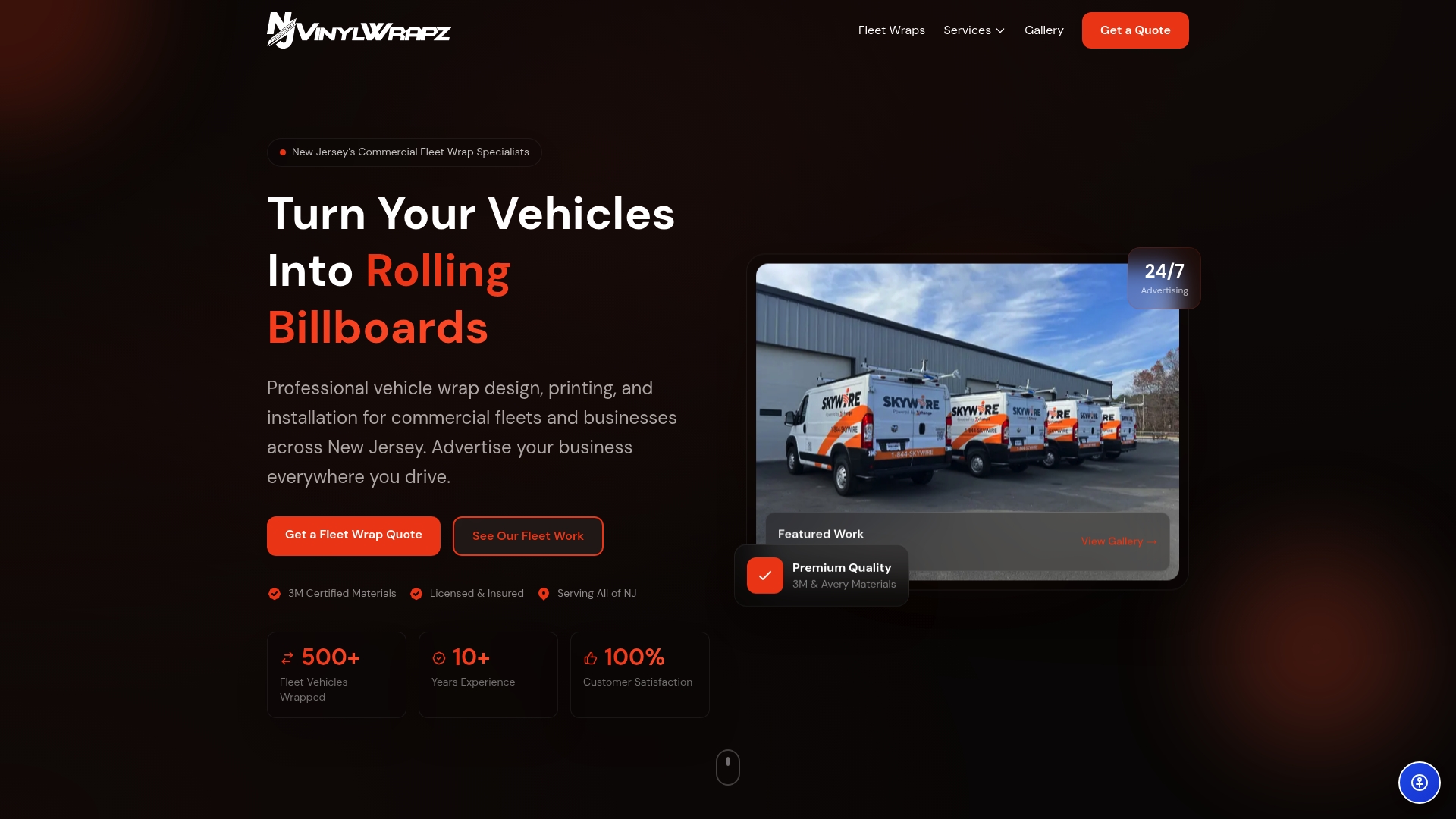
Whether you need a full vehicle wrap, a branded fleet program, paint protection film, or window graphics for a storefront vehicle, the process starts with a straightforward design consultation and a firm quote before any material gets cut. If you’re comparing wrap options and want to see what fits your budget and timeline, request a quote for a full vehicle wrap and get a real answer instead of a guessing game.
Sources
- Graphic Installer | US 3M
- 3M Installer Program Flyer (Preferred vs Certified comparison)
- Find Local 3M Certified Installer: UASG
FAQ
What Is a 3M Preferred Installer?
A 3M Preferred Installer is an individual who has passed hands-on testing in a specific 3M specialty, such as fleet graphics, vehicle color change, or architectural film. It certifies personal installation skill, not a company’s overall operations.
How Do You Become a 3M Certified Installer?
You complete an authorized 3M training course, often a multi-day format at 3M’s St. Paul facility or a regional partner center, then pass a hands-on (and sometimes written) test before submitting the Preferred Installer application.
How Much Does It Cost to Get 3M Certified?
Course and testing costs vary by location, format, and specialty, so pricing isn’t standardized. Contact an authorized 3M training center directly for current rates.
Who Are the 3M Authorized Distributors and How Do I Find Certified Companies?
3M authorized distributors and Certified Graphics Installation Companies are listed through the UASG directory, which lets you search by location and confirm business-level certification details.
What’s the Difference Between a Preferred Installer and a Certified Company?
Preferred is an individual, specialty-based credential earned through testing. Certified Graphics Installation Company is a business-level designation that adds requirements like insurance and staff audits, typically including at least one Preferred Installer on the team.